第15章現代世界と続く課題The Contemporary World and Ongoing Challenges
The Internet and Social Mediaインターネットとソーシャルメディア
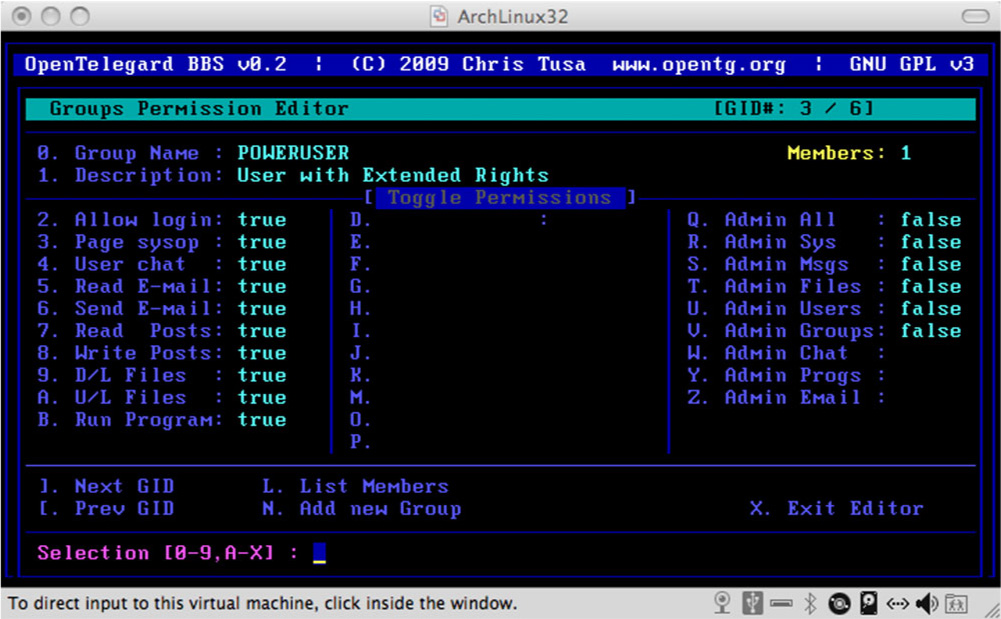
The process of globalization has been accelerated by the rise of the internet and the various social media platforms like Instagram, Facebook, and Twitter that exist there. Many people were introduced to the potential of computer networks for sharing information and creating small social networks in the 1980s, when individual users became able to connect their computers to others by using modems and telephone networks. This connectivity gave rise to regional bulletin board systems (BBSs), in which one person’s computer served as a host for those of other users (Figure 15.18). BBSs functioned much like websites today. Though they ran far more slowly and had limited capabilities, they allowed users to share computer files like games and images, post messages for others to read, participate in virtual discussions and debates, and play text-based online games. BBSs used phone networks to communicate, and long-distance calls were then expensive, so their users tended to be local.
英語のヒント
グローバル化は、インターネットと、そこで利用されるインスタグラム、フェイスブック、ツイッターなどのソーシャルメディアの発達により加速した。1980年代には個人の利用者がモデムと電話網を使って自分のコンピューターを他人のコンピューターにつなげるようになり、多くの人が、情報を共有し小さな社会的ネットワークを作るコンピューターネットワークの可能性に触れた。この接続能力から地域の電子掲示板システム(BBS)が生まれ、一人のコンピューターが他の利用者のコンピューターの接続先となった(図15.18)。BBSは今日のウェブサイトによく似た働きをした。はるかに動作が遅く、機能も限られていたが、ゲームや画像などのファイルの共有、他の人に向けたメッセージの投稿、仮想空間での話し合いや討論への参加、文字を中心とするオンラインゲームを可能にした。BBSは電話網で通信し、当時の長距離通話は高額だったため、利用者は地元の人が中心だった。
A Bulletin Board System, 1980s.1980年代の電子掲示板システム。
(credit: “Screenshot of OpenTG’s Group Permissions Editor” by Chris Tusa/Wikimedia Commons, Public Domain) · Public Domain
Figure 15.18 Bulletin board systems like this one relied on colorful text and simple graphics to make them appealing. They appear very limited compared to today’s websites, but in the 1980s, they were revolutionary and opened new possibilities for the future of communication. (credit: “Screenshot of OpenTG’s Group Permissions Editor” by Chris Tusa/Wikimedia Commons, Public Domain)
図15.18 このような電子掲示板システムは、色彩豊かな文字と単純な図形で魅力を高めようとした。今日のウェブサイトに比べると非常に限られたものに見えるが、1980年代には革新的で、将来の通信に新しい可能性を開いた。(クレジット:Chris Tusa/Wikimedia Commons「Screenshot of OpenTG’s Group Permissions Editor」、パブリックドメイン)
Throughout the 1980s, BBSs continued to be popular with computer hobbyists and those intrigued by the idea of unique virtual communities, while networking technology improved steadily behind the scenes. The United States, Europe, and other developed countries were busy adopting a uniform protocol system that would allow computers around the world to easily communicate with others. Once this protocol had been established, the commercial internet as we currently understand it was born.
英語のヒント
1980年代を通じ、BBSはコンピューター愛好家や独特の仮想共同体という考えに心を引かれる人々に人気を保ち、その裏ではネットワーク技術が着実に進歩した。アメリカ、ヨーロッパなどの先進諸国は、世界各地のコンピューターが容易に通信し合えるよう、統一された通信規約の採用を進めていた。その規約が確立すると、現在私たちが理解する意味での商用インターネットが生まれた。
As early as 1987, about thirty thousand hosts resided on the burgeoning internet. Soon telecommunications and software companies began to exploit this new network by creating online service providers like America Online (AOL) to act as gateways to the internet. Initially, they used standard phone lines and modems to connect, much as BBSs had. But as the volume of information on the internet increased exponentially, service providers turned to more expensive broadband connections that used cable television lines and even dedicated lines to connect. During the 1990s, the first websites, the first internet search engines, and the first commercial internet platforms were established.
英語のヒント
早くも1987年には、成長中のインターネットに約3万台のホストが存在した。ほどなく通信会社やソフトウェア会社は、この新しいネットワークを利用しようと、インターネットへの入口となるアメリカ・オンライン(AOL)などのオンラインサービス事業者を設けた。当初の接続にはBBSと同様、通常の電話線とモデムを使った。しかしインターネット上の情報量が指数関数的に増えると、事業者はケーブルテレビ回線や専用線を用いる、より費用のかかるブロードバンド接続へと移った。1990年代には、最初のウェブサイト、インターネット検索エンジン、商用インターネットのプラットフォームが登場した。
By 2005, more than one billion people worldwide were using the internet regularly. They were able to shop online, make phone calls around the world, and even create their own websites with almost no technical training. Never before had the world been so connected. In 2004, Facebook was launched. Originally a networking tool for Harvard students, it quickly expanded globally to become a giant in the new world of social media. By 2010, nearly half a billion Facebook users around the world were sharing images and messages, creating communities, and linking to news stories. By 2022, the number of Facebook users had reached nearly three billion.
英語のヒント
2005年までに、世界で10億人以上が日常的にインターネットを使っていた。オンラインで買い物をし、世界各地へ電話をかけ、専門技術の訓練をほとんど受けずに自分のウェブサイトまで作れた。世界がこれほど結び付いたことは、それまでなかった。2004年にはフェイスブックが始まった。当初はハーバード大学生同士をつなぐ道具だったが、急速に世界へ広がり、ソーシャルメディアという新しい世界の巨大企業となった。2010年までに、世界の約5億人のフェイスブック利用者が画像やメッセージを共有し、共同体を作り、ニュース記事へのリンクを張っていた。2022年には、その利用者数は約30億人に達した。
Before 2007, almost all internet users gained access to the network via a personal computer, either at home or at work. That year, however, Apple Inc. released the first iPhone, a powerful cell phone but also a portable computer capable of performing all the tasks it once required a desktop computer to do. Even more revolutionary, it connected to the internet wirelessly through cell-phone infrastructure. While the iPhone was not the first phone to connect to the internet, its revolutionary touch-screen interface was far superior to earlier systems. Within just a few years, other cell-phone manufacturers were imitating its design and putting smartphones, and thus internet access, in the pockets of users around the world.
英語のヒント
2007年より前、ほとんどすべてのインターネット利用者は、自宅か職場のパーソナルコンピューターから接続していた。しかしその年、アップル社が初代iPhoneを発売した。それは高性能な携帯電話であると同時に、かつてデスクトップ型コンピューターでしかできなかったあらゆる作業をこなせる携帯用コンピューターでもあった。さらに革新的なのは、携帯電話の通信基盤を通じ、無線でインターネットにつながることだった。iPhoneはインターネットに接続する最初の電話ではなかったが、革新的なタッチスクリーンによる操作方式は、それまでのものを大きく上回った。わずか数年のうちに、他の携帯電話メーカーもその設計を模倣し、スマートフォン、ひいてはインターネットへの接続手段を世界中の利用者のポケットへ届けていた。
Smartphones have transformed life in developing countries, where they have helped bypass some of the traditional stages of infrastructure creation. In Africa, for example, people living where no landlines existed can now communicate with others using cell phones. Small farmers and traders can use cell phones for banking and to connect with potential suppliers and customers. In communities without libraries, schoolchildren can access the internet’s resources to study.
英語のヒント
スマートフォンは発展途上国の生活を変え、従来の基盤整備の段階を一部飛び越える助けとなった。たとえばアフリカでは、固定電話回線のなかった地域の人々が、今では携帯電話で他の人と連絡できる。小規模な農家や商人は、携帯電話で銀行取引を行い、供給業者や顧客になりうる相手とつながれる。図書館のない地域でも、児童はインターネットの資料にアクセスして学べる。
Smartphones have also democratized the internet, serving as powerful tools for organizing and promoting political change. The large pro-democracy movement in Cairo’s Tahrir Square captured the world’s attention in 2011, for example. But it began with twenty-five-year-old activist Asmaa Mahfouz’s YouTube video of January 18, 2011, in which she spoke directly to the camera and urged young Egyptians to protest at the square as part of the larger Arab Spring, a call for government reform and democracy that echoed across in the Arab world.
英語のヒント
スマートフォンはインターネットをより多くの人に開き、政治変革を組織し促進する強力な道具ともなった。たとえば2011年、カイロのタハリール広場で大きな民主化運動が起こり、世界の注目を集めた。その発端は、25歳の活動家アスマー・マフフーズが2011年1月18日に投稿したYouTube動画だった。彼女はカメラに向かって直接語りかけ、アラブ世界全体に響いた政府改革と民主主義を求める運動「アラブの春」の一環として、広場で抗議するようエジプトの若者に呼びかけた。
The Arab Spring was touched off in December 2010 when Muhammad Bouazizi, a young college graduate, set himself on fire in Tunisia after government officials there tried to interfere with the fruit cart that was his only source of income. Other young Tunisians took to the streets in protest, and demonstrations began again in January 2011. As people died in confrontations with government forces, President Zine al-Abidine Ben Ali fled the country, and Tunisia’s prime minister resigned shortly thereafter.
英語のヒント
アラブの春の引き金となったのは、2010年12月、大学を卒業した若者ムハンマド・ブアジジがチュニジアで焼身自殺を図った事件だった。政府職員が、彼の唯一の収入源だった果物の荷車での商売を妨害しようとした後のことだった。他のチュニジアの若者も抗議のため街頭に繰り出し、2011年1月には再びデモが始まった。政府部隊との衝突で死者が出る中、ザイン・アルアービディーン・ベンアリー大統領は国外へ逃亡し、チュニジアの首相も間もなく辞任した。
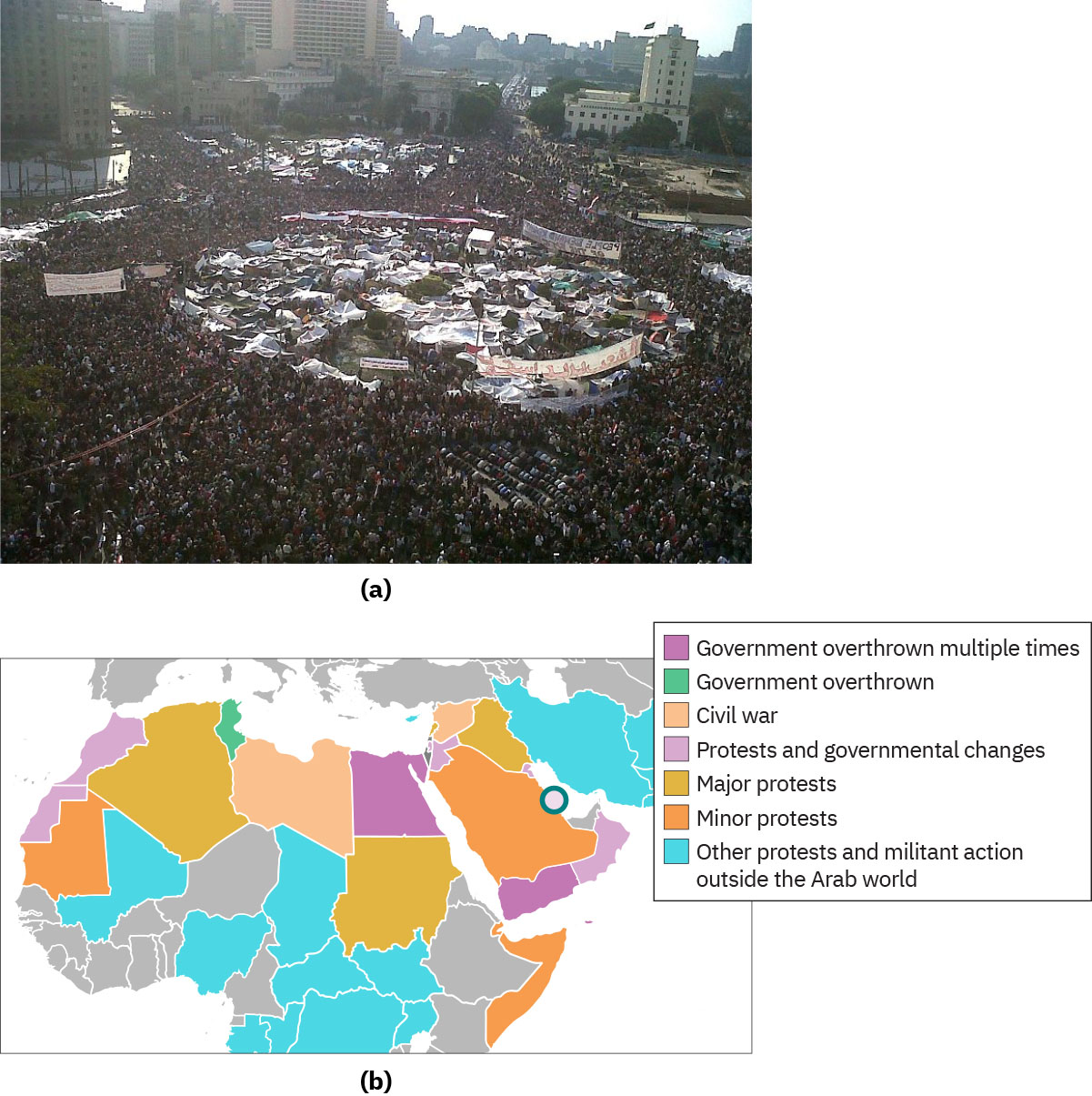
The Tunisian protests led to similar demonstrations in Egypt. On January 17, 2011, an Egyptian set himself on fire near the nation’s Parliament to protest the lack of economic opportunities. Crowds of mostly young people responded with massive demonstrations that lasted weeks (Figure 15.19). These demonstrations were fueled by and broadcast to the world through text messages, photos, tweets, videos, and Facebook posts sent by thousands of mobile phones, including that of Mahfouz. The devices amplified the calls for democracy and showed the world the Egyptian government’s use of violence to try to silence the protestors. Egyptian president Hosni Mubarak resigned on February 11, 2011. He was later convicted for his role in ordering government forces to harm and kill protestors.
英語のヒント
チュニジアの抗議は、エジプトでも同様のデモを引き起こした。2011年1月17日、経済的な機会の欠如に抗議し、一人のエジプト人が国会の近くで焼身自殺を図った。主に若者からなる群衆は、何週間も続く大規模なデモで応じた(図15.19)。マフフーズのものを含めた数千台の携帯電話から送られる文字メッセージ、写真、ツイート、動画、フェイスブックへの投稿は、デモを後押しするとともに世界へ伝えた。これらの端末は民主主義を求める声を増幅し、抗議者を黙らせようとするエジプト政府の暴力を世界に示した。ホスニー・ムバーラク大統領は2011年2月11日に辞任した。後に、政府部隊に抗議者への加害と殺害を命じたことへの関与をめぐり、有罪判決を受けた。
The Egyptian Revolution.エジプト革命。
(credit a: modification of work “Tahrir Square during 8 February 2011” by “Mona”/Flickr, CC BY 2.0; credit b: modification of work “Arab Spring and Regional Conflict Map” by Ian Remsen/Wikimedia Commons, Public Domain) · CC BY 2.0 + Public Domain
Figure 15.19 (a) Internet-connected cell phones using social media applications like Facebook were a common site at the large 2011 protests at Tahrir Square, Cairo. (b) The map shows the results of other uprisings in Africa and the Middle East that were part of the Arab Spring of 2010–2012. (credit a: modification of work “Tahrir Square during 8 February 2011” by “Mona”/Flickr, CC BY 2.0; credit b: modification of work “Arab Spring and Regional Conflict Map” by Ian Remsen/Wikimedia Commons, Public Domain)
図15.19 (a)2011年にカイロのタハリール広場で起きた大規模な抗議では、フェイスブックなどのソーシャルメディアアプリを使う、インターネット接続可能な携帯電話がよく見られた。(b)地図は、2010〜2012年のアラブの春の一部だった、アフリカと中東のその他の蜂起の結果を示す。(クレジットa:「Mona」/Flickr「Tahrir Square during 8 February 2011」を改変、CC BY 2.0。b:Ian Remsen/Wikimedia Commons「Arab Spring and Regional Conflict Map」を改変、パブリックドメイン)
In the wake of the Egyptian protests, activists in Libya, Yemen, Syria, Morocco, Lebanon, Jordan, and other countries coordinated their activities using computers and smartphones to access social media, video, and mobile phone messaging. These efforts resulted in protests, changes to the laws, and even the toppling of governments, such as in Egypt and Tunisia. They also led to civil war in Syria, Iraq, and Libya, leading to thousands of deaths and a refugee crisis in the Mediterranean. While Twitter and Facebook were useful for scaling up protests, the movements to which they gave birth often struggled to find a purpose in countries without a well-established resistance movement.
英語のヒント
エジプトの抗議に続き、リビア、イエメン、シリア、モロッコ、レバノン、ヨルダンなどの活動家は、コンピューターやスマートフォンでソーシャルメディア、動画、携帯電話のメッセージ機能を利用して活動を調整した。これらの取り組みは抗議や法改正をもたらし、エジプトやチュニジアでは政府の転覆にもつながった。またシリア、イラク、リビアでは内戦につながり、数千人が死亡し、地中海で難民危機が生じた。ツイッターとフェイスブックは抗議の規模を拡大するのに役立ったが、それらから生まれた運動は、確立した抵抗運動のない国では、しばしば目的を見いだすのに苦労した。
Since 2011, governments around the world have come to recognize the power of social media to bring about change, and many authoritarian and even ostensibly democratic leaders have moved to limit or block social media use in their countries. China has blocked Facebook and Twitter since 2009 and encourages its citizens to instead use the state-authorized app WeChat, which shares information with the government. In 2020, India banned the social media app TikTok, claiming it threatened state security and public order. In March 2022, following its February invasion of Ukraine, Russia banned Instagram and Facebook because, the government alleged, the platforms carried messages calling for violence against Russian troops and against Russian president Vladimir Putin. Turkmenistan has gone further than China, India, or Russia. It not only bans Facebook and Twitter, but it also requires citizens applying for internet access to swear they will not try to evade state censorship.
英語のヒント
2011年以降、世界各国の政府は変化を起こすソーシャルメディアの力を認識するようになり、多くの権威主義的な指導者、さらには表向き民主的な指導者まで、自国での利用の制限や遮断に動いた。中国は2009年からフェイスブックとツイッターを遮断し、政府と情報を共有する国家公認アプリ、ウィーチャットを代わりに使うよう国民に促している。2020年、インドは国家の安全と公共の秩序を脅かすとして、ソーシャルメディアアプリのTikTokを禁止した。2022年3月には、2月にウクライナへ侵攻したロシアが、ロシア軍とウラジーミル・プーチン大統領への暴力を呼びかける投稿があると主張して、インスタグラムとフェイスブックを禁止した。トルクメニスタンは、中国、インド、ロシアよりさらに踏み込んだ。フェイスブックとツイッターを禁止するだけでなく、インターネット接続を申請する国民に、国家の検閲を回避しようとしないと誓わせている。
In the United States, lawmakers have recognized that social media platforms like Facebook and Twitter can both promote and endanger democracy. Social media provides extremist groups with the ability to attract followers from across the nation and incite violence. Groups can use the platforms to spread fake news, and a report by the U.S. Senate has concluded that Russian intelligence operatives used Facebook, Twitter, and Instagram to manipulate voters. Legislators have called on social media to more actively censor the content on their platforms and limit or block access by groups or persons spreading hate speech or disinformation. The potential for misuse of technology is heightened by advances that enable the creation of deepfakes, computer-generated images that closely resemble real people.
英語のヒント
アメリカの立法者は、フェイスブックやツイッターのようなソーシャルメディアが、民主主義を促進することも危険にさらすこともあると認識している。ソーシャルメディアは過激派集団に、全国から支持者を集め、暴力をあおる手段を与える。集団はこれらの場で虚偽のニュースを広められ、アメリカ上院の報告書は、ロシアの情報工作員がフェイスブック、ツイッター、インスタグラムで有権者を操作したと結論付けた。立法者は運営企業に、投稿内容をより積極的に検閲し、憎悪をあおる言説や偽情報を広める集団・個人の利用を制限または遮断するよう求めている。実在の人物によく似たコンピューター生成画像であるディープフェイクを作れる技術の進歩によって、技術が悪用される可能性は高まっている。