第15章現代世界と続く課題The Contemporary World and Ongoing Challenges
Environmentalism Today今日の環境保護主義
Many of the most outspoken proponents of environmentalism and policies to curb fossil-fuel use have come from the United States and developed countries in Europe. Some of their anxieties about the state of the environment are a product of their own affluence and the sense that it is unsustainable. Yet frequently their environmental concerns have clashed with the interests of developing countries, which are largely geared toward growth. Concerns about the Amazon rainforest is one example of this dynamic.
英語のヒント
環境保護と化石燃料の使用抑制を最も積極的に訴える人々の多くは、アメリカやヨーロッパ先進国の出身だった。環境の状態への不安の一部は、自らの豊かさと、それが持続不可能だという感覚から生まれた。しかし環境への関心は、主として成長に向かう途上国の利益としばしば衝突した。アマゾン熱帯雨林への懸念はその一例である。
The depletion of the rainforest was largely the result of the expansion of cattle ranching and later of farming in the Amazon River basin. When rainforest trees are removed for these purposes, the greenhouse gas carbon dioxide (CO2) is released, contributing to global warming. Ranching also contributes to a rise in methane, another greenhouse gas, produced by the cattle themselves. While environmentalists in the United States and Europe viewed with horror the increase of greenhouse gases and the loss of animal habitats, plants, and trees, the clearing of land brought economic opportunities for many Brazilians. It created jobs for poor workers, produced lumber for construction, and opened space for ranchers to graze cattle and farmers to grow crops that could be consumed domestically or exported for profit.
英語のヒント
熱帯雨林の減少は、主にアマゾン川流域での牧畜と、後には農耕の拡大によるものだった。そのために木々を除くと、温室効果ガスである二酸化炭素(CO₂)が放出され、地球温暖化に寄与する。牧畜も牛が作る別の温室効果ガス、メタンを増やす。アメリカやヨーロッパの環境保護主義者が、温室効果ガス増加や動物の生息地、植物、木々の喪失を恐ろしく感じる一方、開墾は多くのブラジル人に経済的機会をもたらした。貧しい労働者の雇用を生み、建築材を供給し、牧場主が牛を放牧し、農民が国内消費や利益を得る輸出向けの作物を作る場所を開いた。
Debates about whether these outcomes are positive or negative reflect the fact that developed countries have mostly freed themselves from concerns about survival. They are able now to focus on sustainability, while developing countries like Brazil must exploit their natural resources to get by and improve their economic position. Between 1990 and 2019, China’s coal consumption increased nearly four times. Its energy needs have become enormous as China has industrialized and its citizens have experienced a rising standard of living. While the Chinese are not immune to criticisms about high coal consumption, which emits greenhouses gases and contributes to global warming, their policies suggest their larger concern is maintaining their country’s continued growth and development.
英語のヒント
これらの結果が良いか悪いかという議論は、先進国が生存への懸念からおおむね解放されている事実を反映する。先進国は今や持続可能性に集中できるが、ブラジルのような途上国は、生き延び経済的立場を改善するため、天然資源を利用しなければならない。1990〜2019年、中国の石炭消費はほぼ4倍に増えた。工業化し、市民の生活水準が上がるにつれ、エネルギー需要は膨大になった。石炭の大量消費は温室効果ガスを排出し、温暖化に寄与するため、中国人も批判と無縁ではない。しかし政策を見ると、より大きな関心は国の成長と発展を持続させることにある。
Groups like Greenpeace, an environmental organization founded in 1971, sometimes express dismay about such perspectives. For example, in the 1970s, Greenpeace and other environmental groups pushed for a ban on seal hunting around the world, calling it unsustainable and cruel to the animals. However, many in Canada and other arctic regions depend on sealing for their livelihoods. They felt Greenpeace and other environmentalists undermined their industry and hampered their efforts to provide for their families. They resented being portrayed as unfeeling killers by organizations that appeared to know little about their lives.
英語のヒント
1971年設立の環境団体グリーンピースなどは、このような考え方に落胆を表すことがある。たとえば1970年代、グリーンピースや他団体は、アザラシ猟は持続不可能で動物に残酷だとして世界的禁止を求めた。しかしカナダや他の北極圏の多くの人々は、アザラシ猟で生計を立てている。彼らは環境保護活動家が産業を損ない、家族を養う努力を妨げていると感じた。自分たちの生活をほとんど知らないように見える団体から、無情な殺し屋として描かれることに憤った。
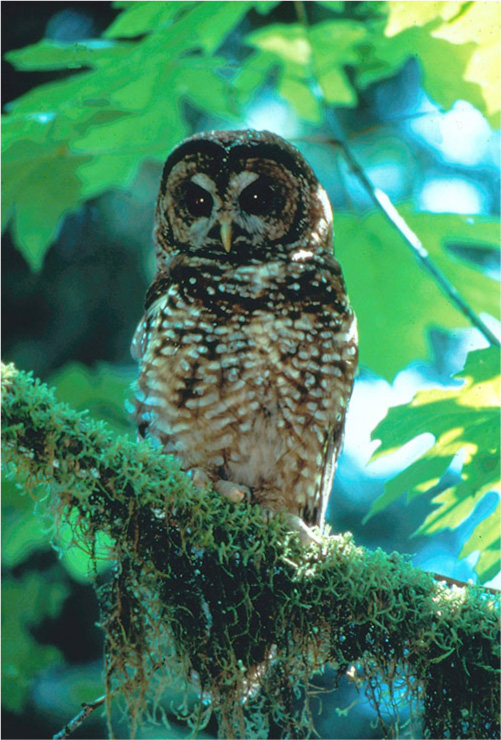
A similar conflict erupted in the forests of the Pacific Northwest in the 1980s as environmentalists ramped up protests against logging in order to preserve the spotted owl, a threatened species indigenous to states like Washington and Oregon (Figure 15.13). (Threatened species are those the government identifies as likely to soon be endangered.) The tens of thousands of loggers who depended on the industry to survive complained that while the environmental concerns were real, their livelihoods should take priority over the survival of an individual species. The conflict became known as the Timber Wars and gained enormous media attention in the late 1980s and early 1990s. In the end, the U.S. government sought a compromise in the Northwest Forest Plan of 1994, which restricted forest exploitation and satisfied neither group.
英語のヒント
1980年代、太平洋岸北西部の森林でも同様の対立が起きた。環境保護主義者は、ワシントン州やオレゴン州などに生息する絶滅の危機に近いマダラフクロウを守るため、伐採反対の抗議を強めた(図15.13)。この区分は、政府がまもなく絶滅危惧種になる可能性があると認める種を指す。産業に生活を依存する数万人の伐採労働者は、環境問題は現実でも、一種の生存より自分たちの生計が優先されるべきだと訴えた。対立は「木材戦争」と呼ばれ、1980年代末から1990年代初めに大きく報じられた。結局、アメリカ政府は1994年の北西部森林計画で妥協を図り、森林利用を制限したが、どちらも満足しなかった。
The Spotted Owl.マダラフクロウ。
(credit: “spotted_owl_forest_bird_NPS_Photo” by Olympic National Park/Flickr, Public Domain) · Public Domain
Figure 15.13 Concerns about the fate of the spotted owl became a major point of contention between loggers and environmentalists in the Pacific Northwest during the 1990s. (credit: “spotted_owl_forest_bird_NPS_Photo” by Olympic National Park/Flickr, Public Domain)
図15.13 マダラフクロウの将来への懸念は、1990年代の太平洋岸北西部で、伐採労働者と環境保護主義者の大きな争点となった。(出典:オリンピック国立公園/Flickrの「spotted_owl_forest_bird_NPS_Photo」、パブリックドメイン)
The Global Response to Climate Change気候変動への世界的な対応
Countries from around the world have regularly tried to address environmental problems together. The Montreal Protocol of 1987 was a global agreement to ban and phase out specific chemicals in industrial and consumer products in the expectation that natural processes would restore the Earth’s ozone layer. The accord went into effect almost immediately, and the ozone layer has been steadily recovering ever since. Scientists anticipate that it will be fully healed by 2070, if not earlier.
英語のヒント
世界各国は、繰り返し共同で環境問題に取り組もうとしてきた。1987年のモントリオール議定書は、自然の作用でオゾン層が回復することを期待し、工業製品や消費財に使う特定の化学物質を禁止・段階的廃止する世界的な合意だった。合意はほぼ直ちに発効し、オゾン層はそれ以来着実に回復している。科学者は、早ければそれ以前、遅くとも2070年までに完全に修復されると予想している。
At the United Nations in 1989, Prime Minister Margaret Thatcher of the United Kingdom gave an urgent warning about the environment and especially climate change. She called for the world to embrace nuclear power as a substitute for coal-burning power plants, but she acknowledged that the increasingly influential green party movement remained firmly committed to preventing the proliferation of nuclear technology.
英語のヒント
1989年、イギリスのマーガレット・サッチャー首相は国連で、環境、とりわけ気候変動への緊急の警告を発した。石炭火力の代替として原子力を採用するよう世界に呼びかけたが、影響力を強める緑の党運動が、原子力技術の拡散阻止を固く支持していることも認めた。
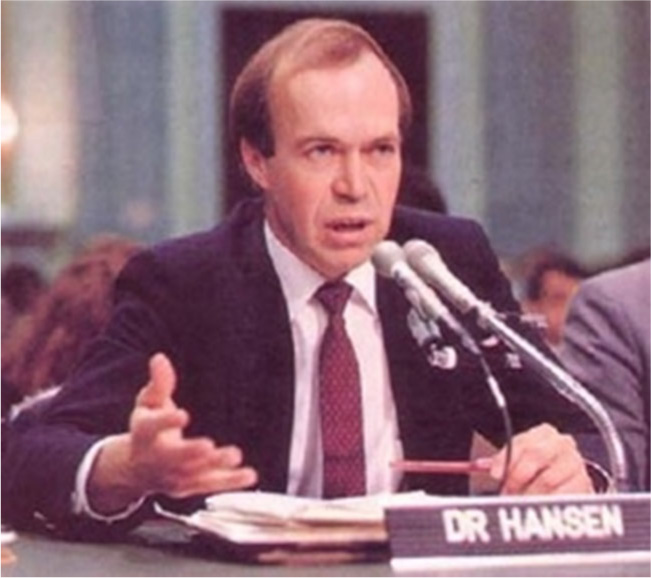
Thatcher’s speech marked a global acknowledgment that warming and climate change were pressing problems requiring international solutions. Given the success of the Montreal Protocol, she suggested a similar solution to climate change, but it met with resistance from the United States. President Reagan and Thatcher had both risen to power by embracing neoliberal economic policies, which call for market-oriented approaches and a rollback of regulation. Reagan remained largely unmoved even as Dr. James Hansen, an atmospheric scientist working for the U.S. government, testified in Congress that global warming was a real and dangerous threat (Figure 15.14).
英語のヒント
サッチャーの演説は、温暖化と気候変動が国際的な解決策を要する切迫した問題だという、世界的な認識を示した。モントリオール議定書の成功を踏まえ、気候変動にも同様の解決を提案したが、アメリカの抵抗に遭った。レーガン大統領もサッチャーも、市場重視と規制縮小を求める新自由主義経済政策を採用して政権についた。アメリカ政府で働く大気科学者ジェームズ・ハンセン博士が、温暖化は現実の危険な脅威だと議会証言しても、レーガンはほとんど態度を変えなかった(図15.14)。
James Hansen.ジェームズ・ハンセン。
(credit: “James Hansen Crop1” by NASA/Wikimedia Commons, Public Domain) · Public Domain
Figure 15.14 On June 23, 1988, NASA scientist James Hansen testified to the U.S. Congress about the danger of global warming resulting from the buildup of greenhouse gases in the atmosphere. (credit: “James Hansen Crop1” by NASA/Wikimedia Commons, Public Domain)
図15.14 1988年6月23日、NASAの科学者ジェームズ・ハンセンは、大気中の温室効果ガス蓄積による地球温暖化の危険について、アメリカ議会で証言した。(出典:NASA/ウィキメディア・コモンズの「James Hansen Crop1」、パブリックドメイン)
Despite U.S. resistance, the larger international community proceeded apace. In 1988, the United Nations was able to establish the United Nations Framework Convention on Climate Change (UNFCCC). Created in 1992 in Rio de Janeiro, Brazil, the UNFCCC convenes annually for negotiations among member countries. Notable meetings have occurred in Kyoto (1997), Copenhagen (2009), Paris (2015), and Edinburgh (2021). The UNFCCC Paris Agreement of 2015 took into account how much each member country is able to pay for a major transition away from fossil fuels. On a five-year cycle, the agreement asks each country to make a contribution proportionate to its own needs and its ability to pay for new energy infrastructure, though it has no enforcement mechanism. The goal of the Paris Agreement is total warming of less than 2°C (3.6°F) above levels from the time of industrialization, around the year 1750. While some have called the agreement successful in helping approach this goal, others feel many countries are not fulfilling the promises they made.
英語のヒント
アメリカの抵抗にもかかわらず、国際社会全体は速やかに前進した。1988年、国連は気候変動枠組条約(UNFCCC)を設立することができた。1992年にブラジルのリオデジャネイロで作られたUNFCCCは、加盟国の交渉のため毎年会合を開く。重要な会議は京都(1997年)、コペンハーゲン(2009年)、パリ(2015年)、エディンバラ(2021年)で行われた。2015年のパリ協定は、化石燃料からの大きな転換に各国がどれほど支払えるかを考慮した。強制の仕組みはないが、5年周期で各国に、自国の必要性と新エネルギー基盤への支払能力に見合う貢献を求める。目標は、工業化の時代、約1750年の水準からの温暖化を2°C(3.6°F)未満にとどめることだ。目標に近づく助けとなり成功しているという声もあれば、多くの国が約束を果たしていないと感じる人々もいる。