第6章植民地化と経済の拡大Colonization and Economic Expansion
Colonial Resistance and Revolution植民地の抵抗と革命
The colonies’ role as generators of wealth for their home nations led to the exploitation of both their original inhabitants and their natural resources. As European states sought to expand their colonial dominions in order to play a greater role in the global economy, they encountered resistance from the people whose lands and labor they sought to use. Some of the earliest resistance took place in the Americas.
英語のヒント
本国に富を生み出すという植民地の役割は、そこに元から暮らす人々と天然資源の両方の搾取につながった。ヨーロッパ諸国は、世界経済でより大きな役割を果たそうとして植民地領域の拡大を図ったが、その土地と労働を利用しようとする相手の人々から抵抗を受けた。最も早い抵抗のいくつかは、アメリカ大陸で起きた。
Resistance in the Americasアメリカ大陸での抵抗
The Indigenous people of New Spain were the first to fight back. The first instance of resistance took place in 1493 with the destruction of Columbus’s early colony, called La Navidad, by the Indigenous inhabitants of Hispaniola. When Columbus returned to Hispaniola on his second voyage he discovered that all thirty-nine of the men he had left behind had been killed. Some acts of resistance nearly put an end to Spanish settlement in parts of North America. In 1680, a Tewa Pueblo religious leader named Popé (Po’pay) led his tribe along with other Pueblo people and the Apache tribe in an uprising against Spanish religious, economic, and cultural abuses in New Mexico. Four hundred Spanish died, and the rest fled the region. Twelve years passed before the Spanish returned to the region in significant numbers. The Pueblo Revolt ultimately failed to provide Native Americans with permanent independence, but it did shape Spain’s colonial policies in the region. Although Spain regained control of the region in 1692, it subsequently granted land to the Pueblos and appointed officials to represent the tribes’ rights in Spanish courts. The Pueblos adopted some elements of Spanish culture, including some Christian practices, but Spanish priests did not attempt to destroy the Pueblos’ traditional religion as they had before. The Pueblo tribes were thus able to retain much of their way of life, preserving unique cultures that remain today.
英語のヒント
最初に反撃したのは、ヌエバ・エスパーニャの先住民だった。最初の抵抗事例は1493年、エスパニョーラ島の先住民が、コロンブスの初期植民地ラ・ナビダッドを破壊したことだった。第2回航海で戻ったコロンブスは、残していった39人が全員殺されていると知った。抵抗によって、北アメリカの一部でスペイン人入植がほぼ終わりかけたこともあった。1680年、テワ系プエブロの宗教指導者ポペ(ポパイ)は、自分の部族とほかのプエブロの人々、アパッチ族を率い、ニューメキシコでスペイン人による宗教・経済・文化上の虐待に対する反乱を起こした。スペイン人400人が死亡し、残りは地域から逃げた。相当数のスペイン人が戻るまで、12年がたった。プエブロの反乱は結局、先住民に恒久的な独立をもたらさなかったが、この地域におけるスペインの植民地政策を変えた。スペインは1692年に支配を取り戻したものの、その後、プエブロの人々へ土地を与え、スペインの法廷で部族の権利を代弁する役人を任命した。プエブロの人々は一部のキリスト教の慣行など、スペイン文化のいくつかの要素を採用したが、スペイン人司祭は以前のようにプエブロの伝統宗教を破壊しようとはしなかった。こうしてプエブロの諸部族は生活様式の多くを保ち、今日まで続く独自の文化を保存できた。
North American tribes in areas claimed by the English also were threatened with the loss of their way of life, especially in the Chesapeake Bay colonies of Virginia and Maryland where tobacco constituted the main cash crop. Tobacco cultivation quickly drained the soil of nutrients, leading English settlers to push further westward in search of land for new fields. Even where colonists did not grow cash crops, the demand for farmland placed pressure on Indigenous communities.
英語のヒント
イングランドが領有を主張した地域の北アメリカ諸部族も、生活様式を失う脅威にさらされた。特にそうだったのは、タバコを主要な換金作物とする、チェサピーク湾沿岸のヴァージニアとメリーランドの植民地だった。タバコ栽培は急速に土壌の養分を奪い、イングランド人入植者は新しい畑の土地を求め、さらに西へ進んだ。植民者が換金作物を育てていない地域でも、農地への需要が先住民の共同体を圧迫した。
Colonists attempted to enslave Native Americans and use their labor to grow tobacco. Sometimes the English captured Indigenous people in attacks on their villages, and sometimes Native American tribes sold war captives to them. Before the arrival of Europeans, Native American tribes had often integrated captives from other groups into their own. Now these people might be sold to the English as enslaved laborers. Although the enslavement of Native Americans was most common in English colonies in the south, it occurred in northern colonies as well.
英語のヒント
植民者は先住民を奴隷化し、その労働力でタバコを栽培しようとした。イングランド人が先住民の村を襲って人々を捕らえる場合もあれば、先住民諸部族が戦争捕虜を売る場合もあった。ヨーロッパ人の到来以前、先住民の諸部族は、ほかの集団から得た捕虜を自分たちの集団へ組み込むことが多かった。今や、そうした人々は奴隷労働者としてイングランド人へ売られることがあった。先住民の奴隷化が最も多かったのは南部のイングランド植民地だったが、北部の植民地でも行われた。
The English found themselves in frequent conflict with Native American tribes. Between 1609 and 1646, Virginia colonists fought a series of wars with the Powhatan Confederacy, an alliance of tribes that spoke languages of the Algonquin family. In New England, longstanding complaints by Indigenous people about English usurpation of land, dishonest traders who cheated them, attempts to convert them to Christianity, and English officials’ refusal to allow them to punish Europeans who had wronged them led to the outbreak of King Philip’s War.
英語のヒント
イングランド人は先住民諸部族と頻繁に衝突した。1609~1646年、ヴァージニアの植民者は、アルゴンキン語族の言語を話す諸部族の同盟、ポウハタン連邦と一連の戦争をした。ニューイングランドでは、イングランド人による土地の横取り、先住民をだます不正直な商人、キリスト教へ改宗させようとする試み、そして先住民に害を与えたヨーロッパ人を先住民自身が処罰することを認めないイングランドの役人に対し、長く不満が蓄積していた。これがフィリップ王戦争の勃発につながった。
United in the summer of 1675 by the Wampanoag leader Metacomet, called King Philip by the English, Native American tribes throughout New England attacked English settlements, destroying several and threatening to expel the English from their lands entirely. The English led a counterattack with the help of Native Americans who had converted to Christianity and killed Metacomet’s followers. The conflict ended in 1676 when Metacomet too was killed (Figure 6.16).
英語のヒント
1675年夏、イングランド人からフィリップ王と呼ばれたワンパノアグの指導者メタコメットのもとに結集したニューイングランド各地の先住民諸部族は、イングランド人入植地を攻撃した。いくつかを破壊し、自分たちの土地からイングランド人を完全に追い出しかねない勢いだった。イングランド側は、キリスト教へ改宗した先住民の助けを借りて反撃し、メタコメットの配下を殺した。1676年にメタコメット自身も殺され、戦争は終わった(図6.16)。
Metacomet.メタコメット
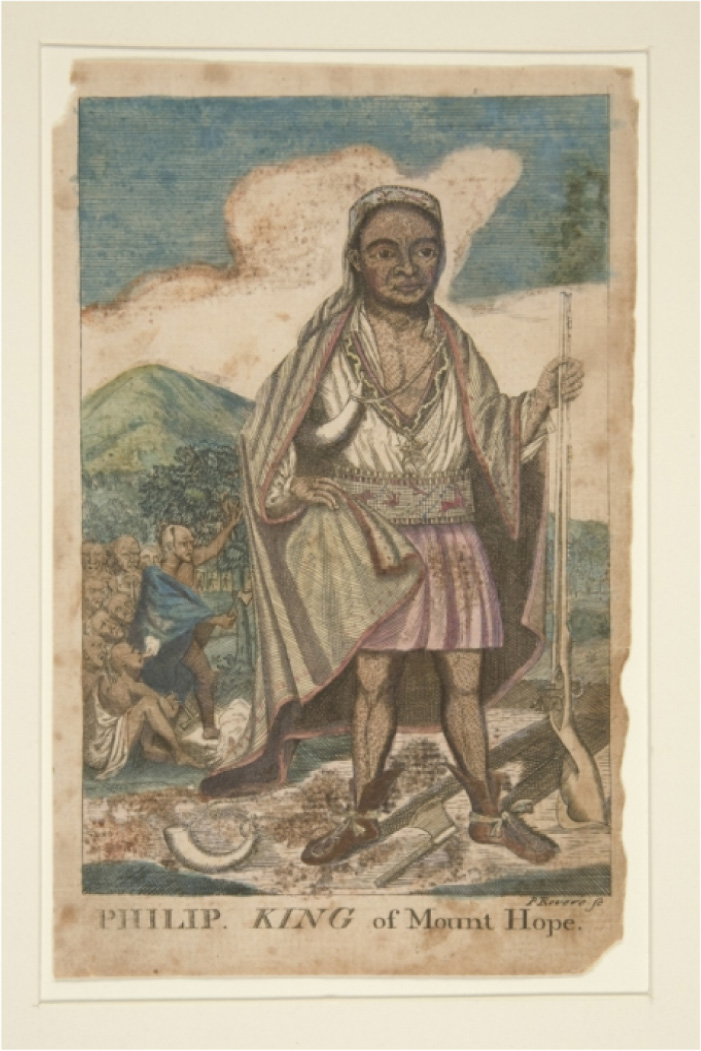
(credit: “Philip King of Mount Hope by Paul Revere” by Yale University Art Gallery/Wikimedia Commons, Public Domain) · Public Domain
Figure 6.16 The Wampanoag leader Metacomet was named Philip by English settlers. Nearly one hundred years after his death, he was depicted in this engraving made by Paul Revere to illustrate a 1772 edition of The Entertaining History of King Philip’s War by Thomas Church. (credit: “Philip King of Mount Hope by Paul Revere” by Yale University Art Gallery/Wikimedia Commons, Public Domain)
図6.16 ワンパノアグの指導者メタコメットは、イングランド人入植者によってフィリップと呼ばれた。死からほぼ100年後、トマス・チャーチの『フィリップ王戦争の興味深い歴史』1772年版の挿絵として、ポール・リヴィアが制作したこの版画に描かれた。(出典:イェール大学美術館/ウィキメディア・コモンズ「ポール・リヴィアによるマウント・ホープの王フィリップ」。パブリックドメイン)
English colonial leaders displayed Metacomet’s severed head in Plymouth as a grisly trophy of their success. To prevent future attacks, captured Wampanoags and others who had allied themselves with Metacomet were enslaved and sent to labor on English sugar plantations in the Caribbean. Between 1715 and 1717, provoked by many of the same issues that had led to conflict in New England, the Yamasee, a confederation of Native American tribes in the Carolinas, also waged war on British colonists. Like Metacomet’s followers, the Yamasee were killed or enslaved. The survivors fled the region or joined other tribes.
英語のヒント
イングランドの植民地指導者は、切り落としたメタコメットの首を、自分たちの成功を示す凄惨な戦利品としてプリマスにさらした。将来の攻撃を防ぐため、捕らえたワンパノアグやメタコメットと同盟したほかの人々を奴隷化し、カリブ海のイングランド領のサトウキビ農園で働かせるために送った。1715~1717年、カロライナの先住民諸部族の連合であるヤマシーも、ニューイングランドでの戦争を引き起こしたものと同じ多くの問題に刺激され、イギリス人植民者に戦争を仕掛けた。メタコメットの配下と同様、ヤマシーの人々も殺されるか奴隷化された。生存者はその地域から逃れるか、ほかの部族に加わった。