第6章植民地化と経済の拡大Colonization and Economic Expansion
6.1 European Colonization in the Americas6.1 アメリカ大陸におけるヨーロッパの植民地化
Learning Objectives学習の目標
By the end of this section, you will be able to:
この節を学ぶと、次のことができるようになる。
Discuss the encomienda system
エンコミエンダ制を論じる。
Explain the motivations behind European settlements in North America
ヨーロッパ人が北アメリカに入植した動機を説明する。
Explain how climate, economics, and geography affected the founding and growth of colonial settlements
気候、経済、地理が植民地の建設と成長にどう影響したかを説明する。
Analyze Indigenous responses to European colonization in the Americas
アメリカ大陸におけるヨーロッパの植民地化への先住民の対応を分析する。
In the early 1500s, Europeans began founding new settlements in the Americas. Some came to get rich, others to win glory for their empires, a few to spread their faith. Some settlements withered and died, but others became profitable centers for international commerce as goods and people flowed across the Atlantic Ocean. Each community of Native Americans made unique choices and decided for themselves whether to embrace or resist the changing world. Regardless of their choices, however, most Indigenous people suffered severely from European colonization. They could slow the European advance into their world, but they could not stop it.
英語のヒント
1500年代初頭、ヨーロッパ人はアメリカ大陸で新しい入植地を築き始めた。富を得るために来た者もいれば、自国の帝国に栄光をもたらそうとする者もおり、信仰を広めようとする者も少数いた。衰退して消えた入植地もあったが、物品と人々が大西洋を行き来するなかで、収益性の高い国際商業の拠点になったところもあった。アメリカ先住民の共同体はそれぞれ独自の選択をし、変化する世界を受け入れるか抵抗するかを自ら決めた。しかし、どう選択したにせよ、ほとんどの先住民はヨーロッパ人の植民地化によって深刻な被害を受けた。自分たちの世界へ進出するヨーロッパ人の歩みを遅らせることはできても、止めることはできなかった。
Spain’s Encomienda Systemスペインのエンコミエンダ制
The Spanish were the first to establish major colonies in North America after Christopher Columbus’s arrival in 1492. They became the earliest Europeans to force the Indigenous population to labor for them, initially by outright enslavement, a practice that slowly evolved into systems that were more complex. By 1502, they had created the encomienda system as part of a broader search for “God, Gold, and Glory” in their vast empire. In this context, God refers to attempts to spread the Catholic faith, gold to the search for wealth, and glory to hopes of obtaining personal fame.
英語のヒント
1492年にクリストファー・コロンブスが到着した後、北アメリカで最初に大規模な植民地を築いたのはスペイン人だった。彼らは先住民に労働を強制した最初のヨーロッパ人でもあり、当初はあからさまに奴隷化したが、その慣行はしだいに、より複雑な制度へと変わっていった。1502年までには、広大な帝国で「神・黄金・栄光」を求める、より大きな取り組みの一環として、エンコミエンダ制を作り出していた。この文脈で、神はカトリック信仰を広める試み、黄金は富の追求、栄光は個人的な名声を得る望みを指す。
The term encomienda comes from the Spanish word encomendar, which means “to entrust.” The encomienda was a system of entrusting valuable territories and peoples to those who had proven to the crown that they were worthy of that trust. The Spanish government gave each grantee, known as an encomendero, the right to demand labor from Indigenous people living in a specific area. In exchange, the Spaniards were supposed to provide guidance, education, and leadership to these Native Americans. While encomiendas did not technically include the ownership of any land, encomenderos often took possession of lands where the people under their control lived. Sometimes the system of forced labor even devolved into what was functionally, if not legally, slavery.
英語のヒント
エンコミエンダという語は、「委ねる」を意味するスペイン語encomendarに由来する。エンコミエンダとは、その信託に値すると王権に認められた者へ、価値のある領域と人々を委ねる制度だった。スペイン政府は、エンコメンデーロと呼ばれる各受領者に、特定の地域に住む先住民から労働を要求する権利を与えた。これと引き換えに、そのスペイン人は先住民に指導と教育を施し、彼らを導くことになっていた。厳密には、エンコミエンダには土地所有は一切含まれていなかった。それでもエンコメンデーロは、自分たちが支配する人々の住む土地をしばしば占有した。この強制労働制度はときに、法的にはそうでなくても、実態としては奴隷制と呼ぶべきものにまで転落した。
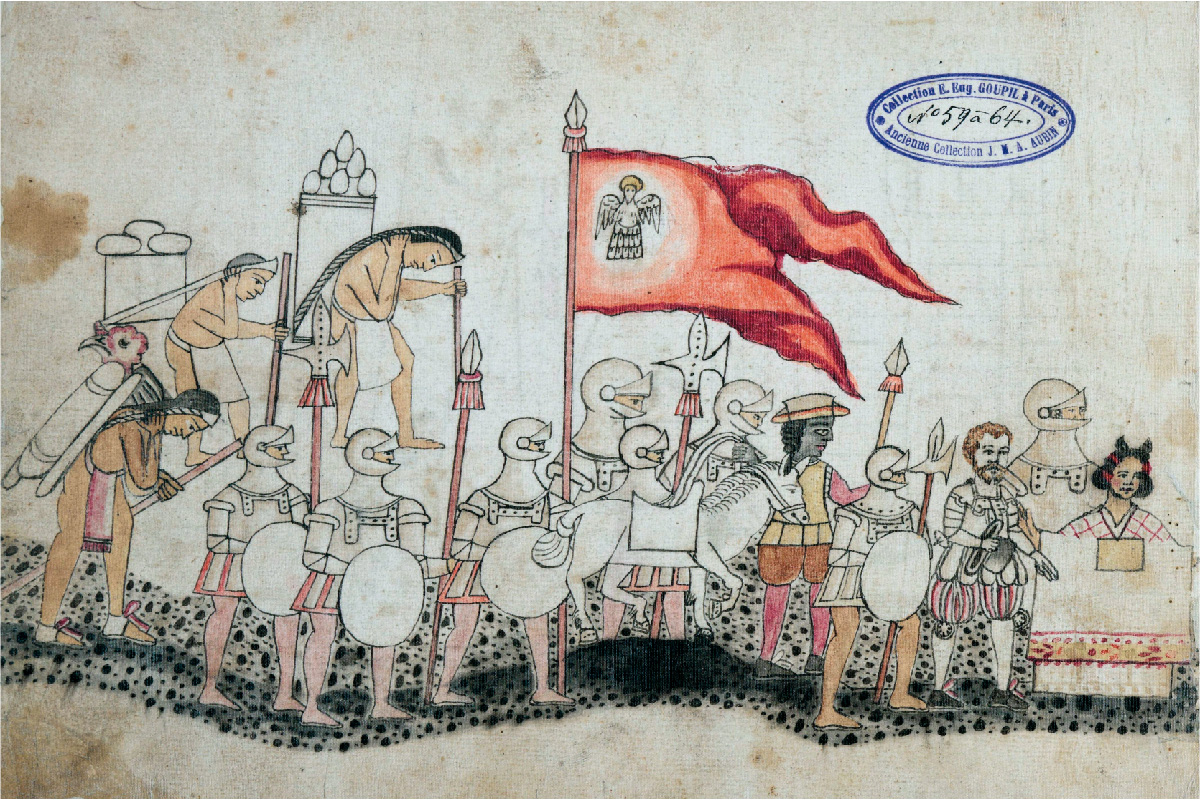
Most recipients of encomiendas were conquistadors being rewarded for campaigns that had won glory for Spain. However, a few Native Americans also received them. When the expedition led by conquistador Hernán Cortés fought a war against the Aztec Empire (1519–1521), the Tlaxcalans of central Mexico allied with Cortés’s forces against the Aztecs, their traditional enemies. As a reward for their service, the Spanish government gave some Tlaxcalans encomiendas, and the tribe enjoyed a far better position in the Spanish Empire than many other Native American groups. Perhaps the most unusual encomendera was Malintzin, a formerly enslaved Indigenous woman who served as Cortés’s chief interpreter during the conquest of the Aztec Empire (Figure 6.3). Malintzin received her encomienda as a reward for this service, without which Cortés’s campaign against the Aztecs might have failed.
英語のヒント
エンコミエンダを受領した者の大半は、スペインに栄光をもたらす遠征への褒賞を受けたコンキスタドールだった。しかし、少数ながら先住民にも受領者がいた。コンキスタドールのエルナン・コルテスが率いる遠征隊がアステカ帝国と戦ったとき(1519~1521年)、メキシコ中央部のトラスカラ人は、長年の敵であるアステカに対抗してコルテスの軍と同盟した。その働きへの報酬として、スペイン政府はトラスカラ人の一部にエンコミエンダを与え、この民族は多くのほかの先住民集団よりはるかに有利な地位をスペイン帝国内で享受した。おそらく最も異例のエンコメンデーラは、かつて奴隷にされていた先住民女性マリンツィンだった。彼女はアステカ帝国征服の際、コルテスの主任通訳を務めた(図6.3)。マリンツィンはこの奉仕への褒賞としてエンコミエンダを受け取った。彼女の働きがなければ、コルテスのアステカ遠征は失敗していたかもしれない。
A Native American Encomendera.先住民女性のエンコミエンダ受領者
(credit: “Codex Azcatitlan” by Gallica Digital Library/Wikimedia Commons, Public Domain) · Public Domain
Figure 6.3 This page from an Aztec manuscript of the sixteenth or seventeenth century shows the Spanish army on the march, with Cortés and the translator named Malintzin at the far right. (credit: “Codex Azcatitlan” by Gallica Digital Library/Wikimedia Commons, Public Domain)
英語のヒント
図6.3 16世紀または17世紀のアステカの絵文書のこのページは、行進するスペイン軍を描いている。右端にいるのはコルテスと、マリンツィンという名の通訳である。(出典:ガリカ電子図書館/ウィキメディア・コモンズ『アスカティトラン絵文書』。パブリックドメイン)
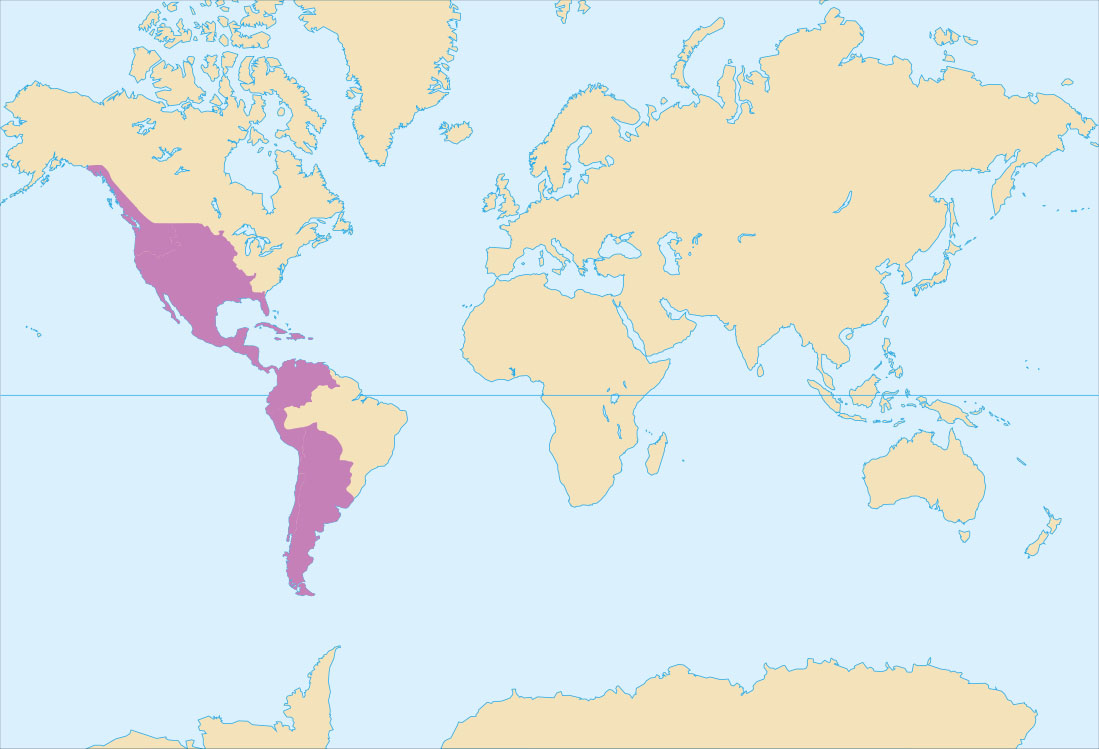
Encomenderos typically abused their authority, overseeing an exploitive arrangement marked by horrific working conditions and acts of extreme violence against anyone who failed to comply with their demands. The encomienda system became the dominant source of labor in Spanish American colonies, which included areas now known as Florida, Texas, New Mexico, Arizona, California, Mexico, and much of South America (Figure 6.4).
英語のヒント
エンコメンデーロは一般に権限を濫用し、恐ろしい労働条件と、要求に従わない者への極端な暴力を特徴とする搾取的な仕組みを運営した。エンコミエンダ制はスペインのアメリカ植民地で最大の労働力供給源となった。この植民地には、現在フロリダ、テキサス、ニューメキシコ、アリゾナ、カリフォルニア、メキシコと呼ばれる地域や、南アメリカの大部分が含まれていた(図6.4)。
Spain’s Colonies.スペインの植民地
(attribution: Copyright Rice University, OpenStax, under CC BY 4.0 license) · CC BY 4.0
Figure 6.4 This map shows the area controlled by Spain in its colonization of the Americas. Native American communities often retained effective control over territory that was “claimed” by European powers. (attribution: Copyright Rice University, OpenStax, under CC BY 4.0 license)
英語のヒント
図6.4 この地図は、スペインがアメリカ大陸を植民地化するなかで支配した地域を示す。ヨーロッパ列強が「領有を主張した」土地でも、先住民の共同体が実効的な支配を保持していることは多かった。(帰属表示:著作権ライス大学、OpenStax。CC BY 4.0ライセンス)
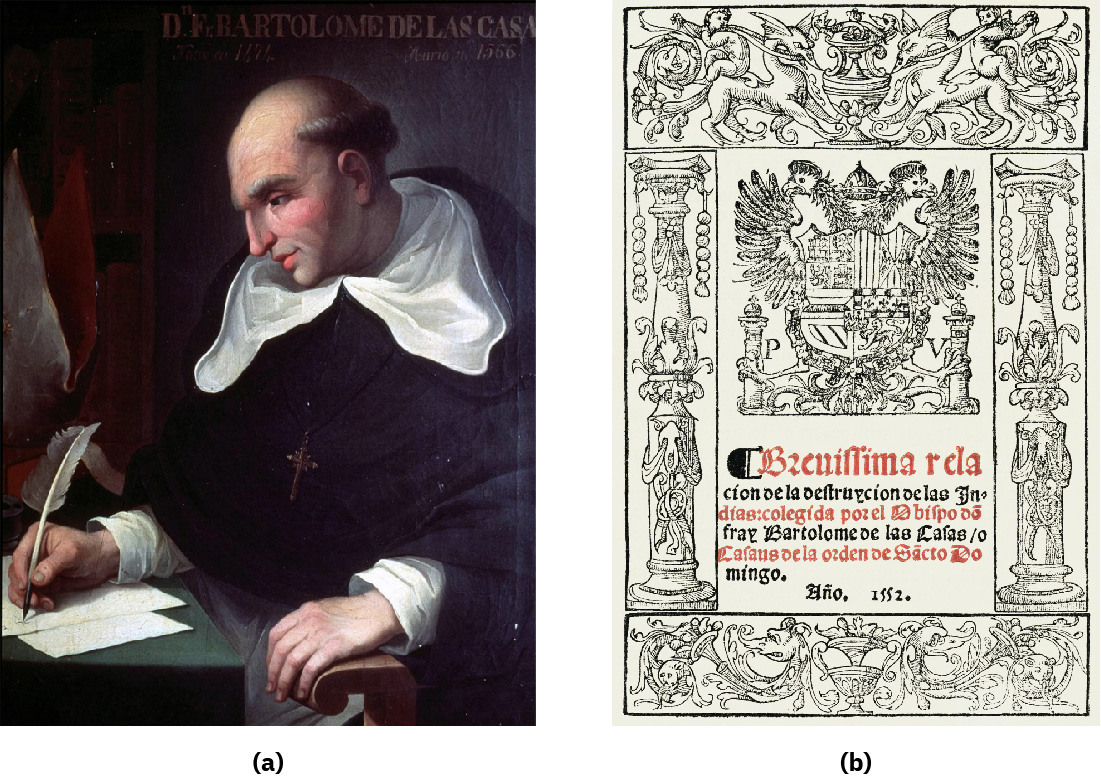
After a brief period as an encomendero, in 1514 the Dominican friar Bartolomé de las Casas became one of the system’s greatest critics (Figure 6.5). He spent most of the next decade traveling across Latin America and Spain speaking out against its brutality. In his 1552 book, A Short Account of the Destruction of the Indies, Las Casas argued that “[Quotation omitted for rights reasons.]” Native Americans. He claimed the Spanish “[Quotation omitted for rights reasons.]” Las Casas eventually convinced King Charles V to implement the New Laws of 1542 that sought to end the encomienda system, but Spanish settlers in the Americas violently opposed the reforms and the system remained.
英語のヒント
短期間エンコメンデーロだったドミニコ会修道士バルトロメ・デ・ラス・カサスは、1514年、この制度を最も厳しく批判する1人になった(図6.5)。その後およそ10年間の大半を、ラテンアメリカとスペインを旅しながら、この制度の残虐さを公然と非難することに費やした。1552年の著書『インディアスの破壊についての簡潔な報告』で、ラス・カサスはスペイン人の先住民に対する振る舞いを「〔権利の関係で割愛〕」と論じた。また、スペイン人について「〔権利の関係で割愛〕」と主張した。ラス・カサスはついに国王カルロス5世を説得し、エンコミエンダ制の廃止を目指す1542年の新法を実施させた。しかし、アメリカ大陸のスペイン人入植者はこの改革に激しく反対し、制度は存続した。
Bartolomé de las Casas.バルトロメ・デ・ラス・カサス
(credit a: modification of work “Portrait of Bartolomé de Las Casas” by General Archive of the Indies/Wikimedia Commons, Public Domain; credit b: modification of work “Cover of ‘A Short Account of the Destruction of the Indies’” by John Carter Brown Library/Wikimedia Commons, Public Domain) · Public Domain
Figure 6.5 (a) Shown in a sixteenth-century portrait by an unknown painter, Bartolomé de las Casas was one of the most outspoken critics of the encomienda system. (b) The cover of his book, A Short Account of the Destruction of the Indies, is shown. (credit a: modification of work “Portrait of Bartolomé de Las Casas” by General Archive of the Indies/Wikimedia Commons, Public Domain; credit b: modification of work “Cover of ‘A Short Account of the Destruction of the Indies’” by John Carter Brown Library/Wikimedia Commons, Public Domain)
英語のヒント
図6.5 (a)作者不詳の16世紀の肖像画に描かれたバルトロメ・デ・ラス・カサスは、エンコミエンダ制を最も率直に批判した人物の1人だった。(b)著書『インディアスの破壊についての簡潔な報告』の表紙。(aの出典:インディアス総合文書館/ウィキメディア・コモンズ「バルトロメ・デ・ラス・カサスの肖像」を改変。パブリックドメイン。bの出典:ジョン・カーター・ブラウン図書館/ウィキメディア・コモンズ「『インディアスの破壊についての簡潔な報告』表紙」を改変。パブリックドメイン)
The complaints of reformers, including Las Casas, inspired the black legend, which claimed the Spanish were particularly cruel imperialists who abused their colonial subjects. Like many historical legends, the black legend is rooted in fact. The Spanish often mistreated Native Americans, but writers from Spain’s colonial rivals, most notably the English, frequently exaggerated Spanish cruelty to justify their own colonial abuses. Despite their intense rivalries, both the English and the Spanish were guilty of abusing Native Americans. Even reformers like Las Casas, who opposed the worst abuses of Native Americans, were flawed. Las Casas’s approach to Native Americans was often paternalistic, and he typically treated non-Europeans as children who would benefit from the benevolent guidance of Europeans rather than as equals.
英語のヒント
ラス・カサスをはじめとする改革者の訴えは、「黒い伝説」を生んだ。これは、スペイン人は植民地の臣民を虐待する、とりわけ残酷な帝国主義者だとする見方である。多くの歴史上の伝説と同様、黒い伝説も事実に根ざしている。スペイン人は先住民をしばしば虐待した。しかし、スペインと植民地で競合する国々、とりわけイングランドの書き手は、自国による植民地での虐待を正当化するため、スペイン人の残虐さを頻繁に誇張した。激しく対立していたとはいえ、イングランド人もスペイン人も、先住民を虐待した責任を負っていた。先住民に対する最悪の虐待に反対したラス・カサスのような改革者にも、欠点はあった。ラス・カサスの先住民への接し方はしばしば父権的であり、通常、ヨーロッパ人以外の人々を対等な相手としてではなく、ヨーロッパ人の慈悲深い指導を受ければよくなる子どものように扱った。