第8章ラテンアメリカの革命Revolutions in Latin America
The Southern Liberation Movement南部の解放運動
Like the port town of Caracas in the north, the port of Buenos Aires in the south reaped significant benefits from the eighteenth-century reforms aimed at developing the Spanish Empire’s outskirts. Formerly subject to the authority of the Spanish Viceroyalty of Peru, in 1776 Buenos Aires became the seat of the newly created Viceroyalty of Río de la Plata (modern-day Argentina, Bolivia, Paraguay, and Uruguay). The port was the principal outlet from which silver from Bolivia and animal hides and tallow from the vast plains of Argentina and Uruguay reached markets abroad. The town’s residents, known as Porteños, also enjoyed abundant opportunities for trading in contraband with the British and Portuguese.
英語のヒント
北部の港町カラカスと同様、南部の港ブエノスアイレスも、スペイン帝国の周辺地域の開発を目指す18世紀の改革から大きな利益を得た。以前はスペインのペルー副王領の権限下にあったブエノスアイレスは、1776年、新設されたリオ・デ・ラ・プラタ副王領の首都となった。この副王領は、現在のアルゼンチン、ボリビア、パラグアイ、ウルグアイにあたる。この港は、ボリビアの銀と、アルゼンチンおよびウルグアイの広大な平原から来る獣皮や獣脂が、海外市場へ出ていく主要な出口だった。ポルテーニョと呼ばれたこの町の住民は、イギリス人やポルトガル人との密貿易でも豊富な機会を享受した。
The population of Buenos Aires quadrupled in the last half of the eighteenth century (it was almost forty thousand by 1800), and merchants and civic leaders took pride in their growing prosperity. Accordingly, rising fortunes in Río de la Plata created a newly favorable environment for those who preferred rupture to reform. There was a ripe international market for South American products like sugar, hides, cacao, tobacco, and silver, and the creole elite were eager to open their ports to British, Dutch, and French merchants. And with their easy access to Atlantic foreign merchants, Argentine elites in Buenos Aires also had much to gain from greater autonomy.
英語のヒント
18世紀後半、ブエノスアイレスの人口は4倍になり、1800年にはほぼ4万人に達した。商人や市の指導者は、増大する繁栄を誇りにした。そのため、リオ・デ・ラ・プラタで富が増大すると、改革よりも断絶を望む人々にとって、新たに有利な環境が生まれた。砂糖、獣皮、カカオ、タバコ、銀といった南アメリカの産品には、十分に育った国際市場があり、クリオーリョのエリート層は、イギリス、オランダ、フランスの商人に港を開きたいと切望した。また、ブエノスアイレスのアルゼンチン人エリートは、大西洋の外国商人と容易に接触できたため、自治の拡大から多くを得られる立場にあった。
Following Napoléon’s invasion of Spain in 1808, the creole militia officers in Argentina formed a new governing junta that proclaimed support for Fernando VII. However, after almost two years, radical changes within the patriot majority of the junta led them to repudiate Spanish authority, silence local opposition, and proclaim Argentina’s revolutionary patriot movement on May 25, 1810. Not all regions of Río de la Plata, however, recognized the authority of the junta, which was based in Buenos Aires. Successful military campaigns in the central part of Argentina soon brought this area under the control of the junta, but its troops were not able to secure Uruguay and Paraguay, which rejected control by Buenos Aires.
英語のヒント
1808年のナポレオンのスペイン侵攻を受け、アルゼンチンのクリオーリョ民兵将校は、フェルナンド7世への支持を表明する新たな統治フンタを結成した。しかし約2年後、フンタの多数を占める愛国派の内部で急進的な変化が起きた結果、彼らはスペインの権威を否認し、地域の反対派を沈黙させ、1810年5月25日にアルゼンチンの革命的な愛国運動を宣言した。ただし、リオ・デ・ラ・プラタの全地域が、ブエノスアイレスに置かれたフンタの権威を認めたわけではなかった。アルゼンチン中部での軍事作戦が成功すると、その地域はまもなくフンタの支配下に入った。しかし、フンタの軍は、ブエノスアイレスによる支配を拒否したウルグアイとパラグアイを確保できなかった。
In March 1816, Argentina’s conservative local leaders invoked a congress in Tucumán. The congress declared the independence of the United Provinces of the Río de la Plata on July 9, 1816 (now Independence Day in Argentina), less as a sign of revolutionary militancy than as a practical recognition of their political situation. Resistance came not from faraway Spain but from the neighboring royalist provinces, Uruguay and Paraguay, when Argentina attempted once again to extend its authority there.
英語のヒント
1816年3月、アルゼンチン各地の保守的指導者は、トゥクマンで議会を招集した。議会は1816年7月9日、リオ・デ・ラ・プラタ連合州の独立を宣言した。この日は現在、アルゼンチンの独立記念日である。その宣言は、革命的な闘争性の表明というよりも、政治的な現状を実際に即して認めたものだった。アルゼンチンが再びウルグアイとパラグアイに権限を及ぼそうとしたとき、抵抗が起きたのは遠く離れたスペインからではなく、この近隣の王党派諸州からであった。
Paraguayans had already declared their independence from both Spain and the Argentine government in 1811. The new country quickly devolved into a dictatorship under José Gaspar Rodríguez de Francia, a lawyer who had briefly taught theology at a seminary in Paraguay. He was chosen one of Paraguay’s ruling consuls by the country’s Congress on October 1, 1813. (In imitation of the Roman Republic, Paraguay had two consuls, chief executives who each also controlled one-half of the country’s army.)
英語のヒント
パラグアイの人々は、すでに1811年にスペインとアルゼンチン政府の双方からの独立を宣言していた。新しい国は、ホセ・ガスパル・ロドリゲス・デ・フランシアのもとで、たちまち独裁体制へと移行した。フランシアは弁護士で、パラグアイの神学校で短期間神学を教えたこともあった。1813年10月1日、同国の議会は彼を統治にあたる執政官の一人に選出した。ローマ共和政にならい、パラグアイには2人の執政官が置かれた。彼らは行政の最高責任者で、それぞれ国の軍の半分も統率した。
In March 1814, Francia, who was an advocate for the common man, passed a law requiring racial intermarriage; White Europeans could marry only people of African, Indigenous, or mestizo ancestry. A few months later, Paraguay’s congress made Francia the country’s only consul and gave him absolute power for three years. In 1816, congress made him dictator of Paraguay for life. Intent on realizing the ideals of the French Revolution and influenced by the ideas of Jean-Jacques Rousseau, Francia, while continuing to support the Catholic Church by building new churches and funding religious festivals, attempted to improve the lives of the poor by abolishing tithes and giving the Paraguayan government control over institutions such as hospitals and orphanages that had been run by the Church. He instituted measures to modernize agriculture and established national industries. Focused solely on reforming society and determined to make Paraguay self-sufficient, Francia ended foreign trade, prevented river traffic between Argentina and Paraguay, and adopted a position of neutrality in foreign policy. Paraguay was thus isolated from the revolutionary turmoil that gripped the rest of South America.
英語のヒント
1814年3月、庶民の擁護者だったフランシアは、人種間結婚を義務づける法律を成立させた。ヨーロッパ系白人は、アフリカ系、先住民系、またはメスティーソ系の人としか結婚できなくなった。数か月後、パラグアイ議会はフランシアを唯一の執政官とし、3年間の絶対的権力を与えた。1816年には、議会は彼を終身の独裁者とした。フランス革命の理想を実現しようとし、ジャン=ジャック・ルソーの思想にも影響を受けたフランシアは、新たな教会の建設や宗教祭への資金提供によってカトリック教会を引き続き支援しながら、貧しい人々の生活を改善しようとした。そのために十分の一税を廃止し、従来教会が運営していた病院や孤児院などの施設を、パラグアイ政府の管理下に置いた。農業を近代化する措置を取り、国の産業を創設した。もっぱら社会改革に力を注ぎ、パラグアイを自給自足の国にする決意を固めたフランシアは、対外貿易を終わらせ、アルゼンチンとパラグアイの河川交通を阻止し、外交では中立の立場を採用した。その結果、パラグアイは南アメリカの他地域を覆う革命の混乱から隔離された。
Just as the people of Paraguay charted their own path to independence, the inhabitants of the eastern province of Montevideo (modern-day Uruguay) resisted threats from La Plata and Brazil and built their own movement, under José Gervasio Artigas. Montevideo remained in Spanish hands until 1814 when it fell to the Argentines, who ignored Artigas’s demands for autonomy. Creole patriots had the upper hand all over Spanish South America. The only exception was the Viceroyalty of Peru, the most solid bulwark of Spanish power in South America, where royalist armies were stationed and most creoles remained steadfastly royalist. Peru was a constant threat to patriots, and its liberation was vital.
英語のヒント
パラグアイの人々が独立への独自の道筋を描いたのと同じように、東方のモンテビデオ州、現在のウルグアイの住民も、ラ・プラタとブラジルからの脅威に抵抗し、ホセ・ヘルバシオ・アルティガスのもとで自分たちの運動を築いた。モンテビデオは1814年までスペインの支配下にあったが、その年にアルゼンチン軍の手に落ちた。アルゼンチン側は、アルティガスの自治要求を無視した。スペイン領南アメリカの全域で、クリオーリョの愛国派が優位に立っていた。唯一の例外がペルー副王領であった。そこは南アメリカにおけるスペイン権力の最も堅固な砦であり、王党派軍が駐留し、クリオーリョの大半も王党派への忠誠を固く守っていた。ペルーは愛国派にとって絶え間ない脅威であり、その解放は不可欠だった。
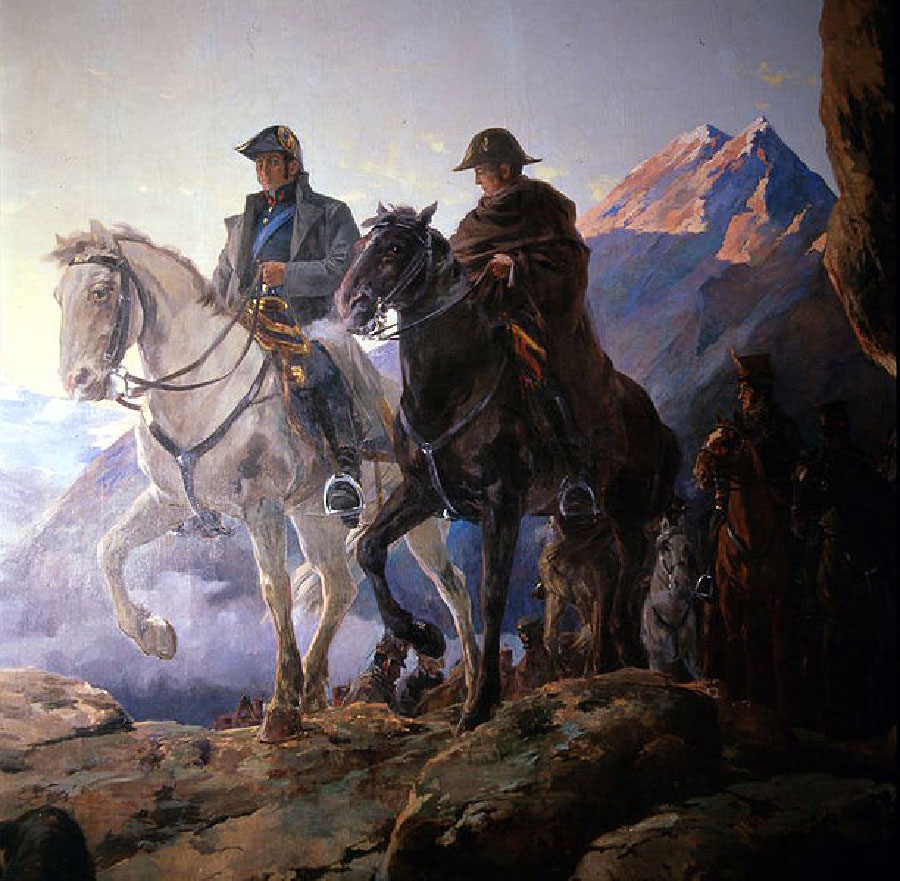
By 1817, the Argentine general José Francisco de San Martín y Matorras, who had fought against Napoléon in Spain in 1812, had set up a plan to isolate and attack royalists in Peru, the Spanish stronghold. He organized an army camp at the base of the Andes, and under his command, Argentine forces scored great successes. In January 1817, after careful preparation, he led his five thousand soldiers through the Andean mountains, where altitudes approached more than ten thousand feet above sea level, and over six different passes into Chile.
英語のヒント
1817年までに、1812年にスペインでナポレオンと戦ったアルゼンチンの将軍ホセ・フランシスコ・デ・サン・マルティン・イ・マトラスは、スペインの拠点ペルーの王党派を孤立させ、攻撃する計画を立てていた。彼はアンデス山脈の麓に軍の野営地を設け、その指揮のもとでアルゼンチン軍は大きな成功を収めた。1817年1月、入念な準備の後、彼は5,000人の兵士を率い、標高が1万フィート(約3,048メートル)を超えるほどのアンデス山中を進み、六つの異なる峠を越えてチリに入った。
Chile had already broken from the Viceroyalty of Peru when creole Spanish Americans there had established their own junta in 1810; however, the region had been plagued by fighting between royalists and various pro-independence factions who supported differing degrees of autonomy. When royalists gained the upper hand, the leader of one of those factions, Bernardo O’Higgins, found himself exiled to Argentina. There he met San Martín, and together they planned an assault on Spanish royalist forces in Chile (Figure 8.17). San Martín’s assistance secured a decisive victory, and O’Higgins declared Chile’s independence in 1818.
英語のヒント
チリは、現地のスペイン系アメリカ人のクリオーリョが1810年に独自のフンタを設立した時点で、すでにペルー副王領から離れていた。しかし、この地域は、王党派と、異なる程度の自治を求めるさまざまな独立支持派の争いに苦しめられていた。王党派が優勢になると、独立支持派の一派の指導者ベルナルド・オイギンスは、アルゼンチンへの亡命を余儀なくされた。そこで彼はサン・マルティンに出会い、二人でチリのスペイン王党派軍に対する攻撃を計画した(図8.17)。サン・マルティンの支援によって決定的な勝利が得られ、オイギンスは1818年にチリの独立を宣言した。
José de San Martín and Bernardo O’Higgins.ホセ・デ・サン・マルティンとベルナルド・オイギンス。
(credit: “San Martín and O’Higgins crossing the Andes” by Museo Histórico y Militar de Chile/Wikimedia Commons, Public Domain) · Public Domain
Figure 8.17 In this late nineteenth-century painting by Julio Vila y Prades, the Argentine José de San Martín (left) and Bernardo O’Higgins of Chile are shown crossing the Andes to liberate Chile in 1817. (credit: “San Martín and O’Higgins crossing the Andes” by Museo Histórico y Militar de Chile/Wikimedia Commons, Public Domain)
図8.17 フリオ・ビラ・イ・プラデスによる19世紀後半の絵。1817年、チリ解放のためアンデス山脈を越える、アルゼンチンのホセ・デ・サン・マルティン(左)とチリのベルナルド・オイギンスを描いている。(出典:Museo Histórico y Militar de Chile/Wikimedia Commons「San Martín and O’Higgins crossing the Andes」。パブリックドメイン)