第8章ラテンアメリカの革命Revolutions in Latin America
8.2 Spanish North America8.2 スペイン領北アメリカ
Learning Objectives学習の目標
By the end of this section, you will be able to:
この節を学び終えると、次のことができるようになる。
Identify events and factors leading to the Mexican War of Independence
メキシコ独立戦争へつながる出来事と要因を特定する。
Describe Agustín de Iturbide’s Plan de Iguala and the achievement of Mexican independence
アグスティン・デ・イトゥルビデのイグアラ綱領と、メキシコ独立の実現を説明する。
The struggle for liberty in Spanish America started in North America and rippled throughout the administrative divisions of the Spanish Empire. It began in Mexico with demonstrations of discontent with the colonial regime. This first wave was socially revolutionary in nature and mobilized the Indigenous and mestizo masses by emphasizing land reform and the abolition of tributary labor. Later, this movement evolved into a provisional creole government and a plan for Mexico’s first constitutional monarchy.
英語のヒント
スペイン領アメリカの自由を求める闘争は北アメリカで始まり、スペイン帝国の行政区画全体へ波及した。始まりはメキシコでの、植民地体制への不満を示す運動だった。この最初の波は社会革命的な性格を持ち、土地改革と貢納的な労働の廃止を強調して、先住民とメスティーソの大衆を動員した。その後、運動はクリオーリョの臨時政府と、メキシコ初の立憲君主制の構想へと発展した。
The Mexican War of Independenceメキシコ独立戦争
Napoléon’s assault on the Bourbons in the Napoleonic Wars immediately transformed European politics, but it had a delayed effect on the Spanish colonies. Spanish American colonial elites took their time weighing the risks, and the majority of their junta members, both in Spain and in the Americas, first swore their loyalty to the absent Spanish king. In 1808, initial meetings with the viceroy of New Spain led to the establishment of an autonomous conservative junta in Mexico City, formed by creoles and peninsulares, who favored maintaining their loyalty to Spain at all costs. Representatives of New Spain, by far the richest Spanish colony, seemed to adapt to the junta system. However, in 1810, when peninsular judges deposed the viceroy and installed their own leader in the position, creole royalists were inspired to take full control of the government.
英語のヒント
ナポレオン戦争でナポレオンがブルボン家を攻撃すると、ヨーロッパの政治はただちに変わったが、スペイン植民地への影響には時間差があった。植民地の上層者は危険をゆっくり検討し、スペイン本国でもアメリカ大陸でも、フンタの成員の大半は当初、不在のスペイン王への忠誠を誓った。1808年、ヌエバ・エスパーニャ副王との初期の協議を経て、メキシコ市に自律的で保守的なフンタが設立された。どんな犠牲を払ってもスペインへの忠誠を保ちたいクリオーリョとペニンスラーレスが構成したものだった。スペインで断然最も豊かな植民地であるヌエバ・エスパーニャの代表たちは、フンタ制度に適応するかに見えた。しかし1810年、半島出身の判事たちが副王を罷免して自分たちの指導者を据えると、クリオーリョの王党派は、政府を全面的に支配しようとする意欲をかき立てられた。
Between 1808 and 1810, a cycle of bad harvests and famine in Mexico had harmed Indigenous peasants and creole farmers. An economic recession that occurred at the same time led to high unemployment among mestizo silver miners. The effects of these downturns were worsened by the Act of Consolidation, passed by the Spanish government in 1804, demanding that the Catholic Church deposit its wealth with the government. Because the Catholic Church had loaned money to people who bought land or started businesses, in order to comply, it now had to ask that the loans be repaid in full. This hurt many creole merchants and landowners. Perhaps not surprisingly, then, the first insurrection for independence in New Spain took the form of a violent multiethnic uprising, coming from the bottom layers of the social hierarchy and led by parish priests in mostly mestizo regions. Creole shopkeepers, professionals, minor political officials, and priests blamed the viceroyalty’s government for their problems.
英語のヒント
1808〜1810年、メキシコでは不作と飢饉が繰り返され、先住民の農民とクリオーリョの農業者が苦しんだ。同時期の景気後退は、メスティーソの銀鉱山労働者に高い失業率をもたらした。これらの悪化に追い打ちをかけたのが、スペイン政府が1804年に制定し、カトリック教会に富を政府へ預けるよう求めた「統合法」だった。教会は、土地購入者や事業を始めた人々に金を貸していたため、法に従うには、その貸付金を全額返済するよう求めなければならなくなった。多くのクリオーリョの商人や地主が打撃を受けた。したがって、ヌエバ・エスパーニャ初の独立蜂起が、社会序列の最下層から起こり、主にメスティーソの地域の教区司祭が率いる、暴力的で多民族的な蜂起になったのも、おそらく驚くことではない。クリオーリョの店主、専門職、下級官吏、司祭は、自分たちの問題を副王領政府の責任とした。
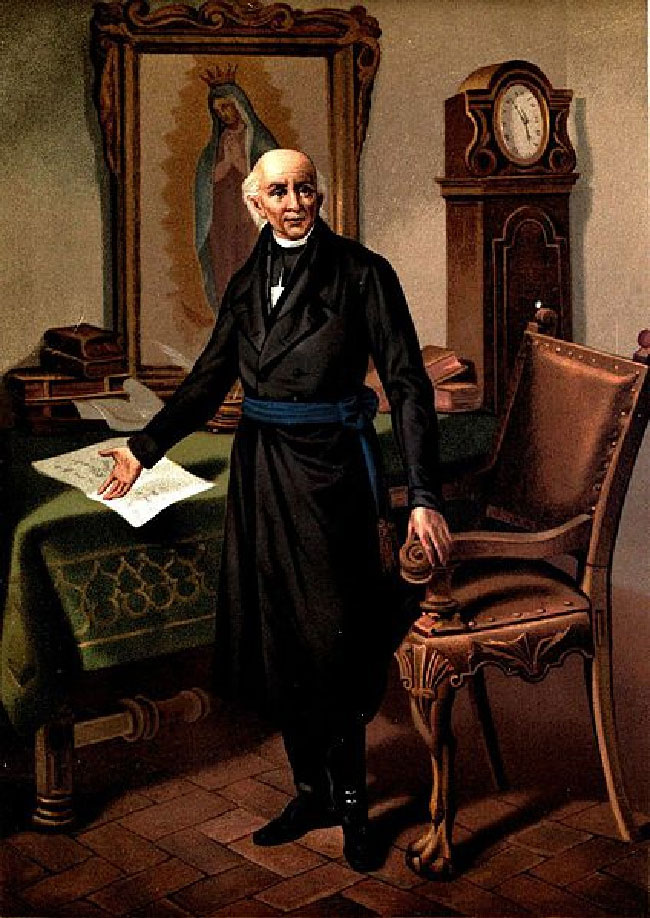
Concerned with recent political changes and the plight of the poor and exploited, a well-educated creole priest named Miguel Hidalgo y Costilla took the initiative to start a movement for independence (Figure 8.10). Although Hidalgo intended to deliver a blow to the status quo and called for radical action, he proclaimed the most conservative of motives. The revolution was to be fought in the name of Fernando VII and the Virgin of Guadalupe—the ultimate symbol of Mexican Catholic piety.
英語のヒント
最近の政治的変化と、貧しく搾取される人々の窮状に心を痛めた、教育のあるクリオーリョの司祭ミゲル・イダルゴ・イ・コスティリャは、独立運動を始めるために先頭に立った(図8.10)。イダルゴは既存の秩序に打撃を与えようとし、急進的な行動を求めたが、公言した動機はきわめて保守的だった。革命はフェルナンド7世と、メキシコのカトリック信仰を究極的に象徴するグアダルーペの聖母の名において戦うべきものとされた。
Miguel Hidalgo y Costilla.ミゲル・イダルゴ・イ・コスティリャ。
(credit: “Don Miguel Hidalgo” by Unknown/Wikimedia Commons, Public Domain) · Public Domain
Figure 8.10 This ca. 1880 portrait of the revolutionary priest Miguel Hidalgo y Costilla is by an unknown artist. An image of the Virgin of Guadalupe hangs on the wall behind him. (credit: “Don Miguel Hidalgo” by Unknown/Wikimedia Commons, Public Domain)
図8.10 革命家の司祭ミゲル・イダルゴ・イ・コスティリャを描いた、1880年ごろの作者不詳の肖像。背後の壁にグアダルーペの聖母の像が掛かっている。(画像:作者不詳/Wikimedia Commons「Don Miguel Hidalgo」、パブリックドメイン。)
When conservative political authorities in Mexico City learned of his plans, Hidalgo issued a declaration in the town of Dolores on September 16, 1810. In this Grito de Dolores (grito means “cry”), he called upon peasants and unemployed miners to overthrow the viceroyalty’s government. He demanded the abolition of slavery and tribute, the redistribution of wealth, and the return of land to the Indigenous people. Another key demand was respect for the Virgin of Guadalupe, who would later become the patron saint of Mexico. The Grito de Dolores proclaimed independence as its goal, but it was unclear about the means. Hidalgo’s plan envisioned a more tolerable form of government that provided benefits for the poor by seeking an end to abuses by the elite, but it lacked a program and effective leadership.
英語のヒント
メキシコ市の保守的な政治当局が計画を知ると、イダルゴは1810年9月16日、ドローレスの町で宣言を発した。この「ドローレスの叫び」(グリトは「叫び」の意味)で、彼は農民や失業した鉱山労働者に、副王領政府を倒すよう呼びかけた。奴隷制と貢納の廃止、富の再分配、先住民への土地返還を要求した。もう一つの重要な要求は、後にメキシコの守護聖人となるグアダルーペの聖母への敬意だった。ドローレスの叫びは独立を目標と宣言したが、その手段ははっきりしなかった。イダルゴの構想は、上層者による虐待を終わらせ、貧しい人々に利益を与える、より耐えられる政治の形を描いたものの、具体的な計画と有効な指導力を欠いていた。
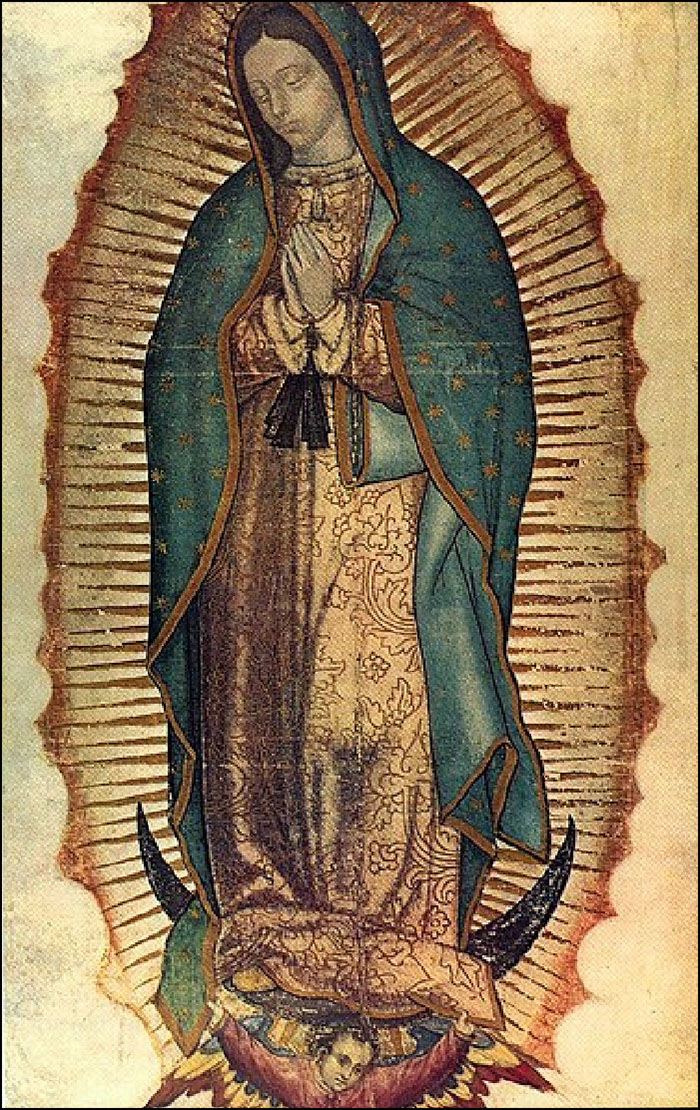
The tale of the Virgin of Guadalupe (Figure 8.11) is an expressive example of a symbol of Christian devotion, the Virgin Mary, transformed and adapted into a Mexican national emblem. According to the story of the Virgin, in 1531 she appeared to the Aztec peasant Juan Diego and spoke to him in his native language. Many Spanish clergy refused to believe Diego’s claims, and the Virgin of Guadalupe’s early worshippers seem to have been largely Indigenous people. Hidalgo proclaimed the Virgin to be the rebellion’s guardian and protector. Her image encouraged lower-class casta peasants to join the movement and fight under her banner. She was also later appropriated by creole nationalists as a uniquely Mexican saint in order to advance their nineteenth-century struggle for autonomy.
英語のヒント
グアダルーペの聖母の物語(図8.11)は、キリスト教の崇敬の象徴である聖母マリアが変容し、メキシコの国民的象徴へ取り入れられたことを、よく表している。物語によれば、1531年、聖母はアステカの農民フアン・ディエゴの前に現れ、彼の母語で語りかけた。多くのスペイン人聖職者はディエゴの主張を信じず、聖母を初期に崇拝した人々は、主に先住民だったようである。イダルゴは聖母を反乱の守護者・保護者と宣言した。その像は下層のカスタの農民に運動への参加を促し、聖母の旗のもとで戦わせた。後にはクリオーリョのナショナリストも、19世紀の自治闘争を進めるため、聖母をメキシコ固有の聖人として取り込んだ。
Virgin of Guadalupe.グアダルーペの聖母。
(credit: “Virgin of Guadalupe” by Unknown/Wikimedia Commons, Public Domain) · Public Domain
Figure 8.11 According to legend, the Virgin of Guadalupe, who became the patron saint of Mexico, appeared to an Indigenous peasant named Juan Diego in 1531 and left this image of herself on his cloak as proof. (credit: “Virgin of Guadalupe” by Unknown/Wikimedia Commons, Public Domain)
図8.11 伝説によれば、メキシコの守護聖人となったグアダルーペの聖母は、1531年、フアン・ディエゴという先住民の農民に現れ、証拠として、彼の外套にこの自分の像を残した。(画像:作者不詳/Wikimedia Commons「Virgin of Guadalupe」、パブリックドメイン。)
Word of Hidalgo’s rebellion quickly spread among the desperate and dispossessed castas in the region, who could now vent their grievances against the colonial administration. Within a few days, the priest had enlisted thousands of recruits in his army, which at its height totaled around sixty thousand people, 55 percent Indigenous people and 20 percent of mixed race. Hidalgo’s forces thus totaled more than one-third of the population of the capital of New Spain. (Mexico City, the largest city on the North American continent in 1811, had a total population of almost 170,000 people.)
英語のヒント
イダルゴの反乱の知らせは、地域の追い詰められ、財産を失ったカスタの間へ急速に広まった。彼らには今、植民地行政への不満を吐き出す機会があった。数日以内に、司祭は数千人を軍に迎え入れ、その最盛期には約6万人、うち55%が先住民、20%が混合出自の人々となった。したがってイダルゴの軍勢は、ヌエバ・エスパーニャの首都人口の3分の1を超えていた。1811年のメキシコ市は北アメリカ大陸最大の都市で、総人口は約17万人だった。
Hidalgo’s followers sacked several towns and committed other destructive actions, including carrying out a mob attack that killed the city elite of Guanajuato, who had barricaded themselves in the public granary for safety. In the face of this violent turn of events, creole and Spanish elites, even those who had originally supported Hidalgo, set aside their differences to protect their privileged positions—and their lives. In doing so, they resembled the creoles and peninsulares of Peru who had banded together to confront Túpac Amaru’s rebellion in the 1780s. In March 1811, royalist forces captured and executed Hidalgo. Yet his army marched on, and today he is remembered as the father of independence and one of Mexico’s greatest national heroes. September 16, the day of the Grito de Dolores, is Mexico’s Independence Day.
英語のヒント
イダルゴの支持者たちはいくつかの町を略奪し、その他の破壊的行為も行った。グアナフアトでは、安全のため公営の穀物倉庫に立てこもった都市の上層者を、群衆の襲撃で殺した。こうした暴力的な展開を前に、クリオーリョとスペイン人の上層者は、当初イダルゴを支持した者まで、自分たちの特権的地位と生命を守るため、意見の違いを脇へ置いた。この点で彼らは、1780年代にトゥパク・アマルの反乱へ対抗するため結束した、ペルーのクリオーリョとペニンスラーレスに似ていた。1811年3月、王党派軍はイダルゴを捕らえ、処刑した。しかし彼の軍は進軍を続け、今日では彼は独立の父であり、メキシコの最も偉大な国民的英雄の一人として記憶されている。ドローレスの叫びが発せられた9月16日は、メキシコの独立記念日である。
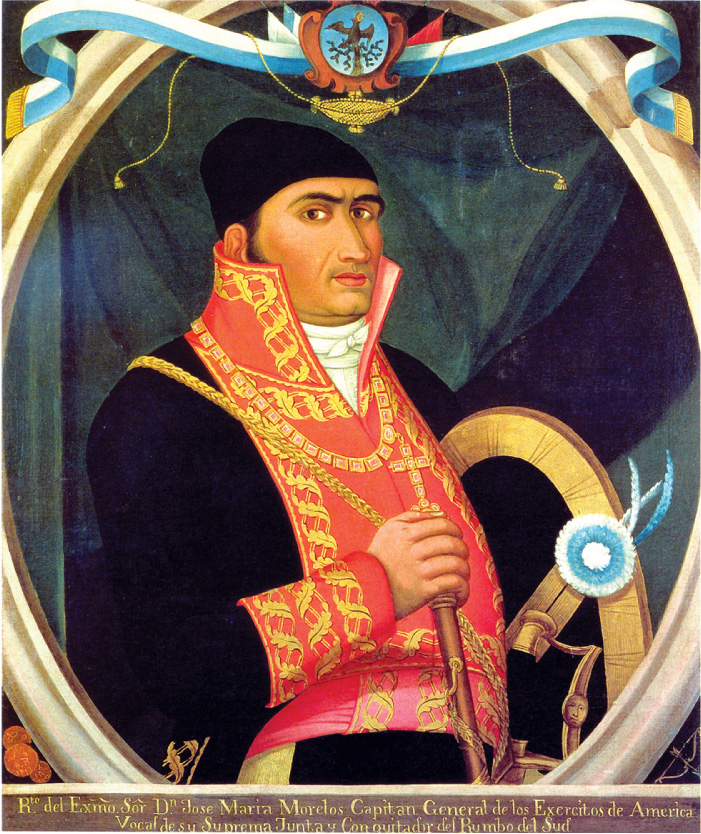
In 1812, another rural priest, José María Morelos y Pavón, from a poor mestizo family in southern Mexico, took charge of the independence movement (Figure 8.12). His army was organized, and he galvanized an insurrection of artisans and peasants. Closer to Indigenous people than even Hidalgo was, Morelos outlined clear sociopolitical objectives: an end to slavery and the casta system, abolition of Indigenous tribute, and institution of land reform. In 1813, at the apex of his military career, Morelos convened a wartime congress in the town of Chilpancingo that declared Mexico’s independence from Spain. The congress was also charged with producing a constitution, and to guide its efforts Morelos composed Sentiments of the Nation, a document outlining plans for social reforms (as well as the introduction of an income tax).
英語のヒント
1812年、メキシコ南部の貧しいメスティーソ家庭出身の、もう一人の農村司祭ホセ・マリア・モレロス・イ・パボンが、独立運動を引き継いだ(図8.12)。その軍は組織化されており、彼は職人と農民の蜂起を力強く促した。イダルゴ以上に先住民に近い立場にいたモレロスは、奴隷制とカスタ制度の廃止、先住民の貢納の廃止、土地改革の実施という、明確な社会政治的目標を示した。軍事的経歴の絶頂にあった1813年、彼はチルパンシンゴの町で戦時の議会を招集し、議会はメキシコのスペインからの独立を宣言した。議会は憲法作成も任され、その指針としてモレロスは、社会改革の構想と所得税の導入を概説する『国民の感情』を作成した。
José María Morelos y Pavón.ホセ・マリア・モレロス・イ・パボン。
(credit: “Retrato del excelentísimo señor don José María Morelos” by Museo Nacional de Historia/Wikimedia Commons, Public Domain) · Public Domain
Figure 8.12 This portrait was painted in 1812 by an unknown Mixtec Indian artist. The painting’s caption identifies Morelos as “captain of the armies of America.” (credit: “Retrato del excelentísimo señor don José María Morelos” by Museo Nacional de Historia/Wikimedia Commons, Public Domain)
図8.12 この肖像は1812年、作者名不詳のミシュテカ系先住民の画家が描いた。絵に添えられた説明は、モレロスを「アメリカの軍の指揮官」としている。(画像:Museo Nacional de Historia/Wikimedia Commons「Retrato del excelentísimo señor don José María Morelos」、パブリックドメイン。)
Although the congress produced a constitution for the nation its members officially named Mexico, Morelos’s efforts were ultimately unsuccessful. He brought some order to a committed but largely undisciplined insurrection force, but he was not able to broaden his support base. He failed to persuade moderate creoles to join the cause, and mestizos continued to make up the majority of his supporters. In December 1815, royalist forces caught and executed him, bringing the first phase of the war for Mexican independence to an end.
英語のヒント
議会は、自ら正式にメキシコと名づけた国のために憲法を作ったが、モレロスの取り組みは最終的に失敗した。献身的ながら大半が規律を欠く反乱軍に一定の秩序を与えたものの、支持基盤を広げることはできなかった。穏健なクリオーリョを説得して参加させることに失敗し、支持者の大多数はメスティーソのままだった。1815年12月、王党派軍が彼を捕らえて処刑し、メキシコ独立戦争の第1段階は終わった。
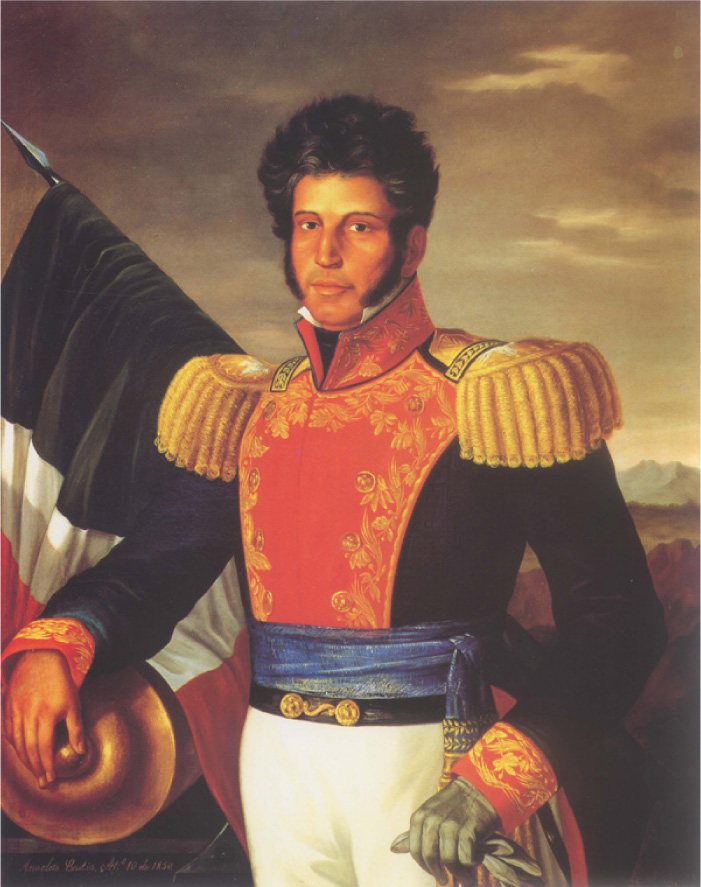
It was the viceroyalty’s government, not the Spanish Crown, that fought both Hidalgo’s and Morelos’s rebellions in New Spain. That is, the royalist armies that met the revolutionary forces were 95 percent Mexican, mostly creole and mixed-race. The rebellions thus represented struggles in which the people’s loyalties were divided and the final outcome was not inevitable; Mexico was experiencing a revolutionary civil war. After Morelos’s death, his follower, the casta Vicente Ramón Guerrero Saldaña, whose father supported the Spanish Crown and whose uncle served in the Spanish militia, continued guerrilla operations against Spanish authorities for several more years (Figure 8.13). While the patriots had not yet succeeded in getting enough people on their side, Spain’s hold on its colony was weakened even more. By 1820, the Viceroyalty of New Spain was relatively calm. Rebellion was about to break out again, however, as a result of events in Spain.
英語のヒント
ヌエバ・エスパーニャでイダルゴとモレロスの両反乱と戦ったのは、スペイン王室ではなく副王領政府だった。つまり革命軍と対峙した王党派軍の95%はメキシコ人で、主にクリオーリョと混合出自の人々だった。したがって反乱は、人々の忠誠が分かれ、結末が最初から決まっていたわけではない闘争だった。メキシコでは革命的な内戦が起きていたのである。モレロスの死後、その支持者でカスタ出身のビセンテ・ラモン・ゲレロ・サルダーニャが、その後数年間、スペイン当局に対するゲリラ作戦を続けた。彼の父はスペイン王室を支持し、おじはスペインの民兵隊に勤務していた(図8.13)。愛国派はまだ十分な人数を味方につけられていなかったが、スペインの植民地への支配はさらに弱まった。1820年までにヌエバ・エスパーニャ副王領は比較的平穏になっていた。しかし、スペイン本国の出来事をきっかけに、反乱が再び起ころうとしていた。
Vicente Ramón Guerrero Saldaña.ビセンテ・ラモン・ゲレロ・サルダーニャ。
(credit: “Vicente Ramón Guerrero Saldaña” by Museo Nacional de Historia/Wikimedia Commons, Public Domain) · Public Domain
Figure 8.13 This portrait was painted in 1850, nineteen years after Guerrero’s death, by the artist Anacleto Escutia. Guerrero served as the second president of Mexico from April 1 to December 17, 1829. (credit: “Vicente Ramón Guerrero Saldaña” by Museo Nacional de Historia/Wikimedia Commons, Public Domain)
図8.13 この肖像はゲレロの死から19年後の1850年、画家アナクレト・エスクティアによって描かれた。ゲレロは1829年4月1日から12月17日まで、メキシコの第2代大統領を務めた。(画像:Museo Nacional de Historia/Wikimedia Commons「Vicente Ramón Guerrero Saldaña」、パブリックドメイン。)