第12章社会心理学
Elaboration Likelihood Model精緻化見込みモデル
An especially popular model that describes the dynamics of persuasion is the elaboration likelihood model of persuasion (Petty & Cacioppo, 1986). The elaboration likelihood model considers the variables of the attitude change approach—that is, features of the source of the persuasive message, contents of the message, and characteristics of the audience are used to determine when attitude change will occur. According to the elaboration likelihood model of persuasion, there are two main routes that play a role in delivering a persuasive message: central and peripheral (Figure 12.15).
英語のヒント
説得の力学を説明するモデルとして特に広く用いられているのが、説得の精緻化見込みモデルである(Petty & Cacioppo, 1986)。精緻化見込みモデルは、態度変容アプローチの変数を考慮に入れる。つまり、説得的メッセージの送り手の特徴、メッセージの内容、受け手の特性を用いて、いつ態度変容が起こるかを判断する。説得の精緻化見込みモデルによれば、説得的メッセージを届けるうえで役割を果たす主なルートが二つあり、それが中心ルートと周辺ルートである(図12.15)。
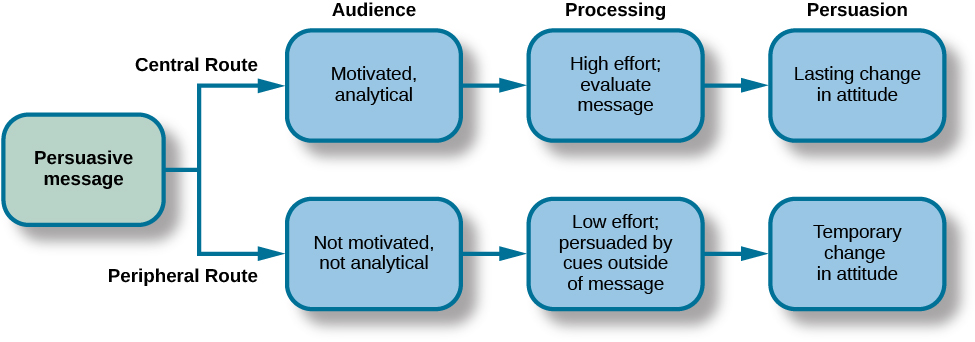

Figure 12.15図 12.15
Persuasion can take one of two paths, and the durability of the end result depends on the path.
説得は二つの経路のどちらかをたどりうる。最終的な結果がどれだけ持続するかは、どちらの経路をたどるかによって決まる。
The central route is logic driven and uses data and facts to convince people of an argument’s worthiness. For example, a car company seeking to persuade you to purchase their model will emphasize the car’s safety features and fuel economy. This is a direct route to persuasion that focuses on the quality of the information. In order for the central route of persuasion to be effective in changing attitudes, thoughts, and behaviors, the argument must be strong and, if successful, will result in lasting attitude change.
英語のヒント
中心ルートは論理に基づくもので、データや事実を用いて、ある議論に価値があることを人々に納得させる。たとえば、自社の車種を買うようあなたを説得しようとする自動車会社は、その車の安全機能や燃費のよさを強調するだろう。これは、情報の質に焦点を当てた、説得への直接的なルートである。説得の中心ルートが態度、考え、行動を変えるのに効果を上げるためには、議論が強力でなければならない。そしてうまくいけば、持続的な態度変容につながる。
The central route to persuasion works best when the target of persuasion, or the audience, is analytical and willing to engage in processing of the information. From an advertiser’s perspective, what products would be best sold using the central route to persuasion? What audience would most likely be influenced to buy the product? One example is buying a computer. It is likely, for example, that small business owners might be especially influenced by the focus on the computer’s quality and features such as processing speed and memory capacity.
英語のヒント
説得の中心ルートが最もよく機能するのは、説得の対象、すなわち受け手が分析的で、情報の処理に進んで取り組もうとする場合である。広告主の視点から見ると、説得の中心ルートを使って売るのが最も適しているのはどのような商品だろうか。影響を受けてその商品を買う可能性が最も高いのは、どのような受け手だろうか。一つの例は、コンピューターの購入である。たとえば、小規模企業の経営者は、コンピューターの品質や、処理速度やメモリ容量といった機能が重点的に取り上げられることに、特に影響を受ける可能性が高いだろう。
The peripheral route is an indirect route that uses peripheral cues to associate positivity with the message (Petty & Cacioppo, 1986). Instead of focusing on the facts and a product’s quality, the peripheral route relies on association with positive characteristics such as positive emotions and celebrity endorsement. For example, having a popular athlete advertise athletic shoes is a common method used to encourage young adults to purchase the shoes. This route to attitude change does not require much effort or information processing. This method of persuasion may promote positivity toward the message or product, but it typically results in less permanent attitude or behavior change. The audience does not need to be analytical or motivated to process the message. In fact, a peripheral route to persuasion may not even be noticed by the audience, for example in the strategy of product placement. Product placement refers to putting a product with a clear brand name or brand identity in a TV show or movie to promote the product (Gupta & Lord, 1998). For example, one season of the reality series American Idol prominently showed the panel of judges drinking out of cups that displayed the Coca-Cola logo. What other products would be best sold using the peripheral route to persuasion? Another example is clothing: A retailer may focus on celebrities that are wearing the same style of clothing.
英語のヒント
周辺ルートは、周辺的な手がかりを用いてメッセージに肯定的な印象を結びつける、間接的なルートである(Petty & Cacioppo, 1986)。周辺ルートは、事実や商品の質に焦点を当てる代わりに、肯定的な感情や有名人による推奨といった肯定的な特徴との結びつきに頼る。たとえば、人気のあるスポーツ選手に運動靴を宣伝してもらうのは、若い成人にその靴を買うよう促すためによく用いられる方法である。態度変容へのこのルートでは、それほど多くの努力も情報処理も必要とされない。この説得の方法は、メッセージや商品に対する肯定的な印象を高めるかもしれないが、たいていは、永続性の低い態度や行動の変化をもたらす。受け手は、分析的である必要も、メッセージを処理しようと動機づけられている必要もない。実際、説得の周辺ルートは、たとえばプロダクト・プレイスメントという戦略のように、受け手に気づかれることさえないかもしれない。プロダクト・プレイスメントとは、ブランド名やブランド・アイデンティティがはっきり分かる商品をテレビ番組や映画の中に登場させ、その商品を宣伝することをいう(Gupta & Lord, 1998)。たとえば、リアリティ番組『アメリカン・アイドル』のあるシーズンでは、審査員たちがコカ・コーラのロゴが入ったカップで飲み物を飲む様子が、目立つように映し出されていた。説得の周辺ルートを使って売るのが最も適しているのは、ほかにどのような商品だろうか。もう一つの例は衣料品である。小売店は、同じスタイルの服を着ている有名人を前面に押し出すかもしれない。
Foot-in-the-door Techniqueフット・イン・ザ・ドア技法
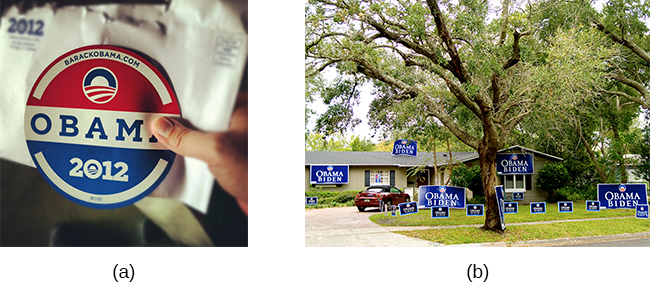
Researchers have tested many persuasion strategies that are effective in selling products and changing people’s attitude, ideas, and behaviors. One effective strategy is the foot-in-the-door technique (Cialdini, 2001; Pliner, Hart, Kohl, & Saari, 1974). Using the foot-in-the-door technique, the persuader gets a person to agree to bestow a small favor or to buy a small item, only to later request a larger favor or purchase of a bigger item. The foot-in-the-door technique was demonstrated in a study by Freedman and Fraser (1966) in which participants who agreed to post a small sign in their yard or sign a petition were more likely to agree to put a large sign in their yard than people who did not first receive the small request (Figure 12.16). Research on this technique also illustrates the principle of consistency (Cialdini, 2001): Our past behavior often directs our future behavior, and we have a desire to maintain consistency once we have committed to a behavior.
英語のヒント
研究者たちは、商品を売ったり、人々の態度、考え、行動を変えたりするのに効果的な説得の戦略を数多く検証してきた。効果的な戦略の一つが、フット・イン・ザ・ドア技法である(Cialdini, 2001; Pliner, Hart, Kohl, & Saari, 1974)。フット・イン・ザ・ドア技法を用いる説得者は、まず相手に、小さな頼みごとを聞き入れることや小さな品物を買うことに同意させ、そのうえで後から、より大きな頼みごとやより大きな品物の購入を求める。フット・イン・ザ・ドア技法は、フリードマンとフレイザー(1966)の研究で実証された。この研究では、自宅の庭に小さな看板を立てることや請願書に署名することに同意した参加者は、最初に小さな依頼を受けなかった人々よりも、庭に大きな看板を立てることに同意する可能性が高かった(図12.16)。この技法についての研究は、一貫性の原理も示している(Cialdini, 2001)。私たちの過去の行動はしばしば将来の行動を方向づけ、私たちはいったんある行動に踏み切ると、一貫性を保とうとする欲求を持つのである。
OpenStax, Rice University; Psychology 2e. (credit a: modification of work by Joe Crawford; credit b: modification of work by "shutterblog"/Flickr) · CC BY 4.0 · Source出典

Figure 12.16図 12.16
With the foot-in-the-door technique, getting someone to agree to a small request such as (a) wearing a campaign button can make them more likely to agree to a larger request, such as (b) putting campaigns signs in your yard. (credit a: modification of work by Joe Crawford; credit b: modification of work by "shutterblog"/Flickr)
フット・イン・ザ・ドア技法では、(a)選挙運動用のバッジを身につけるといった小さな依頼に相手を同意させておくと、その人が(b)自宅の庭に選挙運動の看板を立てるといった、より大きな依頼に同意する可能性が高まりうる。(出典a:Joe Crawfordの作品を改変、出典b:"shutterblog"/Flickrの作品を改変)
A common application of foot-in-the-door is when teens ask their parents for a small permission (for example, extending curfew by a half hour) and then asking them for something larger. Having granted the smaller request increases the likelihood that parents will acquiesce to the later, larger request.
英語のヒント
フット・イン・ザ・ドアのよくある応用例は、10代の若者が親に小さな許可(たとえば、門限を30分延ばすこと)を求め、その後でもっと大きなことを頼むという場合である。小さいほうの依頼をすでに認めていると、親が後のもっと大きな依頼に応じる可能性が高まる。
How would a store owner use the foot-in-the-door technique to sell you an expensive product? For example, say that you are buying the latest model smartphone, and the salesperson suggests you purchase the best data plan. You agree to this. The salesperson then suggests a bigger purchase—the three-year extended warranty. After agreeing to the smaller request, you are more likely to also agree to the larger request. You may have encountered this if you have bought a car. When salespeople realize that a buyer intends to purchase a certain model, they might try to get the customer to pay for many or most available options on the car. Another example of the foot-in-the-door technique would be applied to an individual in the market for a used car who decides to buy a fully loaded new car. Why? Because the salesperson convinced the buyer that they need a car that has all of the safety features that were not available in the used car.
英語のヒント
店の経営者は、あなたに高価な商品を売るために、フット・イン・ザ・ドア技法をどのように使うだろうか。たとえば、あなたが最新モデルのスマートフォンを買おうとしていて、店員が最上位のデータプランに加入するよう勧めたとしよう。あなたはこれに同意する。すると店員は次に、もっと大きな買い物、つまり3年間の延長保証を勧める。小さいほうの依頼に同意した後では、あなたはより大きな依頼にも同意する可能性が高くなっている。車を買ったことがあるなら、こうした経験をしたことがあるかもしれない。販売員は、買い手が特定の車種を買うつもりだと分かると、その車に付けられるオプションの多く、あるいはほとんどに客がお金を払うよう仕向けようとするかもしれない。フット・イン・ザ・ドア技法のもう一つの例は、中古車を買おうとしていた人が、フル装備の新車を買うことに決めるという場合に当てはまるだろう。なぜか。販売員が、中古車にはなかった安全機能をすべて備えた車が必要だと、その買い手に納得させたからである。