第11章すべての戦争を終わらせるための戦争The War to End All Wars
11.3 Total War11.3 総力戦
Learning Objectives学習の目標
By the end of this section, you will be able to:
この節を学ぶと、次のことができるようになる。
Explain how new technology affected combat in World War I
新技術が第一次世界大戦の戦闘に与えた影響を説明する
Describe the experience of the average soldier on the battlefield in World War I
第一次世界大戦の戦場で一般の兵士が経験したことを説明する
Discuss the role combatants’ colonies and colonial troops played in World War I
交戦国の植民地と植民地軍が第一次世界大戦で果たした役割を論じる
Analyze the effect of racism on the actions of the major powers in World War I
第一次世界大戦での主要国の行動に、人種差別が与えた影響を分析する
World War I was a truly modern war. The combatants used then-new weaponry such as tanks and airplanes as well as machine guns and poison gas, making the soldiers’ experience unlike anything earlier generations had faced in battle. The massive numbers of troops and weapons meant that fighting and destruction regularly intruded on civilian life, often with devastating results. Thus, not only armies but entire nations had to do their part and bear the brunt of the war. The widespread use of colonial troops brought mass travel to the globe, and the interactions of many different peoples played out against the backdrop of combat. For all these reasons, and in recognition of its vast extent and destructiveness, World War I came to be called a total war, a war fought using all available resources, with no restrictions on weapons or their targets.
英語のヒント
第一次世界大戦は、まさに近代的な戦争だった。交戦国は機関銃や毒ガスに加え、当時は新しかった戦車や飛行機などの兵器を使い、兵士はそれ以前の世代が戦場で直面したことのない経験をした。兵と兵器の膨大な数によって、戦闘と破壊は日常的に民間人の生活へ入り込み、しばしば壊滅的な結果をもたらした。そのため軍隊だけでなく、国民全体が役割を果たし、戦争の打撃を受けなければならなかった。植民地兵の広範な動員は世界規模の大量移動を生み、戦闘を背景にさまざまな人々の交流が展開した。こうした理由と、その範囲や破壊性の大きさから、第一次世界大戦は総力戦と呼ばれるようになった。総力戦とは、使えるすべての資源を用い、兵器や攻撃目標に制限を設けずに戦う戦争である。
The Unending Horror of War終わらない戦争の恐怖
Military technology had changed greatly by the beginning of the twentieth century, and these changes were not often understood or appreciated by either soldiers or commanders when the war broke out. The recent spread of industrialization meant that more weapons with greater firepower could now be turned out of factories. Just as the guns of the naval arms race had quickly increased in scope and power, the introduction of machine guns, long-range artillery guns, aircraft, and submarines revolutionized warfare in World War I.
英語のヒント
20世紀初頭までに軍事技術は大きく変わっていたが、開戦時には兵士も指揮官も、その変化を理解したり正しく評価したりしていないことが多かった。近年の工業化の広がりによって、より強い火力を持つ兵器を、より多く工場で生産できるようになった。海軍軍拡競争の砲が射程や威力を急速に増したのと同様に、機関銃、長距離砲、航空機、潜水艦の導入は、第一次世界大戦の戦い方を一変させた。
Artillery was one clear example of the way warfare had changed. In the 1800s, cannons were moved by horses. In World War I, however, some long-range artillery could be moved only by rail, and in some cases, railroads even had to be specially built due to the weight of the guns. Artillery became a key tool for fighting the war. The German arms manufacturer Krupp unveiled new artillery throughout the war, each time offering greater firepower, but its “Big Bertha,” a 420-mm howitzer, was used extensively from the beginning of the war to its conclusion. In 1918, the Germans began using the so-called Paris Gun to shell the French capital. While its payload was not overly large, this piece of artillery could fire over a distance of eighty miles, propelling a missile into the stratosphere before it came back to earth. Most battlefield casualties in World War I were the result of artillery fire.
英語のヒント
砲兵器は、戦争の変化を示す明確な例だった。1800年代には大砲を馬で運んだ。しかし第一次世界大戦では、一部の長距離砲は鉄道でしか動かせず、その重量のために専用の鉄道を建設しなければならない場合さえあった。砲は戦争の主要な手段となった。ドイツの兵器メーカー、クルップは戦争中、新たな砲を発表するたびに火力を増していったが、420ミリ榴弾砲「ビッグ・バーサ」は開戦から終戦まで広く使われた。1918年、ドイツはフランスの首都を砲撃する、いわゆるパリ砲を使い始めた。弾頭の搭載量はさほど大きくなかったが、80マイルを超える距離まで砲弾を飛ばし、いったん成層圏へ上げてから地上へ落下させることができた。第一次世界大戦の戦場での死傷者の大部分は、砲撃によるものだった。
The power of machine guns, first seen at the turn of the century in the Boer War, also completely changed the battlefield experience in total war. Many of the machine guns of World War I were based on a design unveiled by inventor Hiram Maxim in 1884. They could fire four to six hundred rounds per minute, utterly transforming what an infantry attack looked like. It was this mechanized weaponry that caused the horrific injuries and mass casualties suffered during the war. A soldier courageously running across a field against an enemy was now undertaking a suicide mission. Barbed wire also became a common sight, strewn across the no-man’s-land between the opposing sides’ frontline trenches. It snagged and caught troops as they advanced, slowing them down as they used wire cutters to break through and making them an easy target for machine gun nests on the opposite side.
英語のヒント
世紀の変わり目のボーア戦争で初めて見られた機関銃の威力も、総力戦の戦場での経験を一変させた。第一次世界大戦の機関銃の多くは、発明家ハイラム・マキシムが1884年に発表した設計に基づいていた。1分間に400〜600発を撃つことができ、歩兵攻撃の様相を完全に変えた。戦争中の恐ろしい負傷や大量の死傷者を生んだのは、この機械化された兵器だった。敵に向かって勇敢に野原を走る兵士は、今や自殺行為をしているようなものだった。有刺鉄線も一般的な光景となり、敵味方の最前線の塹壕の間にある無人地帯に張り巡らされた。進む兵を引っかけて捉え、兵士が鉄線切りで突破する間に動きを遅らせ、向かい側の機関銃陣地にとって容易な標的にした。
Poison gas, outlawed worldwide today, was employed as an instrument of war by all sides, first by German troops fighting Russian units in 1914. Different types of gas were used. Chlorine gas with its greenish hue appeared early in the war, thick and heavy mustard gas came later, and phosgene was used throughout the combat. Mustard gas could burn the eyes, nose, and skin with injuries that took weeks to heal; for the unlucky, it could cause permanent blindness and lifelong respiratory problems, and sometimes death. Phosgene gas was colorless and could be more immediately deadly, through symptoms might not appear for many hours. Historians estimate that 85 percent of deaths from gassing were due to the effects of phosgene.
英語のヒント
今日では世界中で禁止されている毒ガスは、すべての陣営が戦争の道具として用い、最初は1914年にロシア軍と戦うドイツ軍が使った。さまざまな種類のガスが使用された。緑がかった塩素ガスは開戦初期に現れ、濃く重いマスタードガスは後から登場し、ホスゲンは戦争を通じて使われた。マスタードガスは目、鼻、皮膚に治癒まで何週間もかかる火傷を与え、不運な者には失明や生涯続く呼吸障害を引き起こし、時には死をもたらした。ホスゲンは無色で、症状が何時間も現れないことがあるものの、より急速に死をもたらす可能性があった。歴史家は、毒ガスによる死者の85%がホスゲンの作用によるものだったと推計している。
By the midpoint of the war, gas masks had become a regular part of a soldier’s kit. When a call of “Gas!” went out, soldiers would quickly don them, though they were tight and severely narrowed the wearer’s range of vision. Soldiers came to fear gas attacks more than any other kind. The prospect of not being able to see your enemy was unnerving, and the gas might not even be noticed until the first few soldiers collapsed from it.
英語のヒント
戦争の中頃までに、防毒マスクは兵士の標準装備になった。「ガスだ!」という叫びが上がると、兵士はすぐに装着したが、窮屈で視野を大きく狭めた。兵士たちは他のどの攻撃よりも毒ガス攻撃を恐れるようになった。敵が見えなくなるという見通しは不安をかき立て、最初の数人が倒れるまでガスの存在に気づかないことすらあった。
Flamethrowers were employed by both sides as well but were first introduced by Germany, with substantial use beginning in 1915. These were intended to spur enemy soldiers out of their trenches in a battle. The most effective flamethrowers were mobile ones carried by individual soldiers. Their effect was also psychological, much like that of poison gas.
英語のヒント
火炎放射器も双方が使ったが、最初に導入したのはドイツで、1915年から本格的な使用が始まった。戦闘で敵兵を塹壕から追い出すことを目的とした。最も効果的だったのは、個々の兵士が携行する可搬型のものだった。毒ガスと同様、心理的な効果もあった。
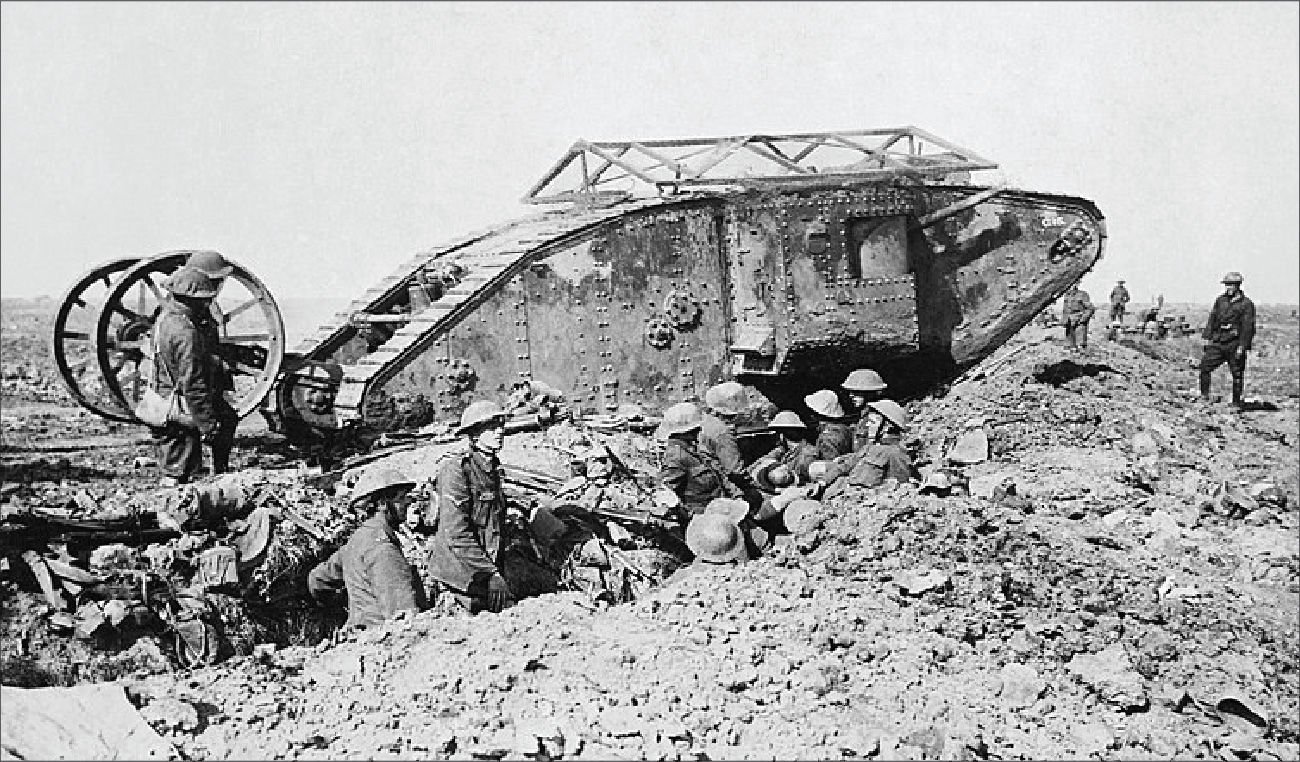
In 1916, the British unveiled a new invention to support their infantry—the tank (Figure 11.12). Early tanks showed promise in that they made large artillery mobile and could travel with advancing infantry, which could help end trench warfare. However, they often malfunctioned and got stuck in the mud too easily. Commanders at first did not fully understand what a boon to the infantry tanks could be, but in the ensuing years they learned.
英語のヒント
1916年、イギリスは歩兵を支援する新発明、戦車を登場させた(図11.12)。初期の戦車は大型砲を移動可能にし、前進する歩兵とともに進めるという点で有望で、塹壕戦を終わらせる助けになる可能性があった。しかし故障が多く、容易に泥にはまった。指揮官は当初、戦車が歩兵にとってどれほど有益かを十分に理解していなかったが、その後の数年間で学んだ。
A New Weapon of War.新しい戦争兵器。
(credit: modification of work “British Mark I male tank Somme 25 September 1916” by Imperial War Museums/Wikimedia Commons, Public Domain) · Public Domain
Figure 11.12 This photo is of an early British tank in the fall of 1916. It was probably being held in reserve for the Battle of the Somme. (credit: modification of work “British Mark I male tank Somme 25 September 1916” by Imperial War Museums/Wikimedia Commons, Public Domain)
図11.12 1916年秋の初期のイギリス戦車。おそらくソンムの戦いに備えて予備として待機していた。(出典:帝国戦争博物館/ウィキメディア・コモンズの「British Mark I male tank Somme 25 September 1916」を改変、パブリックドメイン)
On the sea, the submarine debuted in World War I and heralded a new age of naval combat. Its stealth was its biggest tactical advantage; it could sneak up on unsuspecting vessels and fire a torpedo that would sink them. The German navy called its subs Unterseeboots or U-boats and focused on expanding this part of its fleet during the war. U-boats were seldom submerged because the batteries on which they ran would not allow them to stay underwater for too long. In the early months of the war, German submarines warned ships before sinking them so that the crew could abandon ship, as was the custom in naval warfare. However, after German submarines were destroyed by armed British merchant ships when they made their presence known, they began to attack without firing any warning shot or allowing the crew on the targeted ship to abandon it. This was used by the Allies as evidence that Germany was a crueler foe than other nations. By 1917, German U-boats “[Quotation omitted for rights reasons.]”
英語のヒント
海では、潜水艦が第一次世界大戦で登場し、海戦の新時代を告げた。最大の戦術的利点は隠密性であり、気づいていない船へ忍び寄り、魚雷を撃って沈めることができた。ドイツ海軍は潜水艦をウンターゼーボート、またはUボートと呼び、戦時中は艦隊のこの部分を拡張することに力を注いだ。動力用の蓄電池では長時間潜航できなかったため、Uボートが潜っていることはまれだった。開戦から数か月は、海戦の慣例に従い、乗員が退船できるよう、沈める前に船へ警告した。しかし、存在を知らせたドイツ潜水艦が武装したイギリス商船に破壊されると、警告射撃もせず、狙った船の乗員の退船も認めずに攻撃するようになった。連合国はこれを、ドイツが他国より残酷な敵である証拠として利用した。1917年までに、ドイツのUボートは「〔権利の関係で割愛〕」。
All combatant armies used aircraft for reconnaissance purposes, and pilots soon began engaging one another in aerial “dogfights.” Skilled pilots who were able to shoot down enemy planes became known as “aces.” They kept track of their kills and were heralded for their bravery. The sky was one of the few arenas where skill and courage could make a difference in a confrontation with the enemy.
英語のヒント
すべての交戦国の軍隊が偵察に航空機を使い、操縦士はほどなく空中の「ドッグファイト」で交戦し始めた。敵機を撃墜できる熟練操縦士は「エース」と呼ばれるようになった。撃墜数を記録し、勇敢さを称賛された。空は、技量と勇気が敵との対決の結果を左右しうる数少ない舞台の一つだった。
The use of all these weapons to wage war on an industrial scale meant soldiers suffered more in this war than in past conflicts. The number of casualties was immense. Approximately nine hundred French soldiers died every day on the western front. Even more German soldiers died each day. The need to care for the wounded was also enormous. Huge numbers of doctors, nurses, and stretcher-bearers were needed to get them safely from the battlefields and trenches to medical care. Medical science had improved significantly, leading to a much greater understanding of infection, and new technologies such as the x-ray made care far superior to what soldiers could expect in the 1800s. Soldiers could now survive their wounds, but they then faced a number of problems earlier generations had never experienced. Some needed plastic surgery to repair broken or blown-away bones or metal masks to hide them, and when repairs to arms or legs were not possible, amputation might leave a soldier facing the future with prosthetic limbs.
英語のヒント
これらすべての兵器を使って工業的規模で戦争を行ったため、兵士は過去の戦争以上に苦しんだ。死傷者数は膨大だった。西部戦線では毎日約900人のフランス兵が死亡した。ドイツ兵はそれ以上だった。負傷者の治療の需要も莫大だった。戦場や塹壕から安全に医療へつなぐには、膨大な数の医師、看護師、担架兵が必要だった。医学は大きく進歩し、感染症の理解が深まり、X線などの新技術によって、1800年代の兵士が期待できたものよりはるかに優れた医療が可能となった。今や兵士は傷を負っても生き延びられたが、その後、以前の世代が経験しなかった多くの問題に直面した。砕けたり吹き飛んだりした骨を修復する形成外科手術や、損傷を隠す金属製のマスクを必要とする者もいた。腕や脚を修復できなければ切断となり、義肢を使う将来に向き合わなければならなかった。
Physical wounds were fairly straightforward for doctors and nurses to tackle. The psychological wounds were much more problematic. Never before had so many people been subjected to such intense bombardment as in the trenches and battles of World War I. Doctors began diagnosing cases of “shell shock” early in the war, a diagnosis not new but newly named because it was thought to have been brought on by the intense shelling that accompanied the war. However, medical science later learned that it was the intense psychological pressures on the soldiers rather than the shelling itself that caused the condition. Shell shock went by other names in later wars, such as battle fatigue and, today, post-traumatic stress disorder. Some symptoms were mild, like a shaking hand or constant twitch. Others were more serious, including flashbacks to battle, inability to speak, loss of contact with reality, or fear of any unexpected sound. Those dealing with shell shock often had to be sent to hospitals far from the frontlines, and recovery was exceedingly slow as psychologists tried to help them reenter peacetime society.
英語のヒント
身体の傷は、医師や看護師にとって対処の仕方が比較的明確だった。心理的な傷ははるかに難しかった。第一次世界大戦の塹壕や戦場ほど多くの人が激しい砲撃にさらされたことは、かつてなかった。医師は開戦初期から「シェルショック」と診断し始めた。この病態自体は新しくなかったが、戦争に伴う激しい砲撃が原因と考えられたため、新たな名前が付いた。しかし医学は後に、原因が砲撃そのものではなく、兵士にかかる強烈な心理的圧力だったと知った。後の戦争では戦闘疲労、そして今日では心的外傷後ストレス障害など、別の名で呼ばれた。手の震えや絶え間ない痙攣のような軽い症状もあった。戦闘の記憶の再体験、発話不能、現実感の喪失、予期せぬ音への恐怖など、より重い症状もあった。シェルショックに苦しむ人々は前線から遠い病院へ送られることが多く、心理学者が平時の社会へ戻れるよう支援しても、回復は極めて遅かった。
New military technology plus armies consisting of millions of troops meant battles were no longer quick. They would rage for months and exact a devastating toll of human life. In February 1916, for example, the Battle of Verdun began. The Germans intended this battle to take out as many French troops as possible, to make “France bleed,” as German General Erich von Falkenhayn stated. They chose Verdun because it had great historical and cultural significance to the French nation, and France would do anything to protect it. Only one long road ran into the city, and the French were forced to bring hundreds of thousands of troops and supplies along it. The battle raged from February to December. France managed to stave off the German attacks but suffered approximately 450,000 casualties, and Germany about 300,000.
英語のヒント
新しい軍事技術に加え、数百万人の兵を擁する軍隊によって、戦いはもはや短期では終わらなくなった。数か月も激しく続き、壊滅的な数の命を奪った。たとえば1916年2月にはヴェルダンの戦いが始まった。ドイツ軍はできるだけ多くのフランス兵を倒し、将軍エーリヒ・フォン・ファルケンハインの言葉でいう「フランスを流血させる」ことを狙った。ヴェルダンはフランス国家にとって歴史的・文化的に重要で、フランスが何をしてでも守ると考えたため、そこを選んだ。都市へ入る長い道は一本しかなく、フランス軍は数十万人の兵と物資をその道で運ばなければならなかった。戦闘は2月から12月まで続いた。フランスはドイツの攻撃をなんとか食い止めたが、約45万人の死傷者を出し、ドイツも約30万人を失った。
The British and the Germans had their own battle of attrition along the Somme River. Starting on July 1, 1916, the Battle of the Somme began with British infantry charges that caused tens of thousands of deaths on the first day alone. Britain continued to launch offensives as the Germans rebuilt their line slightly farther back. British commanders finally called an end to the battle in November, unable to break the German line and having advanced only a handful of miles. By the time it ended, total casualties from both sides totaled a million.
英語のヒント
イギリスとドイツも、ソンム川沿いで消耗戦を繰り広げた。1916年7月1日、ソンムの戦いはイギリス歩兵の突撃で始まり、初日だけで数万人の死者を出した。ドイツ軍が少し後方に防衛線を再建する中、イギリスは攻勢を続けた。ドイツの線を突破できず、わずか数マイルしか前進できなかったイギリス軍指揮官は、11月にようやく戦闘の打ち切りを命じた。終結時には、双方の死傷者の合計は100万人に達していた。
As the land war droned on, the power of the submarine was being starkly demonstrated on the high seas. In May 1915, the RMS Lusitania, a passenger liner owned by Cunard, was sailing from New York City to Liverpool. Unbeknownst to the passengers, the British owners of the ship had chosen to transport four million rounds of ammunition in the cargo hold during the return voyage to Britain. The German government learned of this plan and had previously announced that any ship carrying military weapons or equipment was subject to being sunk. This threat put the Lusitania in the cross-hairs of the German submarines. Off the coast of Ireland on May 7, a German sub torpedoed the liner, which sank in about twenty minutes. More than twelve hundred people died in the chilly waters, including 128 U.S. citizens.
英語のヒント
陸上の戦争が長引く一方、公海では潜水艦の力が明白に示されていた。1915年5月、キュナード社の客船ルシタニア号はニューヨークからリヴァプールへ航行していた。乗客の知らないところで、イギリスの船主は帰路の貨物室に400万発の弾薬を積むことを決めていた。ドイツ政府はこの計画を知り、軍用の武器や装備を運ぶ船はすべて撃沈の対象になると以前から発表していた。この警告により、ルシタニア号はドイツ潜水艦の標的となった。5月7日、アイルランド沖でドイツ潜水艦が魚雷を命中させ、客船は約20分で沈没した。冷たい海で、アメリカ市民128人を含む1200人以上が死亡した。
The outcry was immediate. Early news reports focused on the fact that civilians and families had been on board an unarmed passenger ship, again casting Germany as a violator of the norms of warfare. In the United States, however, the public frustration did not result in a push for war with Germany. While aware of what the war was like via the uncensored news stories in the American media, most still felt it was better not to get involved.
英語のヒント
抗議の声はただちに上がった。初期の報道は、非武装の客船に民間人や家族連れが乗っていた事実を強調し、再びドイツを戦争の規範を破る国として描いた。しかしアメリカ合衆国では、国民の憤りは対独戦争を求める動きにはつながらなかった。検閲のないアメリカの報道で戦争の実態を知っていたため、ほとんどの人はなお関わらない方がよいと考えた。
Their focus on a naval arms race before the war did not result in many battles between the surface fleets of Britain and Germany. In fact, there was only one major naval engagement, the Battle of Jutland, fought in 1916 by about 250 ships. Both sides sank or damaged many enemy craft, and both claimed a win, though no decisive victory was gained by either. The German navy, however, never again dared to confront the British navy.
英語のヒント
戦前に海軍軍拡競争を重視したにもかかわらず、イギリスとドイツの水上艦隊同士の戦闘は多くなかった。実際、大規模な海戦は、1916年に約250隻が戦ったユトランド沖海戦の一度だけだった。双方が多くの敵艦を沈めたり損傷させたりし、ともに勝利を主張したが、どちらも決定的な勝利は得なかった。しかしドイツ海軍は、それ以後イギリス海軍と対決することをあえてしなかった。