第11章すべての戦争を終わらせるための戦争The War to End All Wars
The Spark That Lit the Powder Keg火薬庫に火をつけた火花
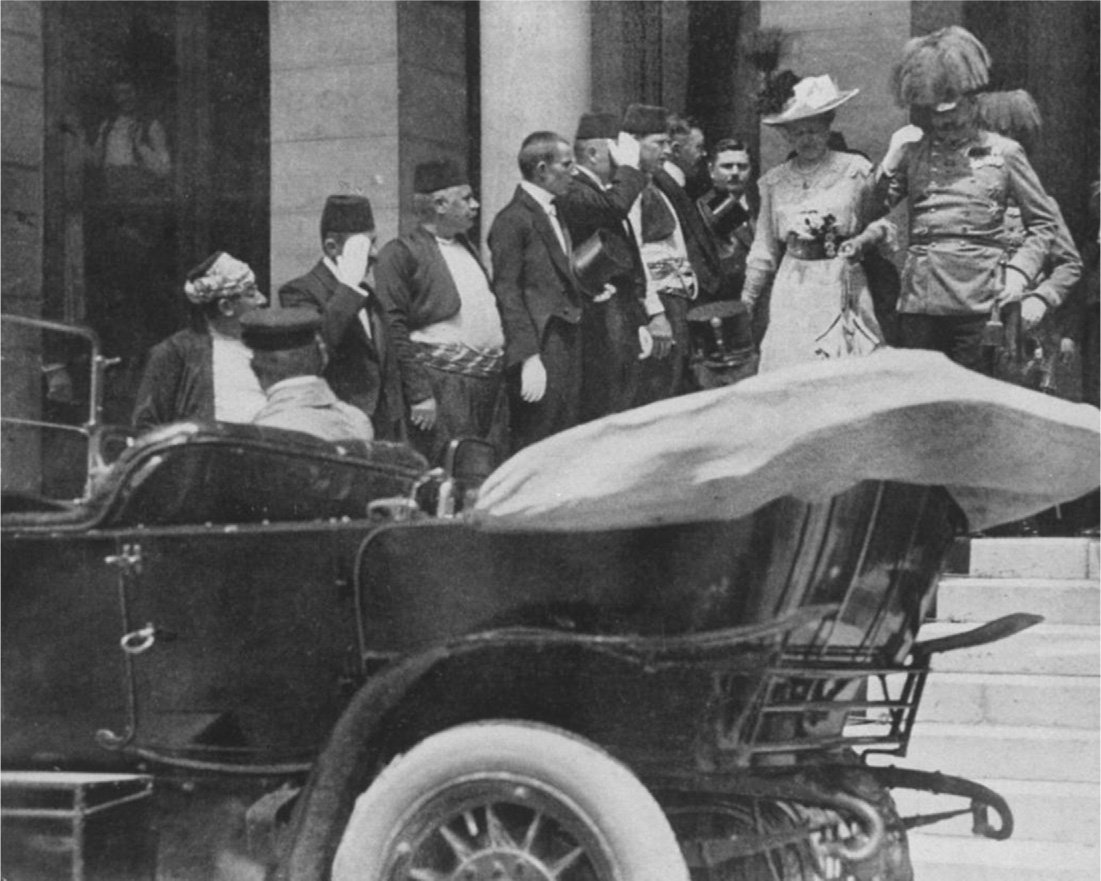
Emperor Franz Josef of Austria-Hungary had no surviving son in the 1900s, so upon his death, a nephew, Archduke Franz Ferdinand, was set to inherit control of the empire. The archduke was not particularly well-liked by his uncle. For one thing, he had new ideas that actually supported more autonomy for the Balkan region within the empire. He was scheduled to travel to the Balkans in the summer of 1914 for a review of troops and survey of the region of Bosnia-Herzegovina. A tour of the city of Sarajevo was planned for June 28, an important date for the Serbian people. It was a day of mourning for the 1389 Battle of Kosovo, which the Serbian people had lost to the encroaching Ottoman Empire but which also marked the birth of Serbian unity. A visit on such a day by Franz Ferdinand, the symbol of another encroaching empire, was seen as a slap in the face (Figure 11.10).
英語のヒント
オーストリア=ハンガリー皇帝フランツ・ヨーゼフには1900年代には存命の息子がおらず、死後は甥のフランツ・フェルディナント大公が帝国を継承する予定だった。大公は叔父から特に好かれてはいなかった。一つには、帝国内のバルカン地域の自治拡大を実際に支持する新しい考えを持っていたからである。1914年夏には、部隊の閲兵とボスニア=ヘルツェゴヴィナ地域の視察のため、バルカンを訪問する予定だった。サラエボ市の巡回は、セルビア人にとって重要な6月28日に計画された。この日は1389年のコソヴォの戦いを悼む日だった。セルビア人は侵入するオスマン帝国に敗れたが、この戦いはセルビア人の結束の誕生も意味していた。そのような日に、別の侵入する帝国の象徴であるフランツ・フェルディナントが訪れることは、侮辱と受け取られた(図11.10)。
Archduke Franz Ferdinand and Duchess Sophie.フランツ・フェルディナント大公とゾフィー公爵夫人。
(credit: “Franz Ferdinand & Sophie Leave Sarajevo Guildhall” by Unknown/Wikimedia Commons, CC0 1.0) · CC0 1.0
Figure 11.10 This photo shows Archduke Franz Ferdinand and his wife the Duchess Sophie of Hohenberg in Sarajevo shortly before their assassination on June 28, 1914. (credit: “Franz Ferdinand & Sophie Leave Sarajevo Guildhall” by Unknown/Wikimedia Commons, CC0 1.0)
図11.10 1914年6月28日に暗殺される少し前、サラエボで撮影されたフランツ・フェルディナント大公と妻のホーエンベルク公爵夫人ゾフィー。(出典:作者不明/ウィキメディア・コモンズの「Franz Ferdinand & Sophie Leave Sarajevo Guildhall」、CC0 1.0)
Late in June, a small band of would-be Bosnian Serb (ethnic Serbs who lived in Bosnia-Herzegovina) assassins armed with weapons from the Serbian military crossed the border from Serbia into Bosnia-Herzegovina. They belonged to an organization called the Black Hand. Their goal was the separation of Bosnia-Herzegovina from Austria-Hungary and its annexation by Serbia to form Greater Serbia, a state comprising all regions of importance to ethnic Serbs. The Black Hand’s plan was to assassinate Archduke Franz Ferdinand in Sarajevo. On June 28, they threw a bomb at his motorcade but missed the archduke. However, that afternoon, one of them, Gavrilo Princip, found himself right next to the archduke’s touring car after it had taken a wrong turn. Princip, then nineteen years old, pulled out a gun and shot both Archduke Franz Ferdinand and his wife Sophie. Both died that day. Princip was arrested immediately.
英語のヒント
6月下旬、ボスニアのセルビア人、すなわちボスニア=ヘルツェゴヴィナに住むセルビア民族の暗殺志願者の小集団が、セルビア軍から得た武器で武装し、セルビアから国境を越えてボスニア=ヘルツェゴヴィナに入った。彼らは黒手組と呼ばれる組織に属していた。目的は、ボスニア=ヘルツェゴヴィナをオーストリア=ハンガリーから分離してセルビアに併合し、セルビア民族にとって重要な全地域を含む大セルビア国家を作ることだった。黒手組は、サラエボでフランツ・フェルディナント大公を暗殺する計画を立てた。6月28日、一行は大公の車列に爆弾を投げたが、大公には当たらなかった。しかし午後、車が道を間違えた後、実行犯の一人ガヴリロ・プリンツィプは大公の観光用自動車のすぐそばにいた。当時19歳だったプリンツィプは銃を抜き、大公と妻ゾフィーを撃った。二人ともその日のうちに死亡した。プリンツィプはただちに逮捕された。
Over the course of the next several weeks, a series of investigations was undertaken and ultimatums began flying from Austria-Hungary to Serbia. Austria-Hungary demanded Serbian subservience to atone for harboring the terrorist organization that planned and carried out the assassination. Austria-Hungary essentially wanted to destroy Serbia’s independence. For its part, Serbia did not want to go to war with Austria-Hungary and would have agreed to many concessions, but it could not effectively agree to give up its independence. As the situation grew more desperate, Serbia turned to its ally Russia. Appealing to the Slavic heritage of both nations, Serbian leaders extracted a promise that Russia would come to their aid if Austria-Hungary attacked.
英語のヒント
その後の数週間に一連の調査が行われ、オーストリア=ハンガリーからセルビアへ最後通牒が次々と送られ始めた。オーストリア=ハンガリーは、暗殺を計画・実行したテロ組織をかくまった償いとして、セルビアの服従を要求した。実質的にはセルビアの独立を破壊しようとしたのである。セルビア側は同帝国との戦争を望まず、多くの譲歩に応じるつもりだったが、独立の放棄に等しい条件には同意できなかった。状況がいっそう切迫すると、セルビアは同盟国ロシアに頼った。両国に共通するスラヴ人の歴史を訴え、セルビアの指導者たちは、オーストリア=ハンガリーが攻撃すればロシアが援助するという約束を引き出した。
For Austria-Hungary, the prospect of war with Russia was much more complicated than war solely with Serbia would be. Austria-Hungary turned to its longtime ally Germany for a show of support. Germany then extended a “blank check” to Austria-Hungary, asking for no details about what Austria-Hungary was planning but essentially agreed to back it no matter what. Germany expected that Austria-Hungary would make a quick move against Serbia, but as the weeks passed, its “blank check” came to look like an endorsement of Austria-Hungary’s hostile behavior.
英語のヒント
オーストリア=ハンガリーにとって、ロシアとの戦争の見通しは、セルビアだけとの戦争よりはるかに複雑だった。同帝国は長年の同盟国ドイツに支持の表明を求めた。するとドイツは、何を計画しているか詳しく尋ねないまま、どのようなことでも実質的に支持すると約束する「白紙小切手」をオーストリア=ハンガリーに与えた。ドイツは同帝国がセルビアに対してすぐに行動すると予想していたが、数週間が過ぎるにつれ、その「白紙小切手」は同帝国の敵対的行動への支持に見えるようになった。
Over the next month, what had been an argument between two nations was enveloping the entire continent. It was becoming clear that if war broke out, it would pull into it many countries bound by their treaty obligations to one another. Many people were alarmed, believing such a war would have few winners. One group that loudly protested a possible war were Europe’s socialist leaders. They were already predisposed to reject monarchial arguments in favor of a war, since the industrial masses would be the ones fighting it. Even once the war started, socialists such as Keir Hardie, one of the founders of the Labour Party in Great Britain, were still trying to organize workers to strike in protest against it.
英語のヒント
その後1か月の間に、二国間の争いだったものが大陸全体を包み込みつつあった。戦争が始まれば、互いに条約上の義務で結ばれた多くの国が巻き込まれることが明らかになってきた。そのような戦争に勝者はほとんどいないと考え、多くの人々が不安を抱いた。戦争の可能性に大きな声で抗議した集団の一つが、ヨーロッパの社会主義指導者たちだった。戦うのは産業に従事する大衆であるため、彼らはもともと戦争を支持する君主の議論を退ける傾向があった。開戦後さえ、イギリス労働党の創設者の一人ケア・ハーディのような社会主義者は、反戦抗議のストライキを行うよう労働者を組織し続けた。
In France, as the war approached, the socialist leader Jean Jaurès was increasingly concerned about how it would affect the French people. Jaurès had been speaking out in favor of pacifism for many years and had opposed France’s three-year conscription law in 1913. In 1914, he continued to agitate against the prospect of a general European war. Arguing that no workers anywhere would benefit from a war of the elites, he even tried to work with German socialists in opposition to the war, attending the congress of the Socialist International in Brussels in July 1914. On July 31, however, Raoul Villain, a young man with French nationalist sympathies, shot and killed Jaurès in Paris, where he was dining after his return from Brussels. The outcry over Jaurès’s death threatened to further disrupt France’s precarious position, while other countries were already mobilizing their troops.
英語のヒント
フランスでは戦争が近づくにつれ、社会主義指導者ジャン・ジョレスが、フランス国民への影響をますます懸念した。ジョレスは長年平和主義を擁護し、1913年にはフランスの兵役3年法に反対した。1914年にも、ヨーロッパ全体を巻き込む戦争の可能性に反対する運動を続けた。どこの労働者もエリートたちの戦争から利益を得ることはないと主張し、ドイツの社会主義者と協力して戦争に反対しようとさえした。同年7月にはブリュッセルの社会主義インターナショナル大会に出席した。しかし7月31日、フランスの民族主義に共感する青年ラウル・ヴィランが、ブリュッセルから戻ってパリで食事中だったジョレスを射殺した。その死に対する激しい抗議は、他国がすでに軍隊を動員している中、不安定なフランスの立場をさらに揺さぶるおそれがあった。
For socialists across Europe, the war became a defining moment. Their shared ideal of international socialism came up against their nationalist sympathies and love of country. Once the war did break out, they came out in support of it and endorsed funding it. Russian socialists were less likely to support the war effort, though later they played a role in the war as the Russian monarchy collapsed. In Italy, factional splits among the socialists helped lead to the rise of Benito Mussolini. Unlike other Italian socialists, Mussolini supported Italy’s entry into the war because he believed it was the spark needed to launch a socialist revolution. He was expelled from the party as a result. Mussolini’s support for the war made him appealing to Italian nationalists who later formed the backbone of the postwar fascist movement.
英語のヒント
ヨーロッパ全域の社会主義者にとって、戦争は決定的な転機となった。共有する国際社会主義の理想が、民族主義への共感や祖国愛と衝突したのである。実際に戦争が始まると、彼らは支持に回り、戦費の支出を承認した。ロシアの社会主義者は戦争への協力を支持しにくかったが、後に王政が崩壊すると戦争の中で役割を果たした。イタリアでは、社会主義者の分裂がベニート・ムッソリーニの台頭を助けた。他のイタリアの社会主義者と異なり、ムッソリーニは戦争が社会主義革命を起こす火花になると考え、イタリアの参戦を支持した。その結果、党を除名された。戦争への支持は、後に戦後のファシズム運動の中核となるイタリア民族主義者にとって、ムッソリーニを魅力的な存在にした。
Emboldened by support from Germany’s “blank check,” Austria-Hungary declared war on Serbia on July 28, 1914, after Serbia failed to meet the demands of the Austrian ultimatum. Russia ordered mobilization of its troops on July 30 in response. Germany now found itself pulled into the fight whether it wanted to be or not, declaring war on Russia on August 1 and ordering full mobilization. France then ordered its own general mobilization, partly because it was bound to by treaty terms with Russia but also because it feared what a mobilized Germany might do to it, with memories of the Franco-Prussian War in mind. As it turned out, France was right to be apprehensive.
英語のヒント
ドイツの「白紙小切手」による支持に力を得たオーストリア=ハンガリーは、セルビアが最後通牒の要求に応じなかったため、1914年7月28日に宣戦布告した。ロシアは対応して7月30日に動員を命じた。ドイツは望むと望まざるとにかかわらず戦いに引き込まれることとなり、8月1日にロシアへ宣戦布告して総動員を命じた。続いてフランスも総動員を命じた。その理由にはロシアとの条約上の義務もあったが、普仏戦争の記憶から、動員したドイツが何をするかを恐れていたこともあった。結果的に、フランスの懸念は正しかった。
The military planners in Germany had been readying for war for many years in the absence of any actual combat. The Schlieffen Plan for fighting a short, two-front war had been continuously amended after its initial development, but in 1914 its basic form still rested on the belief that Russia would be slow to mobilize and unable to field troops for many weeks after a declaration of war. Since Germany was prepared for immediate mobilization, it would use these weeks to attack France and capture Paris, causing France’s surrender (as it had in 1871), and then it would turn its troops to fight Russia.
英語のヒント
ドイツの軍事計画担当者は、実戦のないまま何年も戦争に備えてきた。短期の二正面戦争を想定したシュリーフェン・プランは、策定後も絶えず修正されていた。しかし1914年にも、その基本形は、ロシアの動員は遅く、宣戦布告後何週間も兵を戦場に送り出せないという信念に基づいていた。ドイツは即座の動員が可能だったため、その数週間を利用してフランスを攻撃し、パリを占領して、1871年のようにフランスを降伏させ、その後ロシアとの戦いへ軍を向けるという計画だった。
The expectation of a short war was not just on Germany’s side. Other countries also believed in 1914 that even if a war broke out that summer, the troops would be home by Christmas. Some even saw war as a catharsis for all the tension in Europe and felt it would be a welcome event. Many young men, not having experienced a war in their lifetimes, excitedly followed news of the diplomatic wrangling and the early calls of mobilization.
英語のヒント
短期戦への期待は、ドイツだけのものではなかった。1914年には他国も、その夏に戦争が始まっても、兵士はクリスマスまでに帰還するだろうと考えていた。戦争をヨーロッパに蓄積した緊張をすべて解放する機会と見て、歓迎すべき出来事だと感じる人々さえいた。生まれてから戦争を経験したことのない多くの若者は、外交上の応酬や最初の動員令の知らせを興奮して追っていた。
Germany’s plan for war on France called for moving westward and then sweeping south to head for Paris. To do this, the German armies would need to march across the country of Belgium. On August 2, 1914, they reached the Belgian border and asked for permission to enter and cross to France. Belgium was a small country, with a small military and no way to successfully fight a German advance. The German military leaders and their troops believed it would quickly agree to let them through. But the King of Belgium declined. In 1839, the German Confederation (the predecessor of Germany) as well as other countries in Europe had been signatories to a treaty that guaranteed the independence of Belgium. The king believed that allowing Germany entrance would undermine its independence, and he could not allow that. He ordered the Belgium military to begin blowing up bridges to prevent an easy German crossing.
英語のヒント
ドイツの対仏戦争計画では、西へ進み、その後南へ大きく回ってパリを目指すことになっていた。そのためにはドイツ軍はベルギーを横断する必要があった。1914年8月2日、軍はベルギー国境に到着し、入国してフランスへ通過する許可を求めた。ベルギーは小国で軍隊も小さく、ドイツの進撃に勝って対抗する手段はなかった。ドイツ軍の指導者と兵士は、すぐに通過を認めるだろうと考えた。しかしベルギー国王は拒否した。1839年、ドイツの前身であるドイツ連邦や他のヨーロッパ諸国は、ベルギーの独立を保障する条約に署名していた。国王はドイツの入国を認めると独立が損なわれると考え、それを許せなかった。ドイツ軍が容易に渡れないよう、ベルギー軍に橋の爆破を始めるよう命じた。
The German armies entered anyway but were immensely frustrated by their slow progress and Belgium’s obstinacy. As they made their way, they took their revenge on the Belgian civilians. For weeks they laid siege to the fortress town of Liège, demolishing the dozen forts that surrounded it. In some cities, believing they were being shot at by civilians, German troops rounded up some of the men in the community and executed them. Ultimately, hundreds of civilians including women and children were killed. The German army wrought wholesale destruction, burning more than a thousand buildings, including the library in Louvain.
英語のヒント
それでもドイツ軍は侵入したが、進軍の遅さとベルギーの頑強な抵抗に激しく苛立った。進む途中、ベルギーの民間人に報復した。数週間にわたって要塞都市リエージュを包囲し、その周囲の12の要塞を破壊した。一部の都市では、民間人から銃撃されていると考えたドイツ軍が、住民の男性を集めて処刑した。最終的に、女性や子どもを含む数百人の民間人が殺された。ドイツ軍は大規模な破壊を行い、ルーヴェンの図書館を含む千以上の建物を焼いた。
These weeks, more than any others, shaped the world’s perception of the war and of Germany. The “Rape of Belgium” cast Germany as an aggressor nation that behaved inhumanely in war. It fed the propaganda machines of the Allies, the nations that united to oppose Germany and Austria-Hungary and originally consisted of Russia, France, and Britain.
英語のヒント
この数週間は、他のどの期間よりも強く、戦争とドイツに対する世界の認識を形づくった。「ベルギーの凌辱」は、ドイツを戦争で非人道的に振る舞う侵略国家として印象づけた。それは、ドイツとオーストリア=ハンガリーに対抗して結集し、当初はロシア、フランス、イギリスから成った連合国の宣伝機構に材料を与えた。
Britain was carefully monitoring events and news at the beginning of August. Foreign Secretary Edward Gray delivered a speech on August 3 describing what was at stake in failing to react to the threat hanging over Belgium. Germany and France went to war with one another on August 3, and on August 4 Britain declared war on Germany. The British Expeditionary Force of close to a quarter of a million soldiers arrived in France and helped support the French troops as they tried to withstand the German war machine.
英語のヒント
イギリスは8月初め、出来事と報道を注意深く監視していた。外相エドワード・グレイは8月3日に演説し、ベルギーに迫る脅威に対応しなければ何が危険にさらされるかを説明した。同日、ドイツとフランスは互いに戦争状態に入り、8月4日にイギリスはドイツに宣戦布告した。25万人近い兵士から成るイギリス海外派遣軍がフランスに到着し、ドイツの戦争機構に抗おうとするフランス軍を支援した。