第11章すべての戦争を終わらせるための戦争The War to End All Wars
Life in the Trenches, the Mountains, and the Desert塹壕、山地、砂漠での生活
The trenches of the western front, born of the stalemate in which the Allies and Central powers found themselves in the fall of 1914, became synonymous with the war. The horror of unrelenting artillery fire coupled with unending mud made this arena of fighting unique. Troops literally dug in for protection from enemy artillery barrages and then found themselves stranded in these locations. From the beginning, the German troops dug deeper and more elaborate trenches, as if planning to stay for a long time. The early Allied trenches were more rudimentary but became more highly developed over the years.
英語のヒント
1914年秋に連合国と中央同盟国が陥った膠着状態から生まれた西部戦線の塹壕は、この戦争の代名詞となった。絶え間ない砲撃の恐怖と、どこまでも続く泥が、この戦場を独特のものにした。兵士は敵の集中砲火から身を守るため文字どおり地面を掘り、その場所から動けなくなった。ドイツ軍は最初から、長くとどまるつもりであるかのように、より深く複雑な塹壕を掘った。連合国の初期の塹壕は簡素だったが、年月とともに発達した。
At its height, the trench system traversed nearly five hundred miles. At the front were soldiers who generally stayed in position for several days before being moved back to the second-line support trenches and the third-line reserve trenches. Farther back was the long-range artillery. Behind the trench system lay field hospitals and villages across the French and Belgian countryside.
英語のヒント
最大時には、塹壕網は500マイル近くに及んだ。最前線には兵士が配置され、通常数日とどまってから第2線の支援塹壕、第3線の予備塹壕へ移された。さらに後ろには長距離砲があった。塹壕網の背後には、フランスとベルギーの田園地帯に野戦病院や村々が点在していた。
Soldiers found life in the trenches tedious. There was little to do but always the prospect of death just above the parapet. It rained regularly, and the trenches became filled with mud. Soldiers put down wooden planks to help, but it was hard to avoid some measure of hypothermia. Constant moisture on feet and legs caused trench foot when the skin could not dry and began to split and come off. It was intensely painful but hard to avoid. Trenches also became strewn with debris and trash, and disease easily spread in these close quarters.
英語のヒント
兵士は塹壕生活を退屈だと感じた。することはほとんどないのに、胸壁のすぐ上には常に死の可能性があった。雨が頻繁に降り、塹壕は泥で満たされた。兵士は木の板を敷いて対処したが、ある程度の低体温症を避けるのは難しかった。足や脚が常に濡れ、皮膚が乾かず裂けて剝がれ始めると、塹壕足を発症した。激痛を伴ったが、防ぐのは難しかった。塹壕には残骸やごみも散乱し、狭い空間で病気が容易に広がった。
The proximity of the two armies could lead to rare exchanges, however. In one example, at Christmas the first year of the war in 1914, German and British soldiers faced one another from their respective trenches, and some began calling out across the no-man’s land between them. First one side and then the other sang Christmas carols. Finally, soldiers from both sides cautiously began climbing out of their trenches and ended up meeting in the no-man’s land between them, where they exchanged cigarettes, candy, and souvenirs. Many soldiers reported similar experiences. The Christmas truce displays the humanity that could still be seen in the war, but it also angered those at headquarters. Such camaraderie was not allowed to occur again.
英語のヒント
しかし、両軍が近接していることは、まれな交流を生むこともあった。一例として、開戦した1914年のクリスマス、ドイツ兵とイギリス兵がそれぞれの塹壕から向かい合い、その間の無人地帯を越えて呼びかけ始めた。まず片方が、次いでもう片方がクリスマスの歌を歌った。やがて両軍の兵士が慎重に塹壕から出て、間の無人地帯で出会い、たばこ、菓子、記念品を交換した。多くの兵士が同様の経験を報告している。クリスマス休戦は、戦争の中でもなお見られた人間性を示すが、司令部を怒らせもした。このような親交が再び生じることは許されなかった。
In other combat regions, the armies were more mobile, but the fighting came with its own set of problems. For example, battles between Italian and Austro-Hungarian forces ranged over the Italian Alps, forcing soldiers to fight at high altitude with few opportunities to resupply. Besides the need to live in caves or scale mountain heights, troops also faced regular snowfall and subfreezing temperatures. The threat from frostbite and avalanches was real, and the poor conditions accounted for more than half the casualties suffered during this mountainous fighting. The narrow passes of the Alps also offered little chance to retreat.
英語のヒント
他の戦闘地域では軍隊はより移動しやすかったが、戦いには独自の問題があった。たとえばイタリア軍とオーストリア=ハンガリー軍の戦闘はイタリア・アルプスに及び、兵士は補給の機会が少ない高地で戦わなければならなかった。洞窟で暮らし、山を登る必要に加え、頻繁な降雪と氷点下の気温にも直面した。凍傷と雪崩の脅威は現実のもので、この山岳戦での死傷者の半数以上は劣悪な環境によるものだった。アルプスの狭い峠は、退却の余地もほとんど与えなかった。
Fighting in the Caucasus between the Russians and the Ottomans began in 1914. The front was isolated, and the Ottomans did not have the rail lines to supply operations far from the front. The snow was many feet deep, and temperatures plunged below zero as the troops fought. The Ottoman troops were unable to continue given their lack of supplies, and they suffered tens of thousands of casualties. In arid climates around the Mediterranean and the Middle East, armies had to ensure adequate water supplies in the desert. It was difficult to find enough feed for horses, so particularly in the Middle East, troops became more reliant on camels as a means of carrying supplies and even people.
英語のヒント
カフカスでのロシアとオスマン帝国の戦闘は1914年に始まった。戦線は孤立しており、オスマン帝国には前線から遠く離れた作戦に補給する鉄道がなかった。兵士が戦う中、積雪は何フィートにも達し、気温は零下へ急落した。オスマン軍は補給不足で戦闘を続けられず、数万人の死傷者を出した。地中海周辺や中東の乾燥地では、軍隊は砂漠で十分な水を確保しなければならなかった。馬の飼料も十分に見つけにくく、特に中東では、物資や人を運ぶ手段としてラクダへの依存が強まった。
Colonies, Race, and the War植民地、人種、戦争
As the imperial powers went to war with one another, so too did their colonies in multiple ways. In some cases, colonial troops came to Europe to fight, such as those the French brought from Senegal or the British brought from India. In other cases, such as in Africa, fighting took place in the colonies themselves.
英語のヒント
帝国主義列強が互いに戦争を始めると、その植民地もさまざまな形で戦争に入った。フランスがセネガルから、イギリスがインドから連れてきた兵のように、植民地軍がヨーロッパへ戦いに来る場合もあった。アフリカのように、植民地そのものが戦場になる場合もあった。
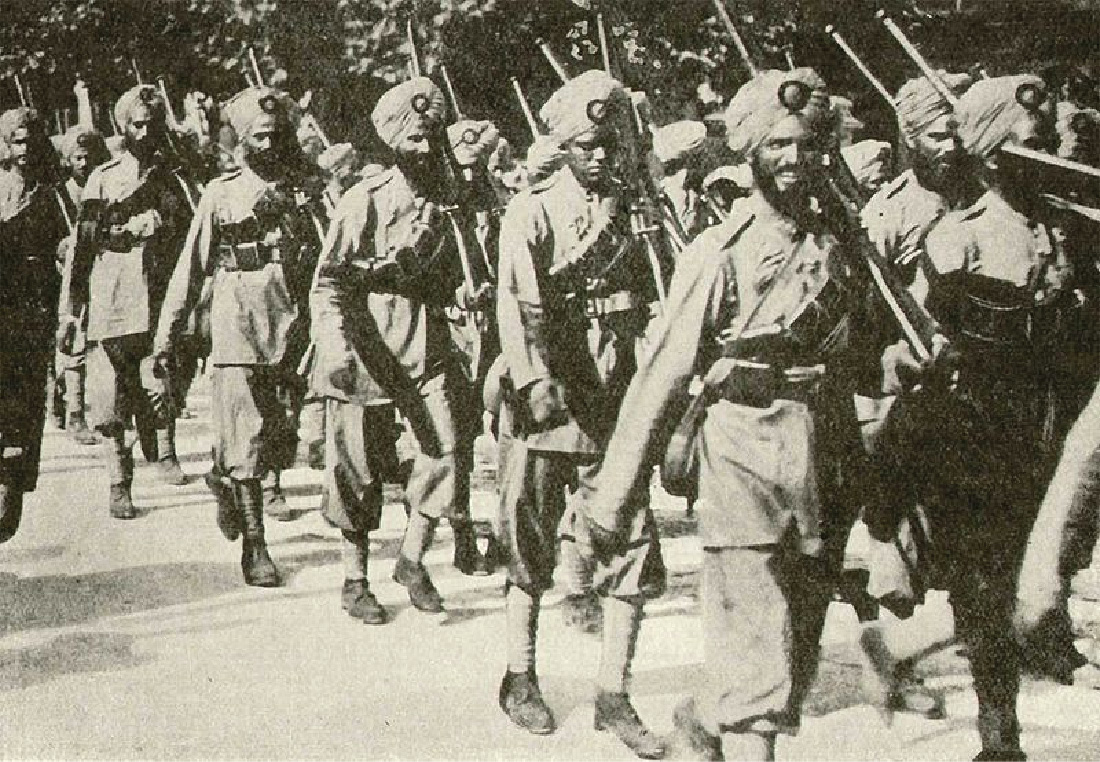
France had extensive colonial holdings throughout Africa and enlisted more than 600,000 soldiers there, most of them from the continent’s west and north. France also employed troops from French Indochina (modern-day Vietnam, Laos, and Cambodia). More than ninety thousand people from French Indochina were brought to Europe, about half of them as laborers for the French armies. Britain made great use of roughly 1.3 million soldiers from India (Figure 11.13). Many were brought to Europe where they fought in the trenches of France and Belgium. Others went to the other theaters of the war—Mesopotamia, Africa, and the Mediterranean. More than three million Africans participated in the war, either as soldiers or in a support capacity. While many fought in Europe, many others fought in French, British, and German colonies in Africa.
英語のヒント
フランスはアフリカ各地に広大な植民地を持ち、主として西部と北部から60万人以上の兵を徴募した。フランス領インドシナ、すなわち現在のベトナム、ラオス、カンボジアの兵も使った。同地域から9万人以上がヨーロッパに連れてこられ、約半数はフランス軍の労働者として働いた。イギリスはインド出身の約130万人の兵を大いに活用した(図11.13)。多くはヨーロッパへ送られ、フランスとベルギーの塹壕で戦った。他の兵はメソポタミア、アフリカ、地中海という別の戦域へ向かった。300万人以上のアフリカ人が、兵士または支援要員として参戦した。ヨーロッパで戦った者も多かったが、アフリカのフランス・イギリス・ドイツの植民地で戦った者も多かった。
Colonial Troops.植民地軍。
(credit: “Indian Troops in France” by The Great World War: A History edited by Frank A. Mumby/Wikimedia Commons, Public Domain) · Public Domain
Figure 11.13 This photo shows troops from India marching in France during World War I. Colonial troops from all over the world served in various capacities in Europe. (credit: “Indian Troops in France” by The Great World War: A History edited by Frank A. Mumby/Wikimedia Commons, Public Domain)
図11.13 第一次世界大戦中、フランスを行進するインド出身の兵士。世界各地の植民地兵がヨーロッパでさまざまな役割を果たした。(出典:フランク・A・マンビー編『大世界戦争の歴史』/ウィキメディア・コモンズの「Indian Troops in France」、パブリックドメイン)
Germany’s colonial forces in Africa were mainly located in East Africa. Colonel Paul von Lettow-Vorbeck commanded thousands of German troops, along with thousands of African porters who carried all the supplies. The plight of African porters underscores the effect racism had on the way the war was fought and who was considered expendable. Porters were given strict rations, in some locations only one thousand calories a day, and forced to march many miles while carrying sixty-pound loads. The death rate among porters was 20 percent over the course of the war, higher than the death rate for British soldiers.
英語のヒント
アフリカのドイツ植民地軍は、主に東アフリカに配置されていた。パウル・フォン・レットウ=フォルベック大佐は数千人のドイツ兵と、すべての物資を運ぶ数千人のアフリカ人運搬人を指揮した。運搬人の窮状は、人種差別が戦い方と、誰を使い捨てにできるとみなすかに与えた影響を浮き彫りにする。配給は厳しく制限され、場所によっては1日1000カロリーしか与えられず、60ポンドの荷を担いで何マイルも歩かされた。戦争を通じた運搬人の死亡率は20%で、イギリス兵の死亡率より高かった。
In addition to colonial troops, the troops of British dominions fought in the war as well. From the very beginning of the conflict, soldiers were organized from Canada, Australia, and New Zealand and sent to the Mediterranean and European theaters. Some of the battles in which they fought became key episodes in their growing national histories.
英語のヒント
植民地軍に加え、イギリス自治領の軍隊も戦争に参加した。開戦当初からカナダ、オーストラリア、ニュージーランドで兵が組織され、地中海とヨーロッパの戦域へ送られた。参加した戦闘の中には、発展しつつある各国の歴史において重要な出来事となったものもある。
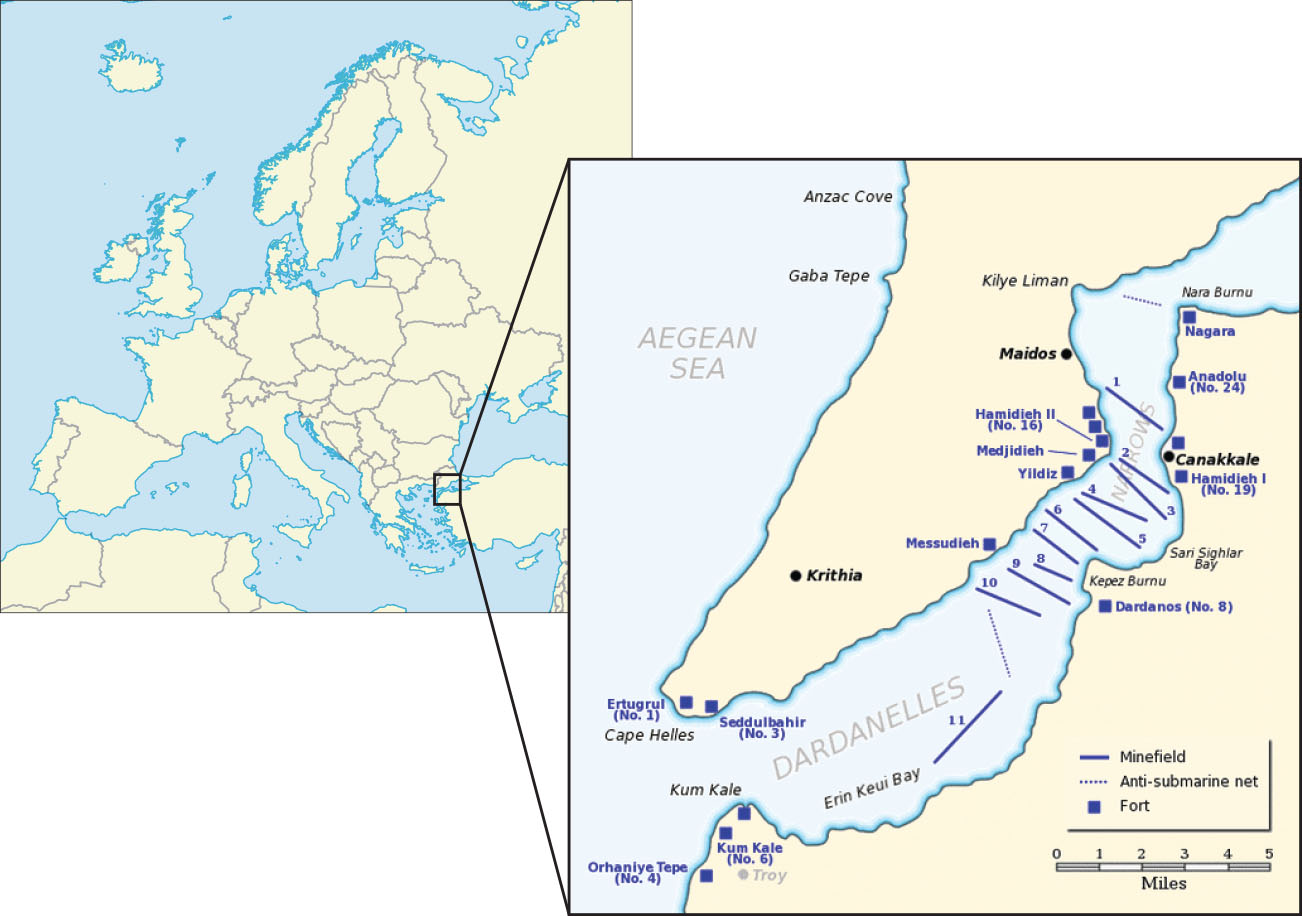
For example, the ANZAC forces representing Australia and New Zealand saw heavy action in the Mediterranean in 1915. The idea behind the British plan was to launch a ship-based artillery attack at the Dardanelles and then land troops on a peninsula called Gallipoli. This would allow the British to link up with Russian forces and coordinate a push against the Turks to isolate the Ottoman Empire and seize control of the important Turkish straits leading to the Sea of Marmara (Figure 11.14). The brainchild of Winston Churchill, then First Lord of the Admiralty, the operation suffered problems from its start in February. The first ships took heavy fire and were crippled by mines. The Turks were prepared for a ground invasion and began firing on the Allied troops from secure positions. Those who made it ashore were unable to do more than establish beachheads and did not drive far into the interior. The situation continued through all of 1915 before the British decided to evacuate their troops. Casualties from both sides totaled approximately 900,000, losses commemorated in Australia and New Zealand each year on ANZAC Day, April 25. Churchill resigned over the debacle.
英語のヒント
たとえば、オーストラリアとニュージーランドを代表するANZAC軍は、1915年に地中海で激戦に参加した。イギリスの計画は、ダーダネルス海峡を艦砲射撃し、その後ガリポリという半島へ上陸するというものだった。これによってロシア軍と連絡を取り、トルコ軍への共同進撃を調整してオスマン帝国を孤立させ、マルマラ海に通じる重要なトルコの海峡を支配できるはずだった(図11.14)。当時の海軍大臣ウィンストン・チャーチルの発案によるこの作戦は、2月の開始時から問題に苦しんだ。最初の艦艇は激しい砲火を受け、機雷で行動不能となった。トルコ軍は地上侵攻に備え、堅固な陣地から連合軍を撃ち始めた。上陸できた兵も橋頭堡を確保する以上のことはできず、内陸へ深く進めなかった。この状況は1915年を通じて続き、イギリスはようやく撤退を決めた。双方の死傷者は合計約90万人に達した。オーストラリアとニュージーランドでは毎年4月25日のANZACの日に、この犠牲を追悼する。チャーチルは大失敗の責任をとって辞任した。
The Ill-Fated Gallipoli Campaign.不運に終わったガリポリ作戦。
(credit left: modification of work "Italy — Details" by The World Factbook/CIA, Public Domain; credit right: modification of work "Dardanelles defences 1915" by "Gsl"/Wikimedia Commons, Public Domain) · Public Domain
Figure 11.14 A British plan to land troops in order to open up the Dardanelles (Strait of Gallipoli) and advance with Russian forces to isolate the Ottoman Empire met overwhelming resistance in Turkey and ultimately failed, costing Prime Minister Churchill his job. This map shows the Turkish defenses in February and March of 1915, including eleven lines of naval mines, two anti-submarine nets, and sixteen major forts. (credit left: modification of work "Italy — Details" by The World Factbook/CIA, Public Domain; credit right: modification of work "Dardanelles defences 1915" by "Gsl"/Wikimedia Commons, Public Domain)
図11.14 ダーダネルス海峡(ガリポリ海峡)を開通させ、ロシア軍とともに進撃してオスマン帝国を孤立させるため上陸するというイギリスの計画は、トルコで圧倒的な抵抗に遭い、最終的に失敗してチャーチル首相を失職させた。この地図は1915年2〜3月のトルコの防衛施設を示し、11列の機雷、二つの対潜水艦網、16の主要要塞を含む。(左の出典:The World Factbook/CIAの「Italy — Details」を改変、パブリックドメイン。右の出典:「Gsl」/ウィキメディア・コモンズの「Dardanelles defences 1915」を改変、パブリックドメイン)
For Canadian forces, the fighting in 1917 at Vimy Ridge, south of Calais, became the key battle to memorialize as a nation. It was fought for a week in April, with Canadian forces charging the German line to take the ridge. More than 3,500 Canadian soldiers were killed and approximately 7,000 were wounded. Canada’s victory became a national rallying point and source of pride.
英語のヒント
カナダ軍にとっては、カレー南方のヴィミー・リッジで1917年に行われた戦闘が、国として記念する重要な戦いとなった。4月に1週間続き、カナダ軍は尾根を奪うためドイツ軍の戦線へ突撃した。3500人以上のカナダ兵が死亡し、約7000人が負傷した。勝利は国民が結束する象徴となり、誇りの源となった。
Prejudice and discrimination were widely evident within the major powers in the war. For example, the interplay between colonial and regular troops and policy decisions about who would be drafted were all reflected in the diversity of the armies engaged in the war. The multitude of nationalities that fought in this war meant that people were regularly engaging with allies from different backgrounds and ethnicities. The prospect of tension in these relationships was clear.
英語のヒント
戦時の主要国の内部では、偏見や差別が広く見られた。たとえば植民地兵と正規軍兵士の相互関係や、誰を徴兵するかという政策上の決定は、戦争に参加する軍隊の多様性にすべて反映された。多くの民族が戦ったため、人々は異なる背景や民族の同盟相手と日常的に関わった。こうした関係に緊張が生じる可能性は明らかだった。
In the United States, the military was still officially segregated. All-Black units had been formed as early as the Civil War, but the military did not integrate any of its branches until after World War II. When the country entered World War I, African American men volunteered in substantial numbers, though the government soon set ceilings on the number it was willing to accept. Once the draft was enacted, southern draft boards were quick to select a disproportionately high number of African Americans in an effort to protect local White men from combat. While most African American soldiers from the United States worked in labor units in Europe, some did see combat, such as the infantry unit dubbed the Harlem Hellfighters.
英語のヒント
アメリカ合衆国では軍隊は依然、公式に人種隔離されていた。黒人だけの部隊は南北戦争の頃から編成されていたが、第二次世界大戦後まで、どの軍種でも人種統合は行われなかった。第一次世界大戦に参戦すると、多数のアフリカ系アメリカ人男性が志願したが、政府はほどなく受け入れ人数に上限を設けた。徴兵制が導入されると、南部の徴兵委員会は地元の白人男性を戦闘から守るため、不釣り合いに多くのアフリカ系アメリカ人をすぐに選んだ。アメリカから渡ったアフリカ系アメリカ人兵士の多くはヨーロッパで労働部隊に所属したが、「ハーレム・ヘルファイターズ」と呼ばれる歩兵部隊のように、実戦を経験した者もいた。
The situation developing in the far reaches of the Ottoman Empire also reflected both diversity and prejudice. Turks dominated in Istanbul, the capital, and in the Anatolian Peninsula. However, large areas of the empire were inhabited by Muslims of other ethnicities, primarily Arabs. During the war, some of these Arab Muslim populations, led by the sharif (ruler) of Mecca, began to fight against the Ottoman overlords in the Arab Revolt of 1916. The British government seized this opportunity to further drive a wedge in the operations of the Ottoman Empire by offering support to the rebels and promising them an independent Arab state free of Turkish control. One British officer, T.E. Lawrence, began working with Faisal ibn Hussein, a son of the sharif. The Arab Revolt was successful in targeting railways and causing problems for the Ottoman forces, but it did not achieve the goal of independence for Arabia. However, when the war ended with the Ottoman Empire defeated and soon dissolved, Arabia was able to separate itself from Ottoman control.
英語のヒント
オスマン帝国の遠方の地域で進む事態も、多様性と偏見の両方を反映していた。首都イスタンブルとアナトリア半島ではトルコ人が優勢だった。しかし帝国の広い地域には、主としてアラブ人など、他民族のムスリムが住んでいた。戦時中、その一部はメッカのシャリーフ(支配者)に率いられ、1916年のアラブ反乱でオスマンの支配者と戦い始めた。イギリス政府はこの機会を捉え、反乱軍を支援し、トルコ支配から自由な独立アラブ国家を約束して、帝国の活動にさらに楔を打ち込んだ。イギリス将校T・E・ロレンスは、シャリーフの息子ファイサル・イブン・フサインと協力し始めた。アラブ反乱は鉄道を標的とし、オスマン軍を苦しめることに成功したが、アラビア独立の目標は達成しなかった。しかしオスマン帝国が敗戦し、ほどなく解体されると、アラビアはその支配から離れることができた。
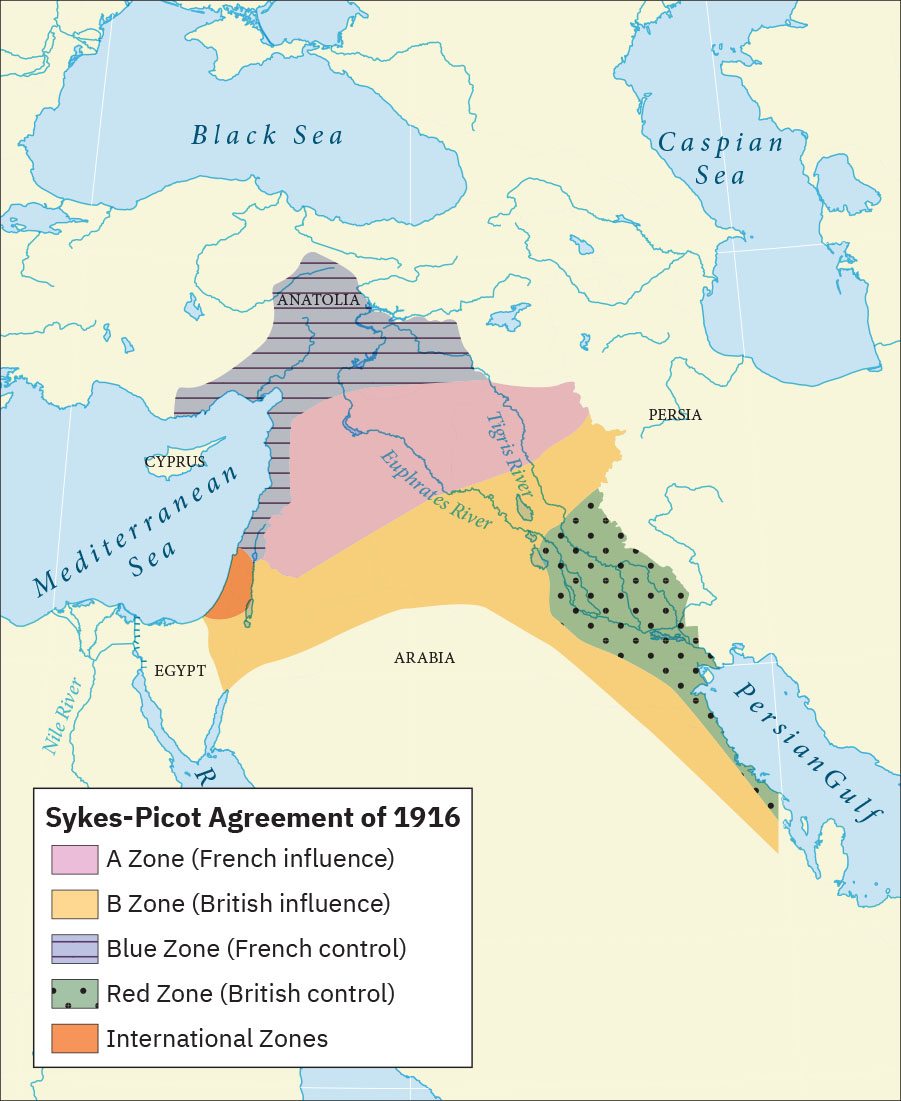
European powers approached Arabia and the Middle East with the same colonial conventions under which they had operated in the nineteenth century. They believed that even after the war they would be the ones deciding the fate of these lands. In 1916, the Sykes-Picot Agreement, a covert deal made between Britain and France with the approval of Italy and Russia, divided the areas of the Middle East under two spheres of influence, with what are today Lebanon, Syria, and northern Iraq going to France and the areas of Jordan, Kuwait, and southern Iraq going to Britain. Britain, France, and Russia were to share control of Palestine (Figure 11.15). Britain and France understood that the world’s growing reliance on oil would make this region a major player in the future. The Sykes-Picot Agreement also supported the creation of an independent Arab state, but this did not come to pass.
英語のヒント
ヨーロッパ列強は、19世紀に行ってきたのと同じ植民地支配の慣行で、アラビアと中東に接した。戦後も自分たちがこれらの土地の運命を決めると考えていた。1916年のサイクス=ピコ協定は、イタリアとロシアの承認を得てイギリスとフランスが結んだ秘密の取引で、中東を二つの勢力圏に分けた。現在のレバノン、シリア、イラク北部はフランスに、ヨルダン、クウェート、イラク南部はイギリスに割り当てられた。パレスチナはイギリス、フランス、ロシアが共同で支配することになった(図11.15)。イギリスとフランスは、世界の石油依存が高まれば、この地域が将来の主要な担い手になると理解していた。協定は独立アラブ国家の建設も支持したが、それは実現しなかった。
Sykes-Picot Agreement.サイクス=ピコ協定。
(credit: modification of work “Fertile Crescent blank base map” by “NormanEinstein”/Wikimedia Commons, Public Domain) · Public Domain
Figure 11.15 This map reflects the proposed boundaries of the 1916 Sykes-Picot Agreement. It shows how much territory the French and British were prepared to claim in the Middle East, and it helped set the stage for many of the tensions in the region over the next decades. (credit: modification of work “Fertile Crescent blank base map” by “NormanEinstein”/Wikimedia Commons, Public Domain)
図11.15 1916年のサイクス=ピコ協定で提案された境界を反映した地図。フランスとイギリスが中東でどれほどの領土を要求するつもりだったかを示し、その後数十年にわたる地域の多くの緊張の土台を作った。(出典:「NormanEinstein」/ウィキメディア・コモンズの「Fertile Crescent blank base map」を改変、パブリックドメイン)
The Sykes-Picot Agreement was kept secret at the time, and promises that contradicted it were explicitly made to some of those involved in the Arab Revolt, such as the British promise of Syria to Faisal ibn Hussein. News of the agreement leaked out by 1918, angering many throughout the region. The Balfour Declaration that soon followed also contributed to frustrations in Palestine by making it clear that Britain supported a Jewish homeland in Palestine.
英語のヒント
サイクス=ピコ協定は当時秘密にされ、イギリスがファイサル・イブン・フサインにシリアを約束するなど、アラブ反乱の関係者の一部には協定と矛盾する約束が明示的に与えられた。1918年までに協定の内容が漏れ、地域全体の多くの人々を怒らせた。続くバルフォア宣言も、イギリスがパレスチナにユダヤ人の民族的郷土を支持すると明確にしたことで、パレスチナの不満を強めた。
For its part, Germany sought to appeal to Muslim troops, in part by making sure its Muslim prisoners of war were properly treated and pledging them its support for Islam. The Germans even built a mosque so their prisoners could properly pray. The aim was to persuade them to fight against the Allied powers instead of Germany. The Turkish sultan (a German ally) endorsed this view, calling for all Muslims to fight against their oppressors, the Allies. Few prisoners of war heeded the call, however.
英語のヒント
ドイツ側はムスリム兵に働きかけようとし、その一環としてムスリム捕虜を適切に扱い、イスラームへの支持を約束した。捕虜が正しく祈れるよう、モスクまで建てた。目的は、ドイツではなく連合国と戦うよう説得することだった。ドイツの同盟者であるトルコのスルタンもこの考えを支持し、すべてのムスリムに、抑圧者たる連合国と戦うよう呼びかけた。しかし、この呼びかけに応じた捕虜はほとんどいなかった。
One of the more violent examples of prejudice during this period affected the Armenian population of the Ottoman Empire. Armenians were a Christian minority and resided in both Ottoman lands and Russia. Due to their background, religion, and location, they were seen as potential collaborators with the Russians, who were also Christians. Believing that local Armenians had been working against the Ottoman army, in 1915 Ottoman troops began murdering them. The Armenians defended themselves, and the Ottoman government ordered their removal from the region, granting its officials permission to repress resistance. Over the next few months, approximately one million Armenians died from forced marches or were executed by the Ottoman government. The Ottomans did not acknowledge this genocide at the time, and to this day, the Turkish government does not admit it occurred.
英語のヒント
この時期の偏見の、より暴力的な例の一つは、オスマン帝国のアルメニア人を襲った。アルメニア人はキリスト教徒の少数派で、オスマン領とロシアの両方に住んでいた。その背景、宗教、居住地のため、同じキリスト教徒のロシア人に協力する可能性があるとみなされた。地元のアルメニア人がオスマン軍に敵対して活動していると信じた軍は、1915年に彼らを殺し始めた。アルメニア人は自衛したが、オスマン政府は地域からの追放を命じ、当局者に抵抗を鎮圧する権限を与えた。その後数か月で、約100万人のアルメニア人が強制行進で死亡するか、オスマン政府に処刑された。オスマン帝国は当時このジェノサイドを認めず、トルコ政府は今日に至るまで、その発生を認めていない。