第7章ヨーロッパと北アメリカの革命Revolutions in Europe and North America
The Haitian Revolutionハイチ革命
Like the leaders of revolution in the North American colonies and France, the leaders of Haiti’s Revolution sought to reject tyranny and dismantle long-standing inequities. Unlike the British colonists, however, the Haitian revolutionaries made addressing racial discrimination and injustice their primary aim. The Haitian Revolution was the first uprising of enslaved people in history that not only toppled a colonial regime but also established national independence (Figure 7.13). Independence came at a tremendous cost, however, since France forced the new republic to pay steep indemnities to compensate French citizens for their property losses for many years, impoverishing the new nation. Nevertheless, the revolution represented one of the most significant challenges to colonialism raised in the Western Hemisphere.
英語のヒント
北米植民地やフランスの革命指導者と同じく、ハイチ革命の指導者たちは専制を拒み、長年の不平等を解体しようとした。しかしイギリスの植民地人とは異なり、ハイチの革命家は人種差別と不正義への対処を第一の目標に据えた。ハイチ革命は、奴隷にされた人々の蜂起が植民地体制を倒しただけでなく、国家の独立も実現した、歴史上初めての例だった(図7.13)。しかし独立には莫大な代償が伴った。フランスは新しい共和国に対し、フランス人が失った財産を補償するため、長年にわたって高額の賠償金を支払わせ、新国家を貧困に陥れた。それでもこの革命は、西半球における植民地主義への最も重要な挑戦の一つだった。
Haitian Revolution.ハイチ革命。
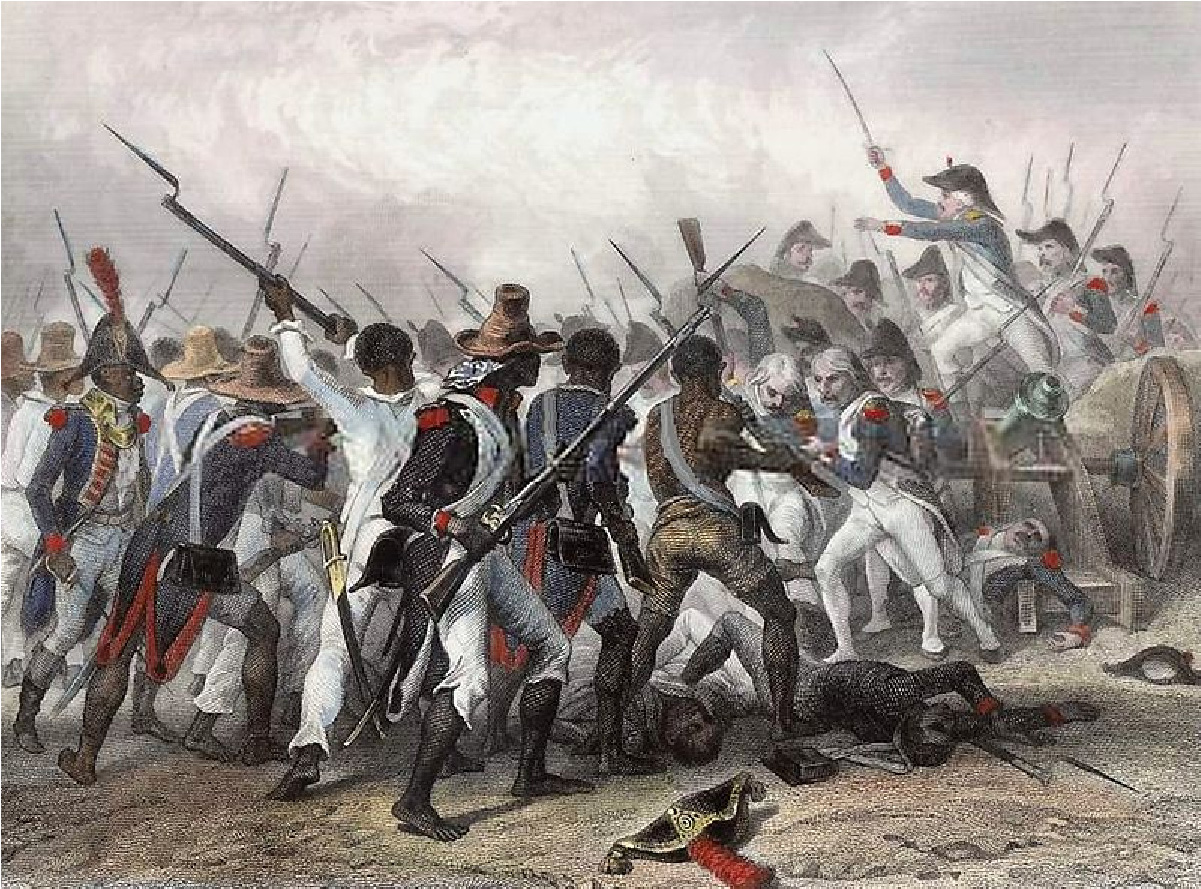
(credit: “Haitian Revolution” by Auguste Raffet/Hebert in Library of Congress/Wikimedia Commons, Public Domain) · Public Domain
Figure 7.13 This 1802 engraving by Auguste Raffet depicts one of the major battles of the Haitian Revolution, the battle of Crête-à-Pierrot, which took place that year. The Haitian army initially suffered a crushing defeat there but eventually won an inspiring victory. (credit: “Haitian Revolution” by Auguste Raffet/Hebert in Library of Congress/Wikimedia Commons, Public Domain)
英語のヒント
図7.13 オーギュスト・ラフェによるこの1802年の版画は、その年に起きたハイチ革命の主要戦闘の一つ、クレート=ア=ピエロの戦いを描く。ハイチ軍は当初、そこで大敗を喫したが、最終的には人々を勇気づける勝利を収めた。(画像:Auguste Raffet/Hebert、Library of Congress/Wikimedia Commons「Haitian Revolution」、パブリックドメイン。)
As France’s wealthiest colony, Saint-Domingue on the island of Hispaniola yielded roughly 40 percent of the sugar and nearly half the coffee imported to Europe in the eighteenth century. Producing these labor-intensive commodities depended on maintaining a ruthless regime that enslaved the majority of the colony’s population. At the beginning of the Haitian Revolution, roughly 500,000 enslaved people lived in Saint-Domingue, mostly of sub-Saharan African descent. A population of about forty thousand Whites was a mix of wealthy planters, middle-class professionals, and poor laborers. A third group of about thirty thousand were gens de couleur libres (a French term meaning free people of color), many of mixed-race heritage and some holding enslaved people themselves. Given sharp social divisions and the exploitation of the colony’s enslaved people, Saint-Domingue was poised for turmoil.
英語のヒント
イスパニョーラ島のサン=ドマングは、フランスで最も豊かな植民地であり、18世紀にヨーロッパへ輸入された砂糖の約40%、コーヒーのほぼ半分を産出した。これらの労働集約的な商品を生産するには、植民地住民の大多数を奴隷にする、冷酷な体制を維持する必要があった。ハイチ革命が始まった当時、サン=ドマングには約50万人の奴隷にされた人々が暮らし、その大半はサハラ以南のアフリカの出身者やその子孫だった。約4万人の白人には、裕福な農園主、中間階級の専門職、貧しい労働者が混在した。約3万人からなる第3の集団は、フランス語で「自由身分の有色人種」を意味するジャン・ド・クルール・リーブルで、多くは複数の人種的出自を持ち、なかには自ら奴隷を所有する者もいた。社会の鋭い分断と奴隷にされた人々の搾取を考えれば、サン=ドマングは騒乱が起こる寸前にあった。
After news of the revolution in France reached the colony, its White planters and gens de couleur libres sent delegates to Paris in 1789 in hopes of securing greater economic and political freedoms from the French. Largely driven by self-interest, each group interpreted the principles and goals of the revolution differently. Whereas wealthy White planters sought political autonomy and greater freedom from trade restrictions, poor Whites were primarily interested in securing equal citizenship for themselves. Neither wealthy nor poor Whites were concerned with gaining equal political or legal rights for people of color. The gens de couleur libres, on the other hand, interpreted the revolutionary rhetoric of liberty to mean the extension of equal rights to all free people regardless of race. Given that some of them owned enslaved people, however, they did not call for an end to slavery. The incompatible goals of each group intensified hostilities among the free sectors of Saint-Domingue’s population. The conflict between Whites and gens de couleur libres exploded in 1791, after Haiti’s White population refused to acknowledge the citizenship rights that France had extended to wealthy people of color. The resulting turmoil and instability provided the perfect opportunity for rebellion, which expanded into a full-fledged revolution.
英語のヒント
フランス革命の知らせが届くと、植民地の白人農園主と自由身分の有色人種は、フランスからより大きな経済的・政治的自由を得ようと、1789年にパリへ代表を送った。各集団は主に自分たちの利益に動かされ、革命の原理と目標を異なる形で解釈した。裕福な白人農園主は政治的自治と貿易制限からの解放を求めたが、貧しい白人は主として、自分たちの平等な市民権の確保に関心を持った。裕福な白人も貧しい白人も、有色人種が政治的・法的に平等な権利を得ることには関心がなかった。これに対して自由身分の有色人種は、革命が唱える自由を、人種を問わずすべての自由人に平等な権利を広げることだと解釈した。しかし自分たちのなかにも奴隷所有者がいたため、奴隷制の廃止は求めなかった。各集団の両立しない目標は、サン=ドマングの自由身分の人々の間の敵意を強めた。1791年、フランスが裕福な有色人種に認めた市民権をハイチの白人住民が認めようとしなかったことで、白人と自由身分の有色人種の対立は爆発した。その結果生じた混乱と不安定さは、蜂起の絶好の機会を作り、それが本格的な革命へと広がった。
Although it may seem at first that the French Revolution and Enlightenment ideals provided the motivation for revolution in Haiti, much of the inspiration actually came from rumors that France had outlawed slavery, the existence of enslaved leaders poised to rebel against White plantation owners, and the influence of beliefs based on Vodou (Voodoo), a mix of Roman Catholic and indigenous West African religious practices. In August 1791, a group of enslaved people planning a rebellion met in a heavily wooded area known as Bois Caïman to formalize their pact in a Vodou ritual overseen by Dutty Boukman, a Vodou priest from Jamaica. It is difficult to know the precise nature of the ceremony. Because France had outlawed the practice of Vodou in its colonies, such gatherings were generally shrouded in secrecy. Nevertheless, it is clear that Vodou was a vital spiritual tradition for enslaved Africans, and one of the few areas in which they could achieve a sense of psychological independence. Due to its widespread appeal among Saint-Domingue’s enslaved population, Vodou thus united different rebel groups and played a significant role in propelling the revolution.
英語のヒント
一見すると、フランス革命と啓蒙の理想がハイチ革命の動機を与えたように思えるかもしれない。しかし実際には、その多くは、フランスが奴隷制を禁じたという噂、白人農園主に反乱を起こす準備をしていた奴隷身分の指導者の存在、そしてローマ・カトリックと西アフリカ土着の宗教実践を混ぜ合わせたヴォドゥー(ブードゥー)の信仰の影響から生まれた。1791年8月、蜂起を計画する奴隷にされた人々の集団が、ボワ・カイマンという深い森に集まり、ジャマイカ出身のヴォドゥーの司祭デュティ・ブークマンの取り仕切る儀礼で、盟約を正式に結んだ。この儀式の正確な内容を知るのは難しい。フランスが植民地でヴォドゥーを禁じていたため、こうした集まりは通常、秘密に包まれていたからである。それでも、ヴォドゥーが奴隷にされたアフリカ人にとって重要な精神的伝統であり、心理的な自立感を得られる数少ない領域の一つだったことは明らかである。サン=ドマングの奴隷人口の間で広く支持されたため、ヴォドゥーは異なる反乱集団を結びつけ、革命を進めるうえで大きな役割を果たした。
Within a few days of the Bois Caïman meeting, some gens de couleur libres joined forces with rebelling enslaved people in an uprising against White colonists. After initiating the rebellion in the north of Saint-Domingue and destroying numerous plantations, they continued to escalate the movement. By September 1791, revolt had spread to Port-au-Prince, the colony’s capital.
英語のヒント
ボワ・カイマンの集会から数日以内に、自由身分の有色人種の一部が、反乱を起こした奴隷にされた人々と合流し、白人植民者に対する蜂起に加わった。サン=ドマング北部で反乱を始め、多くの農園を破壊した後、彼らは運動をさらに拡大した。1791年9月までに、反乱は植民地の首都ポルトープランスに広がっていた。
Other countries soon became involved in the rebellion in Haiti. In 1792, France, in an effort to stop the uprising in Haiti, sent troops to the island and extended the rights of citizenship to all free men of color in order to end their support for the rebellious enslaved people. By 1793, France found itself at war with most of the nations of Europe, including Britain and Spain. European rulers did not wish the French revolutionary sentiment that had led to the overthrow of Louis XVI to spread to their states, and France went to war to ensure that hostile monarchs did not bring an end to the revolution. In 1793, Britain and Spain landed troops in Haiti, where they supported the White colonists in their attempt to put down the slave rebellion. Both Spain and Britain hoped to weaken France by depriving it of revenues from the sale of Haitian sugar and to prevent the slave rebellion from spreading to their own Caribbean colonies. Military intervention did not end the rebellion, however. France officially abolished slavery in 1794, during the most radical phase of the revolution, and colonial officials in Saint-Domingue issued an emancipation decree.
英語のヒント
ほどなく他国もハイチの反乱に関与するようになった。1792年、フランスは蜂起を止めようと島へ軍を送り、奴隷身分の反乱者への支援をやめさせるため、自由身分の有色人種男性すべてに市民権を広げた。1793年までに、フランスはイギリスやスペインを含むヨーロッパの大半の国と戦争状態になった。ヨーロッパの統治者は、ルイ16世を倒した革命の精神が自国へ広まることを望まず、フランスも、敵対する君主たちに革命を終わらせられないよう戦争を行った。1793年、イギリスとスペインはハイチに軍を上陸させ、奴隷の反乱を鎮圧しようとする白人植民者を支援した。両国は、ハイチの砂糖販売による収入を奪ってフランスを弱め、自国のカリブ植民地へ反乱が波及するのを防ごうとした。しかし軍事介入は反乱を終わらせなかった。フランスは革命が最も急進化した1794年に正式に奴隷制を廃止し、サン=ドマングの植民地当局は解放令を発した。
With François-Dominique Toussaint Louverture, a military leader and formerly enslaved man, at the helm, many reforms were brought to the island of Hispaniola, which included Saint-Domingue and the Dominican Republic (Figure 7.14). Louverture freed the enslaved people in both colonies in 1801. He then promoted a constitution for the new nation of Haiti, which he nevertheless maintained was still part of the French Empire. The constitution was based on principles of natural rights and social contract theory similar to those that had guided the French and American Revolutions, but it also made Louverture governor-general of Haiti for life, gave him extensive powers, and allowed him to select his successor in office. Louverture also forced the formerly enslaved Haitian peasants to work in the sugarcane fields. Despite Louverture’s forced labor policy, Haiti, unlike the United States or France, directly addressed the issue of racial inequality, granted rights to all citizens regardless of race or social class, and extended citizenship to all Black, Indigenous, and mixed-raced people who had resided in the nation for at least one year. However, although political rights were extended to all male citizens, Haitian women had to wait until the twentieth century before receiving the right to vote, as did women in France and the United States.
英語のヒント
軍事指導者で、かつて奴隷にされていたフランソワ=ドミニク・トゥサン・ルーヴェルチュールが指揮を執ると、サン=ドマングとドミニカ共和国を含むイスパニョーラ島には、多くの改革がもたらされた(図7.14)。1801年、彼は両植民地の奴隷にされた人々を解放した。その後、新しい国ハイチの憲法を推進したが、ハイチは依然フランス帝国の一部だという立場も保った。憲法は、フランス革命やアメリカ革命を導いたものと似た自然権と社会契約論の原理に基づいていた。しかし同時に、ルーヴェルチュールを終身のハイチ総督とし、幅広い権限と後継者を選ぶ権利も与えた。また彼は、かつて奴隷にされていたハイチの農民に、サトウキビ畑で働くことを強制した。この強制労働政策にもかかわらず、ハイチはアメリカ合衆国やフランスとは異なり、人種的不平等の問題に直接取り組み、人種や社会階級を問わずすべての市民に権利を与え、少なくとも1年国内に住んだ黒人、先住民、複数の人種的出自を持つ人すべてに市民権を広げた。しかし、政治的権利は男性市民全員に広げられたものの、ハイチの女性はフランスやアメリカの女性と同じく、選挙権を得るまで20世紀を待たなければならなかった。
The Island of Hispaniola.イスパニョーラ島。
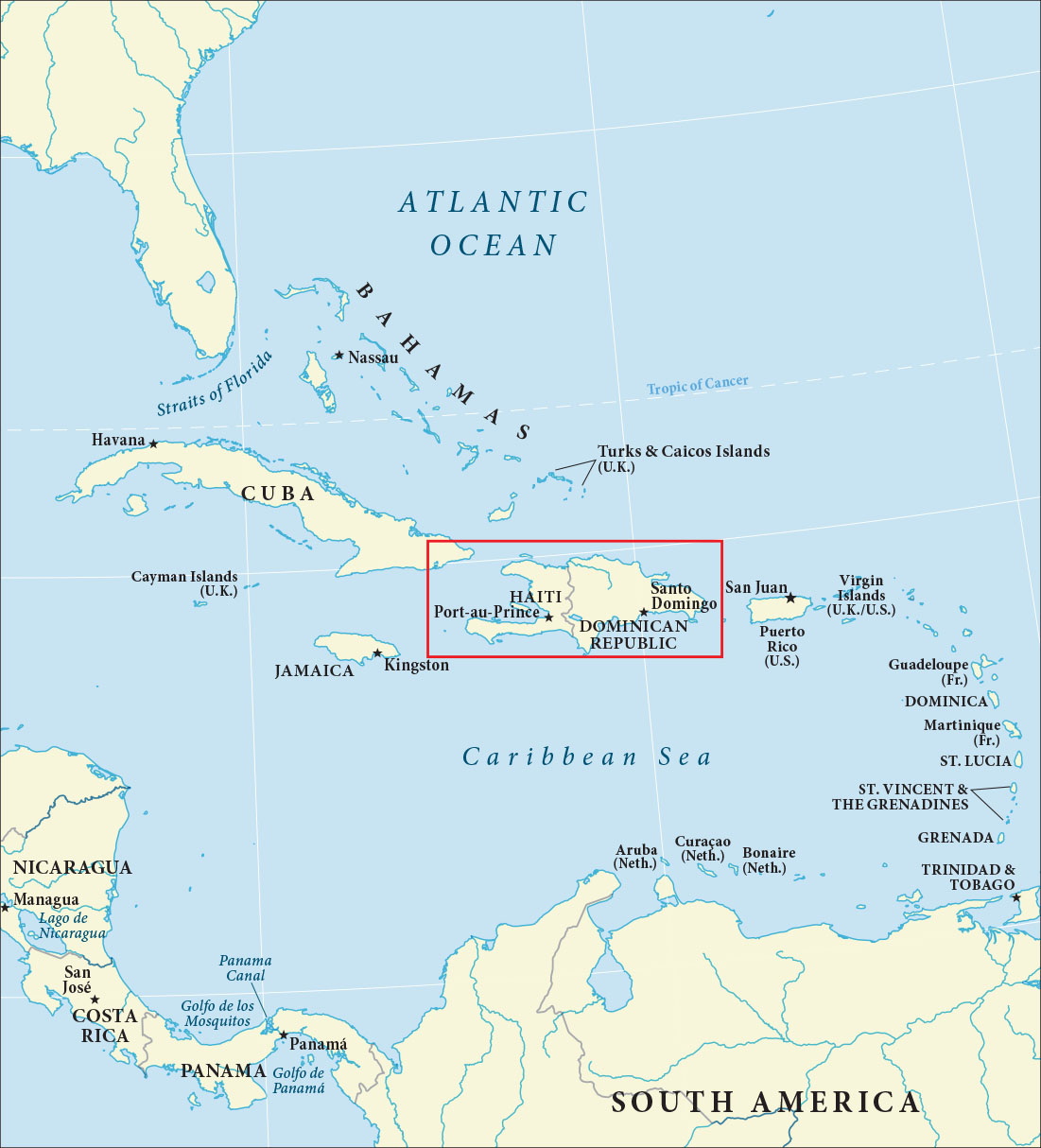
(attribution: Copyright Rice University, OpenStax, under CC BY 4.0 license) · CC BY 4.0
Figure 7.14 Hispaniola, an island in the Caribbean, is the home of the modern nations of Haiti and the Dominican Republic and was originally inhabited by the Taíno people of the Arawak tribe. (attribution: Copyright Rice University, OpenStax, under CC BY 4.0 license)
図7.14 カリブ海の島イスパニョーラには、現在のハイチとドミニカ共和国があり、もとはアラワク系のタイノの人々が暮らしていた。(出典:著作権 Rice University, OpenStax、CC BY 4.0ライセンス。)
As the leader of the Haitian Revolution, Louverture was a target of French antagonism. Despite a brief cessation of hostilities, he was arrested in 1802 when Napoléon attempted to reclaim control of Saint-Domingue. After being deported to France, Louverture spent the brief remainder of his life in a French prison, writing his memoirs to defend himself against charges of treason.
英語のヒント
ハイチ革命の指導者だったルーヴェルチュールは、フランスの敵意の的となった。一時的な戦闘停止にもかかわらず、ナポレオンがサン=ドマングの支配を取り戻そうとした1802年、彼は逮捕された。フランスに強制移送された後、短い余生をフランスの監獄で過ごし、反逆の罪から自分を弁護するため回想録を書いた。
Although Napoléon attempted to reinstate slavery and reclaim French control of Saint-Domingue in 1802, his army was overpowered by the rebel army and Louverture’s successor, Jean-Jacques Dessalines. Dessalines and his victorious forces thereafter renamed their country Haiti, a term meaning mountainous that derived from the Taíno language of the precolonial people. After Dessalines declared Haiti’s sovereign independence on January 1, 1804, White plantation owners either fled or were killed, and lands were redistributed among Haiti’s former enslaved and free Black people. Despite the promise of Haiti’s fledgling nationhood, however, in 1825, France imposed an exorbitant independence debt that devastated the new country’s economy for many years thereafter. Principles of social equality, moreover, remained incomplete when former gens de couleur libres adopted the roles of the former plantation owners at the top of the social hierarchy. Thus, the Haitian Revolution did not bring lasting equality for all, but it did remove racial inequalities even though the gens de couleur libres brought an element of race into their views.
英語のヒント
1802年、ナポレオンは奴隷制を復活させ、サン=ドマングへのフランス支配を取り戻そうとした。しかし、その軍は、ルーヴェルチュールの後継者ジャン=ジャック・デサリーヌと反乱軍に打ち負かされた。その後、デサリーヌと勝利した軍勢は、植民地化以前の人々のタイノ語で「山がちな」を意味する語に由来する「ハイチ」へと、国の名を改めた。1804年1月1日にデサリーヌがハイチの主権独立を宣言した後、白人農園主は逃亡するか殺され、土地はハイチの元奴隷と自由身分の黒人の間で再分配された。しかし、新しい国家としての前途への期待にもかかわらず、1825年にフランスは法外な独立債務を課し、その後長年にわたってハイチ経済を破壊した。さらに、かつての自由身分の有色人種が、社会序列の頂点で旧農園主の役割を引き継いだため、社会的平等の原理も不完全なままだった。こうしてハイチ革命は、すべての人に永続する平等をもたらしたわけではない。しかし、自由身分の有色人種の考え方に人種的要素が持ち込まれていたにもかかわらず、人種間の不平等を取り除いた。
Despite economic instability and the complexities of race relations in Haiti after the revolution, its independence stood as a remarkable challenge to colonialism and the institution of slavery. Haiti also successfully resolved the incompatibility between revolutionary principles of liberty and the practice of slavery. The success of its revolution gave hope to other slave societies and sent shockwaves through slaveholding societies across the Atlantic. Ultimately, fear generated by the Haitian Revolution led to a conservative backlash among elites and a temporary expansion of slavery in neighboring countries such as Cuba. The United States did not officially recognize Haiti as an independent nation until 1862. However, the long-term legacy of Haitian independence later inspired slave revolts elsewhere in the Atlantic, such as the German Coast Uprising in Louisiana in 1811, and ultimately posed a significant challenge to the European colonial order.
英語のヒント
革命後のハイチには、経済の不安定さと複雑な人種関係があった。それでも、その独立は植民地主義と奴隷制度への注目すべき挑戦だった。ハイチはまた、革命の自由の原理と奴隷制の実践が両立しないという問題を、解消することにも成功した。革命の成功は、他の奴隷社会に希望を与え、大西洋の両岸の奴隷所有社会に衝撃を走らせた。最終的に、ハイチ革命が生んだ恐怖は、上層者の間で保守的な反動を招き、キューバなどの近隣国では奴隷制が一時的に拡大した。アメリカ合衆国は、1862年までハイチを独立国家として正式に承認しなかった。しかし、ハイチ独立の長期的な遺産は、その後、1811年のルイジアナのジャーマン・コースト蜂起など、大西洋世界の別の場所の奴隷反乱を鼓舞し、最終的にヨーロッパの植民地秩序への大きな挑戦となった。