第7章ヨーロッパと北アメリカの革命Revolutions in Europe and North America
7.2 The Exchange of Ideas in the Public Sphere7.2 公共圏における思想の交流
Learning Objectives学習の目標
By the end of this section, you will be able to:
この節を学ぶと、次のことができるようになる。
Explain the role of the public sphere as a place for debate and dissent
英語のヒント
討論や異論表明の場としての公共圏の役割を説明する。
Identify the role of public and private forms of expression in the Enlightenment
啓蒙時代における公的・私的な表現形態の役割を明らかにする。
Discuss the role of universities in fostering public debate
公の討論を促すうえで大学が果たした役割を論じる。
As the intellectual ferment of the Enlightenment continued over the course of the eighteenth century, new ideas about religion, political power, and the human condition proliferated alongside a growing revolutionary spirit. Helping to spread these ideas was the emergence of the public sphere, spaces beyond the home and under the control of neither the church nor the state, such as coffeehouses and taverns where people could engage in free and open intellectual exchange, without fear of retribution.
英語のヒント
18世紀を通じて啓蒙思想の知的な活気が続くなか、革命的な精神の高まりとともに、宗教、政治権力、人間の境遇についての新しい考えが次々に広まった。その普及を助けたのが公共圏の出現だった。公共圏とは、家庭の外にあり、教会にも国家にも支配されない空間のことで、コーヒーハウスや酒場などが含まれる。そこでは人々が、報復を恐れずに自由で開かれた知的交流を行うことができた。
Before the late seventeenth century, public forums had been relatively uncommon in Europe outside England. But in the urban centers of the Islamic world and the trade centers of East Asia, informal spaces for conversation and political discussion, such as the many Turkish coffeehouses and the Confucian academies in Korea, were prominent features of social life. As international trade and cultural exchange increased between Europe and its Eastern neighbors during the Enlightenment, these autonomous secular spaces had a profound influence on the development of the public sphere in Europe.
英語のヒント
17世紀末より前、イングランドを除くヨーロッパでは、公の討論の場は比較的まれだった。しかし、イスラーム世界の都市や東アジアの交易中心地では、トルコの多くのコーヒーハウスや朝鮮の儒教の書院のように、会話や政治的議論のための非公式な空間が、社会生活の目立つ特徴となっていた。啓蒙時代にヨーロッパと東方の近隣地域の間で国際貿易や文化交流が増えると、これらの自律的で世俗的な空間は、ヨーロッパの公共圏の発展に深い影響を与えた。
Public Debate and Dissent公の討論と異論
In the medieval period in Europe, opportunities for social encounters and the exchange of ideas had generally been limited to the domestic sphere of private households, or to spaces in which monarchical or church authority could quash dissent or criticism. Over the course of Europe’s seventeenth and eighteenth centuries, public spaces became a pervasive feature of its intellectual culture for the first time.
英語のヒント
中世ヨーロッパでは、人と出会い思想を交換する機会は、一般に私的な家庭の空間、または君主や教会の権威が異論や批判を抑え込める空間に限られていた。17〜18世紀を通じてヨーロッパでは、公共の空間が初めて、その知的文化の広く見られる特徴となった。
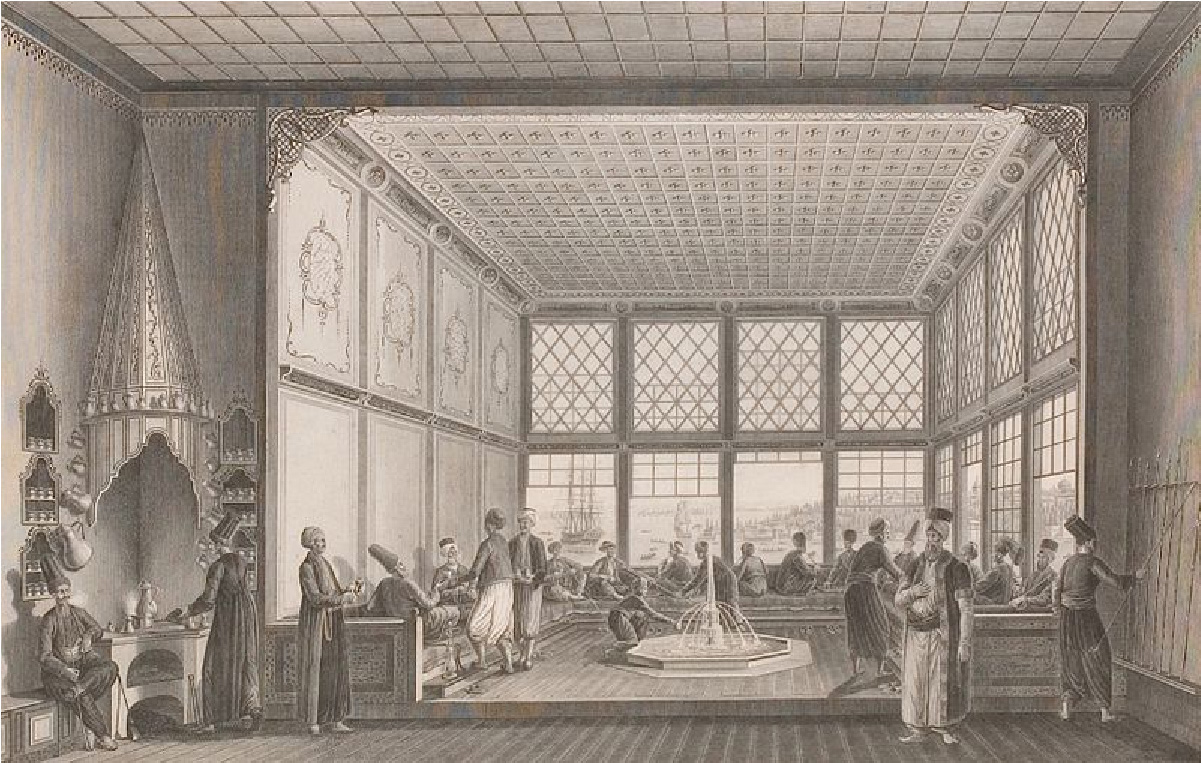
Coffeehouses, which became a staple of European cities by the end of the eighteenth century, had long been centers of intellectual exchange and informal socialization in cities of the Islamic world after the practice of roasting coffee beans and making them into a drink began in Yemen in the 1400s. After its subsequent adoption in Arabia, coffee drinking spread to Egypt, Persia, and the Ottoman Empire. By the mid-sixteenth century, coffeehouses had become a fixture of social life in many communities of the Islamic world, where people could participate in a wide variety of conversations. Istanbul’s cosmopolitan district of Tahtakale, where merchants, artisans, sailors, tradespeople, and travelers congregated, was an especially fitting site for the development of such establishments. After the first cafés there gained a wide following, portable coffee stalls and neighborhood coffeehouses became popular throughout the Ottoman Empire (Figure 7.7).
英語のヒント
18世紀末までにヨーロッパの都市でおなじみの存在となったコーヒーハウスは、イスラーム世界の都市では、それ以前から長く知的交流や気軽な社交の中心だった。1400年代のイエメンでコーヒー豆を焙煎して飲料にする習慣が始まり、その後アラビアに取り入れられると、コーヒーを飲む習慣はエジプト、ペルシア、オスマン帝国へと広まった。16世紀半ばまでに、コーヒーハウスはイスラーム世界の多くの共同体で社会生活に欠かせない存在となり、人々はそこでさまざまな会話に参加できた。商人、職人、船員、商売人、旅行者が集まるイスタンブルの国際的なタフタカレ地区は、とくにこうした店の発展にふさわしい場所だった。そこで最初のカフェが多くの支持を集めると、移動式のコーヒー屋台や近隣住民向けのコーヒーハウスが、オスマン帝国全土で人気を得た(図7.7)。
A Coffeehouse in Istanbul.イスタンブルのコーヒーハウス。
(credit: “Depiction of an Ottoman Coffeehouse” by Antoine-Ignace Melling in Routledge/Wikimedia Commons, Public Domain) · Public Domain
Figure 7.7 Late eighteenth-century coffeehouses in the Islamic world, like the Istanbul establishment in this image from architect Antoine Ignace Melling’s classic 1819 visual record of the city, served as inspiration for the cafés of Enlightenment Europe’s new public sphere. (credit: “Depiction of an Ottoman Coffeehouse” by Antoine-Ignace Melling in Routledge/Wikimedia Commons, Public Domain)
図7.7 建築家アントワーヌ=イニャス・メランが1819年に刊行した、イスタンブルの代表的な図像記録に描かれたこの店のように、18世紀末のイスラーム世界のコーヒーハウスは、啓蒙時代のヨーロッパの新たな公共圏のカフェに着想を与えた。(画像:Antoine-Ignace Melling、Routledge/Wikimedia Commons「Depiction of an Ottoman Coffeehouse」、パブリックドメイン。)
In Europe, the first coffeehouse based on the Turkish model opened in the cosmopolitan port city of Venice in 1645. Coffee shops became especially popular in England after the first one appeared in London in 1652. By 1708, London had more than five hundred, and their appeal continued to soar. The first cafés opened in Paris in the 1670s and in cities such as Vienna, Hamburg, and Frankfurt by the end of the century. Although some monarchs, particularly Charles II of England, attempted to suppress coffeehouses on the grounds that they promoted dissent and anti-royalist sentiment, such efforts generally faced so much opposition that they fell flat. Because coffeehouses existed as public spaces under private ownership in the midst of a growing commercial economy, in most cases, monarchs and other state authorities had little control over them.
英語のヒント
ヨーロッパでトルコ式の最初のコーヒーハウスが開いたのは、1645年、国際的な港湾都市ヴェネツィアだった。イングランドでは、1652年にロンドン最初の店が現れてから、とくに人気が高まった。1708年までにロンドンには500軒を超える店があり、その人気はさらに上昇を続けた。パリでは1670年代に、ウィーン、ハンブルク、フランクフルトなどでは世紀末までに、最初のカフェが開いた。一部の君主、とくにイングランドのチャールズ2世は、コーヒーハウスが異論や反王党の感情を広めるという理由で抑圧しようとした。しかし、そうした試みはたいてい激しい反対に遭って失敗した。コーヒーハウスは成長する商業経済のなかで、私有される公共空間として存在したため、多くの場合、君主などの国家権力はほとんど統制できなかった。
Coffeehouses occasionally acquired a reputation as centers of dissent and subversion, but they were not inherently anti-royalist in character. Rather, they became politicized spaces in which all manner of political debates and opinions were discussed. For those living on subsistence levels or at the lower end of the socioeconomic hierarchy, most days were consumed with work or labor, and finding leisure to visit coffeehouses was virtually impossible. But although not everyone had this luxury, such establishments provided a means of informal education for many. For the price of a cup of coffee, patrons, who were predominantly male, could engage in the rapid circulation of ideas and information that also facilitated the flourishing print culture of the era. For those who could not read or buy books, coffeehouse conversations thus allowed active participation in the intellectual culture of the Enlightenment.
英語のヒント
コーヒーハウスは時として異論や体制転覆の中心という評判を得たが、本質的に反王党派だったわけではない。むしろ、ありとあらゆる政治的議論や意見が話し合われる、政治性を帯びた空間になったのである。ぎりぎりの生活を送る人や、社会経済的序列の下位にいる人は、日々の大半を仕事や労働に費やし、店に通う余暇を得るのはほとんど不可能だった。誰もがこのゆとりを持てたわけではないが、こうした店は多くの人に非公式な教育の機会を与えた。主に男性だった客は、コーヒー1杯の値段で、思想や情報の速い流通に参加でき、それは当時の出版文化の繁栄も促した。こうして、文字を読めない人や本を買えない人も、コーヒーハウスの会話を通じて、啓蒙時代の知的文化に積極的に参加できた。
Whereas coffeehouses were generally spaces in which people of all social backgrounds and statuses could mingle, salons in eighteenth-century France tended to cater to the intellectual endeavors of a more privileged sector of society. Situated in the homes of wealthy aristocrats, salons were informal gatherings of writers, philosophers, and in theory anyone else who wished to participate. In practice, however, only those with adequate wealth, leisure time, and social connections tended to do so, since attendance usually depended upon receiving an invitation from the salon’s host.
英語のヒント
コーヒーハウスが一般に、あらゆる社会的背景や地位の人が交わる空間だったのに対し、18世紀フランスのサロンは、より恵まれた社会層の知的活動に応える傾向があった。裕福な貴族の家で開かれたサロンは、著述家、哲学者、そして理論上は参加を望む誰でも加われる、非公式な集まりだった。しかし実際には、主催者の招待が参加の条件となるのが普通だったため、十分な富、余暇、人脈を持つ人だけが参加する傾向があった。
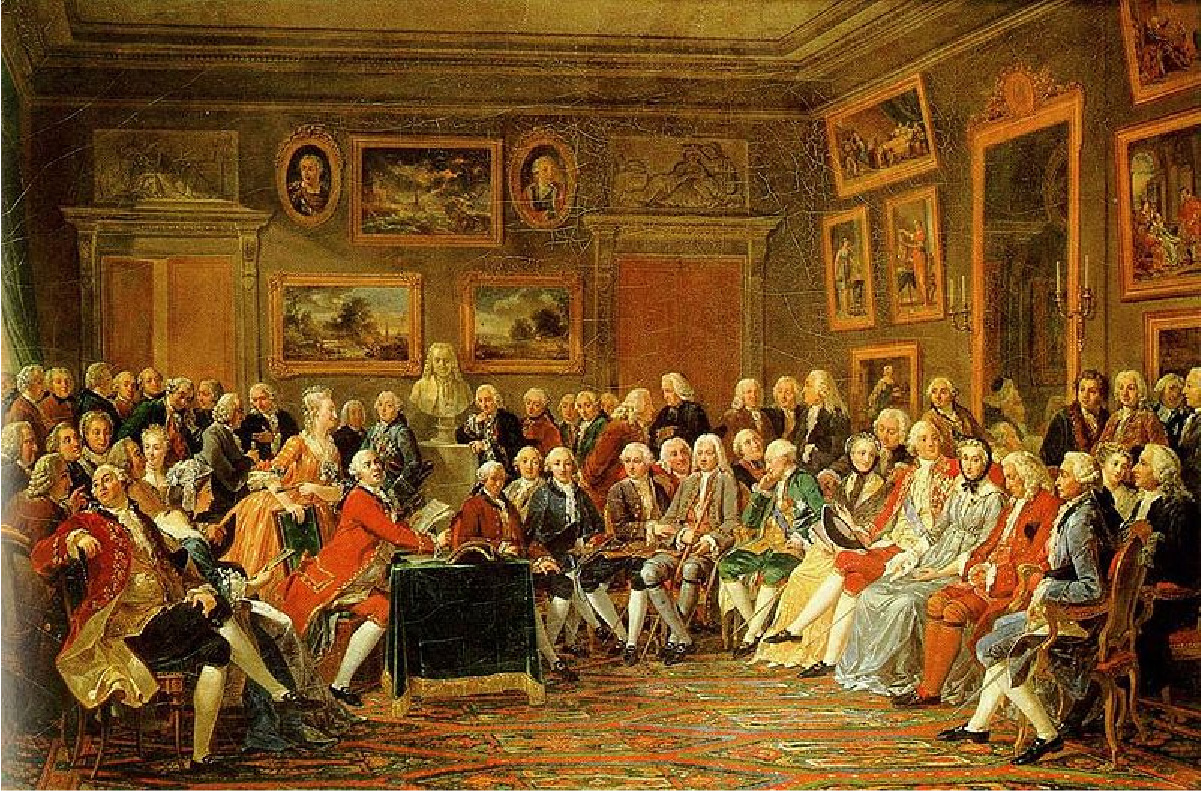
Salons met on designated days and were typically hosted and managed by women, offering an important opportunity for them to take leadership roles in the cultural sphere. Hosts such as Marie-Thérèse Geoffrin, Julie de Lespinasse, and Suzanne Necker not only decided who could attend their salons, but they also managed the inclusive and back-and-forth nature of the conversations (Figure 7.8). Despite the prevailing sentiment among male philosophers that women were not as rational as men, elite women were nevertheless instrumental as benefactors and patrons of the salons, which served as essential venues for the exchange of Enlightenment ideas. Salons eventually evolved into hubs of literary discussion that fostered a culture of polite sociability and cohesion among aristocrats and propertied elites.
英語のヒント
サロンは決まった日に開かれ、一般に女性が主催・運営したため、文化の領域で女性が指導的な役割を担う重要な機会となった。マリー=テレーズ・ジョフラン、ジュリー・ド・レスピナス、シュザンヌ・ネッケルなどの主催者は、誰を招くか決めるだけでなく、誰もが加われて双方向にやりとりする会話の進行も取り仕切った(図7.8)。男性哲学者の間では、女性は男性ほど理性的でないという見方が広まっていた。それでも上層女性は、啓蒙思想の交流に欠かせない場であるサロンの援助者・後援者として、重要な役割を果たした。やがてサロンは文芸討論の中心へと発展し、貴族と財産を持つ上層者の間に、礼儀正しい社交と結束の文化を育んだ。
A Paris Salon.パリのサロン。
(credit: “Reading of Voltaire’s L’Orphelin de la Chine” by Château de Malmaison/Wikimedia Commons, Public Domain) · Public Domain
Figure 7.8 Lecture de la tragédie “L’orphelin de la Chine” de Voltaire dans le salon de Madame Geoffrin, a nineteenth-century oil painting by Anicet Charles Gabriel Lemonnier, imagines the Paris salon of Marie-Thérèse Geoffrin, one of the most celebrated salon hosts of the French Enlightenment, in 1755. The guests are listening to a reading of a newly published play by Voltaire. (credit: “Reading of Voltaire’s L’Orphelin de la Chine” by Château de Malmaison/Wikimedia Commons, Public Domain)
図7.8 アニセ・シャルル・ガブリエル・ルモニエによる19世紀の油彩画『ジョフラン夫人のサロンでのヴォルテールの悲劇「中国の孤児」の朗読』は、フランス啓蒙時代の最も著名なサロン主催者の一人、マリー=テレーズ・ジョフランが1755年にパリで開いたサロンを想像して描いている。招待客たちは、出版されたばかりのヴォルテールの戯曲の朗読を聞いている。(画像:Château de Malmaison/Wikimedia Commons「Reading of Voltaire’s L’Orphelin de la Chine」、パブリックドメイン。)