第7章ヨーロッパと北アメリカの革命Revolutions in Europe and North America
Social Contract Theory社会契約論
At the core of Enlightenment debate about the relationship between state authority and natural rights was the fundamental character of the social contract. This implicit agreement, or “contract,” compels those living in a society to abide by its rules and regulations or suffer punishments for violating them. In essence, those who enter into the social contract implicitly surrender their natural rights to the state, which is then charged with the task of maintaining and protecting those rights. However, according to many social contract theorists like Rousseau, when a state fails to maintain the general will or protect natural rights, citizens may in turn withdraw their social and moral obligations to the state.
英語のヒント
国家の権威と自然権の関係をめぐる啓蒙時代の議論の中心には、社会契約の根本的な性質という問題があった。この暗黙の合意、すなわち「契約」は、社会に暮らす人々に、その規則や法規を守るか、違反した罰を受けるかを迫る。要するに、社会契約に加わる人は、暗黙のうちに自然権を国家に譲り渡し、国家はその権利を維持・保護する任務を負う。しかし、ルソーのような多くの社会契約論者によれば、国家が一般意志を守らなかったり、自然権を保護しなかったりしたとき、市民はそれに応じて、国家に対する社会的・道徳的な義務を取り下げることができる。
The ultimate goal of social contract theory was to demonstrate that the rules imposed by civil society could be rationally justified, and that in its ideal form, government would effectively serve the interests of the people and uphold the general will. As a result, stability and social order would prevail for all. The roles of justice and liberty in civil society thus formed the focus of much debate among philosophers and European rulers concerned with preserving the balance between individual rights and political authority.
英語のヒント
社会契約論の最終的な目的は、市民社会が課す規則は理性によって正当化でき、政府は理想的な形では人々の利益に効果的に奉仕し、一般意志を守ることを示すことだった。その結果、すべての人に安定と社会秩序が行き渡るはずだった。こうして、市民社会における正義と自由の役割は、個人の権利と政治的権威の均衡を保とうとする哲学者やヨーロッパの統治者たちの間で、多くの議論の中心となった。
The social contract is not the same thing as democracy. A democracy is a government in which the power to govern rests in the hands of the people. Under social contract theory, kings and queens could determine what was in the best interests of their people and take such actions as they believed best protected their subjects. The two parties to the contract were the people on the one hand and the monarch on the other. The people surrendered their rights to the monarch and allowed the monarch to govern them, and the king or queen protected the people’s interests. As social contract theory and the concept of natural rights gained greater recognition in the eighteenth and nineteenth centuries, some absolute monarchs in Europe, such as Frederick the Great of Prussia and Catherine the Great of Russia, embraced the influence of the Enlightenment and became known as an enlightened despot (Figure 7.5). Although they maintained the absolute jurisdiction of their rule, enlightened despots differentiated themselves from other monarchs by claiming they received their power from the social contract to rule in the best interest of their subjects.
英語のヒント
社会契約は民主政と同じものではない。民主政とは、統治する権力を人民が持つ政治体制である。社会契約論のもとでは、王や女王が、人民の最大の利益になるものを判断し、臣民を最もよく保護すると考える行動を取ることもできた。契約を結ぶ二者は、一方が人民で、もう一方が君主だった。人民は自分たちの権利を君主に譲り、君主が統治することを認め、王や女王は人民の利益を保護する。18〜19世紀に社会契約論と自然権の概念が広く認知されるようになると、プロイセンのフリードリヒ大王やロシアのエカチェリーナ大帝のようなヨーロッパの一部の絶対君主は、啓蒙思想の影響を受け入れ、「啓蒙専制君主」と呼ばれるようになった(図7.5)。彼らは統治の絶対的な権限を保ちながらも、臣民の最大の利益のために統治する社会契約から権力を得ていると主張することで、他の君主と自分を区別した。
Catherine the Great.エカチェリーナ大帝。
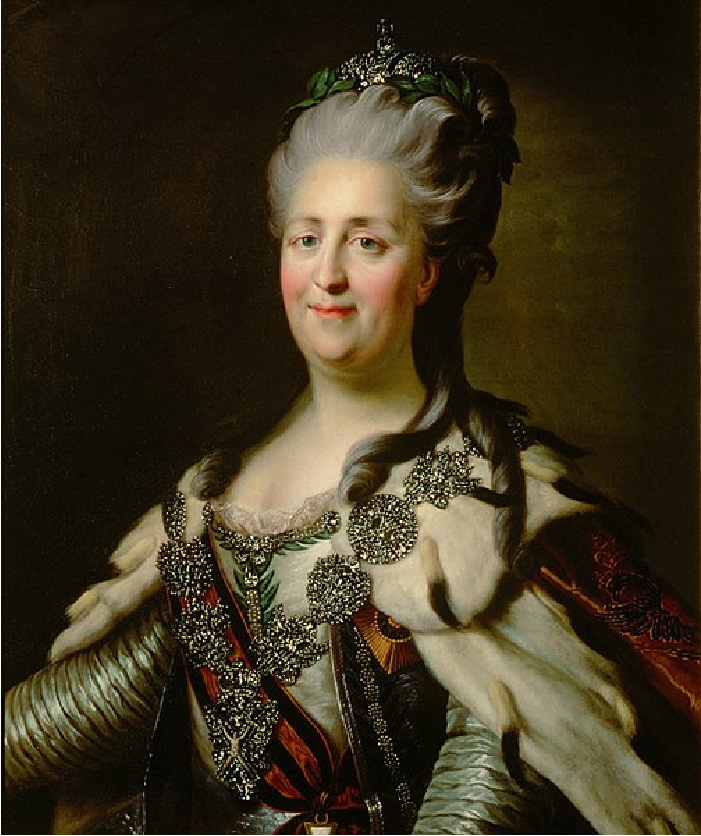
(credit: “Portrait of Catherine II of Russia” by Kunsthistorisches Museum/Wikimedia Commons, Public Domain) · Public Domain
Figure 7.5 Commonly known as Catherine the Great, Empress Catherine II of Russia was an “enlightened despot” whose rule remained authoritarian even as she claimed to derive her political power from the social contract. This oil painting of Catherine by an unknown artist was probably made during her lifetime. (credit: “Portrait of Catherine II of Russia” by Kunsthistorisches Museum/Wikimedia Commons, Public Domain)
英語のヒント
図7.5 一般にエカチェリーナ大帝と呼ばれるロシア皇帝エカチェリーナ2世は、社会契約から政治権力を得ると主張しながらも、権威主義的な統治を続けた「啓蒙専制君主」だった。作者不詳のこの油彩肖像画は、おそらく彼女の存命中に描かれた。(画像:Kunsthistorisches Museum/Wikimedia Commons「Portrait of Catherine II of Russia」、パブリックドメイン。)
Enlightened despots often invited renowned philosophers to their courts to help design laws and policies that would—at least in theory—protect the essence of the social contract. Frederick of Prussia, for example, invited the French philosopher Voltaire to live at his palace in Potsdam in 1750. Although the nature of authoritarian rule may seem at odds with the preservation of natural rights and the social contract, many philosophers developed political models that appealed to enlightened despots. Locke, Rousseau, and Thomas Hobbes are often lauded in traditional historical narratives for their defense of rights and freedoms. Hobbes maintained that an absolute government, characterized by unlimited centralized political authority, provided the best means of preserving rights and freedoms in what would otherwise be an anarchic state of nature, while Rousseau and Locke extolled the virtues of more democratic political models.
英語のヒント
啓蒙専制君主は、少なくとも理論上は社会契約の本質を守る法律や政策を作るため、著名な哲学者を宮廷に招くことが多かった。たとえばプロイセンのフリードリヒは、1750年にフランスの哲学者ヴォルテールをポツダムの宮殿に住むよう招いた。権威主義的統治の性質は、自然権や社会契約の維持と相容れないようにも見えるが、多くの哲学者は啓蒙専制君主を引きつける政治のモデルを作り出した。ロック、ルソー、トマス・ホッブズは、権利と自由を擁護したとして、伝統的な歴史記述ではしばしば称賛される。ホッブズは、制限のない中央集権的政治権力を特徴とする絶対政府こそ、さもなければ無政府状態になる自然状態において、権利と自由を守る最善の手段だとした。これに対してルソーとロックは、より民主的な政治モデルの長所をたたえた。
Despite their adoption of a seemingly progressive vision of universal rights, however, the societies in which Enlightenment thinkers lived did not offer freedoms to all people, nor were their writings as inclusive as they appear. The advance of Enlightenment ideals did result in increased liberties for many—predominantly White men of the upper and middle classes in western Europe and what later became the United States—but most women, men at the lower end of the social hierarchy, and people of color were generally excluded from participating in the Enlightenment or benefiting from its ideals of social and political equality.
英語のヒント
しかし、一見進歩的な普遍的権利の構想を採用していても、啓蒙思想家が暮らした社会は、すべての人に自由を与えていたわけではなく、その著作も見かけほど包摂的ではなかった。啓蒙の理想の広まりは、確かに多くの人々の自由を拡大した。だが、主な受益者は、西ヨーロッパと後にアメリカ合衆国となる地域の、上層・中層階級の白人男性だった。女性の大多数、社会序列の下位にいた男性、有色人種は、おおむね啓蒙運動への参加や、その社会的・政治的平等の理想がもたらす恩恵から排除されていた。
Some elite women, such as the French philosophers Émilie du Châtelet and Germaine de Staël, assumed leadership roles in the era’s vibrant intellectual debates and gained recognition for their contributions. Some Enlightenment thinkers, however, did not consider women to be equal in status to their male counterparts. Rousseau, for example, described women as subordinate to men based on the assumption that they were weaker and less rational by nature. On this premise, Rousseau argued that women belonged in the domestic space of the home, while the public space of politics and business was the preserve of men. Other thinkers such as Locke supported women’s increased access to education and participation in the public sphere, but they asserted that men should retain leadership roles within the household and in public life due to their greater strength and ability. Although a small number of women played important roles in the Enlightenment, most did not immediately benefit from its emphasis on ideals of equality and freedom.
英語のヒント
フランスの哲学者エミリー・デュ・シャトレやジェルメーヌ・ド・スタールなど、一部の上層女性は、当時の活発な知的討論で指導的な役割を担い、その貢献を認められた。しかし、啓蒙思想家のなかには、女性を男性と同等の地位にあるとは考えない者もいた。たとえばルソーは、女性は生来、男性より弱く理性的でないという前提から、男性に従属する存在だと述べた。この前提に立ち、女性の居場所は家庭という私的空間であり、政治や商業の公的空間は男性の領域だと論じた。ロックなど他の思想家は、女性が教育を受ける機会の拡大や、公的領域への参加を支持したが、男性はより強い力と能力を持つため、家庭内でも公的生活でも主導権を保つべきだと主張した。少数の女性は啓蒙運動で重要な役割を果たしたものの、大半の女性は、その平等と自由の理想からすぐには恩恵を受けなかった。
In what later became the United States and in some European countries, Enlightenment theories coexisted with the institution of slavery, the appropriation of lands from Indigenous people, and access to political participation and the protections afforded by the state that were generally limited to White men of property. Social contract theorists generally justified such contradictions by asserting that because Indigenous peoples resided in a nonpolitical state, and because they were believed to lack the capacity to reason, they were not entitled to the rights and protections afforded to other peoples. Enlightenment lawyers, moreover, used social contract theory to defend slavery, on the grounds that either it was a justifiable consequence of conquest or Black people were incapable of governing themselves without the protection of White owners. Although social contract theory ultimately formed the foundations of seminal documents such as the Declaration of Independence and the U.S. Constitution, the ideals of rights and freedoms it espoused coexisted with engrained racial injustices that formed the foundation of slavery and colonialism.
英語のヒント
後にアメリカ合衆国となる地域や、ヨーロッパの一部の国では、啓蒙思想は奴隷制度、先住民からの土地の収奪、そして政治参加や国家の保護を受ける機会が、一般に財産を持つ白人男性に限られる制度と共存していた。社会契約論者はおおむね、先住民は政治的社会を形成していない状態で暮らし、理性的思考の能力も欠くと信じられているのだから、他の人々に与えられる権利や保護を受ける資格がない、と主張してこうした矛盾を正当化した。さらに啓蒙時代の法律家たちは、奴隷制は征服の正当化できる結果である、あるいは黒人は白人の所有者の保護なしには自らを統治できない、という理由で、社会契約論を用いて奴隷制を擁護した。社会契約論は、最終的に独立宣言や合衆国憲法のような画期的な文書の土台となったが、そこで唱えられた権利と自由の理想は、奴隷制や植民地主義の基盤となる、根深い人種的不正義と共存していた。