第16章14世紀の気候変動とペストClimate Change and Plague in the Fourteenth Century
16.2 Famine, Climate Change, and Migration16.2 飢饉・気候変動・移住
Learning Objectives学習の目標
By the end of this section, you will be able to:
この節を学ぶと、次のことができるようになる。
Explain how climate change affected Afro-Eurasian societies in the fourteenth century
14世紀のアフロ・ユーラシアの社会に、気候変動がどのような影響を与えたかを説明する。
Discuss the reasons medieval people migrated and how they did so
中世の人々が移住した理由と、その移動の方法について論じる。
Rising sea levels, extreme hurricanes, and seismic disruptions may call to mind apocalyptic scenes from sci-fi movies, but global climate change, adverse weather, and natural disasters all played a real and significant role in shaping the course of human history in the fourteenth century. Environmental conditions have consistently had a profound impact on the availability of resources and the development of human settlements, trade, and migration across the globe.
英語のヒント
海面上昇、極端に激しいハリケーン、地震による混乱は、SF映画の終末的な場面を思い浮かべさせるかもしれない。しかし14世紀には、地球規模の気候変動、悪天候、自然災害が、人類史の進路を形づくるうえで、現実に大きな役割を果たしていた。環境条件は一貫して、利用できる資源の量と、世界各地の居住地、交易、移住の発展に深い影響を及ぼしてきた。
Cross-disciplinary collaboration between historians and paleo-scientists has yielded vital information about environmental change in the premodern world. Even subtle shifts in climate and temperature have historically resulted in widespread demographic and ecological transformations that now shed light on the ways in which forces of nature and human activity intersected in the past. Understanding these connections enables us as modern historians to track the short- and long-term causes and consequences of historical plagues, famines, and environmental events, such as those that defined much of the fourteenth century. Learning about the ways in which past societies adapted to environmental challenges also provides vital context for modern debates about the effects of climate change and ways in which the environment affects the continued settlement and development of peoples around the world.
英語のヒント
歴史家と古環境を研究する科学者の学際的な協力によって、近代以前の世界における環境変化について、重要な情報が得られてきた。歴史上、気候や気温のわずかな変化でも、人口や生態系に広範な変容を引き起こしてきた。そうした変容から、かつて自然の力と人間の活動がどのように交わっていたかが明らかになりつつある。これらのつながりを理解することで、現代の歴史家は、歴史上の疫病、飢饉、環境上の出来事について、短期・長期の原因と結果を追跡できる。14世紀の大半を特徴づけた出来事も、その対象である。過去の社会が環境上の難題にどう適応したかを学ぶことは、現代の議論にとっても重要な背景となる。気候変動の影響や、環境が世界各地の人々の継続的な定住と発展をどう左右するかを考えるためである。
The Effects of Climate Change in the Fourteenth Century14世紀における気候変動の影響
Perhaps the greatest challenge in grasping the impact of climate change on the past is the limitations of traditional historical sources. Texts and other written source materials often provide scant information about environmental fluctuations of earlier centuries. To overcome these barriers, the field of historical climatology focuses on reconstructing and analyzing climates of the past and comparing them with modern conditions, allowing scholars to expand the traditional source base of historical research. Historians study references to crop yields and weather fluctuations in weather journals and tax records, along with scientific data drawn from tree rings and organic material trapped beneath ice sheets in different parts of the world, which offer information about past temperature fluctuations and rainfall patterns (Figure 16.9).
英語のヒント
過去に気候変動が及ぼした影響を捉える際、最大の難しさは、おそらく伝統的な歴史史料の限界にある。文章などの文字史料は、過去の環境の変動について、乏しい情報しか伝えないことが多い。この壁を乗り越えるため、歴史気候学は過去の気候を復元・分析し、現代の状態と比較することに力を注いでいる。これによって、歴史研究が従来用いてきた史料の範囲を広げられる。歴史家は、天候の日誌や課税記録に見られる収穫量・天候の変動への言及に加え、年輪や、世界各地の氷床の下に閉じ込められた有機物から得られる科学的データを調べる。これらは過去の気温の変動や降雨のパターンを教えてくれる(図16.9)。
Hidden Clues to History.歴史の隠れた手がかり。
Figure 16.9 Because trees can live for hundreds or even thousands of years, during which they experience a variety of environmental fluctuations, clues about these changing conditions are often hidden within the rings in their stumps, which historical climatologists can analyze. (credit: modification of work “The color and width of tree rings can provide snapshots of past climate conditions” by /NASA Climate Kids, Public Domain)
図16.9 木は数百年、ときには数千年も生き、その間にさまざまな環境変動を経験する。そのため切り株の年輪には、変化する環境の手がかりが隠されていることが多く、歴史気候学者はそれを分析できる。(出典: 原作品を加工:“The color and width of tree rings can provide snapshots of past climate conditions”/NASA Climate Kids, パブリックドメイン)
The investigation of such historical clues hidden in the natural world has enabled scholars to identify the ways in which environmental conditions and patterns of human migration and settlement have together shaped the course of human history. In the case of the calamitous fourteenth century, a series of unusual climatic changes led to a chain reaction of competition for resources and desperate attempts to mitigate the damage and despair that defined the century’s first decades.
英語のヒント
自然界に隠されたこうした歴史の手がかりを調べることで、環境条件と人間の移住・定住のあり方が、ともに人類史の進路をどう形づくってきたかを、研究者は明らかにできるようになった。災厄の14世紀では、一連の異常な気候変動が連鎖反応を生んだ。資源をめぐる競争が起こり、世紀初めの数十年を特徴づけた被害と絶望を和らげようと、人々は必死の試みを重ねた。
At the beginning of the fourteenth century, subtle shifts in global mean temperature and rainfall had a profound impact on the climate of the Northern Hemisphere, unleashing devastating famines and plagues across Afro-Eurasia. These events caused significant human hardship, disrupted commerce, and contributed to the decline of once-great empires, even the seemingly impenetrable Mongol dynasty. Although premodern people did not understand these extraordinary environmental shifts, their lives were no less affected by them. In an era during which many people survived on subsistence agriculture, even the slightest change in seasonal weather patterns could devastate crops and result in widespread malnourishment and starvation. Poor nutrition weakens human immune systems, which—together with poor sanitation and the close quarters in which people lived in medieval towns—undoubtedly left many more vulnerable to the ravages of epidemic diseases. This was especially the case when the bubonic plague struck much of Afro-Eurasia by the middle of the century.
英語のヒント
14世紀の初め、世界の平均気温と降雨量のわずかな変化が北半球の気候に深い影響を及ぼし、アフロ・ユーラシア全域で破壊的な飢饉と疫病を引き起こした。これらは人々に大きな苦難をもたらし、商業を混乱させ、かつての大帝国の衰退にもつながった。難攻不落に見えたモンゴルの王朝も例外ではなかった。近代以前の人々はこの異常な環境変化を理解していなかったが、それで生活への影響が小さくなるわけではなかった。多くの人が自給農業で生きていた時代には、季節ごとの天候のごくわずかな変化でさえ、作物を壊滅させ、広範な栄養失調と飢餓を招き得た。栄養不良は人の免疫系を弱める。中世の町の劣悪な衛生状態や、人々が密集して暮らす住環境も重なり、多くの人が感染症流行の猛威に対していっそう脆弱になったことは疑いない。世紀半ばまでに腺ペストがアフロ・ユーラシアの大部分を襲ったときには、とりわけそうだった。
To place the dramatic meteorological changes of the fourteenth century in context, we must understand how they relate to larger climate patterns. Long-term weather fluctuations, during which periods of relative warmth and cold alternated over hundreds of years, have long been part of Earth’s ecological landscape and the narrative of environmental history. Within these longer periods of gradual climatological change, however, less predictable short-term fluctuations have also resulted from rapid changes in wind patterns, ocean currents, and seismic activity. From time to time, such erratic climatological shifts resulted in devastating reversals of typical weather patterns.
英語のヒント
14世紀の劇的な気象変化を大きな背景の中で捉えるには、より長期的な気候の型とどう関係していたかを理解しなければならない。比較的暖かい時期と寒い時期が数百年にわたって交代する長期の天候変動は、古くから地球の生態的環境と環境史の一部だった。しかし、こうしたゆっくり進む長期の気候変化の中でも、風のパターン、海流、地震活動の急激な変化から、予測しにくい短期の変動が生じてきた。ときには、このような不規則な気候の変化によって、通常の天候の型が大きく逆転し、甚大な被害をもたらした。
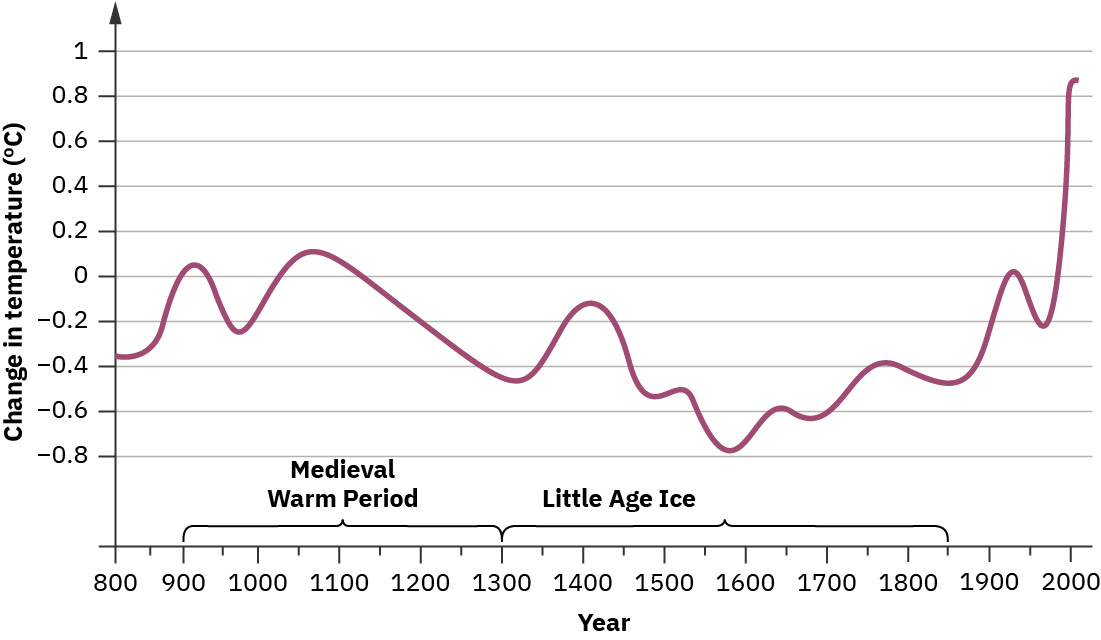
In the fourteenth century in particular, the Little Ice Age, a period of unusually cold weather that affected most of the Northern Hemisphere (Figure 16.10), led to significant variations in normal rainfall and a general drop in the mean annual temperature. Preceded by a Medieval Warm Period, a span of more temperate climate across the globe from the tenth through the thirteenth century, the cool temperatures and, in some areas, droughts radically reduced available resources and food supplies. Aggravated by rising population levels and declining agricultural productivity, food shortages caused significant hardship and financial distress as famine became commonplace and competition for resources intensified.
英語のヒント
特に14世紀には、北半球の大半に及んだ異常に寒い時期である小氷期(図16.10)によって、通常の降雨量が大きく変わり、年平均気温も全般に下がった。それに先立つ10世紀から13世紀までは、世界各地で比較的温和な気候が続いた中世温暖期だった。小氷期の低温と、一部地域の干ばつは、利用できる資源と食料の供給を大幅に減らした。人口の増加と農業生産性の低下が食料不足をさらに深刻にした。飢饉が日常化し、資源をめぐる競争が激しくなるなかで、人々は大きな苦難と経済的困窮に直面した。
The Little Ice Age.小氷期。
(attribution: Copyright Rice University, OpenStax, under CC BY 4.0 license) · CC BY 4.0
Figure 16.10 This chart depicts the shift in the Northern Hemisphere’s temperature over the last millennium, including the Medieval Warm Period that began in the tenth century and the Little Ice Age that ran from the fourteenth century to approximately 1850. (data source: Northern Hemisphere Temperature Reconstruction by Moberg et al., 2005) (attribution: Copyright Rice University, OpenStax, under CC BY 4.0 license)
図16.10 過去1000年間の北半球の気温の推移を示すグラフ。10世紀に始まった中世温暖期と、14世紀からおよそ1850年まで続いた小氷期が含まれる。(データ出典: Northern Hemisphere Temperature Reconstruction/Moberg et al., 2005) (出典: 著作権:Rice University, OpenStax/CC BY 4.0)
Although a consensus about the causes of the Little Ice Age remains elusive, possible triggers may have included changes in ocean circulation patterns, shifts in the earth’s orbit, and several massive volcanic eruptions in the tropics that released clouds of sulfate particles into the atmosphere and reflected solar energy back into space at the end of the thirteenth century. Ultimately, these environmental changes resulted in an advance of mountain glaciers and an overall mean global temperature decrease of 0.6°C (with some areas experiencing as much as a two-degree drop in annual temperature). This decrease may seem insignificant, but in the absence of modern agricultural and irrigation techniques, it led to catastrophic crop failures and widespread famine in many parts of the Northern Hemisphere within the first few decades of the fourteenth century. The increase in glacier growth, moreover, affected many regions of the world, because the more water turned to ice, the less was available to evaporate and turn into rain. As a result, even areas far from glacial mountains suffered prolonged periods of drought.
英語のヒント
小氷期の原因については、今なお見解の一致が得られていない。候補には、海洋循環のパターンの変化、地球の軌道の変化、そして13世紀末に熱帯で相次いだ大規模な火山噴火がある。噴火は硫酸塩粒子の雲を大気中へ放出し、太陽のエネルギーを宇宙へ反射した。これらの環境変化は最終的に山岳氷河の拡大と、世界平均気温全体で0.6℃の低下をもたらした。一部地域では年平均気温の低下が2℃にも達した。この低下は小さく見えるかもしれない。しかし現代の農業・灌漑技術がなかったため、14世紀初めの数十年間に、北半球の多くの地域で壊滅的な不作と広範な飢饉につながった。さらに氷河の成長は、世界の多くの地域に影響した。氷になる水が増えるほど、蒸発して雨になれる水が少なくなるためである。その結果、氷河のある山々から遠い地域でも、長期の干ばつに苦しんだ。
Despite their global impact, the effects of the Little Ice Age were not the same everywhere. In the Mediterranean and West Africa, irregular rainfall and periods of drought dramatically reduced crop yields, whereas in China and northern Europe, cold weather and the freezing of lakes and rivers were especially pronounced. Elsewhere in Europe and Asia, in 1314, extraordinary rains began to fall that introduced a period of abnormally cold and wet winters. This deluge of precipitation resulted in poor harvests as people struggled to cultivate already overworked land. Outside Afro-Eurasia, evidence suggests that the North American interior also suffered when established agricultural systems faltered under hotter summers with less rain and colder winters, leading to severe population loss in the southwestern region.
英語のヒント
小氷期の影響は世界規模だったが、どこでも同じではなかった。地中海地域と西アフリカでは、不規則な降雨と干ばつのため収穫量が激減した。一方、中国と北ヨーロッパでは、寒さや湖・川の凍結が特に顕著だった。ヨーロッパとアジアの他の地域では、1314年に異常な大雨が降り始め、例年になく寒く湿った冬が続く時期に入った。人々はすでに酷使されていた土地を耕そうと苦闘したが、この豪雨は不作を招いた。アフロ・ユーラシア以外にも、北アメリカ内陸部が被害を受けたことを示す証拠がある。従来の農業の仕組みは、夏がより暑く雨が少なくなり、冬がより寒くなるなかで機能しにくくなり、南西部では人口が大きく減少した。
Although the Little Ice Age was especially devastating in the 1300s, its effects persisted for many centuries. In addition to its immediate impact on crops, late medieval climate change led to longer-term deforestation because more wood was used for heating, in the Northern Hemisphere in particular. The climate shift not only altered building designs and clothing styles, which became adapted to colder temperatures, but in some places it also ultimately precipitated the eventual adoption of coal for heating and the beginning of human reliance on fossil fuels.
英語のヒント
小氷期は1300年代に特に甚大な被害をもたらしたが、その影響は何世紀も続いた。中世後期の気候変動は、作物への直接の打撃に加えて、より長期の森林減少を招いた。特に北半球で、暖房用の木材消費が増えたためである。気候の変化によって、建物の設計や衣服の様式も寒さに適応したものへ変わった。それだけでなく、一部の地域ではやがて暖房への石炭利用を促し、人間が化石燃料に依存し始めるきっかけにもなった。
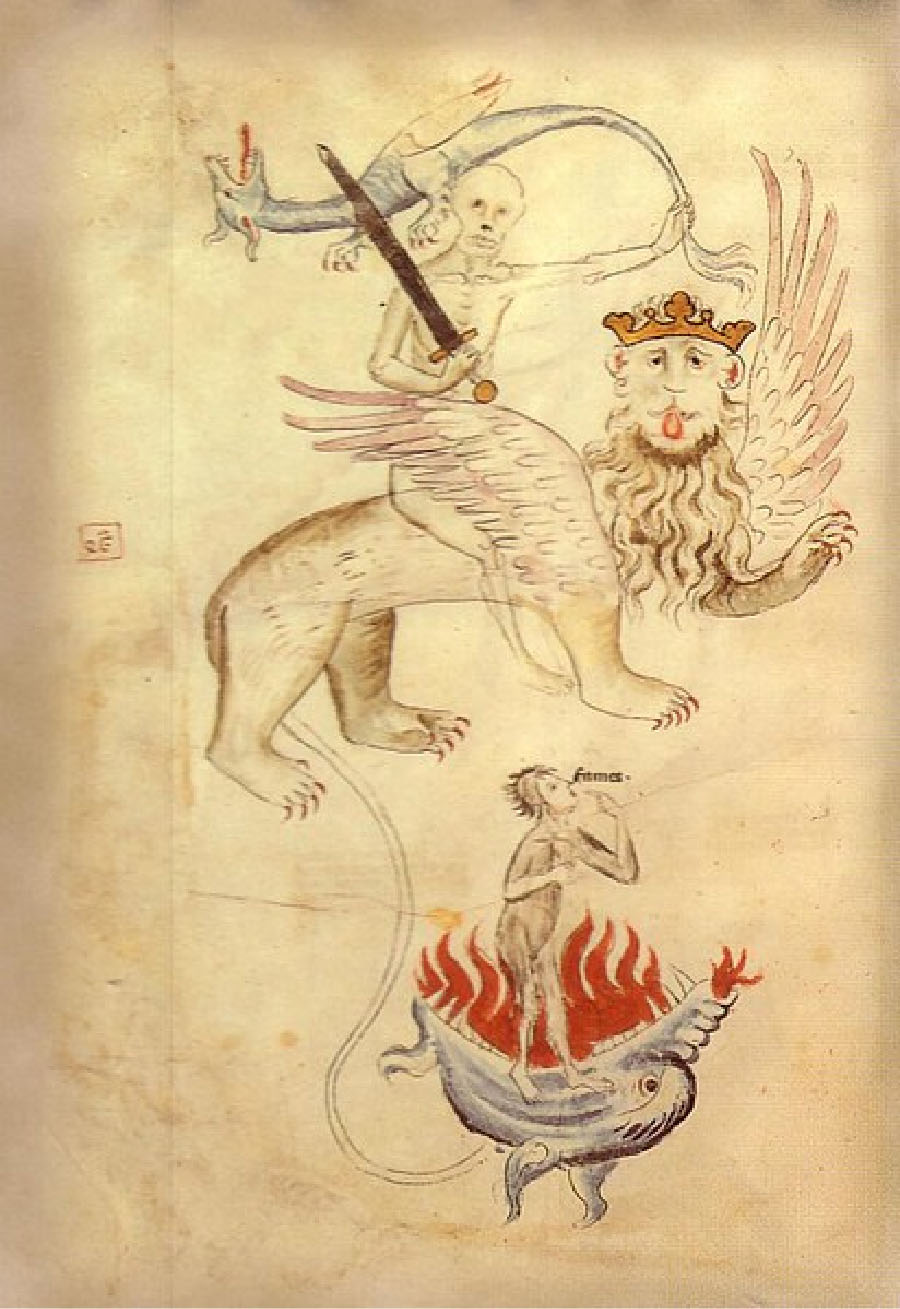
The period known as the Great Famine of 1315–1317 was a direct result of the Little Ice Age in much of Europe north of the Alps, an area of roughly 400,000 square miles. This widespread and prolonged food shortage prompted one of the worst population collapses in Europe’s recorded history. It is virtually impossible to know the actual death toll, but it is likely that up to 10 percent of northern Europe’s population of more than thirty million perished. Even though crop yields began to rebound in 1317, it took several more years for them to return to prefamine levels. Beyond the devastating loss of lives and human suffering, prolonged food shortages also led to widespread political and economic instability. The prices of necessary food staples like grain skyrocketed, and competition for resources generated social tension, conflict, and an increase in crime. Ultimately, the Great Famine led many to question the ability of church officials and monarchs to respond effectively to crises and catastrophes, which had long-term effects on public trust in these institutions (Figure 16.11).
英語のヒント
1315~1317年の大飢饉と呼ばれる時期は、アルプス以北のヨーロッパの大部分、約40万平方マイルに及ぶ地域で、小氷期の直接の結果として起きた。この広範で長期的な食料不足は、記録に残るヨーロッパ史上でも最悪の部類に入る人口減少を引き起こした。実際の死者数を知ることはほぼ不可能だが、3000万人を超えていた北ヨーロッパの人口の、最大10%が死亡した可能性がある。収穫量は1317年に回復し始めたが、飢饉前の水準に戻るには、さらに数年を要した。長引く食料不足は、甚大な人命喪失と苦しみに加え、広範な政治・経済の不安定ももたらした。穀物など不可欠な主食の価格は急騰し、資源をめぐる競争が社会的緊張、紛争、犯罪の増加を引き起こした。ついには大飢饉を通じ、多くの人が、教会指導者や君主に危機や災厄へ効果的に対応する能力があるのか疑うようになった。こうした制度に対する人々の信頼には、長期にわたる影響が残った(図16.11)。
An Allegory of the Great Famine.大飢饉の寓意。
(credit: “Death (“Mors”) sits astride a lion whose long tail ends in a ball of flame (Hell). Famine (“Fames”) points to her hungry mouth” by “Mariule”/Wikimedia Commons, Public Domain) · Public Domain
Figure 16.11 This image from a fourteenth-century manuscript created in Erfurt, Germany, at the time of the Great Famine depicts Death sitting atop a legendary creature known as a manticore, with famine perched on the fires of hell at the end of the manticore’s tail. (credit: “Death (“Mors”) sits astride a lion whose long tail ends in a ball of flame (Hell). Famine (“Fames”) points to her hungry mouth” by “Mariule”/Wikimedia Commons, Public Domain)
図16.11 大飢饉の時期にドイツのエアフルトで制作された、14世紀の写本の図。死がマンティコアという伝説上の生き物にまたがり、その尾の先の地獄の炎の上に、飢饉が乗っている。(出典: “Death (“Mors”) sits astride a lion whose long tail ends in a ball of flame (Hell). Famine (“Fames”) points to her hungry mouth”/“Mariule”/Wikimedia Commons, パブリックドメイン)
With very few options to remedy the devastation wrought by years of poor weather and famine, most people had little practical recourse other than migrating in search of better conditions. The collective anxiety and social tension of the era sometimes led to scapegoating, including persecutions of supposed witches based on the premise that they had the ability to control the weather as a means of causing others harm. Historians have traced connections between peaks of the Little Ice Age and spikes in witch-hunting activities. Although this type of persecution was by no means universal, it demonstrates the desperation many people must have felt in the face of unrelenting strife.
英語のヒント
長年の悪天候と飢饉がもたらした惨状を立て直す方法はごく限られていた。ほとんどの人にとって、よりよい環境を求めて移住する以外に、実際にとれる手段はほとんどなかった。当時の集団的な不安と社会的緊張は、ときに身代わりの責任を負わせるスケープゴート探しにつながった。魔女とされた人々への迫害もその一つで、彼女たちには天候を操り、他人に危害を加える能力があるという前提に基づいていた。歴史家は、小氷期の寒冷化の頂点と、魔女狩りの急増とのつながりを追ってきた。こうした迫害がどこでも起きたわけでは決してないが、絶え間ない苦難を前に、多くの人がどれほど追い詰められていたかを示している。