第8章古代の南北アメリカThe Americas in Ancient Times
8.3 The Age of Empires in the Americas8.3 アメリカ大陸の帝国の時代
Learning Objectives学習の目標
By the end of this section, you will be able to:
この節を学ぶと、次のことができるようになる。
Describe the expansion of pre-Columbian civilizations like the Aztec and Inca
アステカやインカなど、コロンブス到来以前の文明の拡大を説明する。
Identify key features of the Aztec and Inca civilizations
アステカ文明とインカ文明の主な特徴を挙げる。
Identify key features of the Anasazi and Mississippian traditions in North America
北アメリカのアナサジ文化とミシシッピ文化の主な特徴を挙げる。
The arrival of the Spanish at the end of the fifteenth century inaugurated a new age in the Americas, but in Mexico and Peru, the Spanish entered areas already under the control of large and sophisticated empires. The Inca in the Andes and the Aztecs in Mesoamerica were the cultural inheritors of thousands of years of civilizational development that included the heritage of the Moche, Nazca, and Tiwanaku in the Andes and the Olmec, Maya, and Teotihuacanos in Mesoamerica. Likewise, the Mississippian tradition chiefdoms of the Eastern Woodlands, where the early Spanish explorers also trod, were the product of ancient cultural and civilization developments going back to the mound-building traditions of Adena, Hopewell, and even earlier cultures.
英語のヒント
15世紀末のスペイン人の到来は、アメリカ大陸に新しい時代を開いた。しかし、メキシコやペルーで彼らが入っていったのは、すでに大規模で高度に発達した帝国の支配する地域だった。アンデスのインカと、メソアメリカのアステカは、何千年にもわたる文明発展の文化的な継承者だった。アンデスではモチェ、ナスカ、ティワナク、メソアメリカではオルメカ、マヤ、テオティワカンの遺産を受け継いでいたのである。同じように、初期のスペイン人探検者が足を踏み入れた東部森林地帯の、ミシシッピ文化の首長制社会も、アデナ、ホープウェル、さらに古いマウンド築造文化にさかのぼる、文化と文明の発展の産物だった。
The Aztec Empireアステカ帝国
The early origins of the Aztecs are cloudy, partly because this culture did not have a fully developed writing system for chronicling its history. Instead, the Aztecs relied on artistic records and oral traditions passed from generation to generation. They also used codices, book-like records drawn on bark paper that combined both images and pictograms. Based on information from these sources, historians have been able to place Aztec origins within the context of the collapse of the Toltec civilization.
英語のヒント
アステカの初期の起源は、はっきりしない。理由の一つは、自らの歴史を記録する、十分に発達した文字体系を持っていなかったことである。代わりに、美術による記録や、世代から世代へ伝わる口承の伝統に頼っていた。また、図像と絵文字を組み合わせて樹皮の紙に描いた、本のような記録である絵文書も使った。歴史家は、こうした史料から得られる情報に基づいて、アステカの起源を、トルテカ文明の崩壊という文脈の中に位置づけることができた。
The Toltec were an earlier Mesoamerican culture that filled the power vacuum created by the decline of Teotihuacán. From their capital at Tula, the Toltec dominated central Mexico between the tenth and twelfth centuries CE. When their civilization collapsed internally or was possibly conquered, a number of nomadic and warlike groups descended into the area, one of which appears to have been the Aztecs. A new period of cultural transformation and violent wars followed. The Aztecs clearly excelled in these military conflicts, likely acting as mercenaries. Ultimately, they were permitted to settle on a collection of islands within a large but shallow ancient lake called Lake Texcoco, one of five contiguous lakes that once spread across the Valley of Mexico.
英語のヒント
トルテカは、テオティワカンの衰退によって生まれた権力の空白を埋めた、それ以前のメソアメリカの文化だった。10世紀から12世紀にかけて、首都トゥーラからメキシコ中央部を支配した。その文明が内部から崩壊した、あるいは征服された可能性のある時期に、いくつもの遊動的で好戦的な集団が、この地域へ入ってきた。その一つがアステカだったようである。続いて、文化の変化と激しい戦争の新たな時代が始まった。アステカは、おそらく傭兵として活動し、こうした軍事的な争いで明らかに優れた力を示した。やがて、テスココ湖と呼ばれる、古い大きな浅い湖の中の島々に住むことを許された。テスココ湖は、かつてメキシコ盆地に広がっていた、互いにつながる五つの湖の一つだった。
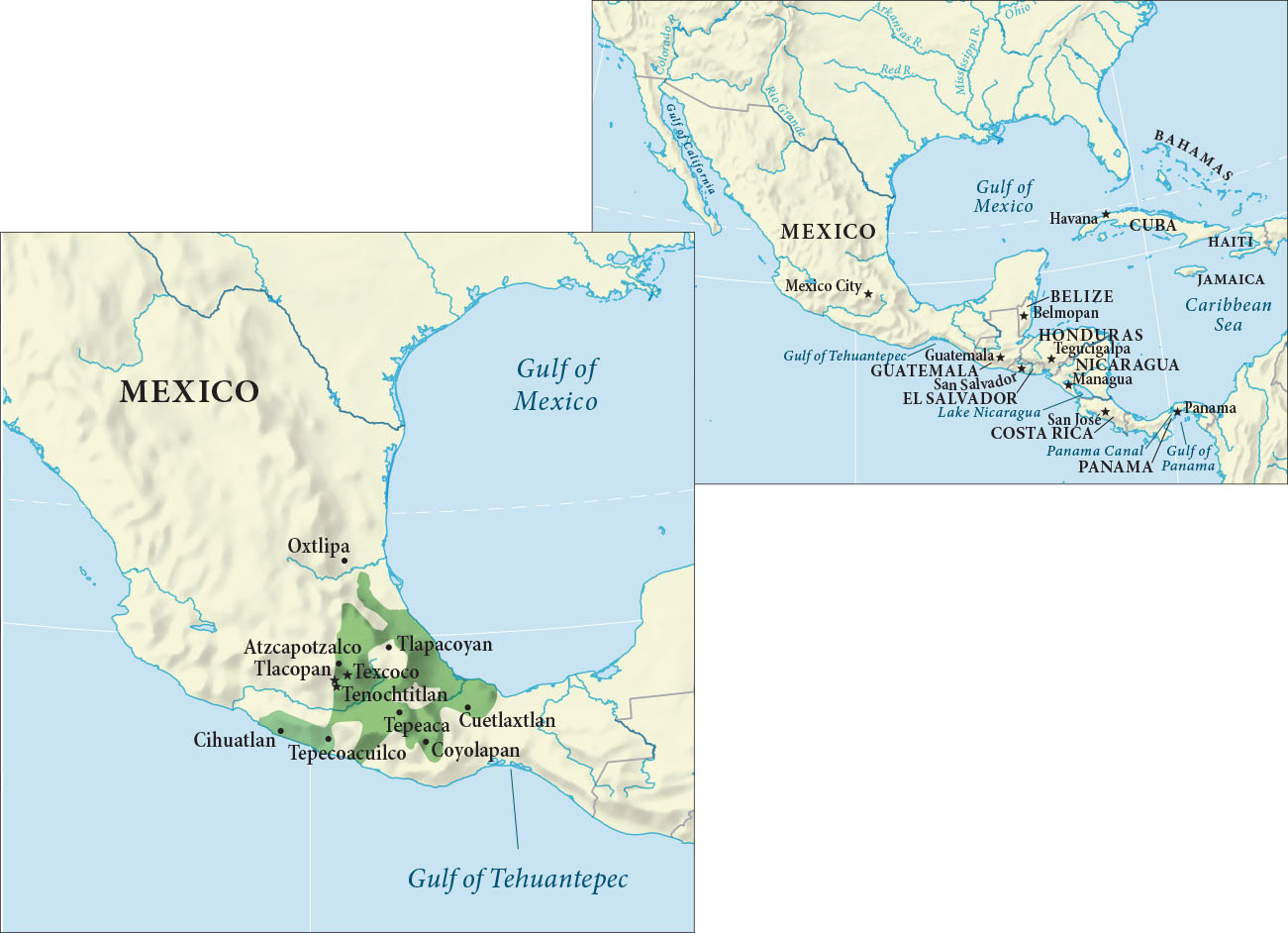
The Aztecs began constructing their home city of Tenochtitlán among the islands within Lake Texcoco around 1325. During the following century, they survived by trading goods they could produce as well as continuing to serve as mercenaries for the surrounding powers. In this way, they accumulated wealth and supplied themselves with stone, which they used to transform their small island settlement into a large and architecturally sophisticated city. After acquiring some influence in the region, they formed an alliance with two neighboring city-states, Texcoco and Tlacopan. Then, in 1428, this Triple Alliance launched a surprise attack on the powerful city-state of Atzcapotzalco and made itself the dominant regional power. Over the next several decades, the Triple Alliance, with the Aztecs at its head, expanded its control of central Mexico to include Oaxaca in the west, parts of modern Guatemala in the south, and the areas bordering the Gulf of Mexico. By 1502, the newly crowned emperor of the Aztecs, Moctezuma II, was ruling an expansive empire from his capital city of Tenochtitlán (Figure 8.28).
英語のヒント
アステカは1325年ごろ、テスココ湖の島々に、拠点都市テノチティトランを築き始めた。その後の1世紀には、自分たちで作れる品を交易し、周囲の勢力の傭兵として働き続けることで生き延びた。こうして富を蓄え、石を調達し、小さな島の集落を、大きく建築的にも高度な都市へと造り変えた。地域で一定の影響力を得ると、近隣の二つの都市国家、テスココとトラコパンと同盟を結んだ。1428年、この三国同盟は、有力な都市国家アスカポツァルコを奇襲し、地域の支配的勢力となった。その後の数十年に、アステカを先頭とする同盟は、メキシコ中央部への支配を広げ、西のオアハカ、南の現在のグアテマラの一部、メキシコ湾に面する地域まで含むようになった。1502年までには、新たに即位したアステカ皇帝モクテスマ2世が、首都テノチティトランから、広大な帝国を統治していた(図8.28)。
The Triple Alliance.三国同盟
(attribution: Copyright Rice University, OpenStax, under CC BY 4.0 license) · CC BY 4.0
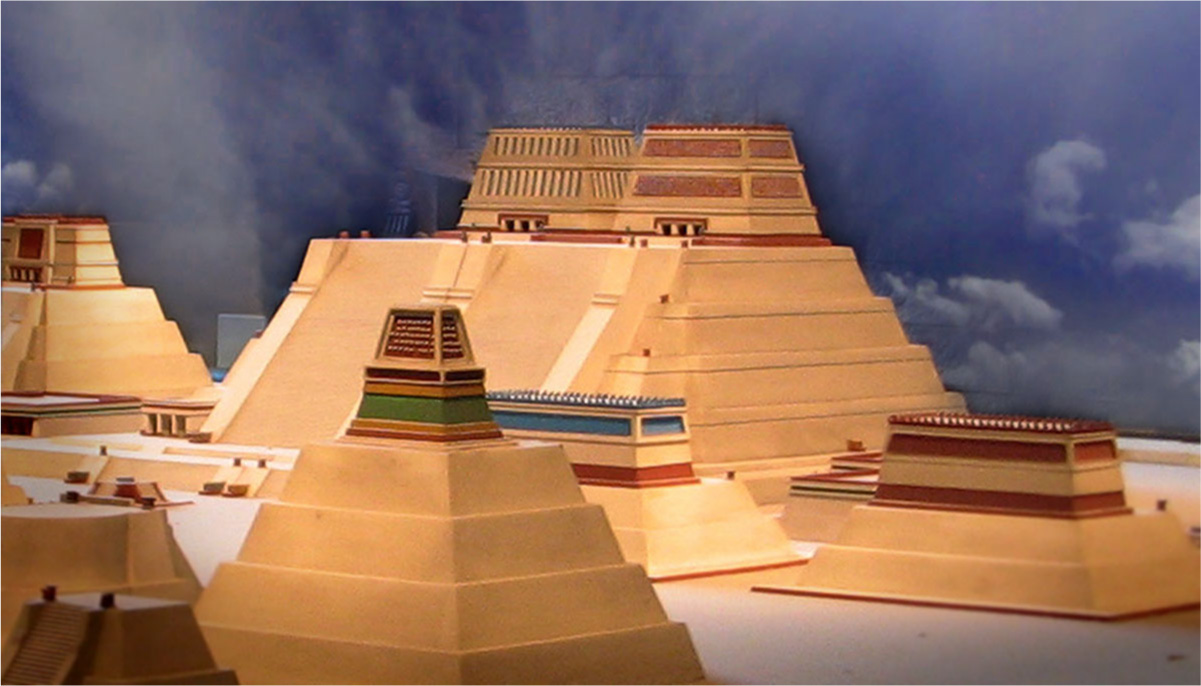
At its height in the early 1500s, Tenochtitlán had a population of at least 200,000 people. It was a massive island city with large causeways that connected it to the shores of the lake. Some of the city’s land had been made by human intervention, which included creating artificial agricultural islands called chinampas around the city that were crisscrossed by canals for irrigation and transportation. These chinampas produced food for the city’s occupants. Toward the center of the island where the land was more firm were the homes of the city’s occupants, made mostly of adobe with flat roofs and built around small courtyards. At the center of the island were large temples, a ball court, administration buildings, homes for the elite, and the palaces of the rulers. The most impressive of the temples was the Templo Mayor, which was expanded numerous times during its long history. By the early 1500s, it was a dual stepped pyramid standing about ninety feet tall (Figure 8.29). One side was dedicated to the city’s patron Tlaloc, the god of rain. The other side was dedicated to Huitzilopochtli, the god of war. Priests climbed a long staircase to the temple to perform important state rituals.
英語のヒント
1500年代初頭の最盛期には、テノチティトランの人口は少なくとも20万人に達していた。湖岸と大きな堤道で結ばれた、巨大な島の都市だった。都市の土地の一部は、人の手で造られた。周囲には「チナンパ」と呼ばれる農業用の人工島が築かれ、灌漑や交通のための水路が縦横に走っていた。このチナンパが、都市の住民の食料を生産した。地盤の比較的しっかりした島の中央寄りには、住民の家があった。大部分は日干しレンガ造りで、平らな屋根を持ち、小さな中庭を囲むように建てられていた。島の中心には、大きな神殿、球戯場、行政施設、支配層の家、君主の宮殿があった。神殿の中で最も見事だったのは、長い歴史の中で何度も拡張されたテンプロ・マヨールである。1500年代初頭には、高さ約90フィートの二重の階段ピラミッドとなっていた(図8.29)。片側は都市の守護神である雨の神トラロック、もう片側は軍神ウィツィロポチトリに捧げられていた。神官は長い階段を上って神殿に入り、国家の重要な儀礼を行った。
Tenochtitlán.テノチティトラン
(credit: “Model of the Templo Mayor (main temple) of Tenochtitlan” by “schizoform”/Wikimedia Commons, CC BY 2.0) · CC BY 2.0
Figure 8.29 At their height in the sixteenth century, the temples at Tenochtitlán were beautifully painted, as this modern model shows. (credit: “Model of the Templo Mayor (main temple) of Tenochtitlan” by “schizoform”/Wikimedia Commons, CC BY 2.0)
図8.29 この現代の模型が示すように、16世紀の最盛期のテノチティトランの神殿は、美しい色で彩られていた。(出典:「schizoform」「Model of the Templo Mayor (main temple) of Tenochtitlan」、Wikimedia Commons、CC BY 2.0)
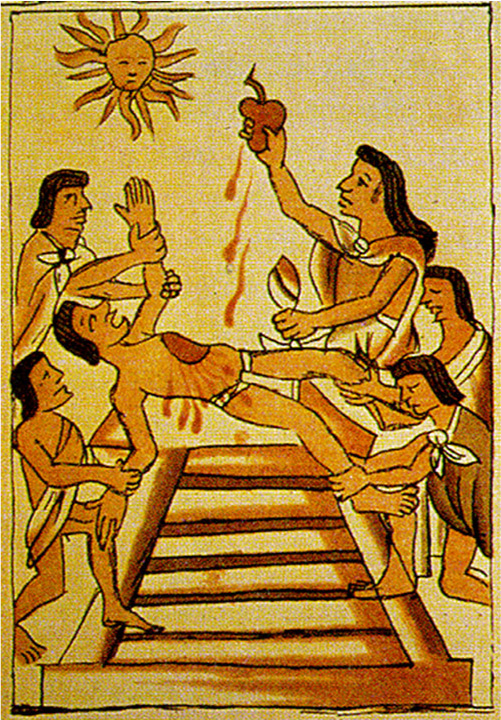
One of the most important ceremonies performed at the Templo Mayor and other temples in Tenochtitlán was the ritual of human sacrifice. Like many Aztec traditions, this rite was widely practiced in Mesoamerica and had roots going back to the Olmec culture and likely earlier. Human sacrifices occurred on important days identified on the Aztec calendar and during the commemoration of new temples or the expansion of existing ones. Contemporary descriptions note that long lines of sacrificial victims were led up the steps to the temple platform. There they were laid on a sacrificial stone, where their chests were opened with a sharp flint or obsidian knife and their hearts removed by the executioner (Figure 8.30). The bodies were then tossed down the steps of the temple.
英語のヒント
テンプロ・マヨールや、テノチティトランのほかの神殿で行われた、最も重要な儀式の一つが、人身供犠だった。多くのアステカの伝統と同じく、この儀礼はメソアメリカで広く行われ、オルメカ文化、おそらくはそれ以前にまで起源を持っていた。人身供犠は、アステカの暦が示す重要な日や、新しい神殿の奉献、既存の神殿の拡張を記念する際に行われた。同時代の記述には、生贄となる人々の長い列が、神殿の基壇へ続く階段を上らされたとある。そこで供犠の石に横たえられ、鋭い燧石や黒曜石の刃で胸を切り開かれ、執行者に心臓を取り出された(図8.30)。その後、遺体は神殿の階段を転がり落とされた。
An Aztec Ritual.アステカの儀礼
(credit: “Aztec Human Sacrifice 10” by latinamericanstudies.org modification of "Image 242 of General History of the Things of New Spain by Fray Bernardino de Sahagún: The Florentine Codex. Book II: The Ceremonies" by Library of Congress/Wikimedia Commons, Public Domain) · Public Domain
Figure 8.30 Like many pre-Columbian civilizations, the Aztecs considered human sacrifice an important part of their religious traditions. This image is from a sixteenth-century codex. (credit: “Aztec Human Sacrifice 10” by latinamericanstudies.org modification of "Image 242 of General History of the Things of New Spain by Fray Bernardino de Sahagún: The Florentine Codex. Book II: The Ceremonies" by Library of Congress/Wikimedia Commons, Public Domain)
図8.30 コロンブス到来以前の多くの文明と同様に、アステカは、人身供犠を宗教的伝統の重要な一部と考えた。図は16世紀の絵文書から。(出典:latinamericanstudies.org「Aztec Human Sacrifice 10」〔Library of Congress所蔵、Fray Bernardino de Sahagún『General History of the Things of New Spain: The Florentine Codex』第2巻「The Ceremonies」、画像242の改変〕、Wikimedia Commons、パブリックドメイン)
These rituals were closely tied to Aztec cosmology and the people’s understanding of their role in the universe. The gods were believed to participate in the practice of sacrifice and to have used it to create the world and perpetuate its existence (Table 8.2). They often needed the assistance of human beings, who were created to serve and feed them through human sacrifice and other means. The sacrifices were thought to ensure that the sun stayed in the sky, the harvests continued to be bountiful, illnesses were kept at bay, and the military power of the Aztecs remained supreme.
英語のヒント
これらの儀礼は、アステカの宇宙観と、宇宙の中で自分たちが果たす役割についての理解に、深く結びついていた。神々自身も犠牲を捧げる行為に加わり、それによって世界を創造し、その存在を保ち続けてきたと信じられていた(表8.2)。神々はしばしば、人間の助けを必要とした。人間は、人身供犠などを通して神々に仕え、養うために造られたとされた。犠牲を捧げることで、太陽が空にとどまり、豊かな収穫が続き、病気が寄せつけられず、アステカの軍事力が最強であり続けると考えられたのである。
Centeotl センテオトル |
The Aztec god of maize トウモロコシの神 |
Huitzilopochtli ウィツィロポチトリ |
The Aztec god of war 戦争の神 |
Quetzalcoatl ケツァルコアトル |
The “feathered serpent” and Aztec god of wind, dawn, merchants, and knowledge 「羽毛のある蛇」。風、夜明け、商人、知識の神 |
Tlaloc トラロック |
The Aztec god of rain 雨の神 |
Coatlicue コアトリクエ |
The Aztec goddess of fertility and rebirth 豊穣と再生の女神 |
Xiuhtecuhtli シウテクトリ |
The Aztec god of fire and creator of life 火の神、生命の創造者 |
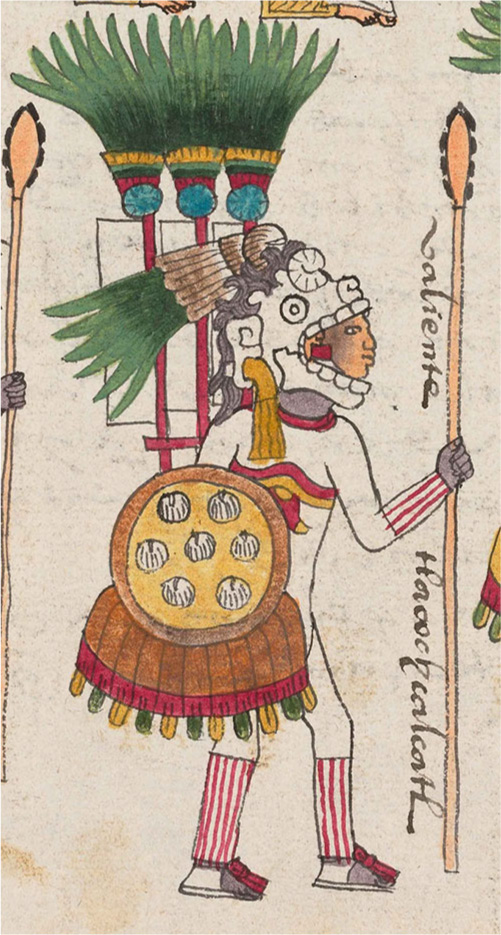
Human sacrifice was also an important means of preserving and expanding the empire and keeping conquered territories in line, since sacrificial victims were often those captured in battle. Thus, the goal in warfare was often to seize the enemy alive. Aztec war had important ritual purposes too. In some instances, it could be highly theatrical and consisted of paired individuals fighting each other, rather than large armies. Young boys began training to serve in the Aztec military from an early age. They drilled regularly with javelins for throwing, leather-covered shields, and clubs fitted with obsidian blades. Until they were old enough and experienced enough to become warriors themselves, they worked in the service of veteran warriors (Figure 8.31).
英語のヒント
人身供犠は、帝国を維持・拡大し、征服地を従わせるための重要な手段でもあった。生贄はしばしば、戦闘で捕らえた人々だったからである。そのため、戦争の目標は、敵を生きたまま捕らえることになる場合が多かった。アステカの戦争には、重要な儀礼上の目的もあった。ときには非常に演劇的な形を取り、大軍どうしではなく、対になった個人どうしが戦うこともあった。男の子は幼いころから、アステカの軍で働くための訓練を始めた。投槍、革張りの盾、黒曜石の刃を付けた棍棒を使い、定期的に訓練した。自ら戦士になれるだけの年齢と経験に達するまでは、熟練の戦士に仕えて働いた(図8.31)。
An Aztec Warrior.アステカの戦士
(credit: “Tlacochcalcatl” by Unknown/Wikimedia Commons, Public Domain) · Public Domain
Figure 8.31 Aztec warriors, like this one shown in a detail from the Codex Mendoza (c. 1542), trained from childhood to fight in wars for the empire. (credit: “Tlacochcalcatl” by Unknown/Wikimedia Commons, Public Domain)
図8.31 『メンドーサ絵文書』(1542年ごろ)の一部に描かれた、この人物のようなアステカの戦士は、帝国の戦争に参加するため、子どものころから訓練した。(出典:「Tlacochcalcatl」、作者不明、Wikimedia Commons、パブリックドメイン)
The Aztec Empire also exacted tribute payments from its conquered territories. At its height, the empire consisted of thirty-eight provinces, each expected to submit specific tribute to the imperial capitals. Occasionally, regions that resisted incorporation into the empire were given harsh terms. More often, the type of tribute demanded was related to the location of the tribute state and the goods it typically produced. For example, the Gulf coast area was known for natural rubber production and was assessed a tribute payment of sixteen thousand rubber balls for use in the Aztec ball game. Locations much closer to the capitals commonly provided goods like food that were expensive to transport over long distances. Those much farther away might be expected to provide luxury goods the Aztec elite gave as gifts to important warriors. Typical tribute items included cloth, tools like knives and other weapons, craft goods of all types, and of course, food. Tribute items could also include laborers to work on larger imperial projects. The Aztec tribute system functioned much like a crude system of economic exchange. Goods of all types flowed into the centers of power and the hands of elites. But they also made their way to commoners, who benefited from the diversity of the items the system made available.
英語のヒント
アステカ帝国は、征服地から貢納も取り立てた。最盛期には38の属州から成り、それぞれが帝国の中心都市に、定められた貢納を納めることを求められた。帝国への編入に抵抗した地域には、ときに厳しい条件が課された。より一般的には、貢納品の種類は、その地域の場所や、ふだん生産する品と結びついていた。例えば、メキシコ湾岸は天然ゴムの生産で知られ、アステカの球技に使うゴム球1万6,000個の貢納を課された。中心都市に近い地域は、食料など、長距離輸送の費用が高い品を納めることが多かった。遠い地域には、支配層が重要な戦士への贈り物にする奢侈品が求められた。典型的な貢納品には、布、刃物やその他の武器などの道具、あらゆる種類の工芸品、そして当然、食料があった。大規模な帝国の事業で働く労働者も、貢納に含まれることがあった。アステカの貢納制度は、ある種の粗い経済的交換の仕組みのように働いた。さまざまな品が、権力の中心と支配層の手元に流れ込んだ。それらは一般の人々にも行き渡り、人々は、この制度によって手に入る多様な品から利益を得た。
As a highly militarized society, Aztec culture prized perceived male virtues like bravery, strength, and fighting ability. Warriors were expected to sacrifice themselves to perpetuate the glory of the state. When they were successful in battle, they were adorned with rich cloth and celebrated by the masses. Aztec women operated within a more circumscribed world. They could not serve in the military or attain high positions within the state, yet they did not necessarily occupy a lower status than men. Rather, Aztec state culture emphasized the complementarity of women and men, with men expected to fill roles outside the home like farming and fighting and women responsible for domestic chores like cooking and weaving.
英語のヒント
高度に軍事化された社会として、アステカ文化は、勇気、強さ、戦う力など、男性的と見なされた徳を重んじた。戦士は国家の栄光を保つため、自らを犠牲にすることを期待された。戦いに成功すると、豪華な布で飾られ、民衆に称えられた。アステカの女性が活動できる範囲は、より限られていた。軍務に就いたり、国家の高い地位を得たりすることはできなかったが、必ずしも男性より低い身分を占めたわけではない。むしろ、国家の文化は男女の相補性を強調した。男性には、農耕や戦闘など、家の外の役割が期待され、女性は料理や機織りなど、家事を担った。
Aztec women thus often spent long hours grinding corn into meal and weaving clothing for the family. Their work could sometimes take them outside the home, such as to the markets where some gained considerable wealth as traders and served in leadership roles. As midwives and healers, women ensured that healthy children were born and that the sick were treated with medicines backed by centuries of knowledge about the medicinal properties of certain plants.
英語のヒント
そのため、アステカの女性はしばしば、長い時間をかけてトウモロコシを粉にひき、家族の衣服を織った。仕事で家の外へ出ることもあり、例えば市場では、商人としてかなりの富を得て、指導的な役割を果たす女性もいた。助産師や治療者として、女性は、健康な子どもが生まれ、病人が薬で治療されるようにした。その薬は、特定の植物の薬効について、数世紀にわたり蓄積された知識に裏付けられていた。
Aztec society was made up of a number of social tiers. At the bottom was a large number of enslaved people and commoners with no land. Above these were the commoners with land. Before the imperial expansion, landed commoners had some limited political power. However, within the imperial system they were relegated to providing food and service for the military. Above them were the many specialized craftspeople, merchants, and scribes. And above all commoners were the nobles, who used conspicuous displays of wealth to elevate themselves. They served in the most important military positions, on the courts, and in the priesthood.
英語のヒント
アステカ社会は、いくつもの階層から成っていた。最下層には、多数の奴隷にされた人々と、土地を持たない平民がいた。その上が、土地を持つ平民だった。帝国が拡大する前、土地を持つ平民には、限られた政治的な力があった。しかし、帝国の体制の中では、軍に食料や奉仕を提供する役割へと追いやられた。その上には、多数の専門的な職人、商人、書記がいた。そして、すべての平民より上に貴族がいた。貴族は目立つ形で富を誇示し、自分たちの地位を高めた。軍の最重要の職、裁判機関、聖職で働いた。