第8章古代の南北アメリカThe Americas in Ancient Times
Peopling the Great Plains大平原への定住
Within the expansive Great Plains region in the center of the North American continent, settlers hunted large bison herds that grazed on the short grasses growing there. Unlike the animals hunted by the Clovis people, the bison were able to adapt to the warming climate conditions and flourished in the plains. The groups that followed and lived off them practiced a seminomadic lifestyle requiring relatively few belongings; thus, their culture had far less social stratification than existed in the Pacific Northwest. Hunting bison was dangerous and required keeping a distance in order to not startle the animals or allow them to grow reflexively fearful of human presence. We know from archaeological sites in central Canada, Texas, Montana, Wyoming, and Colorado that as long ago as 8000 BCE, hunters used a strategy of driving herds of bison over cliffs to their death. Once the animals had been killed or immobilized in this way, sometimes by the hundreds, the hunters could carefully process the carcasses for their meat, bones, and hides. Other strategies included cornering the bison herds in a way that allowed the hunters to approach them with spears.
英語のヒント
北アメリカ大陸中央部の広大な大平原では、定住した人々が、そこに生える丈の低い草を食べるバイソンの大群を狩った。クローヴィス文化の人々が狩っていた動物とは異なり、バイソンは温暖化する気候に適応でき、平原で繁栄した。バイソンを追い、その恵みに依存して暮らす集団は、持ち物を比較的少なく抑える半遊動の生活を営んだ。そのため、社会の階層化は太平洋岸北西部ほど進まなかった。バイソンの狩猟は危険だった。動物を驚かせたり、人間の存在に反射的な恐怖を覚えさせたりしないよう、距離を保つ必要があった。カナダ中部やテキサス、モンタナ、ワイオミング、コロラドの遺跡から、前8000年にはすでに、バイソンの群れを崖から追い落として殺す方法が使われていたことがわかる。この方法で、時には数百頭ものバイソンを殺したり動けなくしたりすると、狩人たちは死骸を丁寧に処理して、肉、骨、皮を得た。ほかにも、バイソンの群れを追い詰め、槍を持つ狩人が近づけるようにする方法があった。
In addition to bison, the plains peoples also hunted antelope, deer, and small animals like rabbits and birds. Hunting birds sometimes required the use of bird decoys designed with feathers to allow hunters to approach and make the kill. The hides of some animals, especially soft ones like rabbit, could be used for clothing when stitched together with plant materials. Edible plants included various types of seeds, berries, nuts, acorns, and tubers like yampa and biscuit-root, which could be unearthed with digging sticks. People carried and stored these foods in coiled baskets made of plants or bags made of leather.
英語のヒント
平原の人々は、バイソンのほか、レイヨウ、シカ、ウサギや鳥のような小動物も狩った。鳥を狩る際には、狩人が近づいて仕留められるよう、羽根で作ったおとりを使うこともあった。動物の皮のうち、特にウサギのような柔らかいものは、植物の素材で縫い合わせれば衣服に使えた。食用の植物には、さまざまな種子、ベリー類、木の実、ドングリ、そしてヤンパやビスケットルートのような塊根があった。これらの根は掘り棒で掘り出せた。食料は植物素材を巻き編みにしたかごや、革袋に入れて運び、保存した。
Peopling the Eastern Woodlands東部森林地帯への定住
To the east of the Great Plains lie the wetter and lusher Eastern Woodlands, extending from the Mississippi River basin to the Atlantic coast. The groups that lived there found a great variety of plants and animals to feed on and exploit. The many rivers and lakes of the region provided fresh water that encouraged settlement along their shores. The same was the case with the oxbow lakes, U-shaped pools created as river courses stabilized in the warmer conditions. These locations also served as excellent hunting and fishing grounds for catfish, deer, birds, rabbits, and many others. Edible plants included nuts from oak, chestnut, and beech trees. Near coastal areas, there was access to saltwater marine life.
英語のヒント
大平原の東には、ミシシッピ川流域から大西洋岸にかけて、より湿潤で緑の豊かな東部森林地帯が広がる。ここに暮らした集団は、食料やその他の用途に使える多種多様な動植物を得た。この地域の多くの川や湖は淡水を供給し、その岸辺への定住を促した。温暖な環境で河道が安定するにつれて生まれた、U字形の三日月湖でも事情は同じだった。これらの場所は、ナマズ、シカ、鳥、ウサギなど、多くの動物を対象とする優れた漁場・狩猟場にもなった。食べられる植物には、オーク、クリ、ブナの実があった。海岸の近くでは、海の生物資源も利用できた。
Not only was there less need for mobility here, so that settlements could be sustained, but populations also began to rise around 6500 BCE, and people constructed large earthworks in Arkansas, Louisiana, Mississippi, and Florida. The oldest discovered, Watson Brake in northern Louisiana, dates from around 3900 BCE and includes several human-made earth mounds as high as twenty-five feet and set in a circular formation. Archaeologists believe the site was likely used by hunter-gatherers on a seasonal basis. While no burial remains have been found there, large cemeteries from the period have been discovered in many other woodland locations including Illinois and Tennessee. Some sites include the remains of more than a hundred individuals, some with personal items like weapons and art. They are evidence of not only rising populations but also an increasingly sedentary lifestyle.
英語のヒント
この地域では移動する必要が比較的小さく、集落を維持できただけでなく、前6500年ごろから人口も増え始めた。人々はアーカンソー、ルイジアナ、ミシシッピ、フロリダで、大規模な土の構築物を造った。発見されている最古の例は、ルイジアナ北部のワトソン・ブレイクで、前3900年ごろにさかのぼる。高さ25フィートにもなる人工の土塚が、円をなしていくつも配置されている。考古学者は、狩猟採集民が季節的に利用した場所だった可能性が高いと考えている。そこでは埋葬された遺骸は見つかっていないが、イリノイやテネシーを含む東部森林地帯のほかの多くの場所では、この時代の大規模な墓地が発見されている。100人以上の遺骸を含む遺跡もあり、武器や美術品のような私物を伴うものもある。これらは、人口の増加だけでなく、定住生活がますます広まった証拠でもある。
Peopling Mesoamericaメソアメリカへの定住
To the south and west of the Eastern Woodlands, the climate is much more arid and less green. This desert scrubland extends down the center of Mexico to the tip of the Central Mexican Plateau. South of there, in the region often described as Mesoamerica, the environment is warmer, greener, and wetter. The formerly large-game-hunting peoples settled there after around 8000 BCE as the game disappeared and the bison followed the retreating grassland north. Evidence of Archaic peoples in this area has been found in several coastal sites along the Gulf of Mexico and the Pacific Ocean, as well as in the Tehuacán Valley south of modern Mexico City. They lived largely in small groups and hunted and gathered over large areas. During the dry season, they relied mostly on wild game like lizards, snakes, and insects, and edible plants like the agave. During the rainy season, they ate avocados, nuts, various types of fruit, and small game, like rabbits.
英語のヒント
東部森林地帯の南と西は、はるかに乾燥し、緑が乏しい。この砂漠性の低木地帯はメキシコの中央部を南へ延び、メキシコ中央高原の端に達する。さらに南の、一般にメソアメリカと呼ばれる地域は、より温暖で緑が多く、湿潤である。かつて大型獣を狩っていた人々は、前8000年ごろ以降にこの地域へ定住した。獲物が姿を消し、バイソンが後退する草原を追って北へ移動したためである。この地域のアルカイック期の人々の痕跡は、メキシコ湾岸や太平洋岸のいくつかの遺跡、さらに現在のメキシコシティの南にあるテワカン渓谷で見つかっている。人々は主に小集団で暮らし、広い範囲で狩猟採集を行った。乾季には、トカゲ、ヘビ、昆虫などの野生の獲物や、リュウゼツランなどの食用植物に主として頼った。雨季には、アボカド、木の実、さまざまな果物、ウサギのような小動物を食べた。
Beginning around 8000 BCE, some groups of hunter-gatherers began periodically occupying a site known as El Riego Cave in the Tehuacán Valley. Excavations there have uncovered numerous stone tools, woven baskets and blankets, and even elaborate burial sites. These burials suggest the existence of a complex spiritual practice. Other evidence in the Tehuacán Valley indicates that by around 5000 BCE, the settlers’ earlier reliance on wild game had given way to a more plant-based diet that included beans, squash, maize (corn), and bottle gourds. By 2600 BCE, the gathering of wild plants had waned considerably as groups adopted agricultural practices, cultivating maize, beans, and squash.
英語のヒント
前8000年ごろから、一部の狩猟採集集団は、テワカン渓谷にあるエル・リエゴ洞窟と呼ばれる場所を、定期的に利用し始めた。そこでの発掘により、多くの石器、編んだかごや毛布、さらに手の込んだ埋葬地まで見つかっている。これらの埋葬は、複雑な宗教的実践があったことを示唆する。テワカン渓谷のほかの証拠は、前5000年ごろまでに、人々の食生活が、それ以前の野生動物への依存から、豆、カボチャ、トウモロコシ、ヒョウタンを含む、より植物中心のものへと変わっていたことを示している。前2600年までには、集団が農耕を取り入れてトウモロコシ、豆、カボチャを栽培するようになり、野生植物の採集は大きく減っていた。
Peopling the Andes Mountains Regionアンデス山脈地域への定住
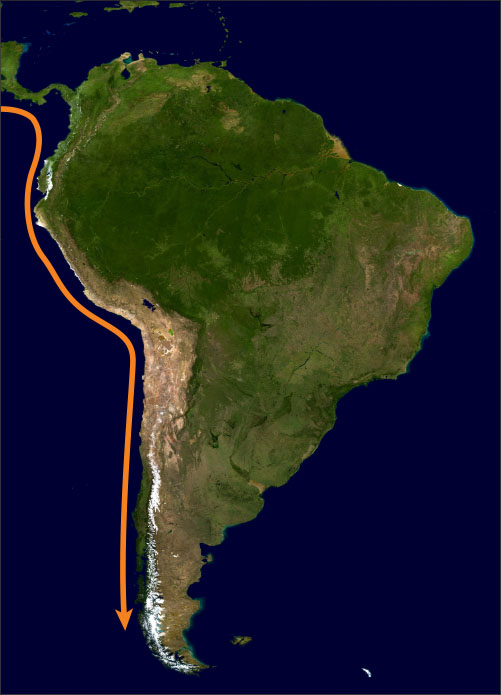
The Andes Mountains run along the western side of South America, rising to more than twenty-two thousand feet in some areas and punctuated by arid deserts and dozens of rivers. It is unclear when the first humans reached South America. At the Monte Verde site in Chile, archaeologists excavating a peat bog recovered remnants of shelters, butchered animal remains, and even scraps of clothing made from hides. Testing dates these to about 12,000 BCE, well before the arrival of Clovis culture in the north. It is unclear exactly what this information means, and it leaves the story of how the Americas were populated incomplete. But whenever they came, the first hunter-gatherers who arrived appear to have spread quickly down the continent, likely because its unique geography encouraged north–south rather than east–west migration (Figure 8.6).
英語のヒント
アンデス山脈は南アメリカの西側を連なり、一部では標高2万2,000フィートを超える。その間には乾いた砂漠や数十もの川が点在している。最初の人類がいつ南アメリカに到達したのかは明らかではない。チリのモンテ・ヴェルデ遺跡では、泥炭湿地を発掘した考古学者が、住まいの痕跡、解体された動物の遺骸、さらに獣皮製の衣服の断片も回収した。測定では、これらは前12000年ごろのものとされる。北方にクローヴィス文化が現れるより、かなり早い時期である。この情報が正確に何を意味するかは不明であり、南北アメリカへの人類の移住の全体像には、なお欠けた部分が残る。それでも、到来した時期がいつであれ、最初の狩猟採集民は大陸を急速に南下したようである。おそらく、この大陸特有の地形が、東西よりも南北への移動を促したためだろう(図8.6)。
A Natural Migration Path.自然の地形が作った移住経路
(credit: modification of work “South America - Blue Marble orthographic” by Blue Marble by Reto Stockli, NASA/GSFC/Dave Pape/Wikimedia Commons, Public Domain) · Public Domain
Figure 8.6 The Andes Mountains hug the west coast of South America, creating a narrow coastal passage that runs north–south. Scholars have hypothesized that this narrow passage enabled early American migrants to spread quickly down the length of the continent on its western side. (credit: modification of work “South America - Blue Marble orthographic” by Blue Marble by Reto Stockli, NASA/GSFC/Dave Pape/Wikimedia Commons, Public Domain)
図8.6 アンデス山脈は南アメリカの西海岸に沿ってそびえ、南北に延びる細い沿岸の通路を作っている。この狭い通路によって、初期の移住者は大陸の西側を急速に南下できたのではないか、と研究者たちは考えている。(出典:「South America - Blue Marble orthographic」を改変、Blue Marble画像:Reto Stockli・NASA/GSFC、加工:Dave Pape、Wikimedia Commons、パブリックドメイン)
The earliest hunter-gatherer groups reached as far as southern Chile and often camped near streams to hunt llamas, guanacos (similar to llamas), and deer. By 8000 BCE, some had begun regularly occupying certain sites. One such site is Guitarrero Cave, located at an altitude of 8,500 feet near the small town of Mancos in central Peru. There, archaeologists have recovered projectile points, modified bone and antler, and textiles. Those who lived in and around Guitarrero Cave likely survived by hunting animals and gathering beans, peppers, and a variety of tubers. In the narrow, low-lying areas along the Pacific coast, people relied on marine resources like fish and mollusks. The site called Quebrada Jaguay in coastal southern Peru may have been used by fishers as early as 10,000 BCE. There, archaeologists have discovered what are believed to be cord and fishing nets as well as the remains of fish and other exploited marine life. Obsidian found at the site, originating about one hundred miles away, is even more surprising; it suggests that long-distance trade may have been occurring in the region many thousands of years ago.
英語のヒント
最初期の狩猟採集集団は、チリ南部にまで到達し、川の近くに野営して、リャマ、リャマに似たグアナコ、シカを狩ることが多かった。前8000年までには、一部の集団が決まった場所を定期的に利用し始めていた。その一例が、ペルー中部の小さな町マンコスの近く、標高8,500フィートにあるギタレロ洞窟である。考古学者はそこで、尖頭器、加工した骨や枝角、織物を回収した。洞窟やその周囲に住む人々は、おそらく動物を狩り、豆、トウガラシ、さまざまな塊根・塊茎を採集して暮らしていた。太平洋岸の狭い低地では、人々は魚や軟体動物などの海の資源に頼った。ペルー南部沿岸のケブラダ・ハグアイという遺跡は、早ければ前10000年には漁をする人々に利用されていた可能性がある。そこでは、ひもや漁網と考えられる物に加え、魚や、人々が利用したほかの海洋生物の遺骸が見つかっている。さらに驚くべきなのは、約100マイル離れた場所を産地とする黒曜石が、この遺跡で見つかったことだ。これは、数千年も前に、この地域ですでに長距離交易が行われていた可能性を示している。