第8章古代の南北アメリカThe Americas in Ancient Times
Maya Cultureマヤ文化
While Maya civilization was clearly influenced by the Teotihuacanos beginning in the fourth century CE, evidence of urban development and rapid population growth in the Maya heartland of Central America dates to before 600 BCE. Village life may go back much further, but in any case, by 600 BCE, the lowlands of Central America were full of small villages, each showing evidence of sophisticated pottery, architecture, irrigation techniques, and religious traditions. By 250 BCE, a handful of powerful Maya city-states had emerged. The major cities of this Early Classic period (250–600 CE) include Tikal, Calakmul, El Mirador, and a few others.
英語のヒント
マヤ文明が4世紀以降、テオティワカンの明らかな影響を受けた一方で、中央アメリカのマヤ中心地域における都市の発展と急激な人口増加の証拠は、前600年より前にさかのぼる。村落生活の始まりは、はるかに古い可能性がある。いずれにせよ、前600年までには、中央アメリカの低地に小さな村々が広がり、それぞれに、高度な土器、建築、灌漑技術、宗教的伝統の証拠が見られる。前250年までには、いくつかの強力なマヤの都市国家が現れていた。この古典期前期(250〜600年)の主要都市には、ティカル、カラクムル、エル・ミラドールなどが含まれる。
El Mirador was a dominant city before 150 CE, with a population of about 100,000 at its height. But Tikal and Calakmul were equally impressive. All had numerous large pyramid-like structures creating an impressive skyline across the spaces cleared of jungle. Most of the major cities were built next to large, shallow lakes, since access to water for drinking and irrigation was important in the lowlands, where rainfall was often insufficient. The tropical soil in the area is also insufficiently fertile, and the Maya developed a style of slash-and-burn agriculture to raise maize, squash, beans, and cacao for the growing urban populations in these cities.
英語のヒント
エル・ミラドールは150年より前には有力な都市で、最盛期の人口は約10万人だった。しかし、ティカルやカラクムルも、それに劣らず見事な都市だった。いずれの都市でも、密林を切り開いた空間に、ピラミッドのような大きな建物がいくつも並び、印象的な都市の輪郭を形づくっていた。大部分の主要都市は、広く浅い湖のそばに築かれた。低地では雨量がしばしば不足し、飲料水や灌漑用水の確保が重要だったからである。また、この地域の熱帯の土壌は十分に肥沃ではなかった。マヤの人々は焼畑農業を発達させ、都市で増え続ける人口を養うため、トウモロコシ、カボチャ、豆、カカオを育てた。
The Maya were certainly influenced by Olmec civilization, though likely not directly. For example, some examples of Maya art include Olmec-derived features like the were-jaguar. The Maya also played a ritual ball game based on the earlier Olmec variety. Another possible Olmec influence was the Maya calendar. This consisted of two different parts—the 260-day Sacred Round calendar and the 365-day Vague Year calendar—that functioned together to create a 52-year cycle for measuring time and tying the dates for ceremonies to important mythological events performed by the gods.
英語のヒント
マヤは確かにオルメカ文明の影響を受けていたが、おそらく直接の影響ではなかった。例えばマヤの美術には、ウェア・ジャガーのように、オルメカに由来する特徴が見られる。また、オルメカの先行する球技をもとにした、儀礼的な球技も行っていた。マヤの暦も、オルメカの影響を受けた可能性がある。それは、260日の祭祀暦「セイクリッド・ラウンド」と、365日の「ヴェイグ・イヤー」という、二つの暦から成っていた。この二つが組み合わさって52年周期をつくり、時を計るとともに、儀式の日取りを、神々の行った重要な神話上の出来事に結びつけていた。
The era of Maya greatness begins with the Classic period, starting around 250 CE and lasting until about 900. During this time, urbanization in the Maya world expanded greatly, with approximately forty different city-states emerging in different areas. Some of the most powerful were older sites like Tikal and Calakmul, along with newer locations like Palenque, Copan, Yaxchilan, and Piedras Negras (Figure 8.16). Each had its own rulers, referred to as “divine lords.” These powerful chieftains exercised their authority over the city-state through their control over religious rituals and ceremonies, the construction of temples, and especially wars they waged with other Maya city-states. Such wars were common for weakening rivals and keeping neighbors in line, and they may even have served important ritual purposes. They also allowed for the exacting of tribute from subdued enemies in the form of animal products, salt, textiles, artwork, and agricultural goods like cacao and maize. Tribute could be paid through labor as well, when defeated enemies supplied workers for the victorious city-state. Only rarely did rulers seek to control conquered city-states, however. These generally remained independent, though they all shared many cultural attributes.
英語のヒント
マヤの繁栄の時代は、250年ごろから約900年まで続く古典期に始まる。この時期には都市化が大きく進み、各地に約40の都市国家が現れた。有力な都市には、ティカルやカラクムルのような古くからの拠点と、パレンケ、コパン、ヤシュチラン、ピエドラス・ネグラスのような新しい拠点があった(図8.16)。各都市には、「神聖王」と呼ばれる独自の支配者がいた。彼らは宗教儀礼や儀式、神殿建設、とりわけ他のマヤ都市国家との戦争を統率することで、都市国家への権威を行使した。戦争は、敵対する都市を弱め、隣国を従わせるために頻繁に行われ、重要な儀礼上の目的も果たしていた可能性がある。戦争によって、打ち負かした敵から、動物由来の品、塩、織物、美術品、カカオやトウモロコシなどの農産物を貢納として取り立てることもできた。敗者が勝者の都市国家に労働者を提供すれば、労働で貢納を納めることもできた。しかし、支配者が征服した都市国家を直接支配しようとすることは、まれだった。諸都市は文化的特徴を数多く共有しながらも、おおむね独立を保った。
The Maya World.マヤの世界
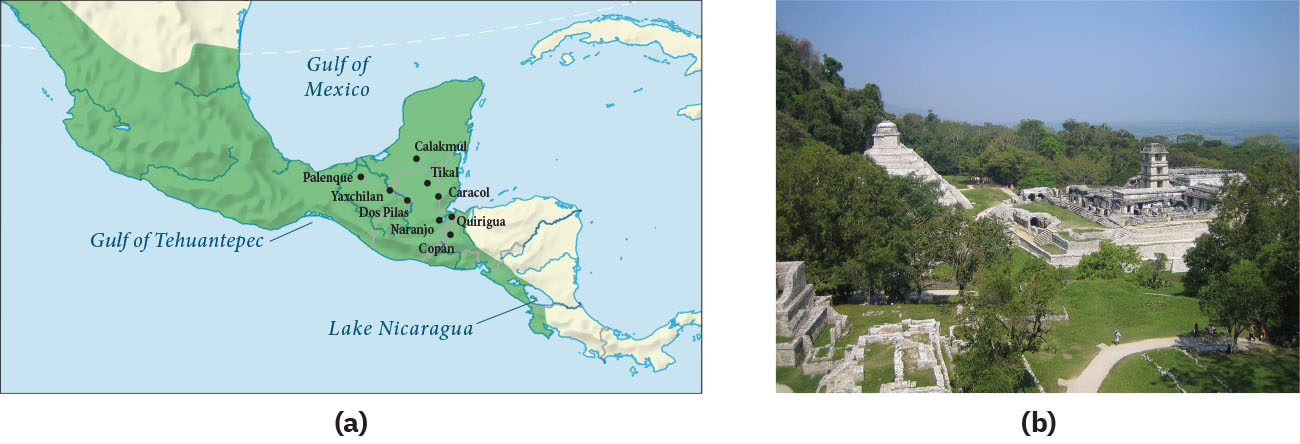
(attribution a: Copyright Rice University, OpenStax, under CC BY 4.0 license; credit b: modification of work “Palenque Palace” by “Candiderm”/Wikimedia Commons, Public Domain) · CC BY 4.0 + Public Domain
Figure 8.16 (a) At its height, the Maya civilization included as many as forty city-states. (b) Today the ruins of Palenque and other Maya sites appear ghost-white. But during their heyday in the seventh century, their temples were painted in bright colors. (attribution a: Copyright Rice University, OpenStax, under CC BY 4.0 license; credit b: modification of work “Palenque Palace” by “Candiderm”/Wikimedia Commons, Public Domain)
図8.16 (a)最盛期のマヤ文明には、40もの都市国家があった。(b)現在、パレンケをはじめとするマヤの遺跡は、幽霊のように白く見える。しかし、7世紀の最盛期には、神殿は鮮やかな色で彩られていた。(aの出典:© Rice University, OpenStax、CC BY 4.0。bの出典:「Candiderm」「Palenque Palace」を改変、Wikimedia Commons、パブリックドメイン)
At the heart of Maya religious practices was the veneration of family ancestors, who were considered bridges between heaven and earth. Homes had shrines for performing ritual bloodletting and prayers directed to the ancestors, and deceased family members were typically interred beneath the floor. Indeed, the large stone temples themselves were in some ways grander versions of these family shrines, usually with large tombs within them, and deceased kings were effectively ancestors for the entire city-state. Ritual practices were tied to the complicated Maya calendar, and gods could act in certain ways depending on the time of year and the location of certain heavenly bodies. Shamans and priests guided rituals like bloodletting, which allowed for communication with the ancestors by releasing a sacred essence in the blood called chu’ulel. The same principle applied to the human sacrifice of war captives and especially captured rival leaders.
英語のヒント
マヤの宗教実践の中心には、天と地の橋渡しをすると考えられた、家族の祖先への崇敬があった。家には、祖先に向けた放血の儀礼や祈りを行う祠があり、亡くなった家族は通常、床の下に埋葬された。実際、大きな石の神殿も、ある意味ではこうした家族の祠を壮大にしたもので、たいてい内部に大きな墓を備えていた。亡き王は、都市国家全体にとって、いわば祖先にあたる存在だった。儀礼は複雑なマヤの暦と結びつき、神々の行動は、季節や特定の天体の位置によって変わりえた。シャーマンや神官は、放血などの儀礼を導いた。血の中の「チュウレル」と呼ばれる聖なる本質を解き放つことで、祖先との交流が可能になるとされたのである。同じ原理は、戦争捕虜、とりわけ捕らえた敵の指導者を人身御供にすることにも当てはまった。
While we can only speculate about how the Olmec played their ritual ball game, we know more about the Maya and later versions (Figure 8.17). The intention was to reenact aspects of Maya mythology, and the game held a significant place in religious practice. Two teams of four wore ritual protective padding and passed the ball to each other without using hands or feet on long I-shaped courts flanked by sloping walls. The object appeared to be to move the ball through a stone ring without letting it hit the ground. As the use of padding indicates, the game could be quite dangerous; the ball was solid rubber and could weigh more than seven pounds. But the true danger came at the end, when losing team leaders or sometimes the entire losing team could expect to be sacrificed to fulfill the game’s ritual purpose.
英語のヒント
オルメカが儀礼的な球技をどのように行ったかは、推測するしかない。しかし、マヤやそれ以降の球技については、もっと多くのことがわかっている(図8.17)。目的はマヤの神話の一部を再現することであり、この競技は宗教実践の中で重要な位置を占めていた。4人ずつの2組が儀礼用の防具を着け、斜面の壁に挟まれた、細長いI字形のコートで競技を行った。手足を使わず、互いにボールを渡した。ボールを地面に落とさず、石の輪に通すことが目標だったようである。防具を使ったことからわかるように、この競技はかなり危険になりえた。ボールは中まで詰まったゴム製で、重さが7ポンドを超えることもあった。しかし、本当の危険は競技の終わりにあった。負けた組の代表者、ときには負けた組全員が、球技の儀礼上の目的を果たすため、生贄にされることを覚悟しなければならなかったのである。
A Maya Ball Court.マヤの球戯場
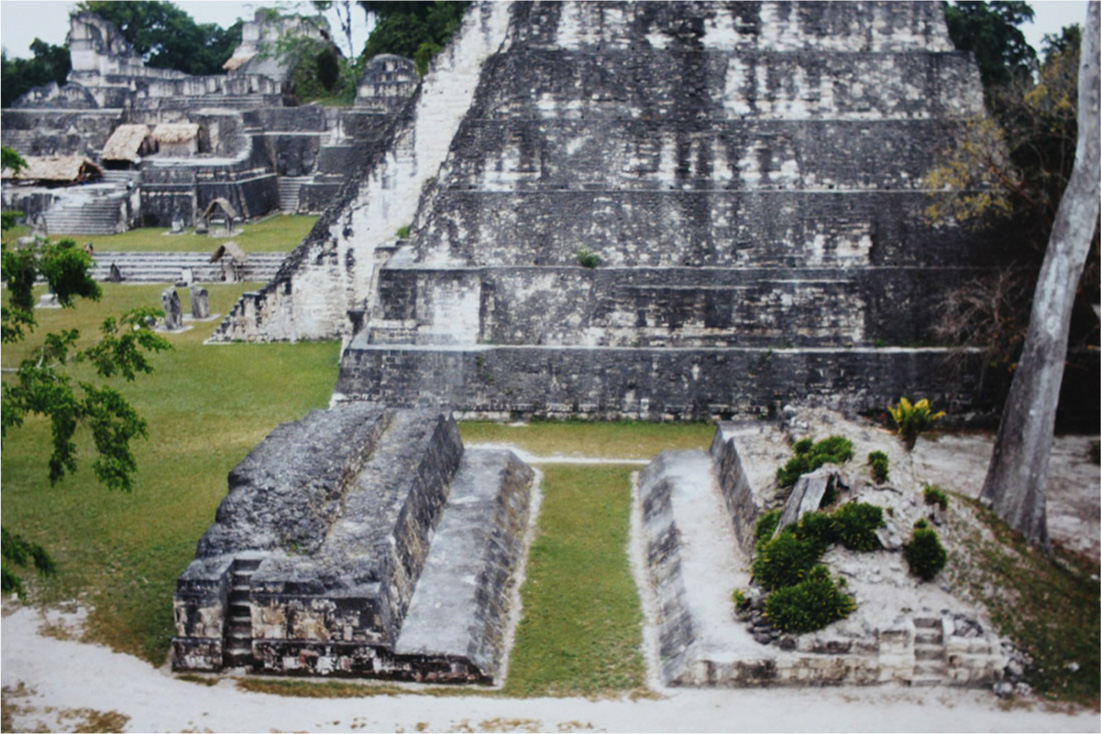
(credit: “Tikal Ballcourt“ by Gary Todd/Flickr, Public Domain) · Public Domain
Figure 8.17 Maya ball court designs varied from city to city, but like this one in front of a pyramid in Peten, Guatemala, all had the same I-shaped layout. (credit: “Tikal Ballcourt“ by Gary Todd/Flickr, Public Domain)
図8.17 マヤの球戯場の設計は都市によって異なったが、グアテマラのペテンにある、このピラミッド前の球戯場と同じく、すべてI字形の配置を備えていた。(出典:Gary Todd「Tikal Ballcourt」、Flickr、パブリックドメイン)
One of the reasons we know so much about the Maya is that, unlike some other Mesoamerican civilizations, they created a writing system that scholars have been able to decode and read (Figure 8.18). This system was phonetically based, with complex characters, and was far more developed than any other writing system discovered in Mesoamerica. It allowed the Maya to record their own history in stone monuments, including invaluable political histories, descriptions of rituals, propagandistic records of battles, and genealogies.
英語のヒント
マヤについて多くを知ることができる理由の一つは、メソアメリカの一部の文明とは異なり、研究者が解読し、読むことのできる文字体系を作ったことである(図8.18)。複雑な字形を持つこの体系は音に基づいており、メソアメリカで発見された他のどの文字体系よりも、はるかに発達していた。マヤの人々は、この文字を使って石の記念物に自らの歴史を記録できた。その中には、非常に貴重な政治史、儀礼の記述、宣伝のための戦闘記録、系譜などが含まれる。
The Maya Writing System.マヤの文字体系
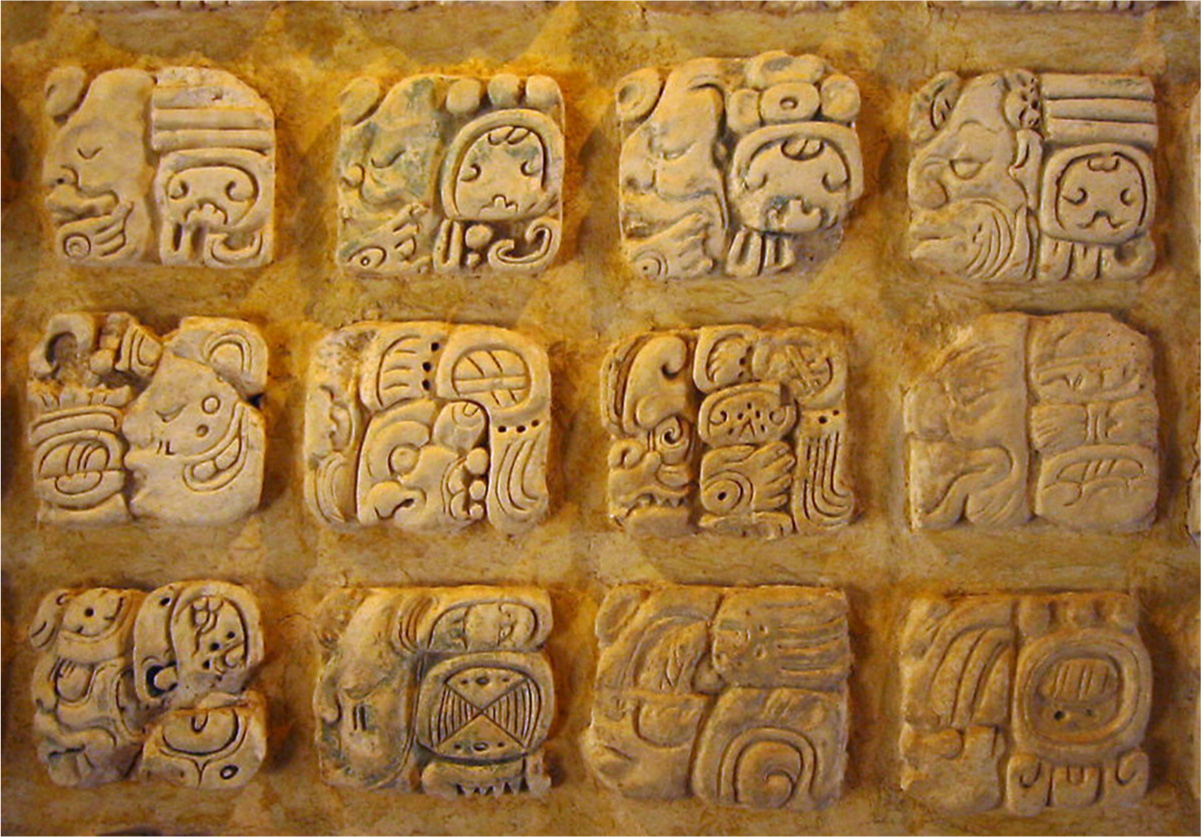
(credit: “Maya stucco glyphs displayed in the museum at Palenque, Mexico” by “Kwamikagami”/Wikimedia Commons, Public Domain) · Public Domain
Figure 8.18 The Maya script baffled researchers for years and was decoded only after decades of careful work. These stucco glyphs are displayed in the museum at Palenque, Mexico. (credit: “Maya stucco glyphs displayed in the museum at Palenque, Mexico” by “Kwamikagami”/Wikimedia Commons, Public Domain)
図8.18 マヤ文字は、長年にわたり研究者を悩ませ、数十年の丹念な研究を経て初めて解読された。この漆喰の文字は、メキシコのパレンケにある博物館で展示されている。(出典:「Kwamikagami」「Maya stucco glyphs displayed in the museum at Palenque, Mexico」、Wikimedia Commons、パブリックドメイン)
Classical Maya civilization entered a period of decline in the ninth century CE and then deteriorated rapidly. Over a period of about a century, alliances broke down, conflicts became more common, the production of luxury goods slowed to a stop, and cities went from thriving urban centers to depopulated shells. The reason for this collapse has been a topic of debate among historians and archaeologists for many years, and much remains uncertain. Among the proposed causes are epidemic diseases, invasions, natural disasters, internal revolutions, and environmental degradation. Several of these may have been influential; it is unlikely there was a single cause.
英語のヒント
古典期のマヤ文明は9世紀に衰退へ向かい、その後、急速に悪化した。およそ1世紀の間に、同盟は崩れ、争いが増え、奢侈品の生産は次第に止まった。都市は、活気ある中心地から、人のいない抜け殻へと変わっていった。この崩壊の理由は、長年にわたり歴史家や考古学者の論争の対象となっており、今も多くが不明である。原因として挙げられてきたのは、疫病、侵入、自然災害、内部の革命、環境の悪化などである。そのうちのいくつかが影響した可能性があり、一つだけの原因で起こったとは考えにくい。
For example, studies over the last few decades have pointed to the environmental problems created by demographic growth. This growth led to large-scale deforestation, which in turn produced soil erosion. Large populations that required high agricultural yields made Mayan civilization more vulnerable to variations in climate or a string of bad harvests caused by crop disease. Such problems would have put enormous pressure on elites and commoners alike and contributed to disorder, war, and perhaps internal revolts. However it happened, by 900 CE the Classic period of Maya civilization had come to an end. But this was not the end of the Maya. In the Yucatán Peninsula, well north of the old centers of power, Maya civilization would experience a rebirth that extended into the sixteenth century and the arrival of the Spanish.
英語のヒント
例えば、ここ数十年の研究では、人口増加が引き起こした環境問題が指摘されている。人口増加は大規模な森林伐採につながり、それが今度は土壌の浸食を生んだ。大量の収穫を必要とする大きな人口を抱えていたため、マヤ文明は、気候の変動や、作物の病気による不作の連続に弱くなった。こうした問題は、支配層にも一般の人々にも、等しく大きな圧力をかけ、混乱や戦争、場合によっては内乱につながっただろう。どのような経緯で起きたにせよ、900年までには、マヤ文明の古典期は終わっていた。しかし、それはマヤそのものの終わりではなかった。かつての権力の中心からはるか北のユカタン半島で、マヤ文明は再び栄え、その復興は16世紀と、スペイン人の到来の時代まで続くことになる。