第8章古代の南北アメリカThe Americas in Ancient Times
8.2 Early Cultures and Civilizations in the Americas8.2 南北アメリカの初期の文化と文明
Learning Objectives学習の目標
By the end of this section, you will be able to:
この節を学び終えると、次のことができるようになる。
Describe how civilizations in the Americas adapted to their environments
南北アメリカの文明が、周囲の環境にどのように適応したかを説明する。
Discuss the contributions of the Olmec civilization to culture and religion in Mesoamerica
オルメカ文明がメソアメリカの文化と宗教に果たした貢献を論じる。
Identify the key components of early cultures in North and South America
北アメリカと南アメリカの初期の文化を構成した主要な要素を挙げる。
At the start of the third century BCE, after thousands of years of hunter-gatherer existence, the peoples living in the Americas began to form complex agricultural-based societies. Over the next few thousand years, the early settled communities gave way to large and architecturally impressive settlements from the Andean region to the Eastern Woodlands of North America. These led to local similarities in art, architecture, religion, and pottery design.
英語のヒント
前3世紀の初め、数千年にわたる狩猟採集生活を経て、南北アメリカの人々は、農耕を基盤とする複雑な社会を形成し始めた。その後の数千年の間に、アンデス地域から北アメリカの東部森林地帯に至るまで、初期の定住共同体は、大規模で建築的にも見事な集落へと変わっていった。それによって、美術、建築、宗教、土器の意匠には、地域ごとの共通性が生まれた。
Complex Civilizations in Mesoamericaメソアメリカの複雑な文明
By the year 1200 BCE, farming had become well established across southern Mexico, especially in the gulf lowland areas where there was sufficient water for irrigation. The many societies there were not exclusively agricultural; they continued to rely on hunting and gathering to supplement their diets. One of them, the Olmec culture, emerged around this time as Mesoamerica’s first complex civilization with its own monumental architecture.
英語のヒント
前1200年までには、メキシコ南部全域、特に灌漑に十分な水のある湾岸低地で、農耕がしっかりと根づいていた。そこにあった多くの社会は農耕だけで生活していたわけではなく、食生活を補うために、狩猟採集にも引き続き頼っていた。その一つ、オルメカ文化はこのころ、独自の壮大な建築を備えた、メソアメリカ最初の複雑な文明として現れた。
Olmec Cultureオルメカ文化
The start of the Olmec civilization, at a site known as San Lorenzo in the modern Mexican state of Veracruz, stretches back to about 1350 BCE and the construction of a large earthen platform rising some 164 feet above the flat landscape. Upon this platform, the Olmec built ceremonial and other structures, water reservoirs, a system of drains, numerous stone works of art, and a number of massive sculpted stone heads. One of the structures has become known as “the red palace” because of the red ocher pigment on the floor and walls. It was likely a residence for the elite and included large stone columns and aqueducts. The massive stone heads and other sculptures, some weighing as much as fifty tons, were carved from volcanic basalt that came from as far as ninety miles away and was likely brought by raft for part of the way and on rollers over land.
英語のヒント
オルメカ文明の始まりは、現在のメキシコのベラクルス州にあるサン・ロレンソという遺跡で、前1350年ごろにさかのぼる。そこでは、平らな土地から高さ約164フィートまでそびえる、大きな土の基壇が築かれた。オルメカの人々はこの基壇の上に、儀礼用をはじめとする建造物、貯水池、排水路の仕組み、多数の石造美術品、そして巨大な石の頭像をいくつも造った。建造物の一つは、床と壁に赤色顔料のオーカーが使われているため、「赤い宮殿」と呼ばれるようになった。おそらく支配層の住居で、大きな石柱や導水路があった。巨大な頭像やその他の彫刻には、重さが50トンに達するものもあった。材料は、遠くは90マイルも離れた場所から来た火山岩の玄武岩である。途中まではいかだで運び、陸上ではころを使って運搬したと考えられる。
Because little of the San Lorenzo site remains, we can only speculate about the organization of the Olmec civilization, but it is clear that their civilization shaped those that followed. For example, the great earthen platform and monumental sculptures shaped liked step pyramids attest to a highly sophisticated culture, with a clearly defined elite that could control large labor forces. Relying on pottery fragments and population density estimates, scholars have concluded that most workers were probably free laborers working to accomplish larger goals. They likely lived well beyond the elevated center reserved for the elite, in villages surrounded by gardens and other agricultural zones where the Olmec grew maize, avocados, palm nuts, squash, tomatoes, beans, tropical fruits, and cacao for chocolate.
英語のヒント
サン・ロレンソの遺構はほとんど残っていないため、オルメカ文明の組織については推測するしかない。しかし、その文明が後続の文明を形づくったことは明らかである。例えば、巨大な土の基壇や階段ピラミッド状の記念碑的な彫刻は、大規模な労働力を統率できる、明確に区別された支配層を持つ、高度に発達した文化の存在を物語る。土器の破片や人口密度の推定に基づき、研究者たちは、労働者の大半は、おそらく共同の大きな目標を達成するために働く自由人だったと結論づけている。彼らは、支配層のために確保された高台の中心部から、かなり離れた村に暮らしていたと考えられる。村の周囲には庭園やその他の耕作地があり、トウモロコシ、アボカド、ヤシの実、カボチャ、トマト、豆、熱帯の果物、チョコレート用のカカオを育てていた。
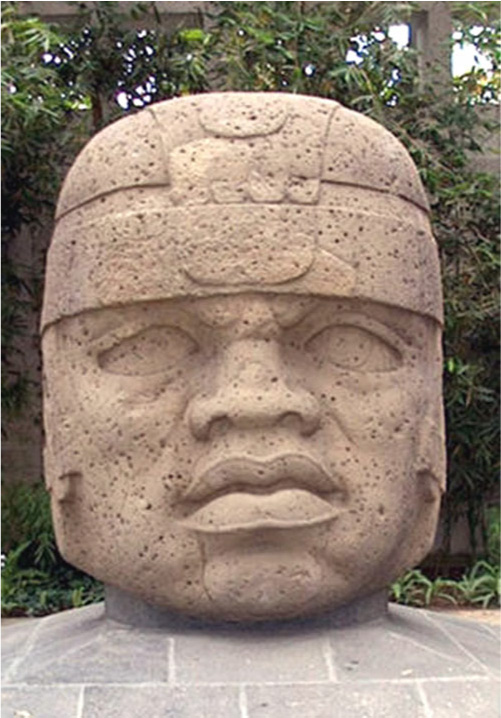
The stone heads themselves are remarkable (Figure 8.12). Seventeen have been found across all the Olmec sites; some stand eleven feet tall. All are generally similar in form and style, depicting men’s faces with large lips and noses with flared nostrils, but they were likely intended to be realistic portraits of rulers of the sites where they were discovered. Upon their heads are helmets of various styles, some with coverings for the ears. Given the effort required to transport the stone and carve the heads, these works were likely intended to emphasize the power of the rulers, both to the Olmec people and to outsiders.
英語のヒント
石の頭像そのものも注目に値する(図8.12)。オルメカの遺跡全体で17体が見つかっており、高さ11フィートに達するものもある。形や様式はおおむね共通し、大きな唇、鼻孔の広がった大きな鼻を持つ男性の顔を表している。ただし、発見されたそれぞれの都市の支配者を、写実的に表した肖像だった可能性が高い。頭部にはさまざまな様式の兜があり、耳を覆う部分を備えたものもある。石の運搬と彫刻に必要だった労力を考えれば、これらの作品は、オルメカの住民と外部の人々の両方に対して、支配者の権力を強調する意図で造られたと考えられる。
An Olmec Head.オルメカの頭像
(credit: “An Olmec colossal head at the Xalapa Museum of Anthropology, in Veracruz, Mexico” by “Maunus”/Wikimedia Commons, Public Domain) · Public Domain
Figure 8.12 Some of the enormous Olmec carvings of heads discovered in Mexico are as tall as eleven feet and weigh as much as fifty tons. (credit: “An Olmec colossal head at the Xalapa Museum of Anthropology, in Veracruz, Mexico” by “Maunus”/Wikimedia Commons, Public Domain)
図8.12 メキシコで発見された巨大なオルメカの頭像には、高さ11フィート、重さ50トンに達するものもある。(出典:「Maunus」「An Olmec colossal head at the Xalapa Museum of Anthropology, in Veracruz, Mexico」、Wikimedia Commons、パブリックドメイン)
Evidence of possible vandalism on some of the heads has led some scholars to suspect an invasion occurred in the tenth century BCE, with desecration of the images as a result. Others, however, believe this is evidence of reworking that was never completed. We may never know for sure, but we do know that during the tenth century BCE, San Lorenzo declined in importance. At the same time, another Olmec site rose in significance, some fifty miles to the northeast at La Venta.
英語のヒント
いくつかの頭像に、故意の破壊と見られる痕跡があることから、一部の研究者は、前10世紀に侵入が起こり、その結果として像が冒瀆されたのではないかと考えている。しかし、これを、完成しないまま終わった彫り直しの痕跡と考える人々もいる。確実なことは、ついにわからないかもしれない。それでも、前10世紀にサン・ロレンソの重要性が低下したことはわかっている。同じころ、北東へ約50マイル離れたラ・ベンタという別のオルメカの都市が、重要性を増していった。
La Venta was built around 1200 BCE on a high ridge above the Palma River less than ten miles from the Gulf of Mexico. By 900 BCE, it had become the dominant Olmec city in the region. At its height, La Venta covered almost five hundred acres and may have supported as many as eighteen thousand people. Its central monuments included several large earthen mounds, plazas, a possible sports arena, several tombs, and numerous stone heads and other sculptures. The complexity of this urban complex reflects a major development in Mesoamerican civilizational and architectural design. It was likely built as a sacred site, with its temples and other complexes organized on a north–south axis believed to enhance the rulers’ authority by connecting them to supernatural environments. This style of urban design was later adopted by other Mesoamerican civilizations like the Maya.
英語のヒント
ラ・ベンタは前1200年ごろ、メキシコ湾から10マイルも離れていない、パルマ川を見下ろす高い尾根の上に築かれた。前900年までには、この地域を代表するオルメカの都市になっていた。最盛期の面積はほぼ500エーカーに及び、1万8,000人もの人口を支えていた可能性がある。中心部の記念建造物には、大きな土塚、広場、競技場と思われる場所、いくつかの墓、多数の頭像やその他の彫刻があった。この都市の建築群の複雑さは、メソアメリカの文明と建築設計が大きく発展したことを示している。おそらく聖地として築かれ、神殿やその他の建築群は南北の軸に沿って配置されていた。この軸は、支配者を超自然的な世界につなぐことで、その権威を強めると考えられていた。こうした都市設計は、後にマヤなど、ほかのメソアメリカ文明にも取り入れられた。
Olmec art depicts numerous deities, such as a dragon god, a bird god, a fish god, and many fertility deities like a maize god and water gods. The Olmec also clearly recognized many types of supernatural mixed beings, like a feathered serpent and the were-jaguar, a cross between a jaguar and a human. These artistic images imply that the Olmec had a sophisticated pantheon of gods who controlled the universe and expected certain rituals be performed, perhaps by Olmec leaders themselves, who may have functioned as shamans empowered to communicate with the spirit world. The rituals were performed in the temples and plazas of the sacred cities like La Venta and San Lorenzo, as well as in sacred natural sites like caves and mountaintops.
英語のヒント
オルメカの美術には、竜の神、鳥の神、魚の神、そしてトウモロコシの神や水の神々のような、多数の豊穣の神々が描かれる。また、羽毛のある蛇や、ジャガーと人間の合わさったウェア・ジャガーのように、複数の存在が混ざった超自然的なものも、多く認識されていたことが明らかである。これらの図像からは、オルメカに複雑な神々の体系があったことがうかがえる。神々は宇宙を支配し、一定の儀礼が行われることを求めていた。その儀礼を担ったのは、霊の世界と交信する力を持つシャーマンとして働いた可能性のある、オルメカの指導者自身だったのかもしれない。儀礼はラ・ベンタやサン・ロレンソのような聖なる都市の神殿や広場で行われたほか、洞窟や山頂のような、自然の中の聖地でも行われた。
Other rituals were connected to a type of ball game played in a special court with balls made from the abundant natural rubber of the region. Sports contests often existed to bring communities together, to allow men to show prowess and strength in times of peace, and to entertain. It is also likely that in times of heightened spiritual need, such contests could take on greater meaning and might have been choreographed to play out supernatural narratives and perhaps connect people to the gods. Like some later civilizations, the Olmec also saw bloodletting as a link to the spirit world. Blood sports may have been used to create pathways to understanding the will of their gods.
英語のヒント
ほかにも、この地域に豊富な天然ゴムで作ったボールを使い、専用のコートで行う球技と結びついた儀礼があった。競技はしばしば、共同体を一つにまとめ、平和な時期に男性が勇武や強さを示せるようにし、人々を楽しませるために行われた。また、宗教的な必要が高まったときには、こうした競技がいっそう重要な意味を帯び、超自然的な物語を演じ、人々を神々と結びつけるように、進行が組み立てられていた可能性も高い。後世の一部の文明と同じく、オルメカも、血を流すことを霊の世界へのつながりと捉えた。流血を伴う競技は、神々の意志を理解する道を開くために使われたのかもしれない。
The Olmec were clearly in contact with other groups around southern Mexico and Central America. There is evidence of a robust trade in pottery and valued materials like obsidian, magnetite, and shells, likely carried out by merchants traveling across the larger region. Over time, this trade exposed other Mesoamerican cultures to Olmec ideas about religion, art, architecture, and governance. Some scholars thus conclude that Olmec civilization was a “mother culture” for later large and sophisticated Mesoamerican states. Cultural similarities exist among these, such as ritual ball games, deities, and calendar systems. Olmec-style artifacts have also been found at sites as far away as what are now western Mexico and El Salvador. Like much related to the Olmec, however, the extent of their influence is a question we may never answer with certainty. By the time this civilization disappeared around 400 BCE, a number of other Mesoamerican cultures were emerging.
英語のヒント
オルメカは、メキシコ南部や中央アメリカのほかの集団と、明らかに接触していた。土器や、黒曜石、磁鉄鉱、貝殻のように価値を置かれた素材の活発な交易があった証拠があり、おそらく広い地域を行き来する商人たちが担っていた。この交易によって、メソアメリカのほかの文化は、オルメカの宗教、美術、建築、統治についての考え方に触れるようになった。そのため一部の研究者は、オルメカ文明を、後の大規模で高度に発達したメソアメリカ諸国家の「母なる文化」と結論づけている。それらの文化の間には、儀礼的な球技、神々、暦の体系などの共通点がある。オルメカ様式の遺物は、遠く離れた、現在のメキシコ西部やエルサルバドルにあたる地域でも発見されている。ただし、オルメカに関する多くの事柄と同じく、その影響がどの程度に及んだかという問いには、確実な答えが出ないままかもしれない。前400年ごろにこの文明が姿を消すころまでには、ほかの多くのメソアメリカ文化が現れつつあった。
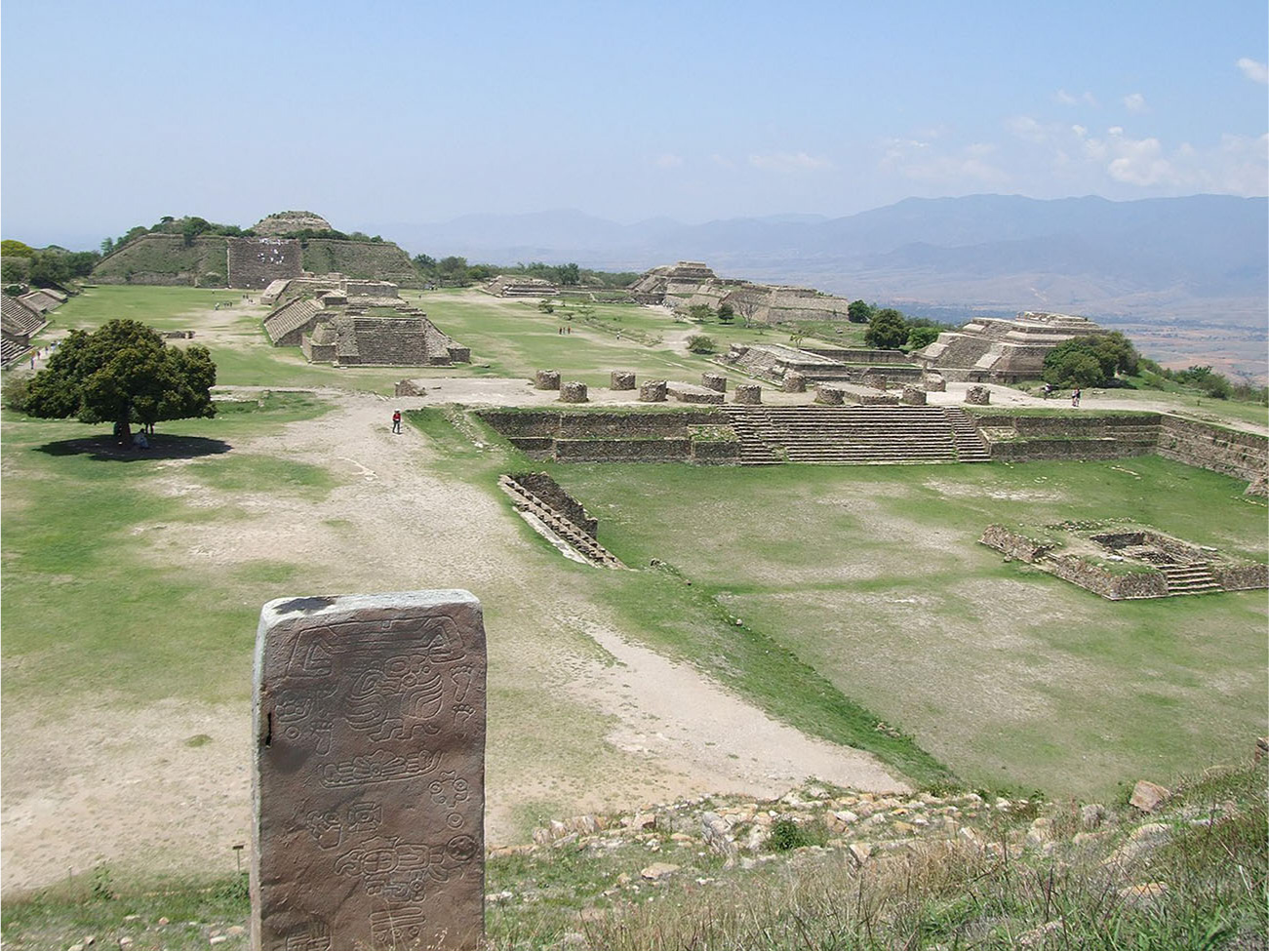
The Zapotec civilization appeared in the valleys of Oaxaca in western Mexico beginning around 500 BCE, with the construction of the regional capital known today as Monte Albán (Figure 8.13). Set on a flattened mountaintop overlooking the larger region, Monte Albán likely had a population of about five thousand by around 400 BCE and as many as twenty-five thousand by around 700 CE. As it grew over the centuries, so too did its stone temples and other complexes. The city exerted influence on the hundreds of much smaller communities scattered across the Oaxaca Valley. The region was highly suitable to maize cultivation, thus allowing for larger populations and monumental architecture. From the defensive walls created around their settlements, it seems the Zapotec lived in a world where warfare was especially common. Monte Albán itself was likely selected for defensive reasons.
英語のヒント
サポテカ文明は、前500年ごろ、現在モンテ・アルバンと呼ばれる地域の中心都市の建設とともに、メキシコ西部のオアハカの谷々に現れた(図8.13)。モンテ・アルバンは、周囲の広い地域を見渡す、平らに整えた山頂に位置する。人口は前400年ごろに約5,000人、700年ごろには2万5,000人に達していた可能性が高い。数世紀にわたって都市が成長するにつれ、石の神殿やその他の建築群も発展した。都市は、オアハカ渓谷全体に散らばる、はるかに小さな何百もの共同体に影響力を及ぼした。この地域はトウモロコシ栽培に非常に適しており、それによって人口の増加と壮大な建築が可能になった。集落を囲む防壁から判断すると、サポテカの人々が生きた世界では、戦争が特に頻繁だったようである。モンテ・アルバンの立地そのものも、防衛上の理由から選ばれた可能性が高い。
Monte Albán.モンテ・アルバン
(credit: “Roman architecture ruins” by Andrew McMillan/Wikimedia Commons, Public Domain) · Public Domain
Figure 8.13 Perched on a flattened mountaintop and serving as the Zapotec capital between 500 BCE and 800 CE, Monte Albán in today’s Oaxaca, Mexico, was an easily defensible city. (credit: “Roman architecture ruins” by Andrew McMillan/Wikimedia Commons, Public Domain)
図8.13 現在のメキシコ、オアハカ州にあるモンテ・アルバンは、平らに整えた山頂に位置し、前500年から800年までサポテカの首都として機能した、防衛しやすい都市だった。(出典:Andrew McMillan「Roman architecture ruins」、Wikimedia Commons、パブリックドメイン)
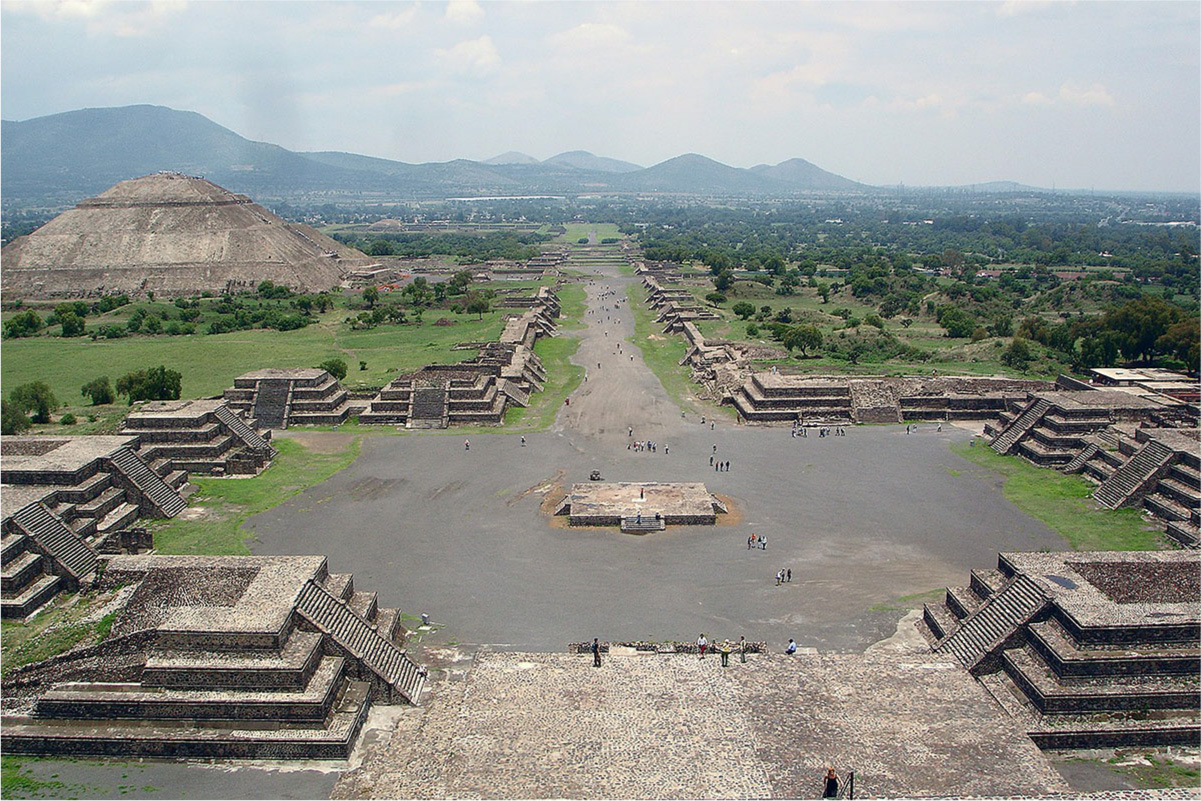
The structures built at Monte Albán after 300 CE reflect the influence of another major Mesoamerican civilization about thirty miles northeast of Mexico City. The massive city of Teotihuacán dominated trade in obsidian, salt, cotton, cacao, and marine shells across southern Mexico and greatly influenced cultures like that of the Zapotec. The origins of the Teotihuacán settlement date to about 400 BCE, but major building at the site did not begin until centuries later. By 300, the growing city had a population of about 100,000, making it one of the largest cities in the world at the time (Figure 8.14). It exercised enormous cultural and military influence across large portions of Mesoamerica until it declined in the sixth and seventh centuries CE.
英語のヒント
300年以降にモンテ・アルバンで造られた建築には、メキシコ市の北東約30マイルにあった、メソアメリカのもう一つの大文明の影響が見られる。巨大都市テオティワカンは、メキシコ南部全域で黒曜石、塩、綿、カカオ、海の貝殻の交易を支配し、サポテカをはじめとする文化に大きな影響を与えた。テオティワカンの集落の起源は前400年ごろにさかのぼるが、大規模な建築が始まったのは、その数世紀後だった。300年までに、成長を続ける都市の人口は約10万人となり、当時の世界でも最大級の都市になった(図8.14)。6〜7世紀に衰退するまで、メソアメリカの広い範囲に、文化面でも軍事面でも大きな影響力を及ぼした。
Teotihuacán.テオティワカン
(credit: “View of the Avenue of the Dead and the Pyramid of the Sun, from Pyramid of the Moon (Pyramide de la Luna)” by”Jackhynes”/Wikimedia Commons, Public Domain) · Public Domain
Figure 8.14 The enormous size of the ruins of Teotihuacán, northeast of Mexico City, is enduring evidence of the power of this city in ancient times. This photograph was taken from the top of the Pyramid of the Moon (c. 250 CE) looking down the Avenue of the Dead and toward the Pyramid of the Sun (c. 100 CE) on the far left side. (credit: “View of the Avenue of the Dead and the Pyramid of the Sun, from Pyramid of the Moon (Pyramide de la Luna)” by”Jackhynes”/Wikimedia Commons, Public Domain)
図8.14 メキシコ市の北東にあるテオティワカンの巨大な遺跡は、この都市が古代に持っていた力を、今に伝えている。写真は月のピラミッド(250年ごろ)の頂上から、「死者の大通り」と、左端にある太陽のピラミッド(100年ごろ)を見たもの。(出典:「Jackhynes」「View of the Avenue of the Dead and the Pyramid of the Sun, from Pyramid of the Moon (Pyramide de la Luna)」、Wikimedia Commons、パブリックドメイン)
The Teotihuacanos built numerous stone temples and other structures organized around a north–south passageway known as the Avenue of the Dead. The largest temples are known as the Pyramid of the Sun and the Pyramid of the Moon. Both are multitiered stone structures, 197 and 141 feet tall, respectively. The site also includes a large royal residence known as the Citadel, which includes the elaborate Temple of Quetzalcoatl, the feathered serpent. Elite military leaders and others lived in large apartment compounds decorated with colorful artwork depicting priests, gods, or warriors. The remaining population was spread across the roughly ten thousand square miles that surrounded the city and produced trade goods as well as agricultural products.
英語のヒント
テオティワカンの人々は、「死者の大通り」と呼ばれる南北の通路を軸として、多数の石の神殿やその他の建築物を配置した。最大の神殿は、太陽のピラミッドと月のピラミッドとして知られる。どちらも石造の多段構造で、高さはそれぞれ197フィートと141フィートである。遺跡には「シウダデラ」と呼ばれる大規模な王の居住区域もあり、その中には、羽毛のある蛇ケツァルコアトルを祀る精巧な神殿がある。軍事指導者などの支配層は、神官、神々、戦士を描く色彩豊かな美術で飾られた、大きな集合住宅群で暮らした。それ以外の住民は、都市の周囲のおよそ1万平方マイルに広がる地域に住み、交易品や農産物を生産していた。
The size of Teotihuacán denotes its wealth and regional influence at its height. This wealth came from trading in crafts, agricultural products, obsidian tools, cloth, ceramics, and artwork. The many preserved frescos and murals show the city’s rulers dressed in elaborate clothing, including iridescent quetzal bird feathers from as far away as Guatemala, testifying to Teotihuacán’s long reach. To influence areas so far away, the city wielded power through its control of trade and use of military force and diplomacy. Sculptures at Monte Albán show Teotihuacano diplomats meeting with the Zapotec elite, reflecting mostly peaceful contact between the two civilizations. Evidence from Maya sites also demonstrates that the Teotihuacanos commonly intervened in Maya affairs deep in Central America, sometimes militarily. They may even have orchestrated a coup in the powerful Maya city of Tikal in 378.
英語のヒント
テオティワカンの規模は、最盛期の富と地域への影響力を示している。その富は、工芸品、農産物、黒曜石の道具、布、陶器、美術品の交易から生まれた。現存する多数のフレスコ画や壁画には、華やかな服装の支配者たちが描かれる。その装いには、遠くグアテマラから来た、玉虫色に輝くケツァールの羽根も含まれ、テオティワカンの影響が遠方に及んでいたことを物語る。こうした遠隔地に影響を及ぼすため、都市は交易の支配、軍事力、外交を通じて力を行使した。モンテ・アルバンの彫刻には、サポテカの支配層と会うテオティワカンの外交官が描かれており、両文明の接触がおおむね平和的だったことを示す。マヤの遺跡の証拠からは、テオティワカンの人々が、中央アメリカの奥深くでマヤの内政にしばしば介入し、ときには軍事介入も行ったことがわかる。378年には、強大なマヤの都市ティカルで、クーデターを仕組んだ可能性さえある。