第10章信仰と帝国Empires of Faith
10.4 The Margins of Empire10.4 帝国の周辺
Learning Objectives学習の目標
By the end of this section, you will be able to:
この節を読み終えると、次のことができるようになる。
Discuss the economic and cultural exchange between the Kushan Empire and other societies
クシャーナ朝とほかの社会との、経済的・文化的な交流を論じる。
Explain Palmyra’s relationship with the Roman Empire and how it was able to become an independent state
パルミラとローマ帝国の関係、およびパルミラが独立国家となれた理由を説明する。
Analyze the way Arab tribes interacted with the Roman Empire and Sasanian Persia
アラブ諸部族が、ローマ帝国やサーサーン朝ペルシアと、どのように関わったかを分析する。
On the Silk Roads linking Europe and Asia in Late Antiquity, several small kingdoms functioned as important intermediaries for goods and people entering the Mediterranean world, as well as being trade partners, military adversaries, and allies of the great Byzantine and Sasanian Empires. The Kushan Empire served as an important cog in the trade route linking the Mediterranean and East Asia, but the ethnic and religious diversity of its population is also important in understanding this empire’s role in Late Antiquity. Palmyra was a major trading partner in the Mediterranean world, but the rule of Queen Zenobia shows how quickly a city-state could take advantage of its geographic position and a tumultuous political situation to expand its borders. Finally, the diversity of groups in the Arabian Peninsula provided the context for the rise of Islam in the following period. The peoples discussed in this section demonstrate the complexity of the wider world of Late Antiquity. They made connections far beyond their borders, and their multiregional societies often had culturally diverse populations.
英語のヒント
古代末期、ヨーロッパとアジアを結ぶシルクロード上の小王国は、地中海世界へ入る品物や人々の重要な仲介者だった。また、大国ビザンツとサーサーン朝の、交易相手、軍事的な敵、同盟者でもあった。クシャーナ朝は、地中海と東アジアを結ぶ交易路の重要な歯車として働いたが、古代末期での役割を理解するには、住民の民族的・宗教的な多様性も重要である。パルミラは地中海世界の主要な交易相手だった。女王ゼノビアの支配は、都市国家が地理的な位置と政治的混乱を利用して、いかに素早く国境を広げられるかを示す。最後に、アラビア半島の集団の多様性は、次の時代のイスラーム台頭の背景となった。この節で扱う人々は、古代末期のより広い世界の複雑さを示している。国境をはるかに越えてつながりを結び、複数地域にまたがる社会には、文化の異なる住民がいることも多かった。
The Kushan Empireクシャーナ朝
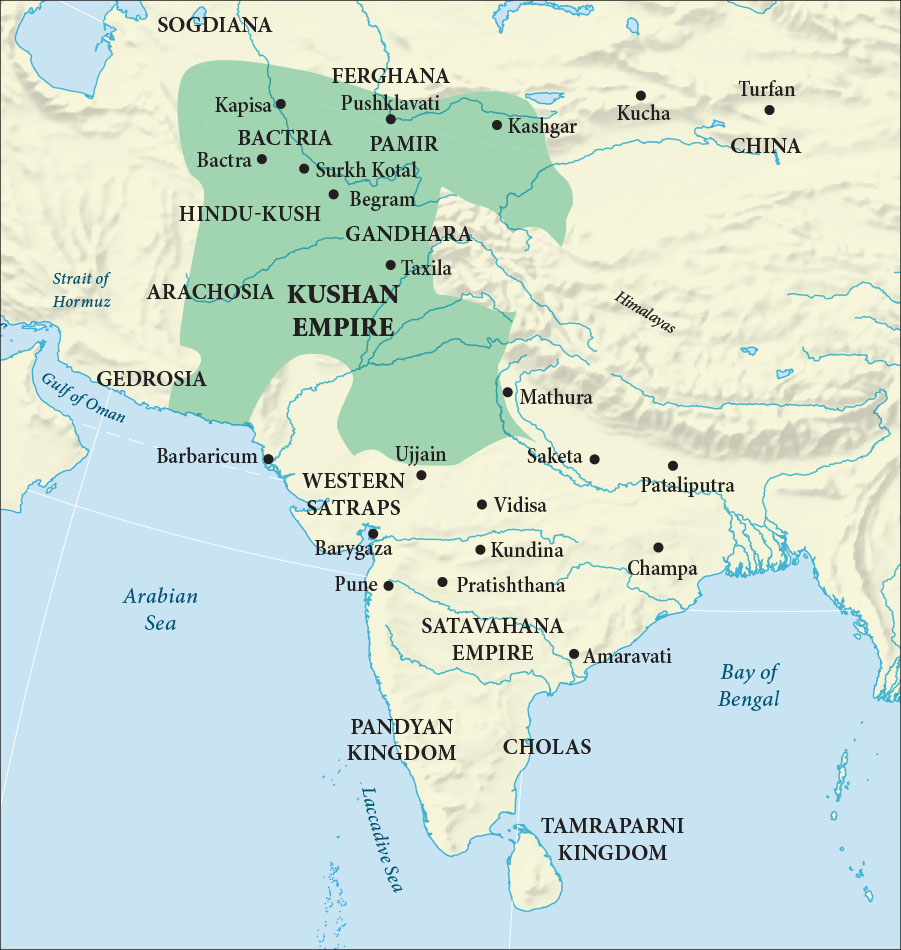
The Kushan Empire was located in northwest India and flourished from the second century BCE to the third century CE. The empire initially arose from the Yuezhi people’s uniting of several nomadic tribes into a single state. Eventually renamed Kushan after its ruling dynasty, this state gradually took territory from the Parthians’ eastern empire. Sometime in the first century BCE, the Kushans moved south, establishing the dual capital cities of Kapisa and Pushklavati near the modern-day cities of Kabul and Peshawar. Under the control of the emperor Kanishka, who ruled the empire during the mid-second century CE (the exact dates are uncertain), the Kushan Empire reached its greatest extent and cultural influence. Kanishka conducted military campaigns, extending Kushan into central China and northern India, and the empire eventually included parts of Pakistan, Afghanistan, and Uzbekistan, as well as northern India (Figure 10.18).
英語のヒント
クシャーナ朝はインド北西部に位置し、前2世紀から紀元後3世紀まで栄えた。初めは月氏の人々が、複数の遊牧部族を一つの国家へ統合したことから生まれた。やがて支配王朝の名にちなみクシャーナと改称され、パルティア帝国の東部から少しずつ領土を奪った。前1世紀のいずれかの時点で、クシャーナ人は南へ移り、現在のカブールとペシャワールの近くに、カピサとプシュカラーヴァティという二つの首都を置いた。紀元後2世紀半ば、正確な在位年代は不明だが、カニシカ帝の下で領土と文化的影響力は最大となった。カニシカは遠征を行い、中国中央部とインド北部へ勢力を広げた。帝国は最終的に、インド北部に加え、パキスタン、アフガニスタン、ウズベキスタンの一部を含んだ(図10.18)。
The Kushan Empire.クシャーナ朝の領域
(attribution: Copyright Rice University, OpenStax, under CC BY 4.0 license) · CC BY 4.0
Figure 10.18 At its greatest extent in the mid-second century, the Kushan Empire stretched from modern-day Uzbekistan to northern India, with two capital cities: Kapisa and Pushklavati. (attribution: Copyright Rice University, OpenStax, under CC BY 4.0 license)
図10.18 2世紀半ばの最大領域では、クシャーナ朝は現在のウズベキスタンからインド北部まで広がり、カピサとプシュカラーヴァティに二つの首都を持った。(著作権表記:Rice University, OpenStax、CC BY 4.0)
At the confluence of several rivers in a valley plain, the Gandhara region of Kushan was home to a particularly vibrant culture whose influence extended across the Indus River into the rest of Kushan. The people of Gandhara produced a unique artistic style, incorporating Greco-Roman elements but focused on Buddhist subjects. This blending of cultures extended to the region’s population; as a result of multiple conquests made before the Kushan Empire, the people of Gandhara claimed lineage from the Macedonian Greeks at the time of Alexander, from the Parthians, and from Indian peoples.
英語のヒント
平らな谷地の、いくつもの川が合流する場所にある、クシャーナ朝のガンダーラ地方には、特に活気ある文化が栄えた。その影響はインダス川を越え、帝国のほかの地域へ及んだ。ガンダーラの人々は、ギリシア・ローマ的な要素を取り入れながら、仏教の題材を中心とする、独自の美術様式を作った。文化の混合は、住民にも及んだ。クシャーナ朝以前に何度も征服を受けた結果、ガンダーラの人々は、アレクサンドロスの時代のマケドニア系ギリシア人、パルティア人、インドの諸民族に祖先を持つとした。
Kushan played a crucial role along the Silk Roads, acting as the link between the trading partners China and the Roman Empire. Its connections to Rome are clear from the Roman coins found in the Kushan region, as well as from written evidence that several Kushan embassies were sent to Roman emperors. Romans in turn received various luxury goods from Asia via Kushan, including jewelry, furs, and silk. In addition, Kushan protected a mountain pass that linked its empire to central China, allowing people and goods to easily enter this region. Its trade and cultural ties in China extended as far as Mongolia. Through its proximity to the sea to the south via the Indus River valley, Kushan also connected maritime and overland trade routes, and Kushan materials have been found in locations from Scandinavia to Ethiopia.
英語のヒント
クシャーナ朝はシルクロード上で、交易相手である中国とローマ帝国を結ぶ、重要な役割を果たした。地域で見つかるローマ貨幣や、クシャーナの使節が何度かローマ皇帝に送られたという文献史料から、ローマとのつながりは明らかである。ローマ人はクシャーナを介して、宝飾品、毛皮、絹など、アジアのさまざまな奢侈品を受け取った。また、クシャーナ朝は、中国中央部へ通じる峠を守り、人や品物がこの地域へ入りやすくした。中国での交易と文化のつながりは、モンゴルにまで達した。南へインダス川の谷を通って海に近づけることから、海上交易路と陸上交易路も結んだ。クシャーナの品物は、スカンディナヴィアからエチオピアまでの場所で発見されている。
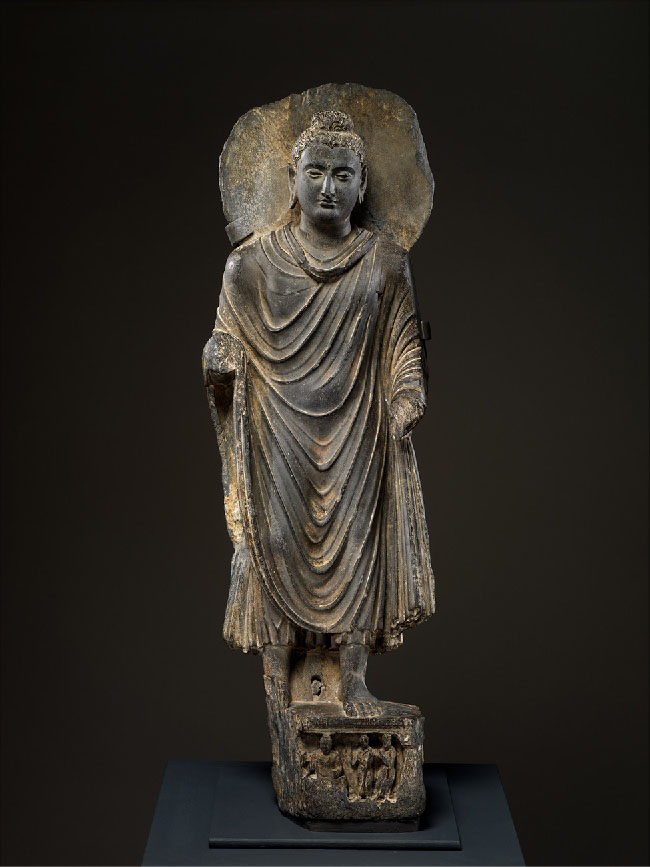
The religious identities of the region were likewise diverse, with a mix of people practicing Buddhism and Zoroastrianism among other faiths. Religious accommodation was a hallmark of Kushan, and its rulers might have felt compelled to embrace various faiths to win over people newly integrated into the empire. For example, some coinage of Kushan rulers shows a fire altar that bears a striking resemblance to Zoroastrian iconography. Yet Buddhism appears to have been important to the rulers of Kushan, who gave this religion special preference. For example, Emperor Kanishka undertook several initiatives to promote Buddhism. He made Buddhist texts more widely available and had many translated into other native languages such as Sanskrit. Around 100 CE, he convened the Fourth Buddhist Council in Kashmir. This council decided to recognize two sects of Buddhism, Mahayan and Hinayan, and compiled the Sarvastivadin Abhidharma texts, a systematic presentation of Buddhist doctrines. Kanishka also contributed to the production of art in Kushan. In what may have been a further attempt at accommodating different beliefs, Kushan art includes the first images of the Buddha in human form (Figure 10.19).
英語のヒント
この地域の宗教的帰属も多様で、仏教やゾロアスター教をはじめ、さまざまな信仰の人々が共存した。異なる宗教を受け入れることは、クシャーナ朝の特徴だった。支配者は、帝国に新たに組み込まれた人々の支持を得るため、多様な信仰を受け入れなければならないと感じたのかもしれない。たとえば、一部の王の貨幣には、ゾロアスター教の図像とよく似た拝火壇がある。それでも、支配者にとって仏教は重要で、特に優遇されたようである。カニシカ帝は仏教を広めるため、複数の事業を進めた。仏典を広く利用できるようにし、多くをサンスクリットなど、ほかの地域の言語へ訳させた。紀元後100年ごろには、カシミールで第4回仏典結集を招集した。この会議は、大乗と小乗という仏教の二派を認めることを決め、仏教の教義を体系的に示す、説一切有部のアビダルマ文献を編纂した。カニシカはクシャーナの美術制作にも寄与した。さらに多様な信仰に対応しようとした試みだったのかもしれないが、クシャーナ美術には、仏陀を人間の姿で表した最初の像が含まれる(図10.19)。
The Buddha.仏陀
(credit: “Buddha” by Purchase, Denise and Andrew Saul Gift, in honor of Maxwell K. Hearn, 2014/The Metropolitan Museum of Art, Public Domain) · Public Domain
Figure 10.19 This skillfully made third-century sculpture, about three feet high, depicts the Buddha in human form. The flowing drapery of his dress may have been influenced by Greco-Roman drapery traditions, suggesting the multiethnic makeup of the region of Gandhara where it was made. (credit: “Buddha” by Purchase, Denise and Andrew Saul Gift, in honor of Maxwell K. Hearn, 2014/The Metropolitan Museum of Art, Public Domain)
図10.19 高さ約3フィート、約90センチメートルの、この巧みに作られた3世紀の彫刻は、仏陀を人間の姿で表す。衣の流れるようなひだは、ギリシア・ローマ美術の衣文表現の影響を受けた可能性があり、制作地ガンダーラの多民族的な構成を示唆する。(出典:Buddha/Maxwell K. Hearn をたたえ、Denise と Andrew Saul の寄贈によって購入、2014年/メトロポリタン美術館、パブリックドメイン)
The pass connecting Kushan and China also allowed Buddhist monks to bring their religion to China in the second century. The most prominent example of this religious transmission was the activity of the Kushan monk Lokaksema, who traveled to China sometime in the 180s. Originally from Gandhara, Lokaksema was a Buddhist scholar who spent his time in China at the court of the Han dynasty, translating Mahayana Buddhist texts with his students. Once they were available in Chinese, these sutras, representing a genre of Buddhist scripture, could reach a wider audience. Thus Kushan’s links allowed Buddhism to grow both intentionally and organically, given that the presence of Buddhists on the area’s extensive trade routes surely led to its spread.
英語のヒント
クシャーナと中国を結ぶ峠は、2世紀に、仏教僧が中国へ教えを運ぶことも可能にした。伝播の最も重要な例は、180年代のいずれかの時点で中国へ渡った、クシャーナの僧ローカクシェーマ、支婁迦讖の活動である。ガンダーラ出身の仏教学者で、中国では漢王朝の宮廷で過ごし、弟子とともに大乗仏典を翻訳した。漢語で読めるようになると、仏教聖典の一ジャンルであるこれらの経典は、より多くの人々に届くようになった。このようにクシャーナのつながりは、意図的な布教によっても、自然な交流によっても、仏教の成長を可能にした。地域の広い交易路上に仏教徒がいたことが、その拡大につながったのは確かだと考えられるからである。
After the death of the emperor Vasudeva I in the early third century, the Kushan Empire split into eastern and western halves that were ruled separately. Centered in modern-day Afghanistan, the western half of the empire fell under the control of the Sasanians in 248, who replaced the ruling dynasty with loyal chiefs referred to today as Indo-Sasanians. The Indo-Sasanian kingdoms were given partial autonomy, so they were self-governing for a time while also paying tribute to the Sasanians. The activities of Buddhist monasteries and the production of art appear to have persisted despite the political changes of this period.
英語のヒント
3世紀初めにヴァースデーヴァ1世が死去すると、クシャーナ朝は東西に分かれ、それぞれ別に統治された。現在のアフガニスタンを中心とする西半分は、248年にサーサーン朝の支配下へ入った。サーサーン朝は、元の王朝を、現在インド・サーサーン朝と呼ばれる、忠実な首長たちに置き換えた。インド・サーサーン諸王国には部分的な自治が認められ、一時は自ら統治しながら、サーサーン朝へ貢納した。この時代の政治的な変化があっても、仏教の僧院の活動や美術制作は、続いたようである。
The Gupta Empire campaigned against Kushan’s eastern half, centered in the Punjab region of modern-day northern India, leading to its eventual absorption into this empire around 375. The final remnants of the Kushan Empire were eventually taken over by the Hephthalites (the White Huns) in the fifth century.
英語のヒント
グプタ朝は、現在のインド北部のパンジャーブを中心とするクシャーナの東半分へ遠征し、375年ごろまでに、この地域を自らの帝国へ取り込んだ。クシャーナ朝の最後の残存勢力は、5世紀に、白フンとも呼ばれるエフタルに征服された。