第10章信仰と帝国Empires of Faith
10.3 The Kingdoms of Aksum and Himyar10.3 アクスム王国とヒムヤル王国
Learning Objectives学習の目標
By the end of this section, you will be able to:
この節を読み終えると、次のことができるようになる。
Discuss how Aksum and Himyar participated in cultural and economic exchange with other societies
アクスムとヒムヤルが、ほかの社会との文化的・経済的な交流に、どのように参加したかを論じる。
Explain how issues of religion influenced Aksumite and Himyarite culture
宗教の問題が、アクスムとヒムヤルの文化にどのような影響を与えたかを説明する。
Describe the religious changes that occurred around the Afro-Eurasian world during Late Antiquity
古代末期にアフロ・ユーラシア各地で起きた宗教的変化を描写する。
Beyond the borders of the Byzantine and Sasanian Empires, several smaller states flourished. They established cultural contacts with the large empires, but they were also able to participate in long-distance trade with Asia. Two kingdoms, Aksum in northeastern Africa and Himyar in southern Arabia, had distinct religious identities that informed their governments and cultures. During much of Late Antiquity, faith played a crucial role in shaping people’s identities, and the religions of these two kingdoms—Christianity in Aksum and Judaism in Himyar—were no exception.
英語のヒント
ビザンツ帝国とサーサーン朝の国境の外では、いくつもの小国家が栄えた。大帝国と文化的な接触を結ぶだけでなく、アジアとの遠距離交易にも参加できた。北東アフリカのアクスムと、南アラビアのヒムヤルという二王国には、それぞれ独特な宗教的帰属意識があり、政府や文化を形づくっていた。古代末期の長い期間、信仰は人々の自己認識を形づくるうえで重要な役割を果たした。この二王国の宗教、アクスムのキリスト教とヒムヤルのユダヤ教も、例外ではなかった。
The Kingdom of Aksumアクスム王国
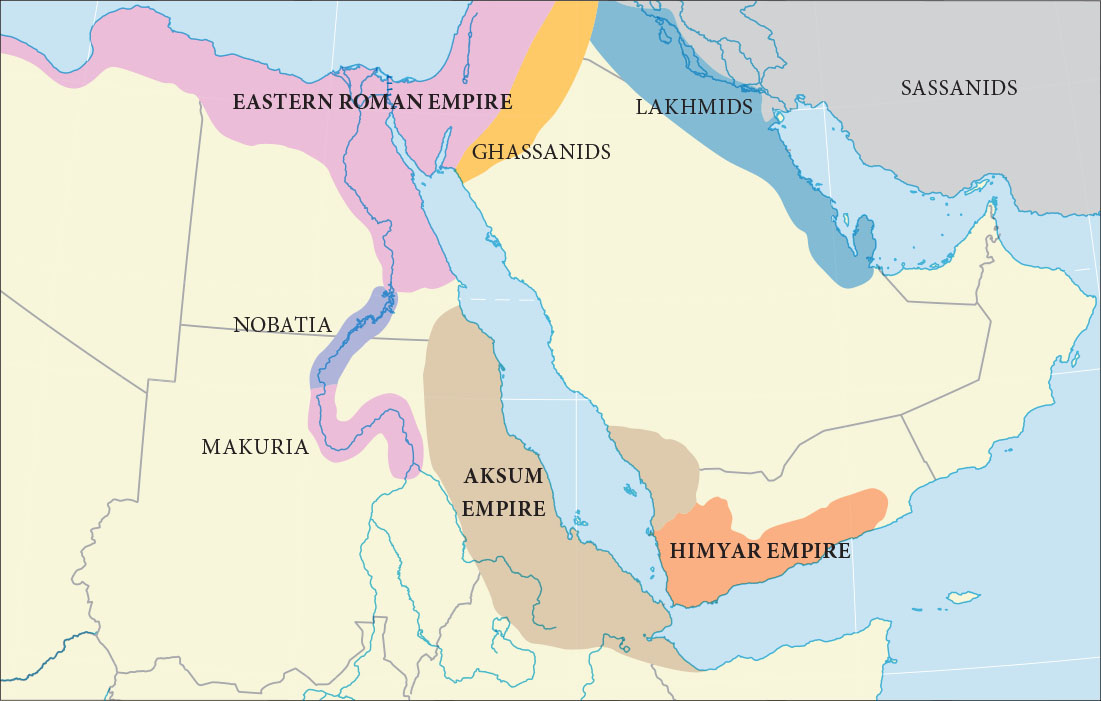
Aksum flourished in sub-Saharan Africa as a counterpoint to the Byzantine and Sasanian Empires. Located in modern-day Ethiopia and Eritrea, Aksum was able to take advantage of its location adjacent to the Red Sea, expanding across it into southern Arabia for a time. Similarities in architecture and polytheistic practices suggest that the Aksumites may have originally descended from the Sabaean people of southern Arabia. In any case, Aksumites were present in East Africa from at least the first century BCE. At its height, from the third to the sixth century CE, Aksum was a powerful economic force, trading luxury goods with Egypt, Arabia, and the eastern Mediterranean (Figure 10.15).
英語のヒント
アクスムはサハラ以南のアフリカで、ビザンツ帝国やサーサーン朝と並び立つ存在として栄えた。現在のエチオピアとエリトリアに位置し、紅海に近い立地を生かして、一時は海を越え、南アラビアへも領土を広げた。建築と多神教の慣行に共通点があることから、アクスム人は、もともと南アラビアのサバ人を祖先とした可能性が示唆される。いずれにしても、少なくとも前1世紀には、東アフリカに存在していた。紀元後3〜6世紀の最盛期には、エジプト、アラビア、東地中海と奢侈品を取引する、強力な経済勢力だった(図10.15)。
The Aksum and Himyar Empires.アクスムとヒムヤルの帝国
(credit: modification of work “Map of the Sassanid Empire just before the Arab conquest of Iran” by “DieBuche”/Wikimedia Commons, Public Domain) · Public Domain
Figure 10.15 Aksum occupied the region of modern Ethiopia, while Himyar was located on the other side of the Red Sea in modern-day Yemen. The locations of the two empires allowed them to dominate trade in the region. (credit: modification of work “Map of the Sassanid Empire just before the Arab conquest of Iran” by “DieBuche”/Wikimedia Commons, Public Domain)
図10.15 アクスムは現在のエチオピアの地域を占め、ヒムヤルは紅海の反対側、現在のイエメンにあった。この立地によって、両帝国は地域の交易を支配できた。(クレジット:「Map of the Sassanid Empire just before the Arab conquest of Iran」、DieBuche/Wikimedia Commonsを改変、パブリックドメイン)
Aksumite society was hierarchical, with the king and nobility at the top. The lower classes at the bottom worked as artisans and farmers, though little evidence of Aksumite family life has survived to confirm class distinctions. There is some evidence that owners of large wealthy estates existed. To work the land, Aksumite society relied on enslaved people, who were likely criminals or foreigners captured in war. The empire was organized around several urbanized centers with monumental architecture including grand royal palaces, as well as lower-class homes made from stone or mud with thatched roofs. A written Semitic language known as Ge’ez survives in inscriptions from this period. Prior to the arrival of Christianity, the Aksumites held polytheistic beliefs, and numerous religious sanctuaries and temples exist from this early period. A priestly class oversaw the state religion, and the king may have held a prominent role in the religious hierarchy.
英語のヒント
アクスム社会は、王と貴族を頂点とする階層制だった。下の階層は職人や農民として働いたが、家族生活についての史料はほとんど残らず、階級差を確かめる材料は乏しい。それでも、大きな豊かな所領の所有者がいたことを示す証拠はある。土地を耕すには、犯罪者、あるいは戦争で捕らえられた外国人だったと思われる、奴隷とされた人々に頼った。帝国はいくつかの都市的な拠点を中心に組織され、そこには壮大な王宮などの大建築があった。また、石や泥で作られ、草葺きの屋根を持つ下層民の家もあった。文字で記されるセム系の言語、ゲエズ語が、この時代の碑文に残る。キリスト教の到来前、アクスム人は多神教を信仰し、その初期の時代の聖域や神殿が、多数現存する。祭司階級が国家の宗教を監督し、王も宗教上の序列で、重要な役割を持っていたかもしれない。
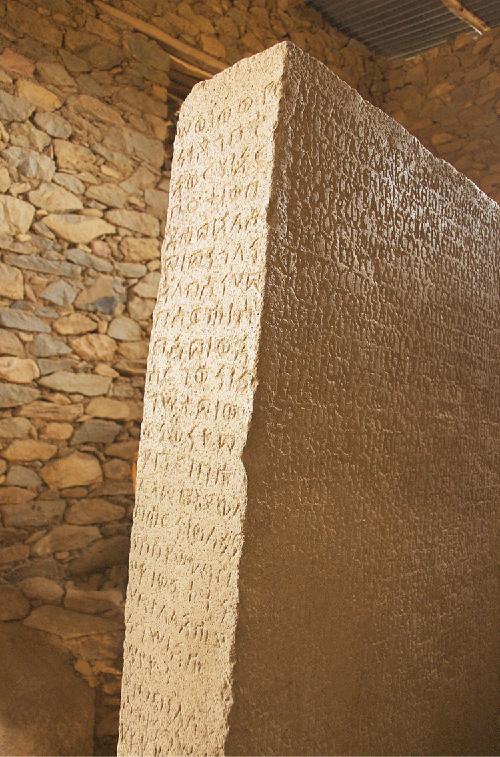
King Ezana came to power in the mid-fourth century, and what we know about the Christianization of Aksum comes largely from his reign. Ezana conducted successful military engagements against the Beja and Nubian people, subduing the Kingdom of Kush that had ruled southern Egypt for at least the previous millennium. A great builder, Ezana is also likely responsible for the construction of several obelisks. Inscriptions on stelae (commemorative slabs or pillars) and obelisks erected in Aksumite cities describe his exploits and profess his faith, while coinage shows the Christian cross gradually replacing other symbols (Figure 10.16).
英語のヒント
エザナ王は4世紀半ばに権力を握り、アクスムのキリスト教化について分かっていることの多くは、その治世に由来する。エザナはベジャ人やヌビア人に対する戦闘に勝ち、少なくともそれ以前の千年間、エジプト南部を支配してきたクシュ王国を服属させた。大いに建設を行った王でもあり、いくつかのオベリスクの建立も、エザナによるものと考えられる。アクスムの都市に建てられた石碑、記念の石板や柱、およびオベリスクの銘文は、王の功績と信仰を述べる。貨幣では、ほかの象徴がキリスト教の十字架に、次第に置き換わっていく(図10.16)。
An Aksumite Stela.アクスムの石碑
(credit: “The Ezana Stone” by Alan/Flickr, CC BY 2.0) · CC BY 2.0
Figure 10.16 This monumental stone slab was erected by the Aksumite king Ezana and attributes his fourth-century military victory over the Nubians to the Christian God. The inscription in three languages—Ge’ez, Sabaean, and Greek—suggests the diversity of Aksum’s people and the intended audience for this monument. (credit: “The Ezana Stone” by Alan/Flickr, CC BY 2.0)
図10.16 アクスム王エザナが建てたこの大きな石碑は、4世紀のヌビア人に対する軍事的勝利を、キリスト教の神に帰している。ゲエズ語、サバ語、ギリシア語という三言語の碑文は、アクスムの人々の多様性と、記念碑が伝えようとした相手の広がりを示唆する。(クレジット:「The Ezana Stone」、Alan/Flickr、CC BY 2.0)
Originally holding polytheistic beliefs, Ezana was converted to Christianity through the initiative of Frumentius, a Christian from the Syrian city of Tyre. Entering the region of Aksum as an enslaved man, Frumentius chose to stay after being freed in order to encourage the growing Christian community, and Athanasius, the Christian patriarch of Alexandria, consecrated him as bishop of the Ethiopian Church. This custom of patriarchs ordaining bishops for foreign cities often strained their relations with local rulers. But it showed that the Christian powers outside Aksum were interested in controlling religious policy there, and Ezana’s conversion may have been a means for Aksum to become more closely allied with the Roman Empire.
英語のヒント
もともと多神教を信じていたエザナは、シリアの都市テュロス出身のキリスト教徒フルメンティウスの働きかけで、キリスト教へ改宗した。フルメンティウスは奴隷としてアクスムの地域に入ったが、解放後も、増えつつあるキリスト教徒の共同体を励ますため、そこに残ることを選んだ。アレクサンドリアのキリスト教総主教アタナシオスは、彼をエチオピア教会の司教に叙階した。総主教が外国の都市の司教を任命する慣行は、地元の支配者との関係を緊張させることが多かった。しかし、それは、アクスムの外にいるキリスト教勢力が、この地域の宗教政策を統制しようとしていたことを示した。エザナの改宗は、アクスムがローマ帝国と、より緊密な同盟関係に入る手段だったのかもしれない。
Interference from the Christian community abroad culminated in the arrival of proselytizing missionaries from the Roman world in the fourth and fifth centuries, who were working to spread the message of their faith with new peoples. While Christianity had largely been adopted in urban centers thanks to the activity of Frumentius, these later missionaries were able to spread the faith into the Aksumite countryside. They established hermitages and monasteries in traditionally pagan sites and occasionally suffered persecution by the local inhabitants. Yet Christianity continued to spread, and inscriptions of the time show biblical passages being translated into Ge’ez. Because of infrequent oversight by the patriarchs in Alexandria, however, Ethiopian Christianity developed unique characteristics, blending local beliefs in its own church ceremonies and holidays.
英語のヒント
国外のキリスト教徒からの介入は、4〜5世紀、ローマ世界から布教する宣教師が訪れることで頂点に達した。彼らは、新たな人々の間へ、信仰の教えを広めようとした。フルメンティウスの活動によって、キリスト教が主に都市で受け入れられていたのに対し、後の宣教師たちは、アクスムの農村部へも信仰を広めた。伝統的に異教の場所だった土地に、隠修所や修道院を設け、時には地元住民から迫害を受けた。それでもキリスト教は広がり続け、当時の碑文は、聖書の一節がゲエズ語へ訳されていたことを示す。アレクサンドリアの総主教による監督が頻繁ではなかったため、エチオピアのキリスト教は、教会の儀式や祝日に地元の信仰を取り込み、独自の特徴を発達させた。
The Judaic group living in Aksum was known as Beta Israel. Probably founded by artisan traders visiting Aksum in the first century, Beta Israel was isolated from other Jewish communities outside the empire. Therefore, like those of Aksumite Christianity, its religious practices were sometimes distinct from the way the faith was practiced in other contexts. In several traditions, Aksum was the kingdom of the biblical figure the Queen of Sheba and the location of the lost Ark of the Covenant, an important artifact supposedly brought from Jerusalem by Ethiopia’s first emperor, Menelik. Still, the Ethiopian Jewish community experienced periods of both tolerance and persecution within Aksum.
英語のヒント
アクスムに住んだユダヤ教の集団は、ベタ・イスラエルとして知られていた。おそらく1世紀に訪れた職人兼商人が形成した集団で、帝国外のほかのユダヤ人共同体から隔てられていた。そのため、アクスムのキリスト教と同じく、宗教的実践には、ほかの環境で営まれる同じ信仰とは異なるところがあった。いくつかの伝承では、アクスムは聖書に出てくるシバの女王の王国であり、失われた契約の箱の所在でもある。契約の箱は、エチオピアの初代皇帝メネリクがエルサレムから持ち帰ったとされる重要な聖遺物だった。それでも、エチオピアのユダヤ人共同体は、アクスムで、寛容に扱われる時期と迫害される時期の両方を経験した。
Christianity continued to flourish in Aksum into the sixth-century reign of King Kaleb. By this time, churches were a common feature in Aksumite cities, and many of the most prominent examples were built in the sixth century with inscriptions claiming that Kaleb had contributed to their construction. The floor plans of Aksumite churches generally followed that of Byzantine churches or basilica, meaning they were oblong in shape with a rounded apse at one end. Still, some were unique in their design, with a circular plan that might have been based on local house types.
英語のヒント
アクスムでは、6世紀のカレブ王の治世にも、キリスト教が栄え続けた。このころ教会は都市の一般的な景観となり、特に目立つ建物の多くは6世紀に造られ、カレブが建設に寄与したとする銘文を伴っていた。教会の平面は、通常、ビザンツの教会やバシリカの形式に従い、細長い形の一端に丸いアプスがあった。ただし、地元の住居の形式に基づいたのかもしれない、円形の平面など、独自の設計もあった。
The apex of Aksumite society, in the sixth century, coincided with the extension of its cultural and political influence into southern Arabia. Kaleb had already established more connections overseas, initiating a silk trade with China. In Arabia, he sought to aid the local Christian communities with a military campaign against the Himyarite king Dhu Nuwas. Owing to their claimed lineage from the biblical figures King Solomon and the Queen of Sheba, the Aksumites may have felt some pull to conquer the biblical kingdom of Sheba in southern Arabia. These overtly Christian motivations allowed for an alliance with the Byzantines in the campaign against the non-Christian Himyarites. With the Byzantine emperor Justin (uncle of the future emperor Justinian), Kaleb subdued Dhu Nuwas, and Aksum controlled southern Arabia until the Sasanian conquest in 572.
英語のヒント
6世紀、アクスム社会が最盛期を迎えたのは、文化的・政治的影響力を南アラビアへ広げた時期と重なる。カレブはすでに海外とのつながりを増やし、中国との絹交易を始めていた。アラビアでは、ヒムヤル王ズー・ヌワースに対する遠征によって、地元のキリスト教徒の共同体を助けようとした。アクスム人は、聖書のソロモン王とシバの女王の子孫であると主張していたため、南アラビアの、聖書に記されたシバ王国を征服したいという思いも抱いたのかもしれない。こうした明確にキリスト教的な動機は、キリスト教徒ではないヒムヤル人への遠征で、ビザンツと同盟することを可能にした。カレブは、後の皇帝ユスティニアヌスの叔父に当たる、ビザンツ皇帝ユスティヌスとともにズー・ヌワースを破った。アクスムは、572年にサーサーン朝が征服するまで、南アラビアを支配した。
After the reign of Kaleb, the Aksumite Kingdom fell into decline, having failed to garner enough resources from working the land to sustain its population. Although it is unclear why this decline occurred so quickly, the climate may have been a factor because the region appears to have become especially arid after the middle of the eighth century. Economic difficulties in the kingdom may have also contributed. Kaleb’s campaign in Arabia could have overextended its finances and military strength, and the Sasanian occupation of the regions around the Red Sea might have disrupted Aksum’s trade network. There appears to have been growing dissatisfaction among the ruling class, and evidence from inscriptions suggests that revolts occurred in some Aksumite cities. As a result of these contributing factors, Aksum fell from political and cultural prominence in the mid-600s.
英語のヒント
カレブの治世の後、アクスム王国は衰退へ向かった。土地の耕作から、人口を支えるのに十分な資源を確保できなかったのである。衰退がなぜ急速に進んだのかは不明だが、この地域は8世紀半ば以後、特に乾燥したように見えるため、気候が一因だったのかもしれない。王国の経済的な困難も影響した可能性がある。カレブのアラビア遠征は、財政や兵力を限界以上に引き延ばしたかもしれず、サーサーン朝が紅海周辺を占領したことは、アクスムの交易網を混乱させたかもしれない。支配階級の間では不満が増していたようで、碑文は一部の都市で反乱が起きたことを示唆する。こうした要因の結果、アクスムは600年代半ばに、政治的・文化的な重要性を失った。