第10章信仰と帝国Empires of Faith
Palmyra as Rival to the Roman Empireローマ帝国に対抗するパルミラ
Located in south-central Syria, the city of Palmyra rose in influence in the third century BCE because of its proximity to a newly built east–west road. As a result, the city was linked to a wider trade network between the Roman state and the east via both the Silk Roads and the Persian Gulf. By funneling goods to the Roman state, the city came to the special attention of the Romans in the first century BCE. Though there is evidence that Roman officials and military were in the city at this time, Palmyra’s government remained semiautonomous throughout the period.
英語のヒント
シリア中南部に位置するパルミラは、新設された東西道路に近かったため、前3世紀に影響力を増した。その結果、シルクロードとペルシア湾の両方を通じ、ローマ国家と東方を結ぶ、より広い交易網へ組み込まれた。ローマへ品物を送り込むことで、前1世紀には、ローマ人の特別な関心を引くようになった。この時代にローマの官人や軍が市内にいた証拠はあるが、パルミラの政府は、期間を通じて半自治的であり続けた。
Palmyra was made part of the Roman province of Syria in the first century CE, and it eventually achieved the status of a Roman colony. This designation meant that its inhabitants were Roman citizens, and at least on the surface, public life was culturally Roman. The city continued to receive imperial favor, being visited by several Roman emperors. Palmyra became the site of architectural adornment with the construction of several remarkable monuments and structures. These included the Great Colonnade, the city’s main street, and a famous temple dedicated to the god Baal. Several different Mesopotamian civilizations worshipped Baal, who was considered the chief deity of weather and fertility.
英語のヒント
紀元後1世紀、パルミラはローマのシリア属州の一部となり、やがてローマ植民市の地位を得た。それは、住民がローマ市民であることを意味し、少なくとも表面的には、公的な生活は文化的にローマ風だった。複数の皇帝が訪れるなど、都市は帝国の好意を受け続けた。目を引く記念建造物や施設が建てられ、建築的な装飾が施された。主なものには、都市の中心街路である大列柱道路や、バアル神にささげられた有名な神殿がある。バアルは、天候と豊穣の主神とされ、メソポタミアのいくつもの文明で崇拝された。
The emperor Trajan added the Nabataean Kingdom, inhabited by a Semitic people of northern Arabia, to the Roman Empire in 106 CE. As a result of this annexation, the Nabataeans’ trade network seems to have disintegrated, an event that greatly benefited the Palmyrenes who no longer had to compete against them. However, the growing power of the Parthian Empire at this time led some trade routes to the east to become cut off. To address these sorts of threats to Palmyra’s trade network, the city allied itself more closely with the Roman Empire. In 267, the leader of Palmyra, Septimius Odaenathus, was assassinated while fighting the Parthians as an ally of the Roman Empire. His widow Zenobia took over as regent of the Palmyrene Kingdom, declaring herself empress.
英語のヒント
紀元後106年、トラヤヌス帝は、アラビア北部のセム系の人々が住むナバテア王国をローマ帝国へ併合した。併合によってナバテア人の交易網は崩れたようで、それは、もはや彼らと競わずに済むパルミラ人に、大きな利益をもたらした。しかし、この時代にパルティア帝国の力が増すと、一部の東方交易路が遮断されるようになった。こうした交易網への脅威に対応するため、パルミラはローマ帝国との同盟を強めた。267年、パルミラの指導者セプティミウス・オダエナトゥスは、ローマの同盟者としてパルティア人と戦っている間に暗殺された。未亡人ゼノビアがパルミラ王国の摂政となり、自ら女帝を称した。
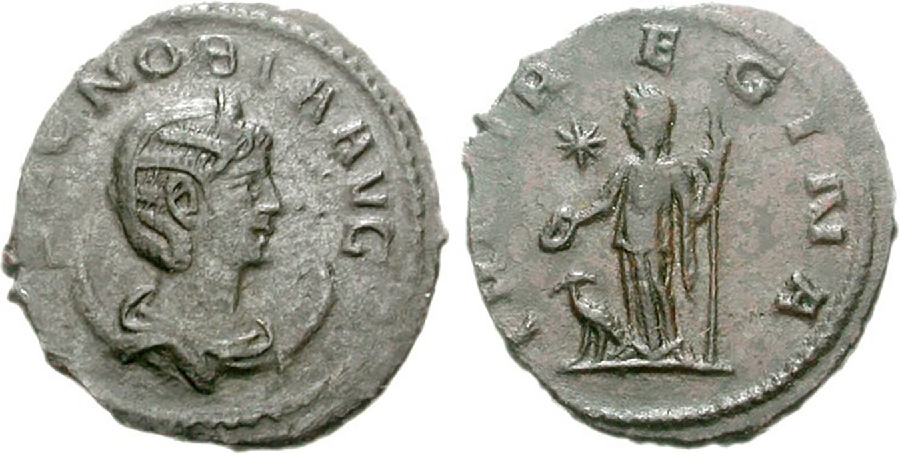
In 269, Zenobia broke off ties with the Roman state and expanded the borders of her kingdom, first taking Anatolia and then Egypt. Because of the disarray of the Crisis of the Third Century, during which their empire split into three separate states for a time, the Romans had left these regions relatively unguarded. Palmyra benefited greatly, now having links to extensive trade networks via the Red Sea. Her kingdom’s independence was short-lived, however, since the Roman emperor Aurelian conquered Palmyra in 272 and took Zenobia captive. Sources differ on her ultimate fate, but one famous anecdote tells of her being led through Rome in gold chains, a sign of the wealth she had accumulated as the leader of this prosperous kingdom (Figure 10.20).
英語のヒント
269年、ゼノビアはローマ国家との関係を断ち、まずアナトリア、次いでエジプトを奪い、領土を広げた。ローマ帝国が一時は三つの国家へ分裂した、3世紀の危機の混乱によって、ローマ人はこれらの地域を比較的手薄にしていた。パルミラは大いに利益を得て、紅海を通じる広い交易網へつながった。しかし独立は短かった。272年、ローマ皇帝アウレリアヌスがパルミラを征服し、ゼノビアを捕らえたからである。女王の最期については、史料によって異なる。しかし有名な逸話の一つでは、金の鎖を付けてローマ市中を引き回されたとされる。その鎖は、繁栄した王国の指導者として蓄えた富を象徴していた(図10.20)。
Queen Zenobia.女王ゼノビア
Zenobia coin photograph — Classical Numismatic Group, Inc., https://www.cngcoins.com/. CC BY-SA 2.5. Reproduced from the pinned OpenStax source. · CC BY-SA 2.5
Figure 10.20 Issued in 272 CE, this rare silver coin names its subject Zenobia and shows her as queen of Palmyra wearing a royal diadem (left). The reverse of the coin (right) says “Regina” (queen in Latin) and shows the Roman goddess Juno, wife of Jupiter, holding a dish for pouring offerings and a scepter. (credit: “Zenobia” by Classical Numismatic Group, Inc./Wikimedia Commons, CC BY-SA 2.5)
図10.20 紀元後272年に発行されたこの珍しい銀貨は、ゼノビアの名を刻み、王冠の帯を着けたパルミラの女王として描く(左)。裏面(右)には、ラテン語で女王を意味する「Regina」とあり、ユピテルの妻であるローマの女神ユノが、供物を注ぐ皿と王笏を持つ姿を示す。(クレジット:「Zenobia」、Classical Numismatic Group, Inc./Wikimedia Commons、CC BY-SA 2.5)
Following the capture of Zenobia, Palmyra’s influence in the region dwindled. The city remained under Roman control, since Aurelian had left behind a military garrison whose soldiers formed a major part of the city’s population. In the late third century, the eastern frontier of the empire was reorganized, and the changed arrangement of forts and roads put Palmyra at a disadvantage for participating in trade. Certain emperors took some interest in the city; Diocletian had a public baths complex constructed, and Justinian is said to have had the city’s walls rebuilt. Palmyra’s Christian population also appears to have grown during this period. The first church there dates from the fourth century, and Christians took over the temple of Baal in the fifth century. Despite continued habitation, however, Palmyra now had less regional influence, and the nearby city of Nisibis became the region’s main trade hub.
英語のヒント
ゼノビアの捕縛後、パルミラの地域への影響力は小さくなった。アウレリアヌスが駐屯軍を残し、その兵士が人口の大きな部分を占めたため、都市はローマの支配下にとどまった。3世紀後半、帝国の東の国境が再編され、砦や道路の配置が変わると、パルミラは交易で不利な位置になった。都市へ関心を寄せる皇帝もいた。ディオクレティアヌスは公共浴場群を建てさせ、ユスティニアヌスは市壁を再建させたといわれる。この時代には、キリスト教徒の人口も増えたようである。最初の教会は4世紀にさかのぼり、5世紀にはバアル神殿がキリスト教徒に引き継がれた。人々は住み続けたが、パルミラの地域的重要性は低下し、近くのニシビスが、地域の主要な交易拠点となった。
The Arab Tribesアラブ諸部族
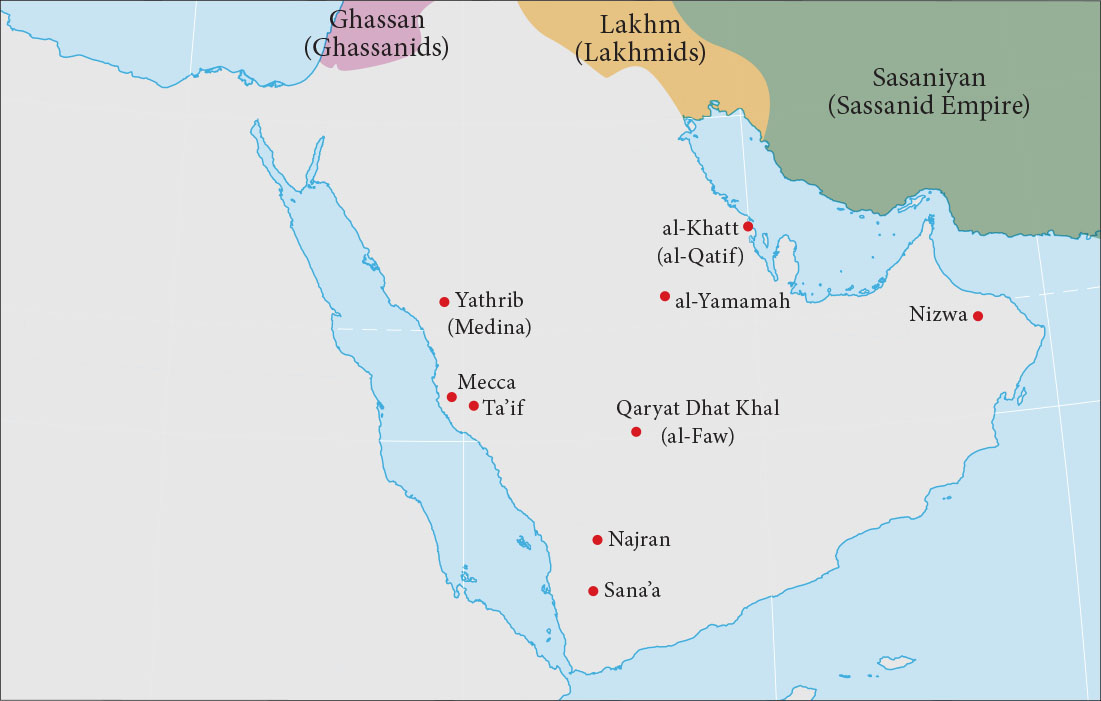
Nomadic tribes have a deep history in the region of Arabia. From at least the early first millennium BCE, they survived in this somewhat harsh environment through pastoral farming, raising livestock such as sheep and goats to produce milk, wool, and other goods. They are known as Bedouin, from the Arabic word badawī meaning “desert dwellers,” and their nomadic lifestyle was a key part of their Arab identity. Bedouin tribes consisted of familial clan groups that were patriarchal (ruled by men) and patrilineal (inheritance was through the father). Because of their familial relationships, tribes were tight-knit groups that had skeptical views of outsiders, occasionally coming into violent conflict with other tribes (Figure 10.21).
英語のヒント
アラビアには、遊牧部族の長い歴史がある。少なくとも前1千年紀初めから、羊や山羊などを育て、乳、羊毛、ほかの産物を得る牧畜によって、やや厳しいこの環境で暮らした。「砂漠の住民」を意味するアラビア語バダウィーに由来し、ベドウィンと呼ばれる。遊牧生活は、アラブとしての自己認識の重要な一部だった。部族は、男性が支配する家父長制で、父を通じて継承する父系の、親族的な氏族集団から成った。血縁関係により部族内部の結びつきは強く、外来者には疑いの目を向けた。時には、ほかの部族と暴力的に衝突することもあった(図10.21)。
Territories of Arab Tribes.アラブ諸部族の領域
(credit: modification of work “Map of Arabia 600 AD” by “Murraytheb”/Wikimedia Commons, Public Domain) · Public Domain
Figure 10.21 The map shows approximate locations of some of the numerous Arab tribes that competed for regional control around 600 CE. These tribes were semi-independent kingdoms susceptible to Byzantine and Sasanian influence, especially in northern Arabia. (credit: modification of work “Map of Arabia 600 AD” by “Murraytheb”/Wikimedia Commons, Public Domain)
図10.21 紀元後600年ごろ、地域の支配を競った多くのアラブ部族のうち、一部のおおよその位置を示す地図。これらは、特にアラビア北部で、ビザンツとサーサーン朝の影響を受ける、半独立的な王国だった。(クレジット:「Map of Arabia 600 AD」、Murraytheb/Wikimedia Commonsを改変、パブリックドメイン)
After military conflict brought them to the eastern empire in the first century BCE, the Romans allowed Arab tribal chiefs of both sedentary town-dwellers and nomadic Bedouin groups to govern themselves. By the second century CE, however, the Roman Empire had begun to absorb the northern regions of Arabia, reflected in its subduing of the Nabataeans and the emperor Trajan’s creation of the Arabian province. But the Romans never made true headway in this region, occupying only the northwestern fringes of Arabia, and for a relatively short period. Instead, Arab tribes continued to be a problem for the Roman Empire on its frontier as they migrated to the outskirts of Syria by the third century.
英語のヒント
前1世紀、軍事衝突によってローマ人が帝国東方へ進出すると、ローマは、都市に定住する人々と、遊牧するベドウィンの両方について、アラブの部族長による自治を認めた。しかし紀元後2世紀までには、アラビア北部の吸収が始まった。ナバテア人の服属や、トラヤヌス帝によるアラビア属州の設置が、それを示している。それでもローマ人は、この地域で本格的な進展を得ることはなく、アラビアの北西端だけを、比較的短期間占領した。むしろアラブの部族は、3世紀までにシリアの周縁へ移動する中で、ローマの国境における問題であり続けた。
The Arabs served as clients, a type of ally, of the Sasanians, especially in the fifth and sixth centuries, as well as foederati of the Byzantine Empire in its long conflict against the Sasanians. For example, the Lakhmid kingdom in northern Arabia was at its height during this period. As an ally of the Sasanian Empire, Lakhmid used its military might to control the northern Arabian tribes. In addition, the Sasanian Persian king Khosrow I cooperated with the Lakhmids in the conquest of Yemen in the sixth century. In a similar role, the Ghassan kingdom was allied with the Byzantines and functioned as a buffer between the eastern empire and the Sasanians. The Ghassanids often clashed with the Lakhmids, whom they defeated in 554, eventually capturing their capital city (Al-Hirah) in 578.
英語のヒント
アラブ人は、特に5〜6世紀、サーサーン朝のクリエンテス、すなわち一種の従属的な同盟者として仕えた。また、サーサーン朝と長く戦うビザンツ帝国のフォエデラティでもあった。たとえば、アラビア北部のラフム王国は、この時代に最盛期を迎えた。サーサーン朝の同盟者として、軍事力を用い、アラビア北部の部族を支配した。また、6世紀のイエメン征服では、サーサーン朝のホスロー1世がラフム人と協力した。似た役割を持つガッサーン王国は、ビザンツと同盟し、東ローマ帝国とサーサーン朝の間の緩衝勢力となった。ガッサーン朝はラフム朝としばしば戦い、554年にこれを破り、最終的に578年、首都アル=ヒーラを占領した。
Since there were several Arabian groups in the region, its pre-Islamic culture was diverse and multifaceted. As the most prominent group by the end of the sixth century, the Ghassanids are thought to have contributed to the creation of a somewhat cohesive Arab identity, which included kinship organization, the growth of cultural traditions such as poetry, and the use of languages that later became Arabic. Possibly settled by this time, the Ghassanids constructed monumental buildings in their urban centers and governed a diverse Arab culture.
英語のヒント
地域には複数のアラブ系集団がいたため、イスラーム以前の文化は、多様で多面的だった。6世紀末までに最も有力な集団となったガッサーン人は、ある程度まとまりのあるアラブの自己認識の形成に、寄与したと考えられる。それには、親族を基礎とする組織、詩などの文化的伝統の成長、後にアラビア語となる言語の使用が含まれていた。このころには定住していた可能性があり、ガッサーン人は都市的な拠点に大建築を造り、多様なアラブ文化を統治した。
The religious life of Arabia was diverse. The peninsula was home to those practicing Christianity, Judaism, Zoroastrian, and polytheism. Traditional polytheistic views included animism, or the recognition of a spiritual essence in natural objects such as plants, animals, and rivers. Arabian polytheists worshipped idols and totems, physical representations of divine spirits. Containing a variety of religious idols, the Kaaba sanctuary in the city of Mecca was the site of religious pilgrimage during this period, perhaps setting the stage for Islamic pilgrimage in the following centuries. Members of the Jewish diaspora had begun to migrate into Arabia in the first century CE. New converts to Judaism in this region as well as the influence of Himyar led to the development of a substantial Jewish population here. By Late Antiquity, Christianity had also gained a foothold, especially in the north, as the influence of the Byzantine and proselytizing missionaries contributed to the growth of the Christian population.
英語のヒント
アラビアの宗教生活は多様だった。半島には、キリスト教、ユダヤ教、ゾロアスター教、多神教を実践する人々がいた。伝統的な多神教には、植物、動物、川などの自然物に霊的な存在を認める、アニミズムも含まれた。多神教徒は、神霊を物の形で表す偶像やトーテムを崇拝した。メッカのカアバ聖所には、さまざまな宗教的偶像が置かれ、この時代の巡礼の場だった。それは、後の世紀のイスラームの巡礼の下地となったのかもしれない。離散したユダヤ人は、紀元後1世紀にアラビアへ移住し始めた。この地域での新たな改宗者とヒムヤルの影響によって、相当なユダヤ人の人口が生まれた。古代末期までには、特に北方でキリスト教も足場を得た。ビザンツの影響と、布教する宣教師が、キリスト教徒の増加に寄与したからである。
The composition of poetry was a major feature of pre-Islamic culture and formed part of an oral tradition that passed poems from generation to generation. Performers memorized often lengthy poems for recitation before public and private audiences. These works express tribal identity because their content often concerns the nature of nomadic life and descriptions of the natural world. In addition to this oral tradition, pre-Islamic literature began to be written down more often by Late Antiquity, and Arabic script was increasingly in use by the sixth century. Papyrus documents surviving from cities like Petra show Arabic script alongside Greek and Latin, pointing to the region’s diversity and transitional state.
英語のヒント
詩を作ることは、イスラーム以前の文化の重要な特徴であり、世代から世代へ詩を伝える口承の伝統の一部だった。演者は、しばしば長い詩を暗記し、公の場や私的な集まりの聴衆へ朗誦した。作品には、遊牧生活のあり方や自然界の描写が多く含まれ、部族の自己認識を表す。口承に加え、古代末期には、イスラーム以前の文学が書き留められることも増え、6世紀までにアラビア文字が次第に使われるようになった。ペトラなどの都市に残るパピルス文書は、ギリシア文字やラテン文字と並んでアラビア文字を示し、地域の多様さと、移行期の状況を物語る。