第10章信仰と帝国Empires of Faith
The Rule of Roman Christianityローマのキリスト教による統治
The Christian Church attracted a large influx of new members during the reign of Constantine. The Edict of Milan, issued in 313, allowed citizens to worship any deity they wished, but it was mainly intended to embrace Christians living in the empire who were now given back their confiscated property and legal rights. Christianity was not made the official religion, but the edict effectively ended any state-sanctioned persecution of its adherents within the empire’s borders. The religion’s new privileged status brought about profound changes for its institutions and their relationship to the imperial government.
英語のヒント
コンスタンティヌスの治世に、キリスト教会には多数の新しい信徒が加わった。313年に出されたミラノ勅令は、市民が望むどの神でも崇拝することを認めたが、主な意図は、帝国のキリスト教徒を受け入れることだった。キリスト教徒には、没収された財産と法的権利が返還された。キリスト教が公認の国教となったわけではない。しかし勅令は、帝国内で国家が認めていた信徒への迫害を、事実上終わらせた。この宗教が新たに得た優遇される地位は、その諸組織と帝国政府との関係に、大きな変化をもたらした。
Emperors generally did not interfere in the self-regulation of the church, except for religious belief. They exercised this control chiefly by organizing ecumenical councils, meetings of bishops to discuss religious doctrine. (The word “ecumenical” comes from the Greek oikoumene, meaning the entire inhabited world.) Ecumenical councils brought together bishops from the Roman East and West and issued decisions designed to be adopted universally. They were venues for hammering out matters of Christian orthodoxy, addressing questions of Jesus’s divinity, and eliminating emerging heretical movements within the church.
英語のヒント
皇帝たちは、信仰内容を除いて、通常は教会の自主的な運営に干渉しなかった。宗教的教義を論じる司教の会合、公会議を組織することが、主な統制の手段だった。英語のecumenicalは、ギリシア語のオイクーメネー、すなわち人が住む世界全体という語に由来する。公会議にはローマの東西の司教が集まり、普遍的に採用されることを意図した決定を出した。キリスト教の正統教義を練り上げ、イエスの神性という問題に取り組み、教会内部で生まれる異端運動を排除する場だったのである。
In 325, for example, Constantine convened the first ecumenical council, the Council of Nicaea, to settle the question of Jesus’s divine nature and his relationship to God. The bishops were most concerned with addressing the Arians, followers of the priest Arius, who held that Jesus was created out of nothing but had a beginning. The bishops at the council worried that this thinking detracted from Jesus’s divinity and after much debate decided against the Arians. They adopted the Nicene Creed, a statement of dogma that declared Jesus was “begotten, not made” and was “consubstantial” with God, expressly embracing his divinity. These types of religious debates remained at the center of the numerous ecumenical councils thereafter, and emperors sometimes used them to exercise control over church-related matters. But while the emperors self-styled themselves as priestly rulers, the bishops sometimes contested this role, and emperors then had to compete with them for religious authority.
英語のヒント
たとえば325年、コンスタンティヌスは最初の公会議であるニカイア公会議を招集し、イエスの神的性質と、父なる神との関係の問題を決着させようとした。司教たちが最も重視したのは、アリウス派への対応だった。アリウス派は、司祭アリウスに従い、イエスは無から創造され、始まりを持つと考えた。公会議の司教たちは、この考え方がイエスの神性を損なうと懸念し、長い議論の末、アリウス派を否定した。採択したニカイア信条は、イエスは「造られたのではなく、生まれた」存在であり、父なる神と「同一本質」であると述べ、イエスの神性を明確に認める教義の声明だった。その後の多くの公会議でも、こうした宗教論争が中心であり、皇帝は時に、公会議を教会関係の問題を統制するために利用した。しかし皇帝が自らを司祭的な支配者と位置づけても、司教たちはその役割を争うことがあった。その場合、皇帝は宗教的権威をめぐって、司教と競合しなければならなかった。
The steady bureaucratization of the empire made its governance more complicated because it meant that power could only be usurped at various levels of government. One way in which emperors attempted to balance local, regional, and imperial power was by formally codifying laws. For example, in 429, the emperor Theodosius II established a commission to compile what became known as the Theodosian Code, a single publication containing all laws issued after 312 CE from across the empire. This code was the first attempt to create a unified system of government for the empire since the days of the Republic. It further solidified Christianity in Roman society because it featured laws that adhered to Christian beliefs and practice. It also brought about a transformation of social morals and placed power in the hands of the church to police morality, a practice that had not been seen in antiquity.
英語のヒント
帝国の官僚制化が着実に進むと、統治はますます複雑になった。権力の簒奪が、政府のさまざまな階層でしか行えないことを意味したからである。皇帝たちが地方・地域・帝国全体の権力を調整しようとした方法の一つが、法律を正式に法典へ編纂することだった。たとえば429年、皇帝テオドシウス2世は委員会を設け、後にテオドシウス法典と呼ばれるものを編纂させた。これは、紀元後312年以後に帝国各地で出されたすべての法律を、一つの刊行物にまとめたものだった。共和政の時代以来、帝国の統一的な統治制度を作ろうとする最初の試みだった。法典は、キリスト教の信仰と実践に沿う法律を含み、ローマ社会におけるキリスト教の地位をさらに固めた。また、社会の道徳観を変え、道徳を取り締まる権力を教会に与えた。これは古代には見られなかった慣行だった。
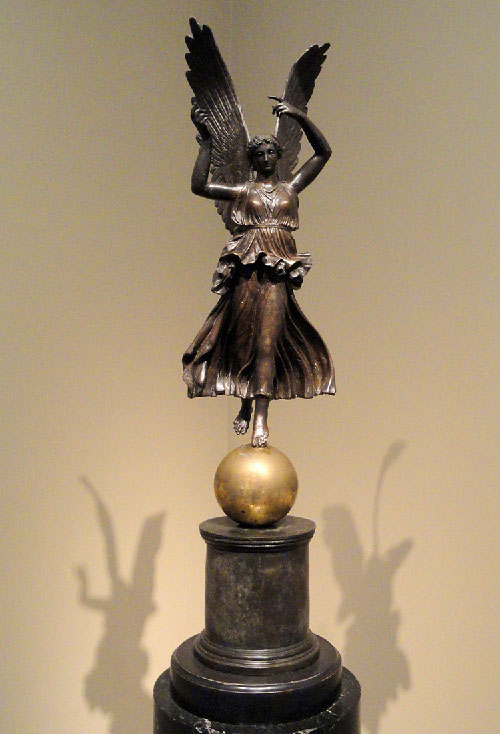
The Theodosian Code represented a trend of emperors attempting to address religious issues through laws and edicts. Constantine, for instance, seems to have banned animal sacrifice, a major feature of traditional Roman religion, though it was already in decline by this time. In several imperial edicts, notably the Edict of Thessalonica in 380 that made Nicene Christianity the state religion of the Roman Empire, Theodosius I attempted to suppress religious controversy outside the church, treating pagans and heretics (those holding unorthodox beliefs) as threats to the imperial state. The First Council of Constantinople, convened in 381, reestablished the Nicene Creed and addressed the topic of the Holy Spirit, suggesting that the problem of Arius’s sympathizers had not completely disappeared. Jewish people were also viewed skeptically during this time but were not a major concern to imperial authorities. Finally, responding to an appeal from the Christian population of Athens, the emperor Justinian closed that city’s philosophical schools in 529. The dismantling of pagan temples, removal of statues of pagan divinities, and discontinuation of traditional practice and priesthoods throughout the empire were a common pattern of authority during this time (Figure 10.9).
英語のヒント
テオドシウス法典は、皇帝が法律や勅令によって宗教問題に対処しようとする傾向を示していた。たとえばコンスタンティヌスは、伝統的なローマ宗教の重要な要素である動物犠牲を禁じたようである。ただし、その時点ですでに衰退していた。テオドシウス1世は、いくつかの勅令によって、教会の外部にある宗教上の異論を抑えようとした。中でも、380年のテッサロニケ勅令は、ニカイア派のキリスト教をローマ帝国の国教とした。皇帝は、異教徒や異端者、すなわち非正統的な信仰を持つ人々を、帝国国家への脅威として扱った。381年に開かれた第1コンスタンティノープル公会議は、ニカイア信条を再確認し、聖霊の問題を扱った。このことは、アリウス派への共感者の問題が、完全には消えていなかったことを示唆する。この時代、ユダヤ人も疑いの目で見られたが、帝国当局にとっての主要な懸案ではなかった。最後に529年、皇帝ユスティニアヌスは、アテネのキリスト教徒の要請に応じて、同市の哲学の学校を閉鎖した。帝国各地で、異教の神殿の解体、神像の撤去、伝統的な慣行と祭司職の廃止が行われることは、この時代の権力行使に共通する型だった(図10.9)。
A Winged Victory.翼のある勝利の女神
(credit: modification of work “Winged Victory by Antonio Canova” by “Daderot”/Wikimedia Commons, CC0 1.0) · CC0 1.0
Figure 10.9 Made by the Italian sculptor Antonio Canova in the early nineteenth century, this bronze figure of a winged Victory atop a globe may resemble a statue that once stood outside the Roman Senate house. As a representation of pagan worship, that statue was removed twice by Christian emperors, in 357 and 382 CE, a decision that was controversial among many pagan senators at the time. (credit: modification of work “Winged Victory by Antonio Canova” by “Daderot”/Wikimedia Commons, CC0 1.0)
図10.9 19世紀初めにイタリアの彫刻家アントニオ・カノーヴァが制作したこのブロンズ像は、球の上に立つ翼のある勝利の女神を表す。かつてローマの元老院議事堂の外に立っていた像に似ているかもしれない。異教信仰を象徴するその像は、紀元後357年と382年の二度、キリスト教徒の皇帝によって撤去された。この決定には、当時の多くの異教徒の元老院議員が異議を唱えた。(クレジット:「Winged Victory by Antonio Canova」、Daderot/Wikimedia Commonsを改変、CC0 1.0)
The relationships between pagans and Christians were unquestionably strained. Elite pagans could still pursue a career and hold public office, as did the noted intellectuals Libanius and Symmachus. These public figures viewed their Christian counterparts, such as the theologian Gregory of Nazianzus, as holding the same general philosophical assumptions as themselves, so they could debate religion together. Yet episodes of violence also occurred in the cities of the empire where bishops wielded both religious and political power. The murder of the influential pagan scholar and teacher Hypatia in Alexandria in 415 demonstrates how a bishop could wield extralegal authority. Bishop Cyril viewed Hypatia, who had a large friendship network of Christians and pagans, as a political threat, and he was able to convince the Christian populace to attack and kill her. This secured his own position as a substantial political and religious authority in the city.
英語のヒント
異教徒とキリスト教徒の関係が、緊張をはらんでいたことは疑いない。それでも、著名な知識人リバニオスやシュンマコスのように、異教徒の上層層が職業上の成功を求め、公職に就くことはできた。彼らは、ナジアンゾスのグレゴリオスのようなキリスト教徒の神学者についても、基本的な哲学上の前提を自分たちと共有すると考え、互いに宗教を論じることができた。それでも、司教が宗教と政治の両方の権力を握る帝国の都市では、暴力事件も起きた。415年、アレクサンドリアで有力な異教徒の学者・教師ヒュパティアが殺された事件は、司教が法の外にある権力を行使し得たことを示す。司教キュリロスは、キリスト教徒と異教徒に広い交友関係を持つヒュパティアを、政治的脅威と見た。そして、キリスト教徒の民衆を説き動かし、彼女を襲って殺害させることができた。これにより、市内での自らの有力な政治的・宗教的権威を確保した。