第14章ストレス、生活習慣、健康
Life Events and Happinessライフイベントと幸福
An important point should be considered regarding happiness. People are often poor at affective forecasting: predicting the intensity and duration of their future emotions (Wilson & Gilbert, 2003). In one study, nearly all newlywed spouses predicted their marital satisfaction would remain stable or improve over the following four years; despite this high level of initial optimism, their marital satisfaction actually declined during this period (Lavner, Karner, & Bradbury, 2013). In addition, we are often incorrect when estimating how our long-term happiness would change for the better or worse in response to certain life events. For example, it is easy for many of us to imagine how euphoric we would feel if we won the lottery, were asked on a date by an attractive celebrity, or were offered our dream job. It is also easy to understand how long-suffering fans of the Chicago Cubs baseball team, which had not won a World Series championship since 1908, thought they would feel permanently elated when their team finally won another World Series in 2016. Likewise, it is easy to predict that we would feel permanently miserable if we suffered a disabling accident or if a romantic relationship ended.
英語のヒント
幸福については、考えておくべき重要な点がある。人はしばしば感情予測、すなわち自分の将来の感情の強さと持続期間を予測することが苦手である(Wilson & Gilbert, 2003)。ある研究では、新婚の夫婦のほぼ全員が、自分たちの結婚満足度はその後の4年間、安定したままか向上すると予測した。こうした当初の強い楽観にもかかわらず、彼らの結婚満足度は実際にはこの期間に低下した(Lavner, Karner, & Bradbury, 2013)。さらに私たちは、ある種のライフイベントに反応して自分の長期的な幸福が良い方向や悪い方向にどう変わるかを見積もるとき、しばしば見誤る。たとえば、宝くじに当たったら、魅力的な有名人からデートに誘われたら、あるいは夢の仕事をオファーされたら、どれほど有頂天になるかを想像するのは、私たちの多くにとってたやすい。また、1908年以来ワールドシリーズで優勝していなかった野球チーム、シカゴ・カブスの長年耐え忍んできたファンが、2016年にチームがついに再びワールドシリーズで優勝したとき、自分たちはずっと大喜びしていられるだろうと考えたのも、容易に理解できる。同じように、障害の残る事故にあったり、恋愛関係が終わったりしたら、自分はずっと惨めな気持ちでいるだろうと予測するのもたやすい。
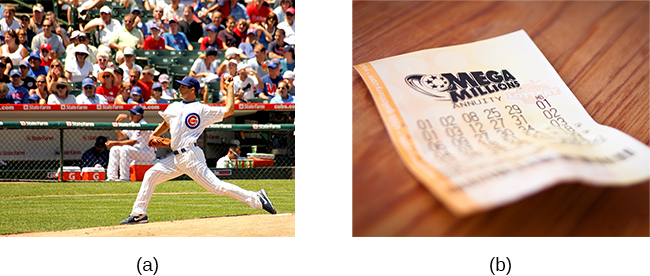
However, something similar to sensory adaptation often occurs when people experience emotional reactions to life events. In much the same way our senses adapt to changes in stimulation (e.g., our eyes adapting to bright light after walking out of the darkness of a movie theater into the bright afternoon sun), we eventually adapt to changing emotional circumstances in our lives (Brickman & Campbell, 1971; Helson, 1964). When an event that provokes positive or negative emotions occurs, at first we tend to experience its emotional impact at full intensity. We feel a burst of pleasure following such things as a marriage proposal, birth of a child, acceptance to law school, an inheritance, and the like; as you might imagine, lottery winners experience a surge of happiness after hitting the jackpot (Lutter, 2007). Likewise, we experience a surge of misery following widowhood, a divorce, or a layoff from work. In the long run, however, we eventually adjust to the emotional new normal; the emotional impact of the event tends to erode, and we eventually revert to our original baseline happiness levels. Thus, what was at first a thrilling lottery windfall or World Series championship eventually loses its luster and becomes the status quo (Figure 14.27). Indeed, dramatic life events have much less long-lasting impact on happiness than might be expected (Brickman, Coats, & Janoff-Bulman, 1978).
英語のヒント
しかし、人がライフイベントに対して感情的な反応を経験するときには、感覚順応に似たことがしばしば起こる。私たちの感覚が刺激の変化に順応するのとほぼ同じように(たとえば、暗い映画館から明るい午後の日差しの中へ歩み出たあと、目が明るい光に順応するように)、私たちは人生における感情的な状況の変化にもやがて順応する(Brickman & Campbell, 1971; Helson, 1964)。ポジティブな感情やネガティブな感情を引き起こす出来事が起こると、私たちは最初、その感情的な影響を最大の強さで経験する傾向がある。私たちは、プロポーズ、子どもの誕生、ロースクールへの合格、遺産相続などのあとに、喜びがどっと湧き上がるのを感じる。想像がつくように、宝くじの当選者は、大当たりを引いたあとに幸福の急激な高まりを経験する(Lutter, 2007)。同じように、配偶者との死別、離婚、仕事の解雇のあとには、惨めさの急激な高まりを経験する。しかし長い目で見れば、私たちはやがて感情面での新たな「普通」に適応する。出来事の感情的な影響は薄れていく傾向があり、私たちは最終的に、もとの基準となる幸福の水準に戻る。こうして、最初は胸躍る宝くじの大当たりやワールドシリーズ優勝だったものも、やがて輝きを失い、当たり前の現状になる(図14.27)。実際、劇的なライフイベントが幸福に与える長期的な影響は、予想されるよりもはるかに小さい(Brickman, Coats, & Janoff-Bulman, 1978)。
OpenStax, Rice University; Psychology 2e. (credit a: modification of work by Phil Roeder; credit b: modification of work by Robert S. Donovan) · CC BY 4.0 · Source出典
Figure 14.27図 14.27
(a) Long-suffering Chicago Cub fans felt elated in 2016 when their team won a World Series championship, a feat that had not been accomplished by that franchise in over a century. (b) In ways that are similar, those who play the lottery rightfully think that choosing the correct numbers and winning millions would lead to a surge in happiness. However, the initial burst of elation following such elusive events would most likely erode with time. (credit a: modification of work by Phil Roeder; credit b: modification of work by Robert S. Donovan)
(a)長年耐え忍んできたシカゴ・カブスのファンは、2016年にチームがワールドシリーズで優勝したとき大喜びした。それは、この球団が1世紀以上成し遂げていなかった快挙だった。(b)同じように、宝くじを買う人々が、正しい番号を選んで何百万ドルもの賞金を当てれば幸福が急上昇するだろうと考えるのは、もっともなことである。しかし、そのようにめったに起こらない出来事のあとの最初の大喜びは、時間とともに薄れていく可能性がきわめて高いだろう。(出典a:Phil Roederの作品を改変、出典b:Robert S. Donovanの作品を改変)
Recently, some have raised questions concerning the extent to which important life events can permanently alter people’s happiness set points (Diener, Lucas, & Scollon, 2006). Evidence from a number of investigations suggests that, in some circumstances, happiness levels do not revert to their original positions. For example, although people generally tend to adapt to marriage so that it no longer makes them happier or unhappier than before, they often do not fully adapt to unemployment or severe disabilities (Diener, 2012). Figure 14.28, which is based on longitudinal data from a sample of over 3,000 German respondents, shows life satisfaction scores several years before, during, and after various life events, and it illustrates how people adapt (or fail to adapt) to these events. German respondents did not get lasting emotional boosts from marriage; instead, they reported brief increases in happiness, followed by quick adaptation. In contrast, widows and those who had been laid off experienced sizeable decreases in happiness that appeared to result in long-term changes in life satisfaction (Diener et al., 2006). Further, longitudinal data from the same sample showed that happiness levels changed significantly over time for nearly a quarter of respondents, with 9% showing major changes (Fujita & Diener, 2005). Thus, long-term happiness levels can and do change for some people.
英語のヒント
近年、重要なライフイベントが人々の幸福のセットポイントをどの程度まで永続的に変えうるのかについて、疑問を呈する人々もいる(Diener, Lucas, & Scollon, 2006)。いくつもの研究から得られた証拠は、状況によっては、幸福の水準がもとの位置に戻らないことを示唆している。たとえば、人は一般に結婚には順応し、結婚によって以前より幸福になることも不幸になることもなくなる傾向があるが、失業や重い障害には完全には順応しないことが多い(Diener, 2012)。図14.28は、3,000人を超えるドイツ人回答者の標本から得た縦断データに基づくもので、さまざまなライフイベントの数年前、その時点、その後の人生満足度の得点を示している。この図は、人がこうした出来事にどのように順応するか(あるいは順応しそこなうか)を表している。ドイツ人回答者は、結婚によって持続的な感情の高まりを得てはいなかった。そうではなく、幸福の短期的な上昇を報告し、そのあとすぐに順応していた。これに対して、夫を亡くした女性や解雇された人は、幸福の大幅な低下を経験し、その低下は人生満足度の長期的な変化をもたらしたようだった(Diener et al., 2006)。さらに、同じ標本の縦断データからは、回答者のほぼ4分の1で幸福の水準が時間とともに有意に変化し、9%では大幅な変化が見られたことが示された(Fujita & Diener, 2005)。したがって、一部の人々では、長期的な幸福の水準は変わりうるし、実際に変わるのである。
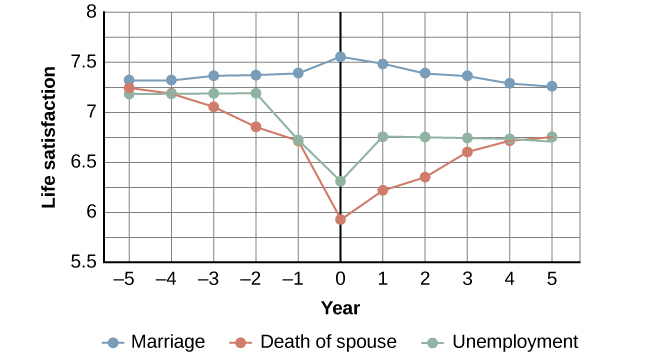


Figure 14.28図 14.28
This graphs shows life satisfaction scores several years before and after three significant life events (0 represents the year the event happened) (Diener et al., 2006).
このグラフは、三つの重要なライフイベントの数年前から数年後までの人生満足度の得点を示している(0は出来事が起きた年を表す)(Diener et al., 2006)。