第14章ストレス、生活習慣、健康
The Physiological Basis of Stressストレスの生理的基盤
What goes on inside our bodies when we experience stress? The physiological mechanisms of stress are extremely complex, but they generally involve the work of two systems—the sympathetic nervous system and the hypothalamic-pituitary-adrenal (HPA) axis. When a person first perceives something as stressful (Selye’s alarm reaction), the sympathetic nervous system triggers arousal via the release of adrenaline from the adrenal glands. Release of these hormones activates the fight-or-flight responses to stress, such as accelerated heart rate and respiration. At the same time, the HPA axis, which is primarily endocrine in nature, becomes especially active, although it works much more slowly than the sympathetic nervous system. In response to stress, the hypothalamus (one of the limbic structures in the brain) releases corticotropin-releasing factor, a hormone that causes the pituitary gland to release adrenocorticotropic hormone (ACTH) (Figure 14.11). The ACTH then activates the adrenal glands to secrete a number of hormones into the bloodstream; an important one is cortisol, which can affect virtually every organ within the body. Cortisol is commonly known as a stress hormone and helps provide that boost of energy when we first encounter a stressor, preparing us to run away or fight. However, sustained elevated levels of cortisol weaken the immune system.
英語のヒント
ストレスを経験しているとき、私たちの体の中では何が起こっているのだろうか。ストレスの生理的な仕組みはきわめて複雑だが、一般に二つの系、すなわち交感神経系と視床下部−下垂体−副腎軸(HPA軸)の働きがかかわっている。人が何かを初めてストレスの多いものとして知覚すると(セリエのいう警告反応期)、交感神経系は副腎からのアドレナリンの放出を通じて覚醒を引き起こす。これらのホルモンの放出によって、心拍数や呼吸の増加といった、ストレスに対する闘争・逃走反応が活性化される。同時に、主に内分泌的な性質を持つHPA軸も特に活発になるが、その働きは交感神経系よりずっと遅い。ストレスに反応して、視床下部(脳内の大脳辺縁系の構造の一つ)は副腎皮質刺激ホルモン放出因子を放出する。これは、下垂体に副腎皮質刺激ホルモン(ACTH)を放出させるホルモンである(図14.11)。次に、ACTHが副腎を活性化して、多くのホルモンを血流中に分泌させる。その中で重要なのがコルチゾールであり、コルチゾールは体内のほぼすべての器官に影響を及ぼしうる。コルチゾールは一般にストレスホルモンとして知られ、ストレッサーに初めて出会ったときに、あのエネルギーの高まりをもたらすのを助け、逃げるか闘うかの準備を整える。しかし、コルチゾールの濃度が高い状態が続くと、免疫系が弱まる。
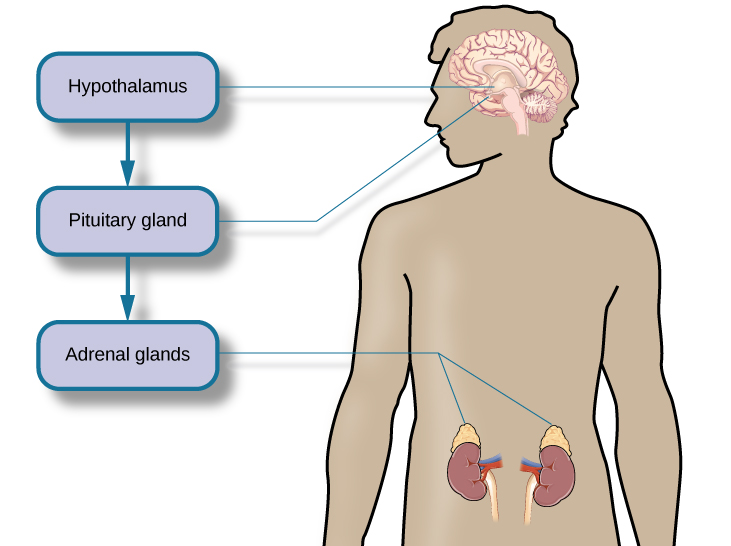

Figure 14.11図 14.11
This diagram shows the functioning of the hypothalamic-pituitary-adrenal (HPA) axis. The hypothalamus activates the pituitary gland, which in turn activates the adrenal glands, increasing their secretion of cortisol.
この図は、視床下部−下垂体−副腎軸(HPA軸)の働きを示している。視床下部が下垂体を活性化し、下垂体が今度は副腎を活性化して、副腎のコルチゾール分泌を増やす。
In short bursts, this process can have some favorable effects, such as providing extra energy, improving immune system functioning temporarily, and decreasing pain sensitivity. However, extended release of cortisol—as would happen with prolonged or chronic stress—often comes at a high price. High levels of cortisol have been shown to produce a number of harmful effects. For example, increases in cortisol can significantly weaken our immune system (Glaser & Kiecolt-Glaser, 2005), and high levels are frequently observed among depressed individuals (Geoffroy, Hertzman, Li, & Power, 2013). In summary, a stressful event causes a variety of physiological reactions that activate the adrenal glands, which in turn release epinephrine, norepinephrine, and cortisol. These hormones affect a number of bodily processes in ways that prepare the stressed person to take direct action, but also in ways that may heighten the potential for illness.
英語のヒント
短時間に限られていれば、この過程は、余分なエネルギーを供給する、免疫系の機能を一時的に高める、痛みへの感受性を下げるなど、いくつかの好ましい効果を持ちうる。しかし、長引くストレスや慢性的なストレスのもとで起こるような、コルチゾールの長期にわたる放出は、多くの場合、高い代償を伴う。高いコルチゾール濃度は、いくつもの有害な影響を生むことが示されてきた。たとえば、コルチゾールの増加は免疫系を著しく弱めうる(Glaser & Kiecolt-Glaser, 2005)。また、抑うつ状態の人々には、高いコルチゾール濃度がしばしば見られる(Geoffroy, Hertzman, Li, & Power, 2013)。まとめると、ストレスの多い出来事はさまざまな生理的反応を引き起こし、それらが副腎を活性化する。すると今度は副腎が、エピネフリン、ノルエピネフリン、コルチゾールを放出する。これらのホルモンは、ストレスを受けた人が直接的な行動をとる準備を整えるように、多くの身体の過程に影響を与えるが、同時に病気の可能性を高めうるようにも影響する。
When stress is extreme or chronic, it can have profoundly negative consequences. For example, stress often contributes to the development of certain psychological disorders, including post-traumatic stress disorder, major depressive disorder, and other serious psychiatric conditions. Additionally, we noted earlier that stress is linked to the development and progression of a variety of physical illnesses and diseases. For example, researchers in one study found that people injured during the September 11, 2001, World Trade Center disaster or who developed post-traumatic stress symptoms afterward later suffered significantly elevated rates of heart disease (Jordan, Miller-Archie, Cone, Morabia, & Stellman, 2011). Another investigation yielded that self-reported stress symptoms among aging and retired Finnish food industry workers were associated with morbidity 11 years later. This study also predicted the onset of musculoskeletal, nervous system, and endocrine and metabolic disorders (Salonen, Arola, Nygård, & Huhtala, 2008). Another study reported that male South Korean manufacturing employees who reported high levels of work-related stress were more likely to catch the common cold over the next several months than were those employees who reported lower work-related stress levels (Park et al., 2011). Later, you will explore the mechanisms through which stress can produce physical illness and disease.
英語のヒント
ストレスが極端であったり慢性的であったりすると、きわめて深刻な悪影響が生じうる。たとえば、ストレスはしばしば、心的外傷後ストレス障害、大うつ病性障害、そのほかの重い精神医学的な病態など、特定の心理的障害の発症の一因となる。さらに、先に述べたように、ストレスはさまざまな身体の病気や疾患の発症と進行に関連している。たとえばある研究では、2001年9月11日の世界貿易センターの惨事で負傷した人々や、その後に心的外傷後ストレスの症状を発症した人々は、のちに心臓病の発症率が有意に高かったことが見いだされた(Jordan, Miller-Archie, Cone, Morabia, & Stellman, 2011)。別の調査では、高齢に差しかかった、あるいはすでに退職したフィンランドの食品産業の労働者の自己報告によるストレス症状が、11年後の罹病と関連していることが明らかになった。この研究はまた、筋骨格系、神経系、内分泌・代謝系の障害の発症も予測した(Salonen, Arola, Nygård, & Huhtala, 2008)。さらに別の研究では、仕事に関連するストレスが高いと報告した韓国の男性製造業従業員は、仕事に関連するストレスがより低いと報告した従業員に比べて、その後の数か月間に普通の風邪をひく可能性が高かったと報告されている(Park et al., 2011)。ストレスが身体の病気や疾患を生み出しうる仕組みについては、後で詳しく見ていく。
Summaryまとめ
Stress is a process whereby an individual perceives and responds to events appraised as overwhelming or threatening to one’s well-being. The scientific study of how stress and emotional factors impact health and well-being is called health psychology, a field devoted to studying the general impact of psychological factors on health. The body’s primary physiological response during stress, the fight-or-flight response, was first identified in the early 20th century by Walter Cannon. The fight-or-flight response involves the coordinated activity of both the sympathetic nervous system and the hypothalamic-pituitary-adrenal (HPA) axis. Hans Selye, a noted endocrinologist, referred to these physiological reactions to stress as part of general adaptation syndrome, which occurs in three stages: alarm reaction (fight-or-flight reactions begin), resistance (the body begins to adapt to continuing stress), and exhaustion (adaptive energy is depleted, and stress begins to take a physical toll).
ストレスとは、人が、自分の幸福にとって手に負えない、あるいは脅威となると評価された出来事を知覚し、それに反応する過程である。ストレスや感情的要因が健康と幸福にどのように影響するかについての科学的研究は、健康心理学と呼ばれる。健康心理学は、心理的要因が健康に及ぼす全般的な影響の研究に専念する分野である。ストレスのあいだに生じる体の主要な生理的反応である闘争・逃走反応は、20世紀の初めにウォルター・キャノンによって初めて明らかにされた。闘争・逃走反応には、交感神経系と視床下部−下垂体−副腎軸(HPA軸)の両方の協調した活動がかかわっている。著名な内分泌学者ハンス・セリエは、ストレスに対するこうした生理的反応を、汎適応症候群の一部として位置づけた。汎適応症候群は三つの段階で起こる。警告反応期(闘争・逃走の反応が始まる)、抵抗期(体が続くストレスに適応しはじめる)、疲憊期(適応のためのエネルギーが枯渇し、ストレスが身体に打撃を与えはじめる)である。