第14章ストレス、生活習慣、健康
14.2 Stressors14.2 ストレッサー
Learning Objectives学習目標
By the end of this section, you will be able to:
この節を学び終えると、次のことができるようになる。
- Describe different types of possible stressorsストレッサーになりうるもののさまざまな種類を説明する
- Explain the importance of life changes as potential stressors潜在的なストレッサーとしての生活の変化の重要性を説明する
- Describe the Social Readjustment Rating Scale社会的再適応評価尺度について説明する
- Understand the concepts of job strain and job burnout職務ストレインとバーンアウトの概念を理解する
For an individual to experience stress, they must first encounter a potential stressor. In general, stressors can be placed into one of two broad categories: chronic and acute. Chronic stressors include events that persist over an extended period of time, such as caring for a parent with dementia, long-term unemployment, or imprisonment. Acute stressors involve brief focal events that sometimes continue to be experienced as overwhelming well after the event has ended, such as falling on an icy sidewalk and breaking your leg (Cohen, Janicki-Deverts, & Miller, 2007). Whether chronic or acute, potential stressors come in many shapes and sizes. They can include major traumatic events, significant life changes, daily hassles, as well as other situations in which a person is regularly exposed to threat, challenge, or danger.
英語のヒント
人がストレスを経験するには、まず潜在的なストレッサーに出会わなければならない。一般に、ストレッサーは慢性と急性という二つの大きなカテゴリーのどちらかに分けられる。慢性ストレッサーには、認知症の親の介護、長期の失業、服役など、長い期間にわたって続く出来事が含まれる。急性ストレッサーは短時間の単発的な出来事であり、その出来事が終わってかなりたってからも、圧倒されるようなものとして経験され続けることがある。凍った歩道で転んで脚を骨折する、といった出来事がその例である(Cohen, Janicki-Deverts, & Miller, 2007)。慢性であれ急性であれ、潜在的なストレッサーの形や大きさはさまざまである。そこには、重大なトラウマとなる出来事、大きな生活の変化、日常いらだち事のほか、人が脅威や挑戦や危険に日常的にさらされるその他の状況も含まれうる。
Traumatic Eventsトラウマとなる出来事
Some stressors involve traumatic events or situations in which a person is exposed to actual or threatened death or serious injury. Stressors in this category include exposure to military combat, threatened or actual physical assaults (e.g., physical attacks, sexual assault, robbery, childhood abuse), terrorist attacks, natural disasters (e.g., earthquakes, floods, hurricanes), and automobile accidents. Men, non-White people, and individuals in lower socioeconomic status (SES) groups report experiencing a greater number of traumatic events than do women, White people, and individuals in higher SES groups (Hatch & Dohrenwend, 2007). Some individuals who are exposed to stressors of extreme magnitude develop post-traumatic stress disorder (PTSD): a chronic stress reaction characterized by experiences and behaviors that may include intrusive and painful memories of the stressor event, jumpiness, persistent negative emotional states, detachment from others, angry outbursts, and avoidance of reminders of the event (American Psychiatric Association [APA], 2013).
英語のヒント
ストレッサーの中には、人が実際に死や重傷に直面する、あるいはその危険にさらされるような、トラウマとなる出来事や状況を含むものがある。このカテゴリーのストレッサーには、軍事的な戦闘にさらされること、身体的暴行を受けそうになること、または実際に受けること(たとえば、身体的な攻撃、性的暴行、強盗、子ども時代の虐待)、テロ攻撃、自然災害(たとえば、地震、洪水、ハリケーン)、自動車事故などがある。男性、白人以外の人々、社会経済的地位(SES)の低い集団の人々は、女性、白人、SESの高い集団の人々よりも、より多くのトラウマとなる出来事を経験していると報告している(Hatch & Dohrenwend, 2007)。極めて大きなストレッサーにさらされた人の中には、心的外傷後ストレス障害(PTSD)を発症する人がいる。PTSDは慢性的なストレス反応であり、それを特徴づける経験や行動には、ストレッサーとなった出来事についての侵入的で苦痛な記憶、びくびくしやすいこと、持続する否定的な感情状態、他者との心の隔たり、怒りの爆発、その出来事を思い出させるものの回避などが含まれうる(American Psychiatric Association [APA], 2013)。
Life Changes生活の変化
Most stressors that we encounter are not nearly as intense as the ones described above. Many potential stressors we face involve events or situations that require us to make changes in our ongoing lives and require time as we adjust to those changes. Examples include death of a close family member, marriage, divorce, and moving (Figure 14.12).
英語のヒント
私たちが出会うストレッサーの大半は、上で述べたものの強烈さにはとうてい及ばない。私たちが直面する潜在的なストレッサーの多くには、それまで続けてきた生活に変化を加えることを求め、その変化に適応するまでに時間を要するような出来事や状況が含まれる。たとえば、近親者の死、結婚、離婚、引っ越しなどである(図14.12)。
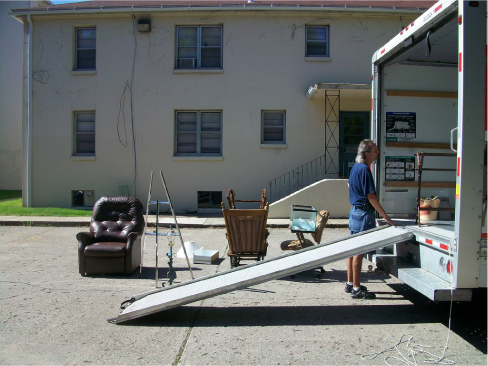

Figure 14.12図 14.12
Some fairly typical life events, such as moving, can be significant stressors. Even when the move is intentional and positive, the amount of resulting change in daily life can cause stress. (credit: "Jellaluna"/Flickr)
引っ越しのような、比較的よくある生活上の出来事も、大きなストレッサーになりうる。自ら望んだ前向きな引っ越しであっても、それによって生じる日常生活の変化の大きさが、ストレスを引き起こすことがある。(出典:“Jellaluna”/Flickr)
In the 1960s, psychiatrists Thomas Holmes and Richard Rahe wanted to examine the link between life stressors and physical illness, based on the hypothesis that life events requiring significant changes in a person’s normal life routines are stressful, whether these events are desirable or undesirable. They developed the Social Readjustment Rating Scale (SRRS), consisting of 43 life events that require varying degrees of personal readjustment (Holmes & Rahe, 1967). Many life events that most people would consider pleasant (e.g., holidays, retirement, marriage) are among those listed on the SRRS; these are examples of eustress. Holmes and Rahe also proposed that life events can add up over time, and that experiencing a cluster of stressful events increases one’s risk of developing physical illnesses.
英語のヒント
1960年代、精神科医のトーマス・ホームズとリチャード・レイは、生活上のストレッサーと身体の病気との関連を調べようとした。その土台にあったのは、人の普段の生活習慣に大きな変化を求める生活上の出来事は、それが望ましいものであれ望ましくないものであれ、ストレスになる、という仮説である。二人は、個人の再適応をさまざまな程度で必要とする43の生活上の出来事からなる、社会的再適応評価尺度(SRRS)を開発した(Holmes & Rahe, 1967)。ほとんどの人が楽しいと考えるであろう生活上の出来事(たとえば休暇、退職、結婚)の多くも、SRRSに挙げられている。これらはユーストレスの例である。ホームズとレイはまた、生活上の出来事は時間とともに積み重なりうること、そしてストレスの多い出来事を一時期にまとめて経験すると、身体の病気になるリスクが高まることも提唱した。
In developing their scale, Holmes and Rahe asked 394 participants to provide a numerical estimate for each of the 43 items; each estimate corresponded to how much readjustment participants felt each event would require. These estimates resulted in mean value scores for each event—often called life change units (LCUs) (Rahe, McKeen, & Arthur, 1967). The numerical scores ranged from 11 to 100, representing the perceived magnitude of life change each event entails. Death of a spouse ranked highest on the scale with 100 LCUs, and divorce ranked second highest with 73 LCUs. In addition, personal injury or illness, marriage, and job termination also ranked highly on the scale with 53, 50, and 47 LCUs, respectively. Conversely, change in residence (20 LCUs), change in eating habits (15 LCUs), and vacation (13 LCUs) ranked low on the scale (Table 14.1). Minor violations of the law ranked the lowest with 11 LCUs. To complete the scale, participants checked yes for events experienced within the last 12 months. LCUs for each checked item are totaled for a score quantifying the amount of life change. Agreement on the amount of adjustment required by the various life events on the SRRS is highly consistent, even cross-culturally (Holmes & Masuda, 1974).
英語のヒント
尺度を作成するにあたって、ホームズとレイは394人の参加者に、43の項目それぞれについて数値による見積もりを出すよう求めた。それぞれの見積もりは、その出来事がどれほどの再適応を必要とすると参加者が感じたかに対応していた。これらの見積もりから、出来事ごとの平均値の得点が得られた。これはしばしば生活変化単位(LCU)と呼ばれる(Rahe, McKeen, & Arthur, 1967)。数値の得点は11から100までの範囲にあり、それぞれの出来事に伴う生活の変化がどれほど大きいと知覚されているかを表している。尺度の中で最も高い順位にあったのは配偶者の死で100 LCU、2番目に高かったのは離婚で73 LCUだった。さらに、本人のけがや病気、結婚、解雇も、それぞれ53、50、47 LCUで高い順位にあった。反対に、転居(20 LCU)、食習慣の変化(15 LCU)、休暇(13 LCU)は低い順位だった(表14.1)。最も低かったのは軽い法律違反で、11 LCUだった。尺度に回答する際、参加者は過去12か月以内に経験した出来事に「はい」と印を付ける。印を付けた各項目のLCUを合計して、生活の変化の量を数値で表す得点とする。SRRSのさまざまな生活上の出来事がどれほどの適応を必要とするかについての評定は、文化をまたいでも非常によく一致している(Holmes & Masuda, 1974)。
Some Stressors on the Social Readjustment Rating Scale (Holmes & Rahe, 1967) 社会的再適応評価尺度に含まれるストレッサーの例(Holmes & Rahe, 1967) |
|
|---|---|
Life event 生活上の出来事 |
Life change units 生活変化単位 |
Death of a close family member 近親者の死 |
63 |
Personal injury or illness 本人のけがや病気 |
53 |
Dismissal from work 解雇 |
47 |
Change in financial state 経済状態の変化 |
38 |
Change to different line of work 別の職種への転職 |
36 |
Outstanding personal achievement 際立った個人的業績 |
28 |
Beginning or ending school 入学または卒業 |
26 |
Change in living conditions 生活環境の変化 |
25 |
Change in working hours or conditions 勤務時間または労働条件の変化 |
20 |
Change in residence 転居 |
20 |
Change in schools 転校 |
20 |
Change in social activities 社会活動の変化 |
18 |
Change in sleeping habits 睡眠習慣の変化 |
16 |
Change in eating habits 食習慣の変化 |
15 |
Minor violation of the law 軽い法律違反 |
11 |
Extensive research has demonstrated that accumulating a high number of life change units within a brief period of time (one or two years) is related to a wide range of physical illnesses (even accidents and athletic injuries) and mental health problems (Monat & Lazarus, 1991; Scully, Tosi, & Banning, 2000). In an early demonstration, researchers obtained LCU scores for U.S. and Norwegian Navy personnel who were about to embark on a six-month voyage. A later examination of medical records revealed positive (but small) correlations between LCU scores prior to the voyage and subsequent illness symptoms during the ensuing six-month journey (Rahe, 1974). In addition, people tend to experience more physical symptoms, such as backache, upset stomach, diarrhea, and acne, on specific days in which self-reported LCU values are considerably higher than normal, such as the day of a family member’s wedding (Holmes & Holmes, 1970).
英語のヒント
多くの研究によって、短い期間(1〜2年)のうちに多くの生活変化単位が積み重なることが、さまざまな身体の病気(事故やスポーツでのけがさえ含む)や精神的健康の問題と関連していることが示されてきた(Monat & Lazarus, 1991; Scully, Tosi, & Banning, 2000)。初期に行われた実証の一つで、研究者たちは、6か月の航海に出ようとしていたアメリカとノルウェーの海軍の人員についてLCU得点を得た。のちに医療記録を調べたところ、航海前のLCU得点と、それに続く6か月の航海中の病気の症状とのあいだに、正の(ただし小さな)相関が見られた(Rahe, 1974)。さらに、人は、家族の結婚式の日のように、自己報告されたLCUの値が普段よりかなり高い特定の日に、腰痛、胃のむかつき、下痢、にきびといった身体症状をより多く経験する傾向がある(Holmes & Holmes, 1970)。
The Social Readjustment Rating Scale (SRRS) provides researchers a simple, easy-to-administer way of assessing the amount of stress in people’s lives, and it has been used in hundreds of studies (Thoits, 2010). Despite its widespread use, the scale has been subject to criticism. First, many of the items on the SRRS are vague; for example, death of a close friend could involve the death of a long-absent childhood friend that requires little social readjustment (Dohrenwend, 2006). In addition, some have challenged its assumption that undesirable life events are no more stressful than desirable ones (Derogatis & Coons, 1993). However, most of the available evidence suggests that, at least as far as mental health is concerned, undesirable or negative events are more strongly associated with poor outcomes (such as depression) than are desirable, positive events (Hatch & Dohrenwend, 2007). Perhaps the most serious criticism is that the scale does not take into consideration respondents’ appraisals of the life events it contains. As you recall, appraisal of a stressor is a key element in the conceptualization and overall experience of stress. Being fired from work may be devastating to some but a welcome opportunity to obtain a better job for others. The SRRS remains one of the most well-known instruments in the study of stress, and it is a useful tool for identifying potential stress-related health outcomes (Scully et al., 2000).
英語のヒント
社会的再適応評価尺度(SRRS)は、人々の生活の中のストレスの量を評価するための、簡単で実施しやすい方法を研究者に提供しており、何百もの研究で用いられてきた(Thoits, 2010)。広く使われている一方で、この尺度は批判も受けてきた。第一に、SRRSの項目の多くはあいまいである。たとえば「親しい友人の死」には、長いあいだ会っていなかった子ども時代の友人の死のように、社会的な再適応をほとんど必要としない場合も含まれうる(Dohrenwend, 2006)。さらに、望ましくない生活上の出来事が望ましい出来事以上にストレスが大きいわけではない、というこの尺度の前提に異議を唱える者もいる(Derogatis & Coons, 1993)。しかし、入手できる証拠の大半は、少なくとも精神的健康に関するかぎり、望ましくない出来事や否定的な出来事の方が、望ましい出来事や肯定的な出来事よりも、悪い結果(たとえば抑うつ)と強く関連していることを示唆している(Hatch & Dohrenwend, 2007)。おそらく最も重大な批判は、この尺度が、そこに含まれる生活上の出来事を回答者がどう評価するかを考慮していない、というものである。思い出してほしいが、ストレッサーに対する評価は、ストレスの概念化においても、ストレスの経験全体においても、鍵となる要素である。職場を解雇されることは、ある人にとっては打ちのめされる出来事かもしれないが、別の人にとってはよりよい仕事に就くための歓迎すべき機会かもしれない。SRRSは依然として、ストレス研究において最もよく知られた道具の一つであり、ストレスに関連して起こりうる健康上の結果を特定するのに役立つ手段である(Scully et al., 2000)。