第14章ストレス、生活習慣、健康
Early Contributions to the Study of Stressストレス研究への初期の貢献
As previously stated, scientific interest in stress goes back nearly a century. One of the early pioneers in the study of stress was Walter Cannon, an eminent American physiologist at Harvard Medical School (Figure 14.7). In the early part of the 20th century, Cannon was the first to identify the body’s physiological reactions to stress.
英語のヒント
先に述べたように、ストレスへの科学的な関心は100年近く前にさかのぼる。ストレス研究の初期の先駆者の一人は、ハーバード大学医学部の著名なアメリカの生理学者、ウォルター・キャノンである(図14.7)。20世紀の初め、キャノンは、ストレスに対する体の生理的反応を初めて明らかにした。
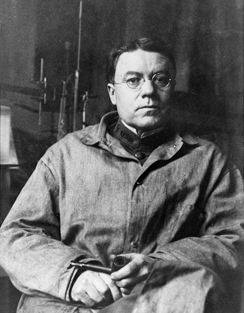
Figure 14.7図 14.7
Harvard physiologist Walter Cannon first articulated and named the fight-or-flight response, the nervous system’s sympathetic response to a significant stressor.
ハーバード大学の生理学者ウォルター・キャノンは、闘争・逃走反応、すなわち重大なストレッサーに対する神経系の交感神経性の反応を初めて明確に述べ、名づけた。
Cannon and the Fight-or-Flight Responseキャノンと闘争・逃走反応
Imagine that you are hiking in the beautiful mountains of Colorado on a warm and sunny spring day. At one point during your hike, a large, frightening-looking black bear appears from behind a stand of trees and sits about 50 yards from you. The bear notices you, sits up, and begins to lumber in your direction. In addition to thinking, “This is definitely not good,” a constellation of physiological reactions begins to take place inside you. Prompted by a deluge of epinephrine (adrenaline) and norepinephrine (noradrenaline) from your adrenal glands, your pupils begin to dilate. Your heart starts to pound and speeds up, you begin to breathe heavily and perspire, you get butterflies in your stomach, and your muscles become tense, preparing you to take some kind of direct action. Cannon proposed that this reaction, which he called the fight-or-flight response, occurs when a person experiences very strong emotions—especially those associated with a perceived threat (Cannon, 1932). During the fight-or-flight response, the body is rapidly aroused by activation of both the sympathetic nervous system and the endocrine system (Figure 14.8). This arousal helps prepare the person to either fight or flee from a perceived threat.
英語のヒント
暖かく晴れた春の日に、コロラド州の美しい山々をハイキングしているところを想像してほしい。ハイキングの途中で、大きくて恐ろしげなクロクマが木立の陰から現れ、あなたから50ヤードほど離れたところに座る。クマはあなたに気づくと、身を起こし、のそのそとあなたの方へ向かってくる。「これは絶対にまずい」と考えるのに加えて、あなたの体の中では一群の生理的反応が起こりはじめる。副腎から大量に放出されるエピネフリン(アドレナリン)とノルエピネフリン(ノルアドレナリン)に促されて、瞳孔が広がりはじめる。心臓がどきどきと高鳴って速くなり、呼吸が荒くなって汗が出はじめ、胃のあたりがそわそわし、筋肉が緊張して、何らかの直接的な行動をとる準備が整う。キャノンは、彼が闘争・逃走反応と呼んだこの反応が、人が非常に強い感情、とりわけ知覚された脅威と結びついた感情を経験したときに生じると提唱した(Cannon, 1932)。闘争・逃走反応のあいだ、体は交感神経系と内分泌系の両方が活性化することによって、急速に覚醒する(図14.8)。この覚醒は、知覚された脅威に対して闘うか、そこから逃げるかのどちらかをする準備を整えるのに役立つ。
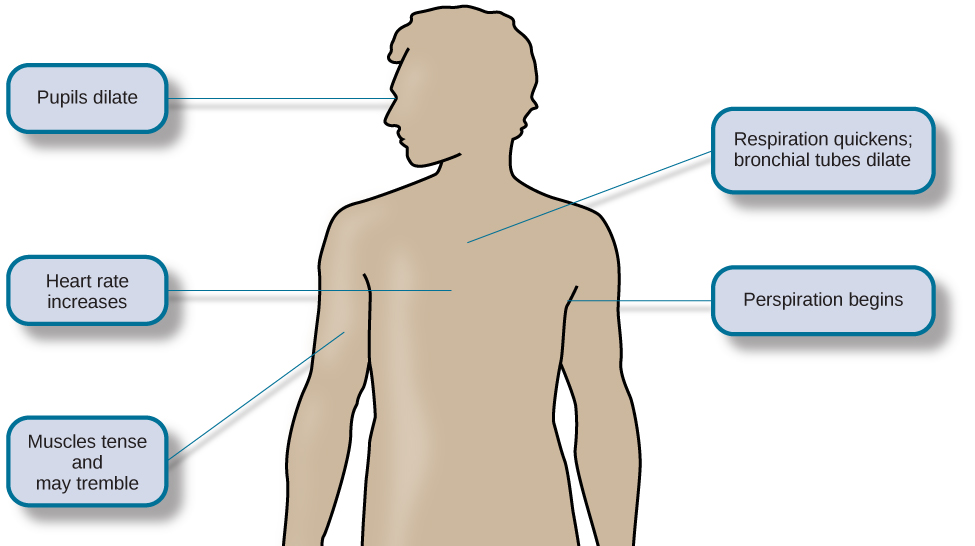
Figure 14.8図 14.8
Fight or flight is a physiological response to a stressor.
闘争・逃走は、ストレッサーに対する生理的反応である。
According to Cannon, the fight-or-flight response is a built-in mechanism that assists in maintaining homeostasis—an internal environment in which physiological variables such as blood pressure, respiration, digestion, and temperature are stabilized at levels optimal for survival. Thus, Cannon viewed the fight-or-flight response as adaptive because it enables people to adjust internally and externally to threats in their environment, allowing them to continue to be alive and overcome the threat.
英語のヒント
キャノンによれば、闘争・逃走反応は、恒常性の維持を助ける生まれつき備わった仕組みである。恒常性とは、血圧、呼吸、消化、体温などの生理的な変数が、生存に最適な水準で安定している体内環境のことである。したがってキャノンは、闘争・逃走反応を適応的なものとみなした。この反応によって、人は環境の中の脅威に対して内的にも外的にも調整でき、生き延びて脅威を乗り越えることができるからである。
Selye and the General Adaptation Syndromeセリエと汎適応症候群
Another important early contributor to the stress field was Hans Selye, mentioned earlier. He would eventually become one of the world’s foremost experts in the study of stress (Figure 14.9). As a young assistant in the biochemistry department at McGill University in the 1930s, Selye was engaged in research involving sex hormones in rats. Although he was unable to find an answer for what he was initially researching, he incidentally discovered that when exposed to prolonged negative stimulation (stressors)—such as extreme cold, surgical injury, excessive muscular exercise, and shock—the rats showed signs of adrenal enlargement, thymus and lymph node shrinkage, and stomach ulceration. Selye realized that these responses were triggered by a coordinated series of physiological reactions that unfold over time during continued exposure to a stressor. These physiological reactions were nonspecific, which means that regardless of the type of stressor, the same pattern of reactions would occur. What Selye discovered was the general adaptation syndrome, the body’s nonspecific physiological response to stress.
英語のヒント
ストレスの分野に初期に大きく貢献したもう一人は、先に触れたハンス・セリエである。セリエはのちに、ストレス研究における世界の第一人者の一人となる(図14.9)。1930年代、マギル大学の生化学科の若い助手だったセリエは、ラットの性ホルモンにかかわる研究に取り組んでいた。当初研究していたことについては答えを見つけられなかったが、彼は偶然、次のことを発見した。極度の寒さ、外科的な損傷、過度の筋肉運動、ショックといった、長く続く好ましくない刺激(ストレッサー)にさらされると、ラットに副腎の肥大、胸腺とリンパ節の萎縮、胃の潰瘍形成の兆候が現れたのである。セリエは、これらの反応が、ストレッサーにさらされ続けるあいだに時間をかけて展開する、一連の協調した生理的反応によって引き起こされていることに気づいた。これらの生理的反応は非特異的だった。つまり、ストレッサーの種類にかかわらず、同じパターンの反応が起こるということである。セリエが発見したのは汎適応症候群、すなわちストレスに対する体の非特異的な生理的反応だった。
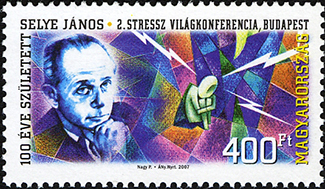
Figure 14.9図 14.9
Hans Selye specialized in research about stress. In 2009, his native Hungary honored his work with this stamp, released in conjunction with the 2nd annual World Conference on Stress.
ハンス・セリエはストレスの研究を専門とした。2009年、彼の母国ハンガリーは、毎年開催される世界ストレス会議の第2回に合わせて発行したこの切手で、彼の業績をたたえた。
The general adaptation syndrome, shown in Figure 14.10, consists of three stages: (1) alarm reaction, (2) stage of resistance, and (3) stage of exhaustion (Selye, 1936; 1976). Alarm reaction describes the body’s immediate reaction upon facing a threatening situation or emergency, and it is roughly analogous to the fight-or-flight response described by Cannon. During an alarm reaction, you are alerted to a stressor, and your body alarms you with a cascade of physiological reactions that provide you with the energy to manage the situation. A person who wakes up in the middle of the night to discover her house is on fire, for example, is experiencing an alarm reaction.
英語のヒント
図14.10に示す汎適応症候群は、(1)警告反応期、(2)抵抗期、(3)疲憊期の三つの段階から成る(Selye, 1936; 1976)。警告反応期とは、脅威となる状況や緊急事態に直面したときの体の即時の反応を指し、キャノンが述べた闘争・逃走反応におおよそ相当する。警告反応期には、あなたはストレッサーに気づかされ、体は、状況に対処するためのエネルギーをもたらす一連の生理的反応を次々に起こして、あなたに警告を発する。たとえば、夜中に目を覚まして自宅が火事になっていることに気づいた人は、警告反応期にある。
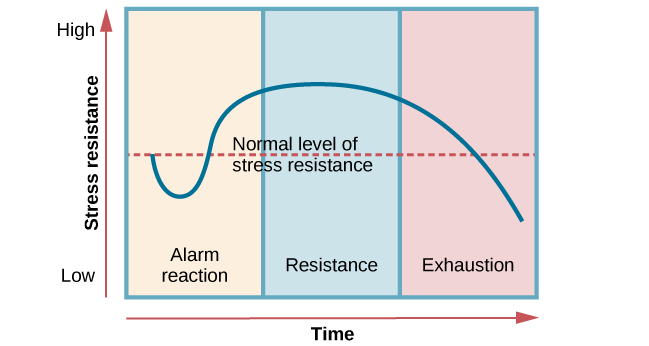


Figure 14.10図 14.10
The three stages of Selye’s general adaptation syndrome are shown in this graph. Prolonged stress ultimately results in exhaustion.
このグラフは、セリエの汎適応症候群の三つの段階を示している。長引くストレスは、最終的に疲憊をもたらす。
If exposure to a stressor is prolonged, the organism will enter the stage of resistance. During this stage, the initial shock of alarm reaction has worn off and the body has adapted to the stressor. Nevertheless, the body also remains on alert and is prepared to respond as it did during the alarm reaction, although with less intensity. For example, suppose a child who went missing is still missing 72 hours later. Although the parents would obviously remain extremely disturbed, the magnitude of physiological reactions would likely have diminished over the 72 intervening hours due to some adaptation to this event.
英語のヒント
ストレッサーにさらされる状態が長引くと、生体は抵抗期に入る。この段階では、警告反応期の最初の衝撃は薄れ、体はストレッサーに適応している。それでも体は警戒を続けてもおり、強さは弱まっているものの、警告反応期と同じように反応する準備ができている。たとえば、行方不明になった子どもが72時間後もまだ見つかっていないとしよう。両親は当然、ひどく動揺したままだろうが、この出来事にいくらか適応したために、その間の72時間で生理的反応の大きさはおそらく小さくなっているだろう。
If exposure to a stressor continues over a longer period of time, the stage of exhaustion ensues. At this stage, the person is no longer able to adapt to the stressor: the body’s ability to resist becomes depleted as physical wear takes its toll on the body’s tissues and organs. As a result, illness, disease, and other permanent damage to the body—even death—may occur. If a missing child still remained missing after three months, the long-term stress associated with this situation may cause a parent to literally faint with exhaustion at some point or even to develop a serious and irreversible illness.
英語のヒント
ストレッサーにさらされる状態がさらに長い期間続くと、疲憊期が訪れる。この段階では、人はもはやストレッサーに適応できない。身体的な消耗が体の組織や器官に打撃を与えるにつれて、抵抗する体の能力が枯渇していくのである。その結果、病気や疾患、そのほかの体への永続的な損傷、さらには死が起こりうる。行方不明の子どもが3か月たってもまだ見つからないなら、この状況に伴う長期的なストレスによって、親はある時点で文字どおり疲れ果てて気を失ったり、さらには深刻で回復不能な病気を発症したりするかもしれない。
In short, Selye’s general adaptation syndrome suggests that stressors tax the body via a three-phase process—an initial jolt, subsequent readjustment, and a later depletion of all physical resources—that ultimately lays the groundwork for serious health problems and even death. It should be pointed out, however, that this model is a response-based conceptualization of stress, focusing exclusively on the body’s physical responses while largely ignoring psychological factors such as appraisal and interpretation of threats. Nevertheless, Selye’s model has had an enormous impact on the field of stress because it offers a general explanation for how stress can lead to physical damage and, thus, disease. As we shall discuss later, prolonged or repeated stress has been implicated in development of a number of disorders such as hypertension and coronary artery disease.
英語のヒント
要するに、セリエの汎適応症候群は、ストレッサーが三段階の過程を通じて体に負担をかけることを示唆している。最初の衝撃、それに続く再調整、そして後に訪れるあらゆる身体資源の枯渇という三段階であり、この過程が最終的に、深刻な健康問題や死にさえつながる下地をつくる。しかし、このモデルがストレスの反応に基づく概念化であることは指摘しておくべきだろう。このモデルはもっぱら体の身体的反応に焦点を当て、脅威の評価や解釈といった心理的要因をほとんど無視している。それでも、セリエのモデルはストレスの分野に非常に大きな影響を与えてきた。ストレスがどのようにして身体的な損傷、ひいては疾患につながりうるのかについて、一般的な説明を提供しているからである。後で論じるように、長引くストレスや繰り返されるストレスは、高血圧や冠動脈疾患など、多くの障害の発症に関与しているとされてきた。