第14章ストレス、生活習慣、健康
Hasslesいらだち事
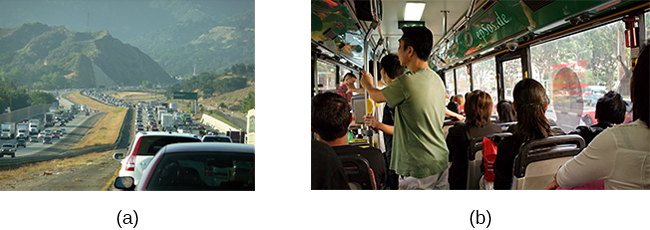
Potential stressors do not always involve major life events. Daily hassles—the minor irritations and annoyances that are part of our everyday lives (e.g., rush hour traffic, lost keys, obnoxious coworkers, inclement weather, arguments with friends or family)—can build on one another and leave us just as stressed as life change events (Figure 14.13) (Kanner, Coyne, Schaefer, & Lazarus, 1981).
英語のヒント
潜在的なストレッサーは、人生の大きな出来事ばかりではない。日常いらだち事、すなわち私たちの日々の生活の一部になっている小さないらだちや煩わしさ(たとえば、ラッシュアワーの渋滞、鍵をなくすこと、不快な同僚、荒れた天気、友人や家族との口論)は、互いに積み重なって、生活の変化を伴う出来事と同じくらい、私たちにストレスを感じさせることがある(図14.13)(Kanner, Coyne, Schaefer, & Lazarus, 1981)。
OpenStax, Rice University; Psychology 2e. (credit a: modification of work by Jeff Turner; credit b: modification of work by "epSos.de"/Flickr) · CC BY 4.0 · Source出典

Figure 14.13図 14.13
Daily commutes, whether (a) on the road or (b) via public transportation, can be hassles that contribute to our feelings of everyday stress. (credit a: modification of work by Jeff Turner; credit b: modification of work by "epSos.de"/Flickr)
毎日の通勤は、(a)道路を車で通う場合でも、(b)公共交通機関を使う場合でも、日々感じるストレスの一因となるいらだち事になりうる。(出典a:Jeff Turnerの作品を改変、出典b:“epSos.de”/Flickrの作品を改変)
Researchers have demonstrated that the frequency of daily hassles is actually a better predictor of both physical and psychological health than are life change units. In a well-known study of San Francisco residents, the frequency of daily hassles was found to be more strongly associated with physical health problems than were life change events (DeLongis, Coyne, Dakof, Folkman, & Lazarus, 1982). In addition, daily minor hassles, especially interpersonal conflicts, often lead to negative and distressed mood states (Bolger, DeLongis, Kessler, & Schilling, 1989). Cyber hassles that occur on social media may represent a modern and evolving source of stress. In one investigation, social media stress was tied to loss of sleep in adolescents, presumably because ruminating about social media caused a physiological stress response that increased arousal (van der Schuur, Baumgartner, & Sumter, 2018). Clearly, daily hassles can add up and take a toll on us both emotionally and physically.
英語のヒント
研究者たちは、日常いらだち事の頻度の方が、実は生活変化単位よりも、身体的健康と心理的健康の両方をよりよく予測することを示してきた。サンフランシスコの住民を対象としたよく知られた研究では、日常いらだち事の頻度の方が、生活の変化を伴う出来事よりも、身体的健康の問題と強く関連していることが分かった(DeLongis, Coyne, Dakof, Folkman, & Lazarus, 1982)。さらに、日常の小さないらだち事、とくに対人的な衝突は、しばしば否定的で苦痛に満ちた気分状態につながる(Bolger, DeLongis, Kessler, & Schilling, 1989)。ソーシャルメディア上で起こるサイバー上のいらだち事は、現代的で、変化し続けるストレス源となっているのかもしれない。ある調査では、ソーシャルメディアによるストレスが青年の睡眠不足と結びついていた。おそらく、ソーシャルメディアのことを反すうすることで、覚醒を高める生理的ストレス反応が引き起こされたためだと考えられる(van der Schuur, Baumgartner, & Sumter, 2018)。明らかに、日常いらだち事は積み重なって、感情と身体の両面で私たちに打撃を与えうる。
Occupation-Related Stressors職業に関連するストレッサー
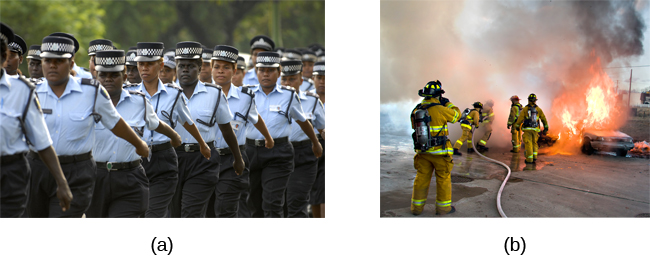
Stressors can include situations in which one is frequently exposed to challenging and unpleasant events, such as difficult, demanding, or unsafe working conditions. Although most jobs and occupations can at times be demanding, some are clearly more stressful than others (Figure 14.14). For example, most people would likely agree that a firefighter’s work is inherently more stressful than that of a florist. Equally likely, most would agree that jobs containing various unpleasant elements, such as those requiring exposure to loud noise (heavy equipment operator), constant harassment and threats of physical violence (prison guard), perpetual frustration (bus driver in a major city), or those mandating that an employee work alternating day and night shifts (hotel desk clerk), are much more demanding—and thus, more stressful—than those that do not contain such elements. Table 14.2 lists several occupations and some of the specific stressors associated with those occupations (Sulsky & Smith, 2005).
英語のヒント
ストレッサーには、困難で不快な出来事に頻繁にさらされる状況も含まれうる。たとえば、難しい、負担の大きい、あるいは安全でない労働条件である。ほとんどの仕事や職業はときに負担が大きくなりうるが、明らかにほかよりストレスの大きい職業もある(図14.14)。たとえば、消防士の仕事は本来的に花屋の仕事よりもストレスが大きいということには、ほとんどの人がおそらく同意するだろう。同じようにほとんどの人は、さまざまな不快な要素を含む仕事は、そうした要素を含まない仕事よりもはるかに負担が大きく、したがってストレスもより大きい、ということにも同意するだろう。そうした仕事とは、たとえば、大きな騒音(重機のオペレーター)、絶え間ない嫌がらせと身体的暴力の脅威(刑務官)、いつまでも続くフラストレーション(大都市のバス運転手)にさらされることを求められる仕事や、日勤と夜勤を交互にこなすよう従業員に義務づける仕事(ホテルのフロント係)である。表14.2に、いくつかの職業と、それぞれの職業に関連する具体的なストレッサーの一部を挙げる(Sulsky & Smith, 2005)。
OpenStax, Rice University; Psychology 2e. (credit a: modification of work by Australian Civil-Military Centre; credit b: modification of work by Andrew Magill) · CC BY 4.0 · Source出典

Figure 14.14図 14.14
(a) Police officers and (b) firefighters hold high stress occupations. (credit a: modification of work by Australian Civil-Military Centre; credit b: modification of work by Andrew Magill)
(a)警察官と(b)消防士は、ストレスの大きい職業に就いている。(出典a:Australian Civil-Military Centreの作品を改変、出典b:Andrew Magillの作品を改変)
Occupations and Their Related Stressors 職業とそれに関連するストレッサー |
|
|---|---|
Occupation 職業 |
Stressors Specific to Occupation その職業に特有のストレッサー |
Police officer 警察官 |
physical dangers, excessive paperwork, dealing with court system, tense interactions, life-and-death decision making 身体的な危険、過剰な書類仕事、裁判制度への対応、緊迫したやりとり、生死にかかわる意思決定 |
Firefighter 消防士 |
uncertainty over whether a serious fire or hazard awaits after an alarm, potential for extreme physical danger 警報の後に深刻な火災や危険が待ち受けているかどうかの不確かさ、極度の身体的危険の可能性 |
Social worker ソーシャルワーカー |
little positive feedback from jobs or from the public, unsafe work environments, frustration in dealing with bureaucracy, excessive paperwork, sense of personal responsibility for clients, work overload 仕事や一般の人々から肯定的なフィードバックがほとんど得られないこと、安全でない職場環境、官僚制への対応に伴うフラストレーション、過剰な書類仕事、クライエントに対する個人的な責任感、仕事の過重負担 |
Teacher 教師 |
Excessive paperwork, lack of adequate supplies or facilities, work overload, lack of positive feedback, threat of physical violence, lack of support from parents and administrators 過剰な書類仕事、十分な備品や設備の不足、仕事の過重負担、肯定的なフィードバックの不足、身体的暴力の脅威、保護者や管理職からの支援の不足 |
Nurse 看護師 |
Work overload, heavy physical work, patient concerns (dealing with death and medical concerns), interpersonal problems with other medical staff (especially physicians) 仕事の過重負担、重い肉体労働、患者に関する問題(死や医療上の問題への対応)、ほかの医療スタッフ(とくに医師)との対人関係の問題 |
Emergency medical worker 救急医療従事者 |
Unpredictable and extreme nature of the job, inexperience 仕事の予測できない極端な性質、経験不足 |
Clerical and secretarial work 事務・秘書の仕事 |
Few opportunities for advancement, unsupportive supervisors, work overload, lack of perceived control 昇進の機会の少なさ、支えにならない上司、仕事の過重負担、知覚されたコントロールの欠如 |
Managerial work 管理職の仕事 |
Work overload, conflict and ambiguity in defining the managerial role, difficult work relationships 仕事の過重負担、管理職の役割を定めるうえでの葛藤とあいまいさ、難しい職場の人間関係 |
Although the specific stressors for these occupations are diverse, they seem to share some common denominators such as heavy workload and uncertainty about and lack of control over certain aspects of a job. Chronic occupational stress contributes to job strain, a work situation that combines excessive job demands and workload with little discretion in decision making or job control (Karasek & Theorell, 1990). Clearly, many occupations other than the ones listed in Table 14.2 involve at least a moderate amount of job strain in that they often involve heavy workloads and little job control (e.g., inability to decide when to take breaks). Such jobs are often low-status and include those of factory workers, postal clerks, supermarket cashiers, taxi drivers, and short-order cooks. Job strain can have adverse consequences on both physical and mental health; it has been shown to be associated with increased risk of hypertension (Schnall & Landsbergis, 1994), heart attacks (Theorell et al., 1998), recurrence of heart disease after a first heart attack (Aboa-Éboulé et al., 2007), significant weight loss or gain (Kivimäki et al., 2006), and major depressive disorder (Stansfeld, Shipley, Head, & Fuhrer, 2012). A longitudinal study of over 10,000 British civil servants reported that workers under 50 years old who earlier had reported high job strain were 68% more likely to later develop heart disease than were those workers under 50 years old who reported little job strain (Chandola et al., 2008).
英語のヒント
これらの職業に特有のストレッサーはさまざまだが、いくつかの共通点を持っているようである。たとえば、重い仕事量や、仕事のある側面についての不確かさとコントロールの欠如である。慢性的な職業上のストレスは、職務ストレインの一因となる。職務ストレインとは、過大な仕事の要求や仕事量と、意思決定の裁量や仕事のコントロールの乏しさとが組み合わさった職場の状況である(Karasek & Theorell, 1990)。表14.2に挙げたもの以外の多くの職業も、仕事量が多く、仕事のコントロールがほとんどきかない(たとえば、いつ休憩を取るかを自分で決められない)ことが多いという点で、少なくとも中程度の職務ストレインを伴うことは明らかである。そうした仕事は地位が低いことが多く、工場労働者、郵便局員、スーパーマーケットのレジ係、タクシー運転手、軽食堂の調理係などの仕事がこれに当たる。職務ストレインは、身体的健康と精神的健康の両方に悪い結果をもたらしうる。職務ストレインは、高血圧(Schnall & Landsbergis, 1994)、心臓発作(Theorell et al., 1998)、最初の心臓発作の後の心臓病の再発(Aboa-Éboulé et al., 2007)、大幅な体重の減少または増加(Kivimäki et al., 2006)、大うつ病性障害(Stansfeld, Shipley, Head, & Fuhrer, 2012)のリスクの増加と関連していることが示されている。1万人を超えるイギリスの公務員を対象とした縦断的研究によれば、それ以前に高い職務ストレインを報告していた50歳未満の労働者は、職務ストレインがほとんどないと報告した50歳未満の労働者に比べて、のちに心臓病を発症する可能性が68%高かった(Chandola et al., 2008)。
Some people who are exposed to chronically stressful work conditions can experience job burnout, which is a general sense of emotional exhaustion and cynicism in relation to one’s job (Maslach & Jackson, 1981). Job burnout occurs frequently among those in human service jobs (e.g., social workers, teachers, therapists, and police officers). Job burnout consists of three dimensions. The first dimension is exhaustion—a sense that one’s emotional resources are drained or that one is at the end of their rope and has nothing more to give at a psychological level. Second, job burnout is characterized by depersonalization: a sense of emotional detachment between the worker and the recipients of their services, often resulting in callous, cynical, or indifferent attitudes toward these individuals. Third, job burnout is characterized by diminished personal accomplishment, which is the tendency to evaluate one’s work negatively by, for example, experiencing dissatisfaction with one’s job-related accomplishments or feeling as though one has categorically failed to influence others’ lives through one’s work.
英語のヒント
慢性的にストレスの多い労働条件にさらされている人の中には、バーンアウトを経験する人もいる。バーンアウトとは、自分の仕事に関して抱く、感情的な消耗と冷笑的な態度の全般的な感覚である(Maslach & Jackson, 1981)。バーンアウトは、対人援助の仕事(たとえば、ソーシャルワーカー、教師、セラピスト、警察官)に就いている人々のあいだでよく起こる。バーンアウトは三つの次元からなる。第一の次元は消耗感である。これは、自分の感情的な資源が枯れ果てた、あるいは自分はもう限界で、心理的なレベルでこれ以上与えられるものは何もない、という感覚である。第二に、バーンアウトは脱人格化を特徴とする。脱人格化とは、働く人と、その人のサービスを受ける人々とのあいだの感情的な隔たりの感覚であり、しばしば、そうした人々に対する冷淡で冷笑的な、あるいは無関心な態度につながる。第三に、バーンアウトは個人的達成感の低下を特徴とする。これは、自分の仕事を否定的に評価する傾向であり、たとえば、仕事上の達成に不満を感じたり、自分の仕事を通して他者の人生に影響を与えることにまったく失敗したかのように感じたりすることに表れる。
Job strain appears to be one of the greatest risk factors leading to job burnout, which is most commonly observed in workers who are older (ages 55–64), unmarried, and whose jobs involve manual labor. Heavy alcohol consumption, physical inactivity, being overweight, and having a physical or lifetime mental disorder are also associated with job burnout (Ahola, et al., 2006). In addition, depression often co-occurs with job burnout. One large-scale study of over 3,000 Finnish employees reported that half of the participants with severe job burnout had some form of depressive disorder (Ahola et al., 2005). Job burnout is often precipitated by feelings of having invested considerable energy, effort, and time into one’s work while receiving little in return (e.g., little respect or support from others or low pay) (Tatris, Peeters, Le Blanc, Schreurs, & Schaufeli, 2001).
英語のヒント
職務ストレインは、バーンアウトにつながる最大の危険因子の一つであるように思われる。バーンアウトが最もよく見られるのは、年齢が高く(55〜64歳)、未婚で、肉体労働を伴う仕事に就いている労働者である。大量の飲酒、身体活動の不足、過体重、身体疾患があること、生涯のうちに精神障害にかかったことがあることも、バーンアウトと関連している(Ahola, et al., 2006)。さらに、抑うつはしばしばバーンアウトと同時に起こる。3000人を超えるフィンランドの従業員を対象とした大規模な研究では、重度のバーンアウトがある参加者の半数に、何らかの形の抑うつ障害があったと報告されている(Ahola et al., 2005)。バーンアウトは、自分の仕事にかなりのエネルギーと努力と時間を注いできたのに、見返りがほとんどない(たとえば、他者からの尊敬や支援がほとんどない、あるいは給料が低い)という感覚がきっかけとなって起こることが多い(Tatris, Peeters, Le Blanc, Schreurs, & Schaufeli, 2001)。
As an illustration, consider Tyre, a nursing assistant who worked in a nursing home. Tyre worked long hours for little pay in a difficult facility. Tyre's supervisor was domineering, unpleasant, and unsupportive, as well as disrespectful of Tyre's personal time, frequently informing them at the last minute they must work several additional hours after their shift ended or report to work on weekends. Tyre had very little autonomy at work. They had little input in day-to-day duties and how to perform them, and was not permitted to take breaks unless explicitly told by their supervisor. Tyre did not feel as though their hard work was appreciated, either by supervisory staff or by the residents of the home. Tyre was very unhappy over the low pay, and felt that many of the residents treated them disrespectfully.
英語のヒント
例として、介護施設で働いていた看護助手のタイアを考えてみよう。タイアは厳しい環境の施設で、安い給料で長時間働いていた。タイアの上司は高圧的で不愉快で、支えになってくれず、そのうえタイアの私的な時間を尊重しなかった。勤務が終わった後に数時間追加で働かなければならない、あるいは週末に出勤しなければならない、と直前になってタイアに告げることもしばしばだった。タイアには仕事の中での自律性がほとんどなかった。日々の業務やそのやり方について意見を言う余地はほとんどなく、上司にはっきり指示されないかぎり休憩を取ることも許されなかった。タイアは、自分の懸命な働きが、管理する立場のスタッフからも施設の入居者からも評価されているとは感じていなかった。タイアは給料の低さにひどく不満を抱いており、また入居者の多くが自分を尊重しない扱い方をしていると感じていた。
After several years, Tyre began to hate their job. Tyre dreaded going to work in the morning, and gradually developed a callous, hostile attitude toward many of the residents. Eventually, they began to feel they could no longer help the nursing home residents. Tyre’s absenteeism from work increased, and one day they decided that they had had enough and quit. Tyre now has a job in sales, vowing never to work in nursing again.
英語のヒント
数年たつと、タイアは自分の仕事が嫌でたまらなくなった。朝、仕事に行くのがひどく憂うつになり、しだいに多くの入居者に対して冷淡で敵意のある態度をとるようになった。やがてタイアは、もう入居者を助けることはできないと感じはじめた。タイアの欠勤は増え、ある日、もうたくさんだと決めて仕事を辞めた。タイアは今は営業の仕事に就いており、二度と看護の仕事はしないと誓っている。
Finally, our close relationships with friends and family—particularly the negative aspects of these relationships—can be a potent source of stress. Negative aspects of close relationships can include conflicts such as disagreements or arguments, lack of emotional support or confiding, and lack of reciprocity. All of these can be overwhelming, threatening to the relationship, and thus stressful. Such stressors can take a toll both emotionally and physically. A longitudinal investigation of over 9,000 British civil servants found that those who at one point had reported the highest levels of negative interactions in their closest relationship were 34% more likely to experience serious heart problems (fatal or nonfatal heart attacks) over a 13–15 year period, compared to those who experienced the lowest levels of negative interaction (De Vogli, Chandola & Marmot, 2007).
英語のヒント
最後に、友人や家族との親密な関係、とくにそうした関係の否定的な側面は、強力なストレス源になりうる。親密な関係の否定的な側面には、意見の相違や口論といった衝突、感情的な支えや打ち明け話の欠如、互恵性の欠如などがありうる。これらはいずれも、圧倒されるようなものであり、関係を脅かすものであり、したがってストレスになりうる。そうしたストレッサーは、感情と身体の両面で打撃を与えうる。9000人を超えるイギリスの公務員を対象とした縦断的調査では、ある時点で、最も親密な関係における否定的なやりとりが最も多いと報告していた人々は、否定的なやりとりが最も少なかった人々と比べて、13〜15年の期間に重い心臓の問題(死に至る、または死に至らない心臓発作)を経験する可能性が34%高かった(De Vogli, Chandola & Marmot, 2007)。