第4章イスラーム世界The Islamic World
4.3 The Safavid Empire4.3 サファヴィー朝
Learning Objectives学習の目標
By the end of this section, you will be able to:
この節を学ぶと、次のことができるようになる。
Identify the factors that contributed to the rise of the Safavid Empire
サファヴィー朝の台頭に寄与した要因を挙げる。
Discuss the similarities and differences between Twelver Islam and Sunni Islam
十二イマーム派とスンナ派の共通点と相違点を論じる。
Describe the political structure of the Safavid Empire
サファヴィー朝の政治構造を説明する。
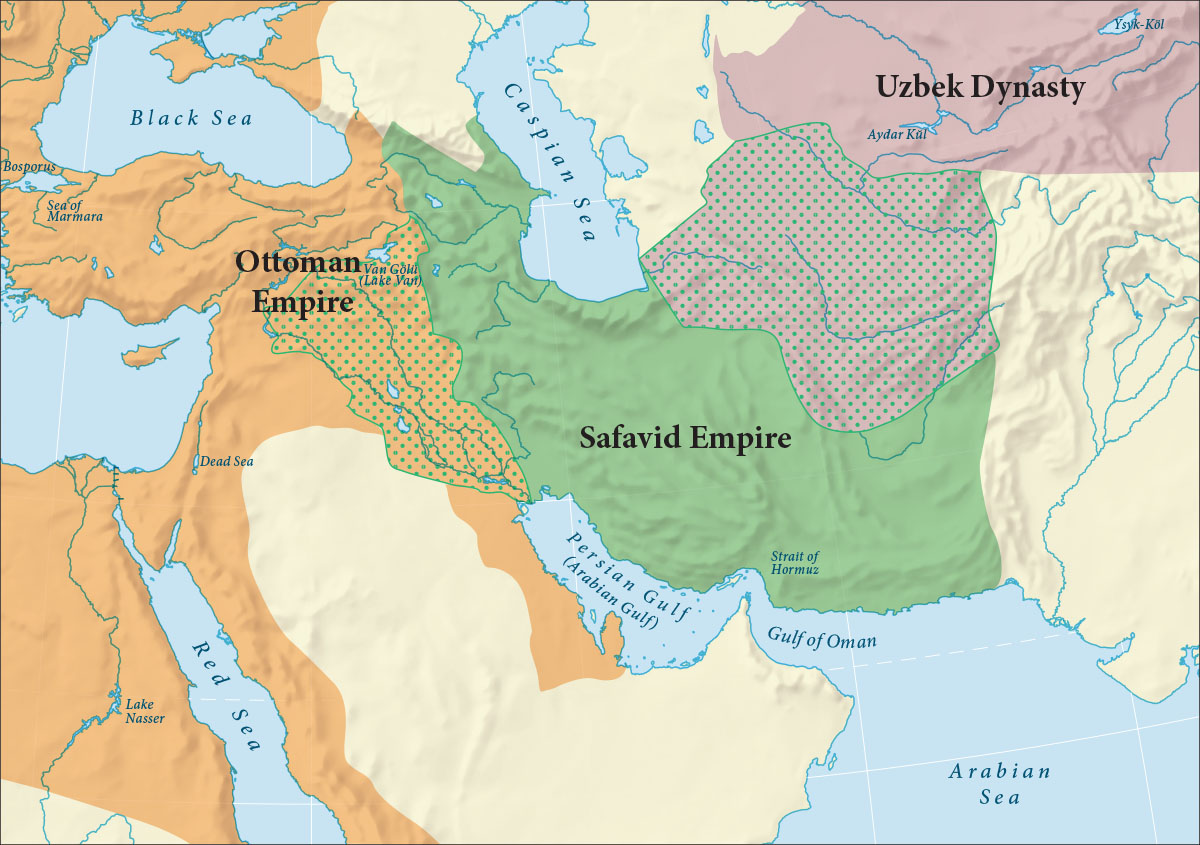
To the east of the lands of the Ottomans, another Islamic empire emerged at the beginning of the sixteenth century. Based in Iran, the Safavid Empire at its height ruled over much of what is now Armenia, Azerbaijan, Bahrain, Georgia, and Iraq, as well as parts of several neighboring countries including Turkey, Turkmenistan, and Uzbekistan (Figure 4.19). Like the Ottomans and Mughals, the Safavids developed a powerful military, ran a strong and well-organized central state, and fostered a climate in which artistic and intellectual culture flourished. The Safavids also introduced Shi‘ism as the state religion at a time when Iran’s population was mostly Sunni, and in doing so they fostered the deep divisions between Shi‘ism and Sunnism that continue to characterize relations between Iran and other Islamic nations today.
英語のヒント
オスマン帝国の領土の東では、16世紀初めにもう一つのイスラーム帝国が現れた。イランを拠点とするサファヴィー朝は、最盛期には現在のアルメニア、アゼルバイジャン、バーレーン、ジョージア、イラクの大部分に加え、トルコ、トルクメニスタン、ウズベキスタンなど複数の隣国の一部を支配した(図4.19)。オスマン帝国やムガル帝国と同じように、サファヴィー朝は強力な軍隊を育て、強大でよく組織された中央国家を運営し、芸術・知的文化が花開く環境をつくった。また、イランの住民の大半がスンナ派であった時期に、シーア派を国教とした。その結果、今日もイランと他のイスラーム諸国の関係を特徴づける、シーア派とスンナ派の深い分裂を生み出した。
The Safavid Empire.サファヴィー朝。
(attribution: Copyright Rice University, OpenStax, under CC BY 4.0 license) · CC BY 4.0
Figure 4.19 This map shows the Safavid Empire (green) at its greatest extent, including disputed territories (dots) where the Safavids found themselves in conflict with the Ottoman Empire (orange) and the Uzbek rulers of the Khanate of Bukhara (purple). (attribution: Copyright Rice University, OpenStax, under CC BY 4.0 license)
図4.19 この地図は、最大版図のサファヴィー朝(緑)を示す。点で表した係争地域では、サファヴィー朝はオスマン帝国(オレンジ)や、ブハラ・ハン国のウズベク人支配者(紫)と対立した。(出典表示:著作権ライス大学、OpenStax、CC BY 4.0ライセンス)
The Rise of the Safavid Empireサファヴィー朝の台頭
The Safavids began not as a political dynasty, but as the hereditary leaders of a Sufi order based in the city of Ardabil, located in today’s northwestern Iran. The order in Ardabil was founded in the thirteenth century by the Sufi master Zahed Gilani, and little is known about its beliefs and practices in its earliest stages. We do know that Zahed appointed his son-in-law and disciple Safi al-Din Ardabili to succeed him, which angered his family and some of his followers.
英語のヒント
サファヴィー家は、政治王朝としてではなく、現在のイラン北西部にある都市アルダビールを拠点とするスーフィー教団の世襲指導者として始まった。アルダビールの教団は、13世紀にスーフィーの師ザーヒド・ギーラーニーが創設したが、初期の信仰や実践についてはほとんどわかっていない。ただし、ザーヒドが娘婿で弟子でもあるサフィー・アッディーン・アルダビーリーを後継者に指名し、それが家族や一部の信徒の怒りを招いたことはわかっている。
Safi al-Din renamed the order after himself—Safaviyya—and made a number of reforms that reshaped it from a local order to a religious movement that sought followers from around Iran and neighboring countries. While Safi al-Din’s origins are lost to history, it is generally believed that he came from a family of Azeri-speaking Kurds, although even this is uncertain. (Azeri is a Turkic language.) The Safavid family later claimed that Safi al-Din was descended from the Prophet through Muhammad’s daughter Fatima and son-in-law Ali ibn Abi Talib. This genealogy was most likely invented by court historians during the sixteenth-century reign of Shah Ismail I. However, several scholars went one step further and extended the family’s history back to the biblical Adam.
英語のヒント
サフィー・アッディーンは、自分の名にちなんで教団をサファヴィー教団と改称し、いくつもの改革を行った。それによって地方的な教団を、イラン各地と近隣諸国に信徒を求める宗教運動へと作り変えた。サフィー・アッディーンの出自は歴史の中で失われているが、一般にはアゼリー語を話すクルド人の家系に生まれたと考えられている。ただし、これすら確かではない。(アゼリー語はテュルク系の言語である。)サファヴィー家は後に、サフィー・アッディーンが、ムハンマドの娘ファーティマと娘婿アリー・イブン・アビー・ターリブを通じて預言者の血を引くと主張した。この系譜は、16世紀のシャー・イスマーイール1世の治世に、宮廷史家が作り上げた可能性がきわめて高い。しかし、数人の学者はさらに一歩進め、一族の歴史を聖書のアダムまでさかのぼらせた。
Initially, like most of Iran’s population, the Safavids were primarily Sunni Muslims. Like that of many Sufi orders, their ideology incorporated elements of both Sunni and Shia doctrines to proclaim a universal message and attract followers from both sects. However, Safi al-Din’s great-grandson Junayd made several changes to the order’s doctrine, adopting specifically Shia ideas. Junayd believed the Safavids should use their popular religious mandate to seek military and political power for themselves, and he found Shia doctrine more appropriate for his vision.
英語のヒント
当初、サファヴィー家はイラン住民の大多数と同様、おもにスンナ派のムスリムであった。多くのスーフィー教団と同じように、その思想は、普遍的な教えを宣言し、両派の信徒を引きつけるため、スンナ派とシーア派双方の教義の要素を取り入れていた。しかし、サフィー・アッディーンの曾孫ジュナイドは、特にシーア派的な考えを採用して、教団の教義をいくつか変更した。ジュナイドは、サファヴィー家が民衆の宗教的な支持を利用して、自らの軍事力と政治権力を追求するべきだと考えた。そして、この構想にはシーア派の教義のほうが適していると判断した。
Junayd’s son Haydar created a solid political and military framework by establishing a Safavid military order known as the Qizilbash, after their distinctive red hats (qizil means “red” in Azeri). Haydar declared a religious war against the Christian residents of the Caucasus, but in order to reach them, he had to pass through the territory of the Shirvanshahs, who were allied with his enemies. Although at first he was able to negotiate safe passage for his army, the Shirvanshahs, already uneasy about Haydar’s growing power, used his eventual attack on one of their cities as an excuse to declare war on the Safavids. Haydar was killed in battle in 1488. His son Ali Mirza took his place, but within a few years his capital at Ardabil was conquered by his enemies. Ali Mirza was also killed, and his infant brother Ismail was sent into exile.
英語のヒント
ジュナイドの息子ハイダルは、サファヴィー家の軍事教団を設け、確固とした政治・軍事の枠組みを築いた。この集団は、特徴的な赤い帽子からキズルバシュと呼ばれた。キズルはアゼリー語で「赤」を意味する。ハイダルはコーカサスのキリスト教徒住民に宗教戦争を宣言したが、そこへ達するには、敵と同盟関係にあったシルヴァン・シャー朝の領土を通る必要があった。初めは交渉によって軍の安全な通過を認めさせた。しかし、すでにハイダルの勢力拡大を不安視していたシルヴァン・シャー朝は、後に彼が自国の都市の一つを攻撃したのを口実に、サファヴィー家に宣戦した。ハイダルは1488年に戦死した。息子アリー・ミールザーが後を継いだが、数年以内に首都アルダビールを敵に征服された。アリー・ミールザーも殺され、幼い弟イスマーイールは亡命させられた。
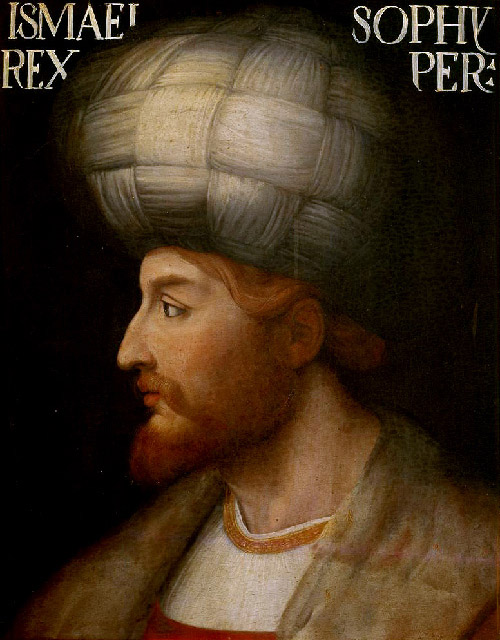
After being sheltered by allies, the twelve-year-old Ismail emerged from exile in 1499 claiming to be the Mahdi or messiah and began rallying the Qizilbash troops who had fought for his father and brother. They embarked on a military campaign, winning victory after victory until, in July 1501, Ismail entered the Shirvanshah capital of Tabriz and declared himself shah, or emperor, of all Iran (Figure 4.20). At the time, he governed only Azerbaijan and part of the Caucasus. By 1511, however, Ismail’s troops had driven the Uzbek people across the Oxus River, establishing the eastern borders of modern Iran. The Safavids also staged incursions into eastern Anatolia; these triggered a conflict with the Ottoman Empire that continued for the length of the Safavids’ reign. Not only had Ismail’s forces occupied the empire’s border cities, but he had begun recruiting for his army among the ethnic Turkish tribes of eastern Anatolia and encouraging the Shia Muslims in Ottoman lands to revolt against their Sunni rulers.
英語のヒント
同盟者たちにかくまれた後、12歳のイスマーイールは1499年に亡命先から姿を現し、自らをマフディー、すなわち救世主と称して、父と兄のために戦ったキズルバシュの部隊を集結し始めた。彼らは軍事遠征に乗り出し、勝利を重ねた。1501年7月、ついにイスマーイールはシルヴァン・シャー朝の首都タブリーズへ入り、自らを全イランのシャー、すなわち皇帝と宣言した(図4.20)。当時、実際に統治していたのはアゼルバイジャンとコーカサスの一部だけだった。しかし1511年までに、彼の軍はウズベク人をオクサス川の向こうへ押し戻し、現代イランの東の国境を定めた。サファヴィー朝はアナトリア東部にも侵攻した。これがオスマン帝国との対立を引き起こし、その対立はサファヴィー朝の全治世にわたって続いた。イスマーイールの軍は帝国の国境都市を占領しただけではなかった。彼はアナトリア東部のトルコ系部族から兵士を募り始め、オスマン領のシーア派ムスリムに、スンナ派支配者への反乱を促していた。
Shah Ismail.シャー・イスマーイール。
(credit: “Portrait of Shah Ismail I of Persia” by Uffizi Gallery/Wikimedia Commons, Public Domain) · Public Domain
Figure 4.20 The Safavid Empire was as ethnically diverse as the Ottoman Empire. In this portrait of Shah Ismail by an Italian painter of the sixteenth century, for example, the shah’s reddish hair, possibly an inheritance from his Greek grandmother, is clearly visible. (credit: “Portrait of Shah Ismail I of Persia” by Uffizi Gallery/Wikimedia Commons, Public Domain)
図4.20 サファヴィー朝は、オスマン帝国と同様に民族的に多様であった。例えば16世紀のイタリア人画家によるこのシャー・イスマーイールの肖像では、ギリシア人の祖母から受け継いだのかもしれない赤みがかった髪が、はっきりと見える。(クレジット:ウフィツィ美術館/Wikimedia Commons「ペルシアのシャー・イスマーイール1世の肖像」、パブリックドメイン)
In response, the Ottoman sultan Bayezid II deported the Shi‘ites of his empire from Anatolia to other regions where they would be unable to heed the Safavid call. As the Safavids continued to push westward into Ottoman territory, Bayezid’s son Selim I responded by invading Iranian Azerbaijan, laying waste to Tabriz in 1514 and attempting to destroy the Qizilbash. The loss of his capital Tabriz to the enemy—and to a Sunni Muslim at that—was a huge blow to Shah Ismail’s standing among his own armies, made worse by the fact that he had declared himself invincible based on his fictionalized semidivine ancestry.
英語のヒント
これに対し、オスマンのスルタン・バヤジト2世は、帝国内のシーア派住民をアナトリアから、サファヴィー朝の呼びかけに応じられない他の地域へ強制移住させた。サファヴィー朝が西へオスマン領への進出を続けると、バヤジトの息子セリム1世はイラン領アゼルバイジャンへ侵攻し、1514年にタブリーズを荒廃させ、キズルバシュを破壊しようとした。首都タブリーズを敵に、しかもスンナ派ムスリムに失ったことは、シャー・イスマーイールの自軍内での地位に大きな打撃となった。架空の半神的な祖先に基づき、自らを無敵と宣言していたことが、その打撃をさらに深めた。
After Ismail’s death in 1524, ten years of internal strife followed as rival Qizilbash factions fought for dominance and the right to be regent to Ismail’s ten-year-old heir Tahmasp. Tahmasp went on to become the longest-reigning Safavid shah. Disappointed by his experience navigating the rivalries within the Qizilbash, he began using enslaved Christians from Circassia and Georgia in the palace administration and civil services instead of members of the Qizilbash. Tahmasp faced several challenges at home and abroad, however. Although he successfully repelled an attempt by the Uzbeks to invade northeastern Iran, they remained a threat to the east, and war with the Ottomans flared up soon afterward when Suleiman’s armies invaded Iran in the mid-1530s. Tahmasp’s desire to fend off the Turkish threat led him to ally himself with a rising European power, the Habsburg Empire.
英語のヒント
1524年にイスマーイールが死去すると、キズルバシュの対立する派閥が、優位と、10歳の後継者タフマースプの摂政となる権利を争い、10年にわたる内紛が続いた。タフマースプはその後、サファヴィー朝で最も長く在位するシャーとなった。キズルバシュ内部の抗争を切り抜ける経験に失望した彼は、宮廷管理や官僚組織において、キズルバシュの代わりに、チェルケシアやジョージア出身の奴隷化されたキリスト教徒を登用し始めた。しかし彼は国内外でいくつもの課題に直面した。ウズベク勢力によるイラン北東部への侵入は撃退できたが、彼らは東の脅威として残った。ほどなく、1530年代半ばにスレイマンの軍がイランへ侵攻し、オスマン帝国との戦争が再燃した。トルコ側の脅威を退けたいという願いから、タフマースプは新興のヨーロッパ勢力、ハプスブルク帝国と同盟を結んだ。
The Habsburg emperor Charles V, concerned by the Ottomans’ progression toward Vienna, approached first Ismail and then Tahmasp about an alliance. By agreement, the Safavids would attack the Ottomans whenever the Ottomans attacked the Habsburgs to divide the Ottoman army between two fronts of battle and thereby weaken it. In 1536, the Ottomans formalized their own alliance with the king of France, an enemy of the Habsburgs, who sent a military adviser to counsel Sultan Suleiman about his war with Iran in 1547.
英語のヒント
オスマン軍のウィーンへの進出を懸念したハプスブルク皇帝カール5世は、まずイスマーイールに、次いでタフマースプに、同盟を打診した。合意により、オスマン帝国がハプスブルク家を攻撃するたびに、サファヴィー朝がオスマン帝国を攻撃することになった。オスマン軍を二つの戦線に分散させ、それによって弱体化させるためである。1536年、オスマン帝国は、ハプスブルク家の敵であるフランス王との独自の同盟を正式なものにした。フランス王は1547年、イランとの戦争についてスルタン・スレイマンに助言する軍事顧問を送った。
Two decades of warfare severely strained the Iranian economy, however, and Tahmasp sought peace with the Ottomans. Under the Peace of Amasya, concluded in 1555, Armenia and Georgia were divided between the two empires; the Ottomans gained control over Iraq and access to the Persian Gulf, while Iran’s control over Azerbaijan was guaranteed. Tahmasp also moved his capital from Tabriz to Qazvin, closer to the Caspian Sea and at less risk of capture or siege by Ottoman forces. The two states finally laid down arms and declared a peace that lasted more than thirty years.
英語のヒント
しかし20年にわたる戦争はイラン経済をひどく圧迫し、タフマースプはオスマン帝国との和平を求めた。1555年に締結されたアマスィヤの和約により、アルメニアとジョージアは両帝国の間で分割された。オスマン帝国はイラクの支配とペルシア湾への進出路を得、イランのアゼルバイジャン支配は保証された。タフマースプは首都もタブリーズからガズヴィーンへ移した。カスピ海により近く、オスマン軍に占領・包囲される危険がより小さい場所だった。両国はついに武器を置き、30年以上続く和平を宣言した。
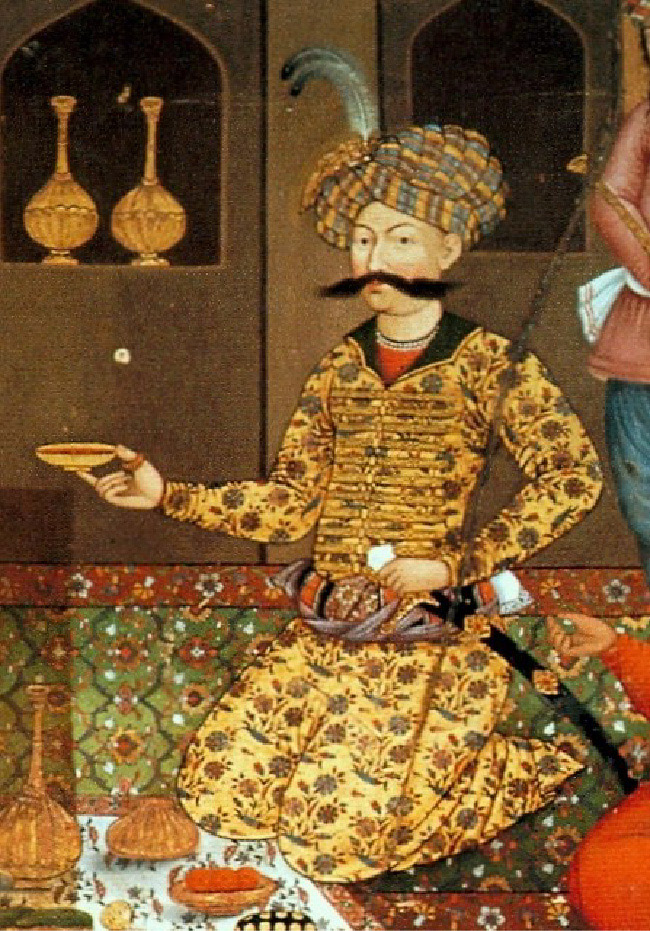
It did not last forever, however. The borders of Iran were secure at the end of Tahmasp’s reign, but his son and grandson were ineffective leaders who failed to keep the Qizilbash rivalries from once again destabilizing the country, which led to yet more incursions by Ottoman and Uzbek forces. Tahmasp’s grandson Abbas I, generally considered the strongest Safavid shah as well as one of the greatest rulers in Iranian history, found himself compelled to take up arms once again (Figure 4.21). During his reign, the Safavid state reached the height of its military, political, and economic power. Abbas I reformed the military and civil service and built a showpiece capital city, Isfahan, which remains one of the masterworks of Persian Islamic art and architecture.
英語のヒント
しかし、その和平は永遠には続かなかった。タフマースプの治世末にイランの国境は安定していたが、その息子と孫は力量に欠け、キズルバシュの抗争が再び国を不安定にするのを防げなかった。それが、オスマン軍とウズベク軍によるさらなる侵入を招いた。タフマースプの孫アッバース1世は、一般にサファヴィー朝で最も強力なシャーであり、イラン史上最も偉大な支配者の一人でもあると考えられるが、再び武器を取らざるを得なくなった(図4.21)。彼の治世に、サファヴィー朝は軍事、政治、経済上の力の頂点に達した。アッバース1世は軍隊と行政組織を改革し、誇示にふさわしい首都イスファハーンを建設した。この都市は今も、ペルシアのイスラーム美術・建築の傑作の一つである。
Shah Abbas I.シャー・アッバース1世。
(credit: “Abbas I of Persia” by Unknown/“TRAJAN 117”/Wikimedia Commons, Public Domain) · Public Domain
Figure 4.21 This detail from a series of seventeenth-century paintings decorating the walls of the Chehel Sotoun Palace in Isfahan, Iran, depicts Shah Abbas I, who ruled over Iran at the height of the Safavid dynasty’s power. (credit: “Abbas I of Persia” by Unknown/“TRAJAN 117”/Wikimedia Commons, Public Domain)
図4.21 イランのイスファハーンにあるチェヘル・ソトゥーン宮殿の壁を飾る17世紀の絵画群の一部。サファヴィー朝の最盛期にイランを統治したシャー・アッバース1世を描いている。(クレジット:作者不明/「TRAJAN 117」/Wikimedia Commons「ペルシアのアッバース1世」、パブリックドメイン)
By the time the seventeen-year-old Abbas was crowned shah in 1588, Iran was in chaos. After waging war against the Uzbeks, Abbas realized that fighting the Ottomans with the country in upheaval would be nearly impossible. As a result, he signed a peace treaty in 1590 that gave nearly half his territory, including the former capital of Tabriz, to the Ottomans. Abbas then returned to the issue his grandfather had taken up: taming the Qizilbash, whose disputes had plunged Iran into civil conflict that twice nearly brought the country to ruin. His grandfather had acquired over thirty thousand enslaved people employed as civil servants and palace administrators; turning to the Caucasus region again, Abbas decided to also create an enslaved soldier corps like the Ottoman Janissaries.
英語のヒント
17歳のアッバースが1588年にシャーとして戴冠したとき、イランは混乱状態にあった。ウズベク勢力と戦った後、彼は国内が激しく動揺する状況でオスマン帝国と戦うのはほぼ不可能だと悟った。その結果、1590年に和平条約を結び、旧首都タブリーズを含む領土のほぼ半分をオスマン帝国に譲った。アッバースはその後、祖父が取り組んだ課題、キズルバシュの統制に立ち戻った。彼らの争いはイランを内紛に陥れ、二度にわたって国を破滅寸前に追いやっていた。祖父は3万人以上の奴隷化された人々を獲得し、行政官や宮廷管理者として用いていた。アッバースは再びコーカサスに目を向け、オスマンのイェニチェリのような奴隷兵の軍団も作ることにした。
With his new army behind him, Abbas undertook to gain back the territories lost to the Uzbeks and Ottomans. The Safavid armies quickly reconquered Khorasan from the Uzbeks and moved on to Azerbaijan. The Ottomans sued for peace in 1612, relinquishing the Caucasus to the Iranians. An attempt to recapture the territory in 1618 resulted in a devastating loss for the Ottomans.
英語のヒント
新しい軍を後ろ盾に、アッバースはウズベク勢力とオスマン帝国に失った領土の奪還に取り組んだ。サファヴィー軍はすぐにウズベク勢力からホラーサーンを再征服し、アゼルバイジャンへ進んだ。オスマン帝国は1612年に和平を請い、コーカサスをイラン側へ明け渡した。1618年の領土奪回の試みは、オスマン帝国の壊滅的な敗北に終わった。
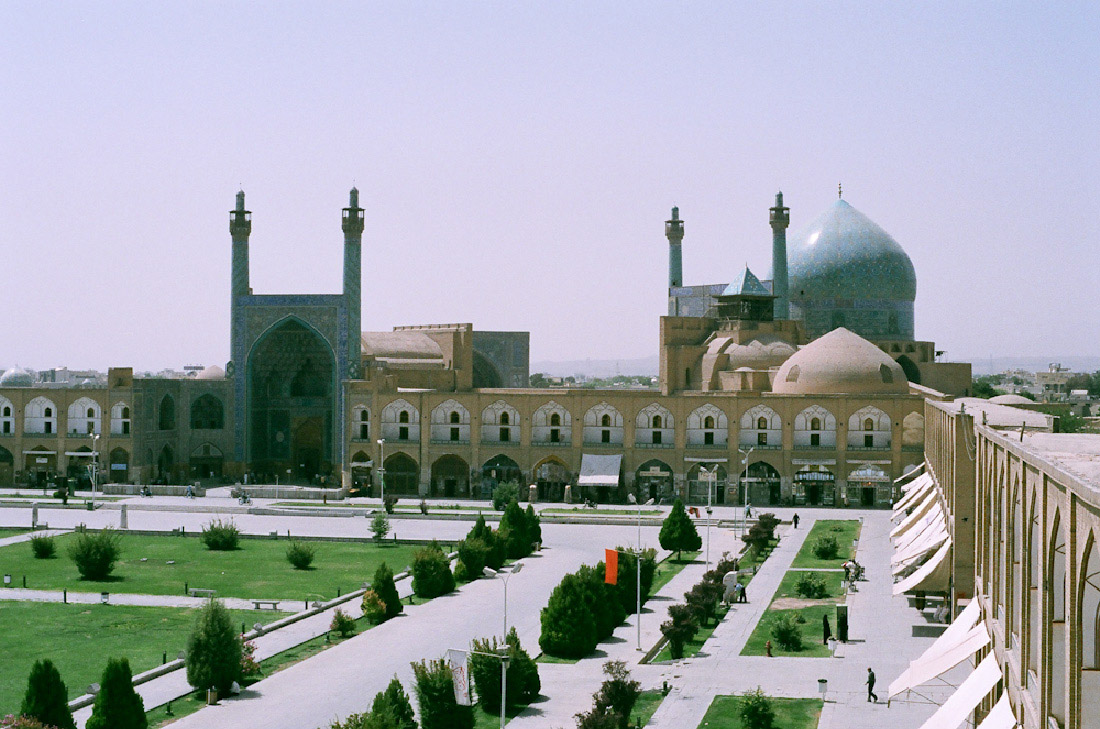
Despite near-constant war, during this time Iran reached new cultural and economic heights. In 1598, Abbas moved his capital from Qazvin to Isfahan in the central Iranian plateau, far from the constantly shifting borders with the Ottomans and Uzbeks and closer to the Persian Gulf and the newly arrived traders of the British and Dutch East India Companies. The city was built as a showpiece, with administrative buildings and public markets opening on the enormous Naqsh-e Jahan (“Exemplar of the world”) Square (Figure 4.22).
英語のヒント
ほぼ絶え間なく戦争が続いていたにもかかわらず、この時期のイランは文化と経済の新たな高みに達した。1598年、アッバースは首都をガズヴィーンから、イラン中央高原のイスファハーンへ移した。そこは、絶えず変動するオスマン帝国やウズベク勢力との国境から遠く、ペルシア湾や、新たに到来したイギリス・オランダの東インド会社の商人に近かった。都市は国力を誇示するために建設され、行政庁舎と公共市場が、巨大なナクシェ・ジャハーン広場、すなわち「世界の模範」に面していた(図4.22)。
Naqsh-e Jahan Square.ナクシェ・ジャハーン広場。
(credit: “Naqsh-e Jahan Square” by Bijan Tehrani/Wikimedia Commons, CC BY 2.0) · CC BY 2.0
Figure 4.22 The Shah Mosque, built by Abbas I, is located on the south side of Naqsh-e Jahan Square in the center of Isfahan. The square, a UNESCO World Heritage site, still serves as a gathering place today. (credit: “Naqsh-e Jahan Square” by Bijan Tehrani/Wikimedia Commons, CC BY 2.0)
図4.22 アッバース1世が建てたシャー・モスクは、イスファハーン中心部のナクシェ・ジャハーン広場の南側に位置する。ユネスコ世界遺産であるこの広場は、今も人々の集まる場所として使われている。(クレジット:ビージャン・テヘラーニー/Wikimedia Commons「ナクシェ・ジャハーン広場」、CC BY 2.0)
The city center was unique. All levels of society could mix there, from members of the royal court whose pavilion overlooked the square, to the Shi‘ite clergy whose mosque was at the square’s southern end, to foreign dignitaries, members of the military, merchants, and commoners. A soup kitchen distributed free food to the needy, and occasionally the square was cleared for polo games, public ceremonies, and festivals. To populate his new capital, Abbas ordered several different populations to settle in it, including Armenians, Jewish people, Circassians, and other Caucasian peoples, many of whom had been displaced during his war against the Ottomans in their homelands. The cathedral Abbas ordered built for the Armenian Christians still serves that community in Isfahan today.
英語のヒント
都市の中心部は独特だった。広場を見下ろす館の宮廷人から、南端のモスクのシーア派宗教家、外国の要人、軍人、商人、庶民まで、あらゆる社会層がそこで交わることができた。炊き出し所は困窮者に無料の食事を配り、ときにはポロの試合、公の儀礼、祭りのために広場を空けた。アッバースは新首都に住民を集めるため、アルメニア人、ユダヤ人、チェルケス人、その他のコーカサス諸民族を含む、複数の異なる集団に定住を命じた。その多くは、自分たちの故郷でのアッバースとオスマン帝国の戦争によって、住まいを追われた人々だった。アッバースがアルメニア人キリスト教徒のために建設を命じた大聖堂は、今日もイスファハーンのその共同体に使われている。
After Abbas’s death, the Safavid state met another internal threat, this time from the Georgian kingdom of Kakheti. After Abbas had ordered the mass deportation of Georgians to central Iran, he sent Oghuz Turks (Turcomen) to settle the area; the local population that remained refused to allow them to do so, however, and staged a military rebellion. Although the Safavids were eventually able to reestablish authority, they never achieved their earlier level of control.
英語のヒント
アッバースの死後、サファヴィー朝はまた新たな国内の脅威に遭遇した。今回はジョージアのカヘティ王国からだった。アッバースは、多数のジョージア人をイラン中部へ強制移住させた後、その地域にオグズ・トルコ人、すなわちトゥルクメンを入植させていた。しかし残った地元住民はそれを認めず、武装反乱を起こした。サファヴィー朝は最終的に権威を回復したが、以前と同じ水準の支配を取り戻すことはなかった。
Iran also continued to face threats from outside. In the early eighteenth century under the reign of Tsar Peter the Great, Russia began to encroach on the northern shores of the Caspian Sea and to compete for influence in the Caucasus. The armies of Peter the Great took the Caucasus in the Russo-Persian war of 1722–1723, while the Ottomans reoccupied northwestern Iran. The entry of European ships to the Indian Ocean trade cut off much of Iran’s direct access to Africa and South Asia. Over the course of the 1730s, Nader Afshar, one of the Safavid vassals, established himself as a strong military ruler. He was able to reverse many of Iran’s territorial losses to the Russians and Ottomans; however, he had no interest in sharing power. In 1736, Nader deposed the infant Abbas III and crowned himself shah, bringing the Safavid Empire to an end and establishing the short-lived Afsharid dynasty.
英語のヒント
イランは外からの脅威にも直面し続けた。18世紀初め、ツァーリ・ピョートル大帝の治世に、ロシアはカスピ海北岸へ侵出し、コーカサスでの影響力を争い始めた。1722〜1723年のロシア・ペルシア戦争でピョートルの軍がコーカサスを奪う一方、オスマン帝国はイラン北西部を再占領した。ヨーロッパ船のインド洋交易への参入は、イランがアフリカと南アジアへ直接接触する道の多くを断ち切った。1730年代の間に、サファヴィー朝の家臣の一人、ナーディル・アフシャールが強力な軍事支配者として台頭した。彼はロシアとオスマン帝国に奪われた領土の多くを取り戻したが、権力を分かち合う気はなかった。1736年、ナーディルは幼いアッバース3世を廃位して自らシャーに即位し、サファヴィー朝を終わらせ、短命のアフシャール朝を樹立した。