第4章イスラーム世界The Islamic World
Islamic Trade Networksイスラームの交易網
Islam had arisen in a region defined by trade and travel. Many prominent early Muslims, including Muhammad himself, were traders or members of trading families. And thanks to the institutional continuity specified under sharia, Islamic religious law, trade soon became closely regulated, the taxes levied on imported goods were systematized, and markets were inspected and administered in the same way throughout the Islamic world. By the sixteenth century, the flags of Islam flew from Spain and Morocco in the west to the gates of China in the east. However, these territories were not unified under one political leader. Instead, what brought them together into one collective ummah despite their political, ethnic, and linguistic differences was a network based on trade and travel, which carried Islam farther than its armies ever could.
英語のヒント
イスラーム教は、交易と移動を特徴とする地域で生まれた。ムハンマド自身を含む初期の有力なムスリムの多くは、商人、または商家の一員であった。そして、イスラームの宗教法であるシャリーアが定める制度の継続性のおかげで、交易はまもなく厳密に規制され、輸入品に課される税は体系化され、イスラーム世界全域で市場は同じ方法で検査・管理されるようになった。16世紀までに、イスラームの旗は西のスペインとモロッコから東の中国の門口までひるがえっていた。しかし、これらの領域は、一人の政治指導者の下に統一されてはいなかった。政治、民族、言語の違いを越えて、一つの共通のウンマへとそれらを結びつけたのは、交易と移動を基盤とするネットワークであった。このネットワークは、軍隊が到達しえたよりも遠くへイスラーム教を運んだ。
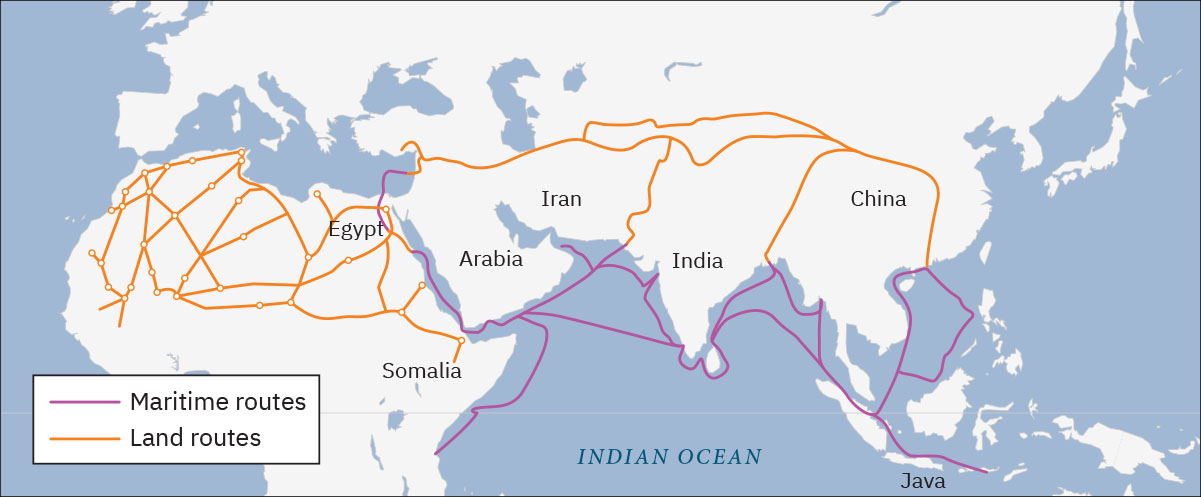
Trade routes crisscrossed the larger Islamic world, connecting far-flung regions. By sea, Muslim merchants traded from India and Southeast Asia (especially the country of Indonesia) to East Africa, Egypt, and the Arabian Peninsula. Muslims in central Asia and China traded overland with merchants in Iran, East and North Africa, and the Balkans. Caravans crossing the Sahara extended trade into West Africa. Along these trade routes traveled merchants, missionaries, scholars, and many others. Their movement facilitated not only the expansion of Islam but also the spread of languages like Arabic and Persian, which became the languages of commerce, scholarship, and literary expression. It also allowed for the flow and exchange of new technologies, ideas, precious metals, writing and numerical systems, and a great variety of agricultural products once available only in small corners of the world (Figure 4.6).
英語のヒント
交易路は、遠く離れた地域を結びながら、広いイスラーム世界を縦横に走っていた。海では、ムスリム商人がインドや東南アジア、特にインドネシアから、東アフリカ、エジプト、アラビア半島まで交易した。中央アジアや中国のムスリムは、イラン、東・北アフリカ、バルカン半島の商人と陸路で取引した。サハラを横断する隊商は、西アフリカまで交易を拡大した。こうした交易路を商人、宣教師、学者、その他多くの人々が行き来した。その移動は、イスラーム教の拡大だけでなく、商業、学問、文学表現の言語となったアラビア語やペルシア語などの普及も促進した。また新しい技術、思想、貴金属、文字・数字の体系、そしてかつては世界のごく限られた場所でしか得られなかった多種多様な農産物の移動と交換も可能にした(図4.6)。
Muslim Trade Routes.ムスリムの交易路。
(credit: modification of work “World map blank shorelines” by Maciej Jaros/Wikimedia Commons, Public Domain) · Public Domain
Figure 4.6 Muslim merchants conducted trade over a vast territory, dominating land routes in central Asia, Iran, and the Ottoman Empire. Sailors from India, Yemen, and Iran participated in a thriving Indian Ocean trade. (credit: modification of work “World map blank shorelines” by Maciej Jaros/Wikimedia Commons, Public Domain)
図4.6 ムスリム商人は広大な地域で交易を行い、中央アジア、イラン、オスマン帝国の陸上ルートで優位を占めた。インド、イエメン、イランの船乗りたちは、活発なインド洋交易に参加した。(クレジット:マチェイ・ヤロス/Wikimedia Commons「海岸線のみの世界白地図」を改変、パブリックドメイン)
Dhimmi and other non-Muslim populations were frequently encouraged to participate in trade because of their specializations and contacts in distant areas. Armenian Christians, for example, were heavily involved in the silk trade, and their presence was welcomed in major trade centers. Jewish communities were linked by a trade network they had established between Europe, North Africa, the Middle East, and South Asia. Being exempt from the financial provisions of sharia, which forbade charging interest on loans, Jewish people rose to prominence as moneylenders and bankers, usually serving both Muslim and Christian clients. (Jewish law forbade them to loan money at interest to other Jewish people.) And Muslims traveled and traded widely, guided by Muhammad’s often-cited hadith, or saying, “Seek knowledge, even unto China.”
英語のヒント
ズィンミーをはじめとする非ムスリムの人々は、専門的な技能や遠隔地とのつながりを持つため、交易への参加をしばしば奨励された。例えばアルメニア人キリスト教徒は絹交易に深く関わっており、主要な交易都市で歓迎された。ユダヤ人共同体は、自らがヨーロッパ、北アフリカ、中東、南アジアの間に築いた交易網で結ばれていた。ユダヤ人は、融資への利子を禁じるシャリーアの金融規定の適用を受けなかったため、金貸しや銀行家として有力になり、通常はムスリムとキリスト教徒の両方を顧客とした。(ユダヤ法は、他のユダヤ人に利子付きで金を貸すことを禁じていた。)またムスリムは、よく引用されるムハンマドのハディース、すなわち言葉である「知識を求めよ、たとえ中国まで行ってでも」に導かれ、広く旅をし、交易した。
Islamic communities sprang up along the Silk Roads, the land routes between the Middle East and China, and in other places where Muslim merchants traveled, such as East Africa, West Africa, and India. When merchants established themselves in non-Muslim communities, they often intermarried with the local population, and the children resulting from these marriages were usually raised as Muslims. Members of the existing merchant community often converted to Islam to forge closer relationships with Muslim traders. Once a Muslim community had been established, religious scholars often followed to found mosques, schools, and charitable organizations. In this way, Islam spread throughout Asia, Africa, and the Balkans.
英語のヒント
イスラーム共同体は、中東と中国を結ぶ陸上ルートであるシルクロード沿いに次々に生まれた。東アフリカ、西アフリカ、インドなど、ムスリム商人が訪れる他の場所でも同様だった。商人が非ムスリムの共同体に定着すると、現地の人々と通婚することが多く、そこから生まれた子どもは通常ムスリムとして育てられた。既存の商人共同体の人々も、ムスリム商人とより密接な関係を築くため、しばしばイスラーム教に改宗した。ムスリム共同体がひとたび成立すると、宗教学者がその後に続き、モスク、学校、慈善団体を設立することが多かった。このようにして、イスラーム教はアジア、アフリカ、バルカン半島へと広がった。
When merchants arrived in a new city, they usually selected a prayer leader, often a member of the ulama who also served as a judge. A Muslim market inspector vouched for the accuracy of weights and measures, verified business contracts between Muslim merchants, certified the sizes of loads being shipped out, and ensured that businesses adhered to sharia. The consistency with which Muslim merchants and traders operated was a key advantage of contracting with them to transport goods long distances. Another benefit was the widespread use of letters of credit, which were recognized in other Islamic lands and allowed merchants to travel without carrying large amounts of gold.
英語のヒント
商人は新しい都市に到着すると、通常、礼拝を指導する人を選んだ。それは裁判官を兼ねるウラマーの一人であることが多かった。ムスリムの市場監督官は、度量衡の正確さを保証し、ムスリム商人同士の商取引契約を確認し、出荷される荷物の量を認証し、商売がシャリーアに従っていることを確かめた。ムスリム商人の活動における一貫性は、彼らと長距離の物資輸送契約を結ぶ際の大きな利点であった。もう一つの利点は、信用状が広く利用されていたことである。信用状は他のイスラーム地域でも通用し、商人は大量の金を持ち運ばずに旅をすることができた。
Trade earned profits for participating states in two ways. The first was by bringing in direct income from importing and selling goods, including spices, ivory, salt, silks, and other luxury items, as well as enslaved people. Given their central location at the crossroads of Europe, Africa, and Asia, Muslim merchants frequently acted as intermediaries who purchased goods from one area and sold them to merchants from another. The second financial benefit of trade was the receipt of taxes that states levied on goods being transported through their territory.
英語のヒント
交易は、参加する国家に二つの方法で利益をもたらした。第一は、香辛料、象牙、塩、絹、その他の奢侈品、さらに奴隷化された人々を輸入・販売することによる直接の収入である。ヨーロッパ、アフリカ、アジアの交差点という中心的な位置にいたため、ムスリム商人はしばしば仲介者となり、ある地域の商品を購入し、別の地域の商人に売った。交易による第二の財政的利益は、領内を輸送される物資に国家が課した税を受け取ることであった。
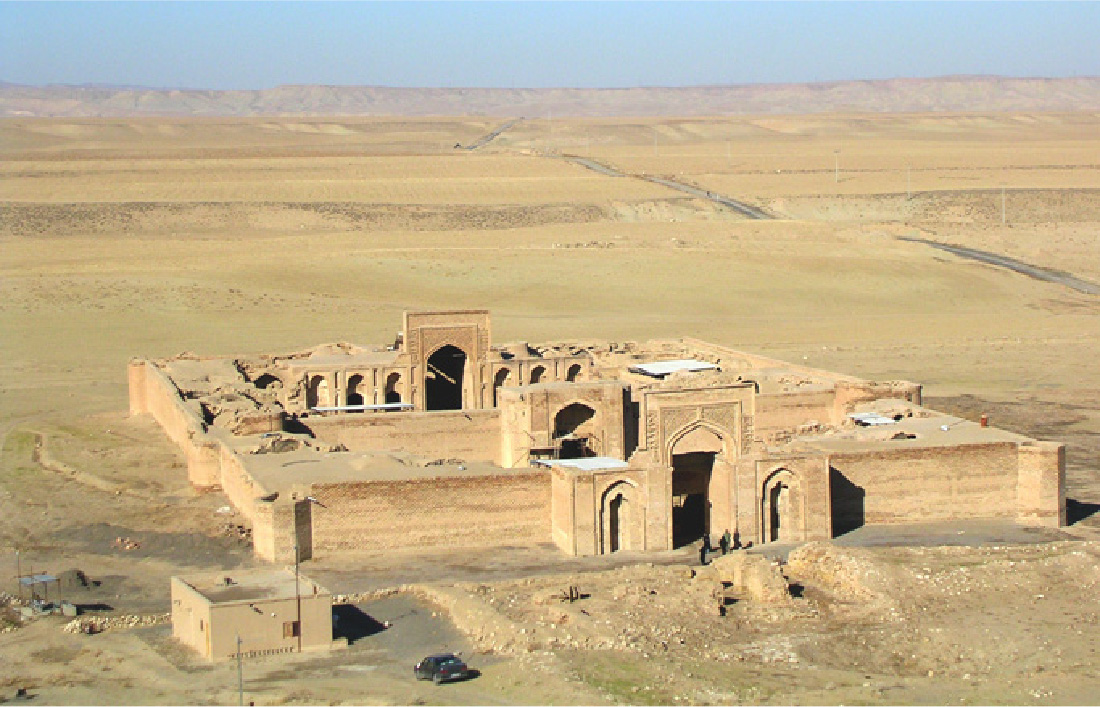
Given the profit potential of the goods traded, robbers and bandits were a constant threat. Governments thus sponsored inns called caravansaries at regular intervals on major trade routes, usually one day’s journey apart, where traders could rest and store their goods securely (Figure 4.7). Wealthy individuals might also build caravansaries, providing shelter for travelers as an act of piety. Weak states that could not guarantee security for traders and travelers often found trade routes shifting out of their territory if they became too risky.
英語のヒント
交易品が利益を生む可能性を持つ以上、強盗や山賊は絶え間ない脅威であった。そのため政府は、主要な交易路に一定間隔で、通常は1日分の旅程ごとに、キャラヴァンサライと呼ばれる宿泊施設を支援した。商人はそこで休み、商品を安全に保管することができた(図4.7)。裕福な個人も、信仰に基づく善行として旅人に宿を提供するため、キャラヴァンサライを建てることがあった。商人や旅行者の安全を保証できない弱い国家では、領内が危険になりすぎると、交易路が領外へ移ってしまうことが多かった。
A Medieval Caravansary.中世の隊商宿。
(credit: modification of work “Ribat-i Sharaf (or Robat-e Sharaf)” by “Rezamosh”/Wikimedia Commons, Public Domain) · Public Domain
Figure 4.7 This caravansary in Iran was built in the twelfth century and served as a fortified place for travelers to rest. Caravansaries were usually located far from urban centers in areas that were (and still are) quite remote. (credit: modification of work “Ribat-i Sharaf (or Robat-e Sharaf)” by “Rezamosh”/Wikimedia Commons, Public Domain)
図4.7 イランのこの隊商宿は12世紀に建てられ、旅行者が休息する要塞化された場所として使われた。隊商宿は通常、都市中心部から遠く離れた、当時も現在もかなり辺鄙な地域に位置している。(クレジット:「Rezamosh」/Wikimedia Commons「リバート・イ・シャラフ」を改変、パブリックドメイン)
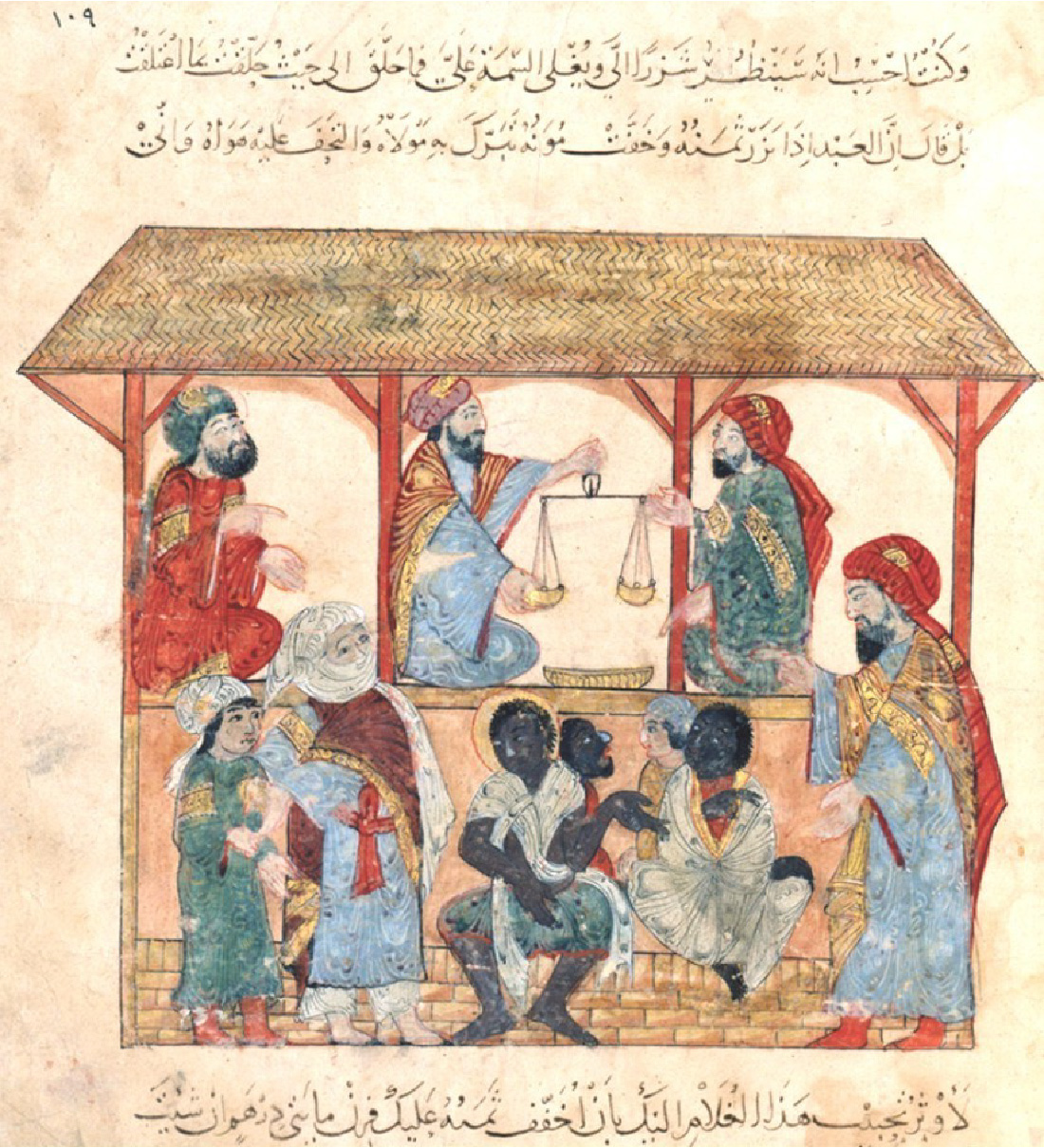
In addition to the shipment of material goods like agricultural products, precious metals, and spices, the transportation of enslaved people was also facilitated along Islamic trading routes. Since sharia forbids Muslims from enslaving other Muslims, it became common practice to enslave non-Muslims from regions within reach of Islamic slavers. Common sources included North and sub-Saharan Africa, central and eastern Europe, India, and Indonesia. Enslaved people being moved around the Islamic world were traded for a great variety of goods like cloth, pottery, glassware, and precious metals. Muslim traders also acted as intermediaries, passing enslaved people from Africa to merchants in central Asia and Europe, and they were the primary traders engaged in transporting enslaved people across the Sahara Desert (Figure 4.8).
英語のヒント
農産物、貴金属、香辛料といった物資の運搬に加え、イスラームの交易路は奴隷化された人々の輸送も容易にした。シャリーアはムスリムが他のムスリムを奴隷にすることを禁じているため、イスラームの奴隷商人が手を伸ばせる地域の非ムスリムを奴隷化するのが一般的になった。おもな供給地域には、北アフリカとサハラ以南のアフリカ、中央・東ヨーロッパ、インド、インドネシアがあった。イスラーム世界の各地へ運ばれる奴隷化された人々は、布、陶器、ガラス製品、貴金属など、さまざまな商品と交換された。ムスリム商人は仲介者にもなり、アフリカの奴隷化された人々を中央アジアやヨーロッパの商人に引き渡した。また、サハラ砂漠を横断して奴隷化された人々を輸送する中心的な商人でもあった(図4.8)。
A Slave Market.奴隷市場。
(credit: “Slaves Zadib Yemen 13th century” by Bibliothèque Nationale de France/Wikimedia Commons, Public Domain) · Public Domain
Figure 4.8 This page from the Maqamat al-Hariri, a thirteenth-century manuscript illustrated by Yahya ibn Mahmud al-Wasiti, depicts the Zabid slave market in Yemen. (credit: “Slaves Zadib Yemen 13th century” by Bibliothèque Nationale de France/Wikimedia Commons, Public Domain)
図4.8 ヤフヤー・イブン・マフムード・アル=ワースィティーが挿絵を描いた13世紀の写本『ハリーリーのマカーマート』のこのページは、イエメンのザビードの奴隷市場を描いている。(クレジット:フランス国立図書館/Wikimedia Commons「イエメン、ザビードの奴隷、13世紀」、パブリックドメイン)
Within the Islamic world, women outnumbered men among the enslaved two to one. Men were primarily employed in domestic work or service within the estates of the rich, laboring on irrigation projects and in mines or taking care of animals. Most women were kept in wealthy households, where they became domestic servants such as nursemaids or were kept for sexual purposes. Although enslaved people did have legal recourse if mistreated or abused, it was difficult for them to access the courts without the aid of a sympathetic free person. There was no social stigma to prevent a slave owner from recognizing his children with an enslaved woman; the children were born free, and the mother gained her freedom upon the death of her owner.
英語のヒント
イスラーム世界では、奴隷化された人々の女性と男性の比率は2対1であった。男性はおもに家事や富裕層の屋敷での奉仕に従事し、灌漑工事や鉱山で働いたり、家畜の世話をしたりした。女性の多くは富裕な家庭に置かれ、乳母などの家内使用人となるか、性的な目的のために所有された。奴隷化された人々には、ひどい扱いや虐待を受けた際に法的な救済を求める手段が確かにあったが、同情的な自由人の助けなしに裁判所を利用するのは難しかった。奴隷所有者が奴隷女性との間の子どもを認知することを妨げるような社会的な汚名はなかった。子どもは自由人として生まれ、母親は所有者が死亡した時点で自由を得た。
Muhammad encouraged the freeing of enslaved people, and many Muslims did so. Enslaved men and women were also allowed to purchase their own freedom. This, together with the fact that the children of enslaved women and their owners were born free, meant that it was difficult to maintain a permanently enslaved population in the Islamic world or to make the enslaved population self-reproducing. Those who sought to use enslaved workers thus frequently needed to replenish their labor force by making new purchases, ensuring that the trade in enslaved people remained important in the Islamic world until the nineteenth century.
英語のヒント
ムハンマドは奴隷化された人々の解放を奨励し、多くのムスリムがそれを実行した。奴隷化された男女は、自分の自由を買い取ることも認められていた。このことに加え、奴隷女性とその所有者の間の子どもが自由人として生まれたため、イスラーム世界では、永続的な奴隷人口を維持したり、奴隷人口が再生産されるようにしたりするのが難しかった。したがって、奴隷労働者を利用しようとする者は、新たな購入によって労働力を補充する必要がしばしばあった。そのため、奴隷化された人々の交易は、19世紀までイスラーム世界で重要であり続けた。