第4章イスラーム世界The Islamic World
Safavid Government and Cultureサファヴィー朝の統治と文化
During the Safavid period, Iran was ethnically quite diverse. Safi al-Din is believed to have come from a family of Kurds who spoke Azeri. As the Safavid order developed, its members intermarried with other Turkic groups such as the Turcomen, Lar, and Bakhtiyari, and with Georgian, Armenian, and Pontic Greek Christians within their lands and bordering territories. Through his mother, Shah Ismail I was descended from the Komnenos dynasty that once ruled the Byzantine Empire. He used Persian as the language of government and composed poetry in Azeri, contributing to its development as a literary language. The Qizilbash were largely Turcoman, another Turkic group with its own language. Various groups of Persian-speaking peoples lived in the Iranian plateau and were usually described as “Tajik.”
英語のヒント
サファヴィー朝時代のイランは、民族的にきわめて多様であった。サフィー・アッディーンは、アゼリー語を話すクルド人の家系の出身と考えられる。サファヴィー教団が発展するにつれ、その成員は、トゥルクメン、ラル、バフティヤーリーなど他のテュルク系集団や、領内・隣接地域のジョージア人、アルメニア人、ポントス・ギリシア人のキリスト教徒と通婚した。シャー・イスマーイール1世は、母方を通じて、かつてビザンツ帝国を統治したコムネノス家の血を引いていた。彼は行政の言語としてペルシア語を用い、アゼリー語で詩を作り、アゼリー語の文学言語としての発展に寄与した。キズルバシュは、おもに独自の言語を持つ別のテュルク系集団、トゥルクメンからなっていた。イラン高原には、ペルシア語を話すさまざまな集団が暮らし、通常「タジク」と呼ばれていた。
The Safavid shahs were wary of groups that sought to exert too much power over them and the government. One of the reasons the Qizilbash were eventually replaced as palace administrators, bureaucrats, and military elites is that they had occasionally used their collective power to render some of the weaker shahs mere figureheads. However, beneath the shah and the powerful elites, the Safavid hierarchy was unique for its time in being largely based on merit; worth and talent, not status or birth, were the keys to upward mobility. Even those in hereditary positions had to prove themselves capable or be replaced. This system brought the brightest and most talented into government service while preventing the development of an entrenched and unchecked aristocracy.
英語のヒント
サファヴィー朝のシャーたちは、自分たちや政府に過度の権力を及ぼそうとする集団を警戒した。キズルバシュが最終的に宮廷管理者、官僚、軍事エリートの地位から交代させられた理由の一つは、集団としての力を使い、弱いシャーの一部を単なる名目的な君主にしていたことだった。しかし、シャーと有力エリートの下では、サファヴィー朝の階層秩序は、おもに能力に基づく点で、当時としては独特だった。社会的な上昇の鍵は、身分や生まれではなく、実力と才能だった。世襲の地位にある者も、自らの能力を示さなければ交代させられた。この制度は、最も聡明で才能ある人々を行政に取り込みながら、地位を固定し、抑制の利かない貴族層の発達を防いだ。
Shi‘ism’s rise created a new religious hierarchy in Iran. Given the sect’s government sponsorship, the Shia ulama were often able to act as intermediaries between the people and the government. They formed an early alliance with merchants, for instance, establishing and administering vaqfs to protect the merchants’ property and assets. Through this alliance many members of the ulama became landowners themselves, creating a religious aristocracy that gave them a level of political independence. When the Safavid state weakened in its later years, the ulama were able to step in and use their newly acquired wealth to benefit their communities. This strengthening of direct ties between the ulama and the people, and the separation of the religious establishment from the state, is believed to be one of the reasons Shi‘ism long outlasted the Safavid era.
英語のヒント
シーア派の台頭は、イランに新しい宗教上の階層を生み出した。国家の支援を受けたシーア派のウラマーは、しばしば民衆と政府の仲介者として行動できた。例えば、早くから商人と提携し、商人の財産や資産を守るため、ワクフを設立・管理した。この提携を通じて、多くのウラマー自身が地主となり、一定の政治的独立性を持つ宗教的貴族層が形成された。サファヴィー朝の末期に国家が弱まると、ウラマーは乗り出して、新たに得た富を共同体のために使うことができた。こうしてウラマーと民衆の直接の結びつきが強まり、宗教組織が国家から分離したことが、シーア派がサファヴィー朝時代をはるかに越えて存続した理由の一つと考えられている。
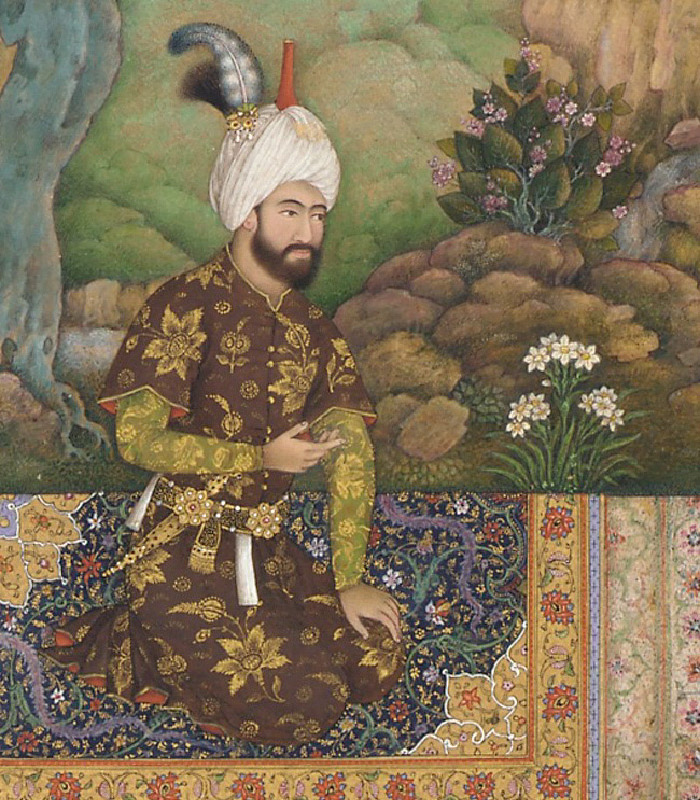
The stability of the Safavid system allowed art and culture to flourish; the Safavid era is considered one of the high points of Perso-Islamic culture. Two distinct schools of painting developed: the Turkmen school in western Iran and the Timurid school based in Herat (in today’s Afghanistan). Shah Tahmasp supported both schools at a royal painting workshop where artistic masters were invited to work with luxury materials such as gold leaf and ground lapis lazuli (Figure 4.25).
英語のヒント
サファヴィー朝の制度の安定は、美術と文化の繁栄を可能にした。サファヴィー朝時代は、ペルシア・イスラーム文化の最盛期の一つとされる。二つの異なる絵画流派が発達した。イラン西部のトゥルクメン派と、現在のアフガニスタンにあるヘラートを拠点とするティムール派である。シャー・タフマースプは宮廷絵画工房で両派を支援し、名匠を招いて、金箔や粉末のラピスラズリなどの高価な材料を使って制作させた(図4.25)。
Shah Tahmasp.シャー・タフマースプ。
(credit: “Shah Tahmasp in the mountains” by Freer Gallery of Art/Wikimedia Commons, Public Domain) · Public Domain
Figure 4.25 This detail of a sixteenth-century miniature by the Persian artist Farrukh Beg shows Shah Tahmasp, who was a great patron of the arts. The patterns on Tahmasp’s robe have been embellished with gold. (credit: “Shah Tahmasp in the mountains” by Freer Gallery of Art/Wikimedia Commons, Public Domain)
図4.25 ペルシア人画家ファッルフ・ベグの16世紀の細密画の一部。芸術の偉大な庇護者だったシャー・タフマースプを描く。タフマースプの長衣の模様は金で飾られている。(クレジット:フリーア美術館/Wikimedia Commons「山中のシャー・タフマースプ」、パブリックドメイン)
One of the most famous achievements of Tahmasp’s workshop was an illustrated version of the Shahnameh, the national epic of Iran written by the poet Ferdowsi in the tenth century. Safavid miniature painting remains one of the most prized examples of visual art. Iranian ceramics became highly valued for export because of their remarkable similarity in style and quality to treasured Chinese porcelain, with even more intricately painted decorations. Some Safavid ceramic artists went so far as to place a fake Chinese workshop stamp on the back of their products to increase their value.
英語のヒント
タフマースプの工房の最も有名な成果の一つは、『シャー・ナーメ』の挿絵入り写本であった。これは10世紀に詩人フィルドゥスィーが著した、イランの民族叙事詩である。サファヴィー朝の細密画は、今なお最も珍重される視覚芸術の一つである。イランの陶磁器も、宝物とされた中国磁器に様式・品質が驚くほど似ており、さらに複雑な絵付けを施していたため、輸出品として高く評価された。価値を高めようと、製品の裏に中国の工房の偽の印を付けるまでした陶芸家もいた。
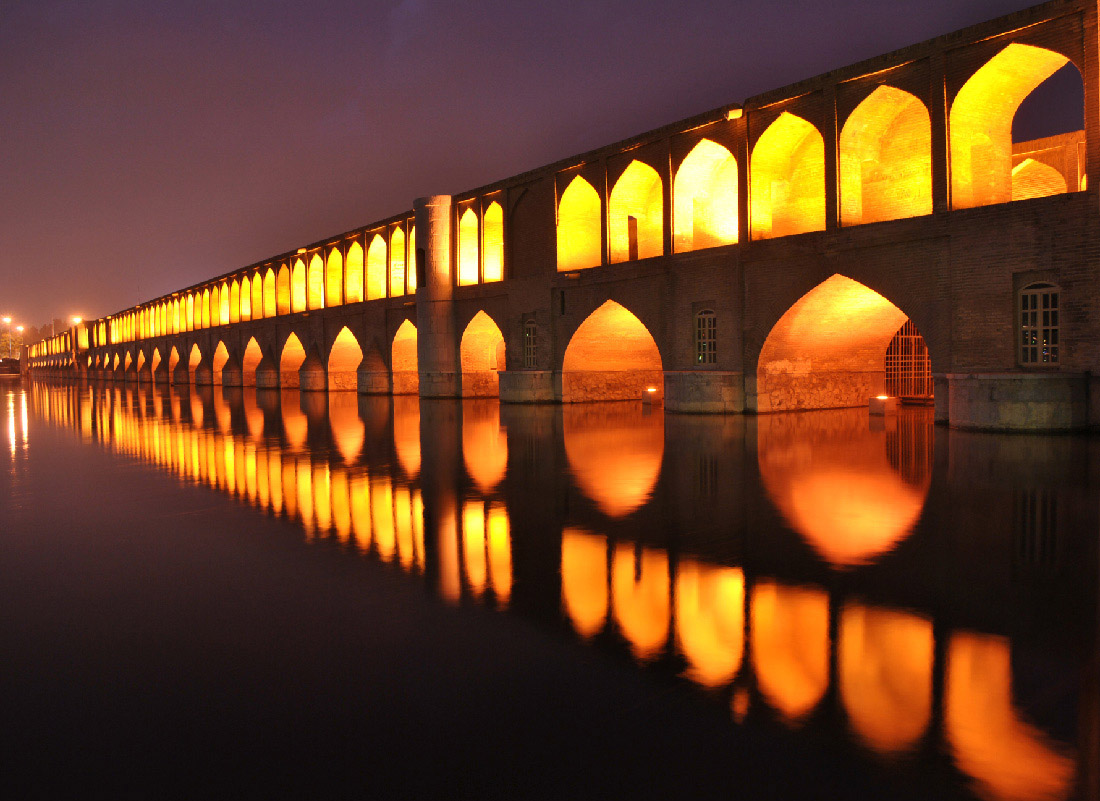
As Tahmasp’s royal studio was to painting, Abbas’s capital at Isfahan was to architecture. While Naqsh-e Jahan Square provided a focus, the city also featured a broad tree-lined avenue called the Chahar Bagh, stretching over four kilometers from the square to a royal country estate (Figure 4.28). This street was flanked by palaces and public gardens that featured fruit trees and fountains with running water. The city was designed as a treat for the senses, employing artistic motifs in tilework and calligraphy, broad sweeping arches and domes that mimicked the sky, the sounds of running water and wind blowing through leaves, and the scents of flowering shrubs and trees carried on the breeze. Later Safavid shahs continued to expand Isfahan, adding buildings, avenues, and bridges and commissioning structures in other cities based on the style cultivated in the capital. Many of these are now symbols of Iranian nationhood.
英語のヒント
タフマースプの宮廷工房が絵画に対して果たした役割を、アッバースの首都イスファハーンは建築に対して果たした。ナクシェ・ジャハーン広場が中心をなす一方、都市にはチャハール・バーグという並木の大通りもあった。広場から王の田園の離宮まで4キロメートル以上伸びていた(図4.28)。通りの両側には宮殿や公共庭園があり、庭園には果樹や水の流れる噴水があった。この都市は感覚を楽しませるように設計されていた。タイル装飾や書道の芸術的な文様、空を模した大きく広がるアーチやドーム、流れる水や葉を吹き抜ける風の音、そよ風に運ばれる花咲く低木や木々の香りが使われたのである。後のサファヴィー朝のシャーもイスファハーンを拡張し続け、建物、大通り、橋を加え、首都で育まれた様式に基づく建造物を他都市でも注文した。その多くは、今日、イランという国家の象徴になっている。
The Si-o-Se-Pol Bridge in Isfahan.イスファハーンのスィー・オ・セ・ポル橋。
(credit: “Si-o-se Pol (‘33 Bridges’ or ‘the Bridge of 33 Arches’), also called the ‘Allah-Verdi Khan Bridge’” by Reza Haji-pour/Wikimedia Commons, CC BY 3.0) · CC BY 3.0
Figure 4.28 The Si-o-Se-Pol (“thirty-three arches”) Bridge in Isfahan, built between 1599 and 1602, carries the broad avenue called Chahar Bagh across the Zayanderud River. (credit: “Si-o-se Pol (‘33 Bridges’ or ‘the Bridge of 33 Arches’), also called the ‘Allah-Verdi Khan Bridge’” by Reza Haji-pour/Wikimedia Commons, CC BY 3.0)
図4.28 イスファハーンのスィー・オ・セ・ポル(「33のアーチ」)橋は、1599〜1602年に建設され、チャハール・バーグ大通りをザーヤンデルード川の向こう岸へ渡す。(クレジット:レザー・ハージープール/Wikimedia Commons「スィー・オ・セ・ポル〔33の橋、または33のアーチの橋〕、別名アッラーフ・ヴェルディー・ハーン橋」、CC BY 3.0)
As in the Ottoman Empire, wealthy Safavid women raised their public stature by becoming patrons of the arts and endowing public buildings. Royal and elite women often funded the construction or maintenance of caravansaries, demonstrating the value of trade to both the state and individual wealth. Safavid art and artistic production reflected Iran’s location at the center of global trade routes, incorporating elements and styles from countries with which Iran conducted trade. The production of silk was one of the most important industries in Iran. Persian carpets of silk and wool were in high demand in Europe and other parts of the Islamic world. The Ardabil carpet, still one of the largest Persian carpets in existence, was made during the Safavid period. It is 34-1/2 by 17-1/2 feet and is on view at London’s Victoria and Albert Museum.
英語のヒント
オスマン帝国と同様、サファヴィー朝の裕福な女性たちは、芸術の庇護者になり、公共建築に寄進することで、公の地位を高めた。王族やエリートの女性は、しばしば隊商宿の建設や維持に資金を提供した。交易が国家と個人の富の双方にとって重要であることを示している。サファヴィー朝の美術や工芸品の制作は、イランが世界の交易路の中心にあることを反映し、交易相手国の要素や様式を取り込んだ。絹の生産はイランの最重要産業の一つだった。絹や羊毛のペルシア絨毯は、ヨーロッパやイスラーム世界の他の地域で需要が高かった。今も現存する最大級のペルシア絨毯の一つであるアルダビール絨毯は、サファヴィー朝時代に作られた。大きさは34と2分の1フィート×17と2分の1フィートで、ロンドンのヴィクトリア・アンド・アルバート博物館で展示されている。