第4章イスラーム世界The Islamic World
Establishing Shi‘ism as the State Religionシーア派の国教化
The Safavids declared Shia Islam the state religion of Iran in the early 1500s, and it remains so to this day, encompassing about 10 percent of the worldwide Muslim population. The Shia movement originated with a dispute over Muhammad’s successor after his death in 632. One faction, which became known as the Sunnis, supported the candidacy of Abu Bakr al-Sadiq, Muhammad’s father-in-law. The other faction wished the leadership to remain within Muhammad’s biological family and backed Ali ibn Abi Talib, Muhammad’s cousin and son-in-law, whom they believed the Prophet had chosen as his successor. This group became known as the Shia.
英語のヒント
サファヴィー朝は1500年代初めにシーア派イスラームをイランの国教と宣言し、それは今日まで続いている。シーア派は世界のムスリム人口のおよそ10%を占める。この運動は、632年のムハンマドの死後、その後継者をめぐる争いから生まれた。スンナ派として知られるようになった一派は、ムハンマドの義父アブー・バクル・アッ=サーディクの擁立を支持した。他の一派は、指導者をムハンマドの血縁の家族内にとどめることを望み、従弟で娘婿のアリー・イブン・アビー・ターリブを支持した。預言者が彼を後継者に選んだと信じたのである。この集団がシーア派として知られるようになった。
The Shia believe Ali, who finally succeeded Uthman to become the leader of the Muslim community in 656, was the first legitimate imam, the title they give their spiritual leader rather than “caliph.” They view the line of Muhammad that descends through Ali and his wife Fatima, Muhammad’s daughter, as the only source of definitive religious guidance. About 95 percent of Shia also believe Ali was the first of twelve infallible leaders chosen by God, so this sect is often called the Twelvers. Twelvers hold that the twelfth and final imam, Muhammad al-Mahdi, went into “mystical hiding” in the ninth century and will return, along with Jesus, to defeat evil on earth and herald the Day of Judgment. The remaining Shia are either Zaydis (also known as Fivers) or Ismailis (also called Seveners), who disagree with Twelvers over the identities of the fifth and seventh imams, respectively. The Zaydi sect was established by Zayd, the great-grandson of Ali.
英語のヒント
シーア派は、656年にようやくウスマーンの後を継いでムスリム共同体の指導者となったアリーを、最初の正統なイマームだったと信じる。イマームは、シーア派が自らの精神的指導者に「カリフ」の代わりに与える称号である。彼らは、アリーと、ムハンマドの娘でアリーの妻であるファーティマを通じて続くムハンマドの血統を、確実な宗教的指導の唯一の源とみなす。シーア派の約95%はさらに、アリーが、神に選ばれた誤りのない12人の指導者の最初の一人だったと信じるため、この宗派はしばしば十二イマーム派と呼ばれる。十二イマーム派は、最後の第12代イマーム、ムハンマド・アル=マフディーが9世紀に「神秘的な隠れ」の状態に入り、イエスとともに再来して地上の悪を打ち破り、審判の日の到来を告げると考える。残るシーア派は、ザイド派(五イマーム派ともいう)かイスマーイール派(七イマーム派ともいう)であり、それぞれ第5代、第7代イマームが誰かについて、十二イマーム派とは見解を異にする。ザイド派は、アリーの曾孫ザイドによって創設された。
Sunnis respect Ali and all the Twelve Imams, but they do not believe the Twelve alone were divinely chosen to lead the Muslim community. In their view of Islam, any pious man who followed the example of Muhammad could lead the Muslim community.
英語のヒント
スンナ派はアリーと12人のイマーム全員を尊敬するが、この12人だけがムスリム共同体を導くために神から選ばれたとは考えない。スンナ派のイスラーム観では、ムハンマドの模範に従う敬虔な男性であれば、誰でもムスリム共同体を率いることができる。
Shi‘ism was not officially tolerated by the Sunni caliphs of the Umayyad and Abbasid Empires because of its perceived challenge to their rule. For this reason, most Shia movements developed far outside the control of these caliphates, in places like Morocco, Yemen, Iran, and central Asia. After the Mongol conquest of Baghdad in 1258, the Sunni caliphate became a weak figurehead position that held only symbolic authority. During the period of Mongol rule over Iran and the Caucasus, the distinction between Shia and Sunni became less important than it had been. When Ismail crowned himself Shah in 1501, most of Iran’s population was Sunni. When he declared Twelver Shi‘ism to be the state religion of Iran, he hoped to unify his Iranian subjects by having them adopt a form of Islam that gave them a unique identity and distinguished them from their military and political enemies the Ottomans and the Uzbeks, who were both Sunni.
英語のヒント
ウマイヤ朝とアッバース朝のスンナ派カリフは、シーア派を自らの統治への挑戦とみなし、公的には容認しなかった。そのため、シーア派運動の大半は、モロッコ、イエメン、イラン、中央アジアなど、これらのカリフ国の支配が及ばない遠方で発達した。1258年のモンゴル軍によるバグダード征服の後、スンナ派のカリフ職は、象徴的な権威しか持たない弱い名目的地位となった。モンゴルがイランとコーカサスを支配していた時代には、シーア派とスンナ派の区別は、それまでほど重要ではなくなった。1501年にイスマーイールがシャーに即位したとき、イラン住民の大半はスンナ派であった。彼が十二イマーム派をイランの国教と宣言したのは、イランの臣民に、独自の帰属意識を与える形のイスラームを採用させて統合したいと望んだからであった。同時に、それによって、いずれもスンナ派である軍事・政治上の敵、オスマン帝国とウズベク勢力から区別しようとした。
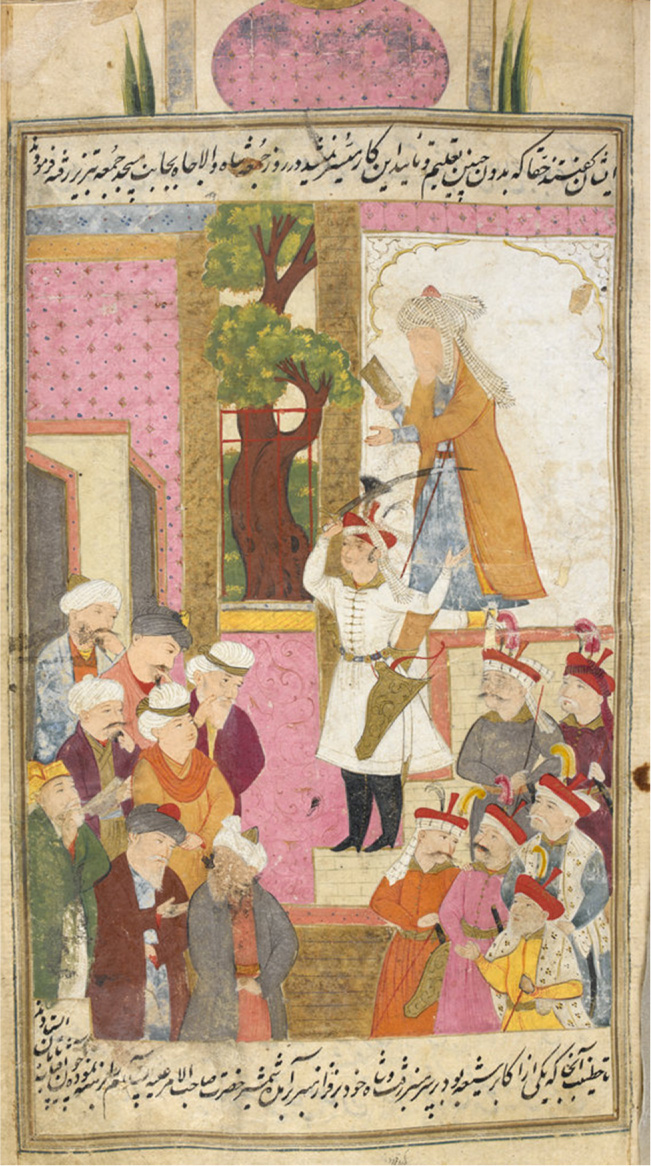
Historians generally agree that the Safavids’ efforts to convert Muslims in their empire to Shi‘ism utilized coercion and force. Shah Ismail, who saw himself as infallible and semidivine, believed his strong religious convictions had won him the Iranian throne, and he used his political and military authority to impose his religious ideology on the country (Figure 4.23). He ordered all Iran’s Sunni Muslims to become Shi‘ites. Sunni clerics and theologians were given the choice of conversion or exile. Sunnis who resisted conversion but remained in Iran faced death. To spread the new beliefs and win converts, Ismail brought Shia scholars to Iran from Lebanon and Syria. He used state funds to construct schools where Shia beliefs were taught and to build shrines to Ali and members of his family. Ismail also invited foreign Shi‘ites living in places where they were persecuted by the Sunni majority to move to Iran, promising them land and protection.
英語のヒント
サファヴィー朝が帝国内のムスリムをシーア派に改宗させる際、強制と武力を用いたという点で、歴史家はおおむね一致している。自らを無謬で半ば神的な存在と考えたシャー・イスマーイールは、強い宗教的確信によってイランの王位を得たと信じ、政治・軍事上の権威を用いて、自分の宗教思想を国全体に押し付けた(図4.23)。彼はイランの全スンナ派ムスリムに、シーア派になるよう命じた。スンナ派の宗教家や神学者に与えられた選択肢は、改宗か追放であった。改宗を拒んでイランに残ったスンナ派には、死が待っていた。新しい信仰を広め、改宗者を得るため、イスマーイールはレバノンとシリアからシーア派学者をイランへ招いた。また国費を使い、シーア派の信仰を教える学校や、アリーとその家族をまつる霊廟を建てた。スンナ派の多数派から迫害されている外国のシーア派にも、土地と保護を約束し、イランへの移住を呼びかけた。
Shi‘ism as the State Religion.国教としてのシーア派。
(credit: “Shah Isma'il, History of Shah Isma'il, by Mu'in Musavvir, Isfahan, Iran” by Muin Musavvir/British Library/Wikimedia Commons, Public Domain) · Public Domain
Figure 4.23 In this image from a Persian history of his reign written about 1650, the Safavid ruler Shah Ismail (dressed in white) stands on the steps of a mosque prior to his coronation, having the sermon read in the name of the Twelve Imams and effectively declaring Shi‘ism to be the state religion of Iran in 1501. (credit: “Shah Isma'il, History of Shah Isma'il, by Mu'in Musavvir, Isfahan, Iran” by Muin Musavvir/British Library/Wikimedia Commons, Public Domain)
図4.23 1650年ごろに書かれたペルシア語の治世史に載るこの図では、サファヴィー朝の支配者シャー・イスマーイール(白い衣服)が、戴冠前にモスクの階段に立っている。彼は十二イマームの名で説教を読ませることで、1501年、シーア派を事実上イランの国教と宣言した。(クレジット:ムイーン・ムサッヴィル/大英図書館/Wikimedia Commons「シャー・イスマーイール、ムイーン・ムサッヴィルによる『シャー・イスマーイール史』、イラン、イスファハーン」、パブリックドメイン)
The conversion efforts of the Safavids have left long legacies in the Islamic world. Though the majority of Muslims in Azerbaijan and Iran considered themselves Shia by the time the Safavid era ended in 1736, Nader Shah attempted to restore Sunnism as the dominant sect. But there was little public enthusiasm, and after his death most who had claimed to adopt Sunnism during his reign quietly reverted to Shi‘ism. At the same time, however, the Safavids’ conversion policy brought tensions between Sunni and Shia to a level not seen since Muhammad’s death. The hostility between the sects that continues today is usually traced to the Safavid era and the dynasty’s military rivalry with the Ottomans, especially after the sultan acquired the Sunni title of caliph in 1517.
英語のヒント
サファヴィー朝による改宗の取り組みは、イスラーム世界に長く続く遺産を残した。サファヴィー朝時代が1736年に終わるまでに、アゼルバイジャンとイランのムスリムの大多数は自らをシーア派と考えるようになっていたが、ナーディル・シャーはスンナ派を優勢な宗派に戻そうとした。しかし民衆の熱意は乏しく、彼の死後、その治世にスンナ派を受け入れたと称していた人々の大半は、静かにシーア派へ戻った。同時に、サファヴィー朝の改宗政策は、スンナ派とシーア派の緊張を、ムハンマドの死以来見られなかった水準に引き上げた。今日も続く宗派間の敵対は、通常、サファヴィー朝時代と、オスマン帝国との軍事的競争にさかのぼるとされる。特に、1517年にオスマンのスルタンがスンナ派のカリフの称号を獲得した後の対立である。
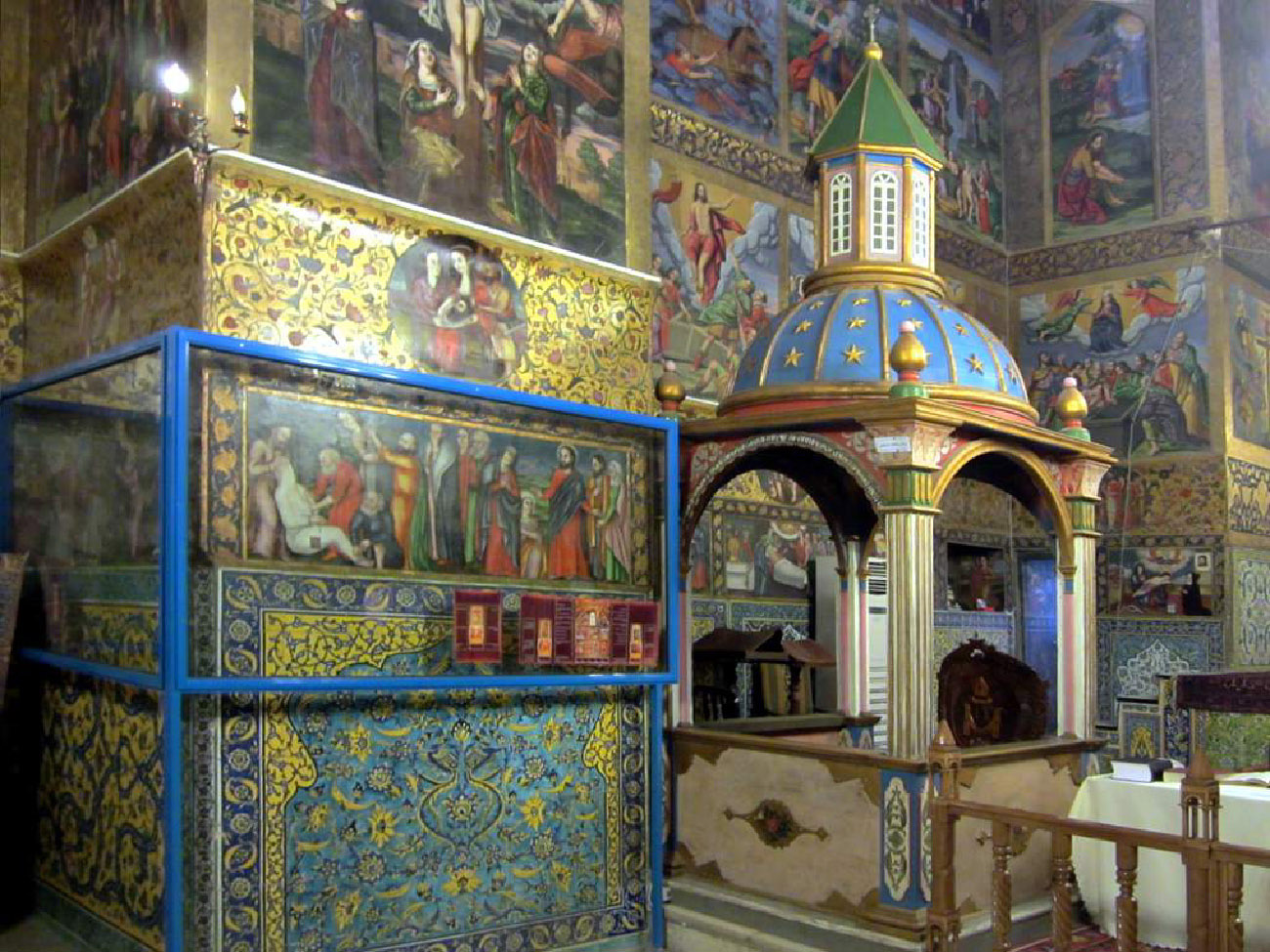
The Safavids were generally more tolerant of non-Muslim subjects than they were of the Sunni. Nevertheless, Safavid rulers were aggressive toward the Armenians, Georgians, and other Christians in the Caucasus region, whom they considered potentially rebellious. They sought to control these populations by enslaving or deporting their members, and nobles were often requested to convert to Shi‘ism. Christians elsewhere in the Safavid realm, however, were given considerable freedom to build churches and honor their own customs and beliefs. Abbas I was particularly lenient toward the Armenian Christian population of Isfahan, due to their participation in the lucrative manufacture and export of silk. Spain and the Vatican sent several embassies to Iran hoping to enlist it as an ally against the Ottomans. The pope also hoped Abbas would allow the construction of a cathedral in his new capital city of Isfahan, but on their arrival his emissaries found three Roman Catholic churches already there (Figure 4.24).
英語のヒント
サファヴィー朝は、概してスンナ派よりも非ムスリムの臣民に寛容だった。それでも、反乱を起こす恐れがあると考えた、コーカサス地域のアルメニア人、ジョージア人、その他のキリスト教徒には攻撃的であった。こうした集団の人々を奴隷化したり強制移住させたりして統制しようとし、貴族にはしばしばシーア派への改宗を求めた。しかし、サファヴィー朝の他の地域のキリスト教徒には、教会を建て、独自の慣習と信仰を守る相当の自由が与えられた。アッバース1世は、イスファハーンのアルメニア人キリスト教徒が利益の大きい絹の生産と輸出に関わっていたため、特に寛大に扱った。スペインとヴァティカンは、イランを対オスマン同盟国に引き入れようと、何度か使節を送った。教皇は、アッバースが新首都イスファハーンで大聖堂の建設を認めることも期待したが、到着した使節たちは、すでにローマ・カトリックの教会が三つあることを知った(図4.24)。
Holy Savior Cathedral in Isfahan.イスファハーンの聖救世主大聖堂。
(credit: “Armenian Frescoes” by David Stanley/Flickr, CC BY 2.0) · CC BY 2.0
Figure 4.24 The interior of the Armenian Christian Holy Savior Cathedral in Isfahan, built in 1606, incorporates both Christian imagery, such as scenes from the life of Christ, and Islamic-style decorative tilework. (credit: “Armenian Frescoes” by David Stanley/Flickr, CC BY 2.0)
図4.24 1606年に建設されたイスファハーンのアルメニア人キリスト教徒の聖救世主大聖堂では、キリストの生涯の場面などのキリスト教図像と、イスラーム様式の装飾タイルの両方が内装に取り入れられている。(クレジット:デイヴィッド・スタンリー/Flickr「アルメニアのフレスコ画」、CC BY 2.0)