第15章サハラ以南のアフリカの国家と社会States and Societies in Sub-Saharan Africa
The Almoravidsムラービト朝
As the Fatimid Caliphate tried to wrest control of the Maghreb back from the Zirid family, the center of power in the region shifted away from the coast and toward the Atlas Mountain range in Morocco. This part of West Africa was occupied by the Sanhaja, Islamized Africans subdivided into distinct ethnic tribes including the Djuddala and the Lamtuna. It was among these groups that the Islamic jurist Ibn Yasin settled in 1039 at the instigation of Yahya ibn Ibrahim, who sought to reform the tribes to the “true” Islamic religion (that is, Sunni Islam as he saw it). Ibn Yasin worked for over a decade to impose on the Djuddala the Malikite interpretation of Sunnism, which was based on a literal reading of the Quran and the sunna (the deeds and sayings of the prophet Muhammad). Anyone who fell short of Ibn Yasin’s strict demands for discipline and the observation of religious duties was severely punished.
英語のヒント
ファーティマ朝が、ズィーリー家からマグリブの支配を取り戻そうとする間、地域の力の中心は、沿岸から、モロッコのアトラス山脈方面へ移った。この西アフリカの地域には、ジュッダラやラムトゥーナなどの集団に分かれた、イスラーム化したアフリカ人、サンハージャが住んでいた。1039年、イスラーム法学者イブン・ヤースィーンが定住したのは、これらの人々の間だった。ヤフヤー・イブン・イブラーヒームの働きかけによるものだった。イブラーヒームは、諸集団を、自分が「真の」イスラームと考える、スンナ派の教えへ改革しようとしていた。イブン・ヤースィーンは、10年以上かけ、クルアーンとスンナ、すなわち預言者ムハンマドの言行を文字どおりに読む、マーリク派のスンナ派解釈を、ジュッダラへ課そうとした。規律と宗教的義務の実行についての厳しい要求に、少しでも達しない者は、厳罰を受けた。
After more than a decade among the Djuddala, during which time he alienated several leading members of the tribe, Ibn Yasin himself was expelled. While in exile, he received a steady stream of followers from both the Lamtuna and Djuddala Sanhaja, forming a group he soon came to call the Almoravids. Under Ibn Yasin’s direction the Almoravids became zealous reformers committed to imposing his version of Islam on the people of the Maghreb. In 1052, Ibn Yasin and the Almoravids embarked on a years-long campaign to defeat the other tribes of the region, assembling an impressive army in the process.
英語のヒント
ジュッダラの中で10年以上過ごす間に、イブン・ヤースィーンは、何人かの有力者の反感を買い、ついに追放された。追放先には、ラムトゥーナとジュッダラの両方のサンハージャから、信奉者が絶えず集まった。まもなく彼がムラービトゥーンと呼ぶようになる、集団が生まれた。彼の指導のもと、ムラービトの人々は、自分たちのイスラーム解釈を、マグリブの人々に課すことに専心する、熱心な改革者となった。1052年、地域のほかの諸集団を倒すため、何年にも及ぶ軍事行動を開始し、その過程で、強力な軍を集めた。
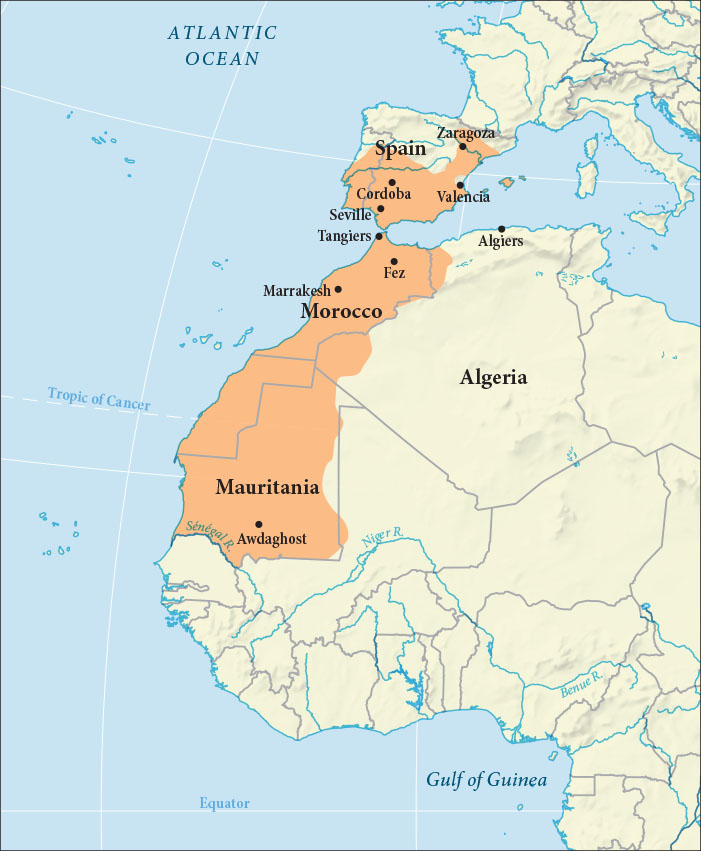
By 1054, the Almoravids had captured the trans-Saharan trading route between Sijilmasa and Awdaghost. After the death of Ibn Yasin in battle in 1059, his followers continued their northward advance all the way to Fez (in modern-day Morocco), which they captured in 1069. In 1070 they established their capital at Marrakesh. After tightening their grip on Morocco, the Almoravids launched an invasion of Umayyad Spain, conquering the Islamic states of Al-Andalus to create the Almoravid Empire. From 1085, the Almoravid Empire, ruled by the Sanhaja, encompassed all the territory from Awdaghost in the southern Sahara to Zaragoza on the Ebro River in Spain (Figure 15.19). Maliki legal doctrine dominated interpretations of Islam, and study of the Quran and the prophetic traditions contained in the sunna were largely abandoned. Unlike the Fatimids of Egypt, the Almoravids were intolerant of any other faith, including mystic Islamic Sufism and sects of Sunni Islam.
英語のヒント
1054年までに、ムラービト勢力は、シジルマサとアウダゴストを結ぶ、サハラ縦断交易路を押さえた。1059年、イブン・ヤースィーンが戦死した後も、信奉者は北上を続け、現在のモロッコのフェスに達し、1069年に占領した。1070年には、都マラケシュを築いた。モロッコ支配を固めた後、ウマイヤ朝のスペインに侵攻し、アル=アンダルスのイスラーム諸国を征服して、ムラービト帝国を作った。1085年からは、サンハージャの統治下で、南サハラのアウダゴストから、スペインのエブロ川沿いのサラゴサまで、すべての領域を含む帝国となった(図15.19)。イスラーム解釈では、マーリク派の法学説が優勢となり、クルアーンと、スンナに含まれる預言者の伝承の研究は、大部分が放棄された。エジプトのファーティマ朝と異なり、ムラービト朝は、イスラーム神秘主義のスーフィズムや、ほかのスンナ派宗派を含め、別の信仰に不寛容だった。
The Almoravid Empire.ムラービト帝国
(attribution: Copyright Rice University, OpenStax, under CC BY 4.0 license) · CC BY 4.0
Figure 15.19 The Almoravid Empire was founded in the early eleventh century. At its height around the end of the century, it stretched from Zaragoza in the north to the oasis town of Awdaghost in Mauretania to the south. (attribution: Copyright Rice University, OpenStax, under CC BY 4.0 license)
図15.19 11世紀初めに成立したムラービト帝国は、世紀末頃の最盛期には、北のサラゴサから、南のモーリタニアのオアシス都市アウダゴストまで広がった。(出典:Rice University/OpenStax、CC BY 4.0)
The Almohadsムワッヒド朝
The Almoravids did not remain in power for long. Ibn Tumart, a member of the Masmuda (an Amazigh tribe) from the Atlas Mountains, launched a countermovement that rejected the legalistic formality of the Almoravids. Through his studies at mosques and madrasas across the Muslim world, Ibn Tumart had developed a broader outlook than Ibn Yasin, and Ibn Tumart’s cosmopolitan approach challenged Ibn Yasin’s scriptural literalism. A reformer, he sought a return to what he believed was the original, uncorrupted Islamic faith and rejected all of the schools of Islamic law because he considered their pronouncements to be heretical interpretations of the teachings of the prophet Muhammad. Ibn Tumart’s followers adopted the name Almohads, meaning “those of the oneness,” a reference to their belief in the transcendental unity of God. Despite the more cosmopolitan outlook of his movement, Ibn Tumart was no less strict than Ibn Yasin in insisting upon what he considered to be the appropriate way to practice Islam. He once pulled his sister off the horse she was riding because she was not wearing a veil. He was also a frequent visitor to Marrakesh, where he routinely mocked Almoravid government officials and ridiculed their beliefs.
英語のヒント
ムラービト朝の支配は、長くは続かなかった。アトラス山脈出身で、アマジグのマスムーダに属するイブン・トゥーマルトが、法学説の形式を重んじるムラービト朝に対抗する運動を始めた。ムスリム世界各地のモスクやマドラサで学び、イブン・ヤースィーンより広い視野を得ていた。その国際的な見方は、聖典を文字どおりに読む姿勢に、異議を唱えるものだった。改革者として、自分が本来の、堕落していないイスラームと考える信仰への回帰を求めた。イスラーム法のすべての学派を、その見解は預言者の教えの異端的解釈だとして拒んだ。信奉者は、神の超越的な唯一性を信じる立場から、「唯一性を唱える者たち」を意味する、ムワッヒドゥーンという名を採用した。視野がより広くても、正しいイスラームの実践だと考える方法を要求する厳しさは、イブン・ヤースィーンに劣らなかった。姉妹がヴェールを着けずに馬に乗っているのを見て、引きずり下ろしたことさえあった。マラケシュもたびたび訪れ、ムラービト朝の官吏をいつもあざけり、その信仰を嘲笑した。
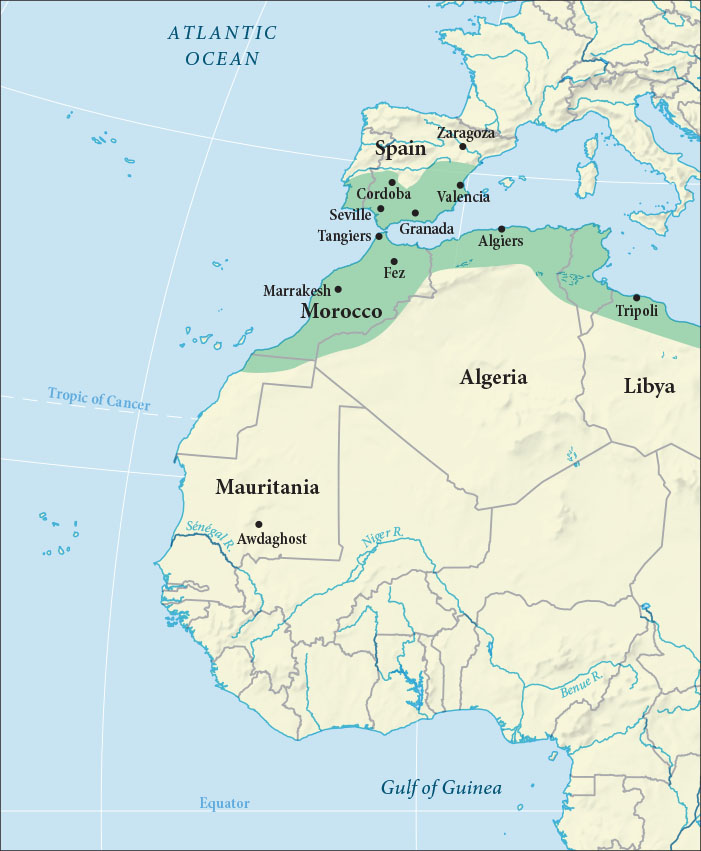
The reach of the Almoravids in the southern extreme of their empire was tentative. Their mounted armies encountered difficulties fighting and maneuvering in the heights of the Atlas Mountains, so the Masmuda nomads who lived there largely escaped Almoravid control. It was among these nomads that Ibn Tumart began to recruit the Masmuda tribes into a force to oppose the Almoravids. By 1130, his control extended across the region. Those groups initially reluctant to join the Almohad cause were persuaded into an alliance by Ibn Tumart’s military. In 1147, the Almohads captured Marrakesh, destroyed what they believed were the symbols of a decadent and corrupt empire, including the Almoravid mosque, and moved on to the coastal region of the Maghreb, which they conquered as far as Tripoli by 1160. At the end of the century, the Almohad Empire extended across all of Muslim Spain (Figure 15.20).
英語のヒント
ムラービト朝の南端での支配は、不確かだった。騎馬軍は、アトラス山脈の高地での戦闘や行動に苦労し、そこに住むマスムーダの遊牧民の多くは、支配を免れた。イブン・トゥーマルトが、ムラービト朝に対抗する軍へ、マスムーダ諸集団を集め始めたのは、この人々の間だった。1130年までに、その支配は地域全体へ広がった。初めはムワッヒド運動への参加をためらった集団も、軍の力によって、同盟へ参加させられた。1147年、ムワッヒド勢力はマラケシュを占領し、退廃・腐敗した帝国の象徴と見なすものを、ムラービト朝のモスクを含めて破壊した。その後、マグリブ沿岸へ進み、1160年までにトリポリに至る地域を征服した。世紀末には、ムスリム統治下のスペイン全域に、ムワッヒド帝国が広がった(図15.20)。
The Almohad Empire.ムワッヒド帝国
(attribution: Copyright Rice University, OpenStax, under CC BY 4.0 license) · CC BY 4.0
Figure 15.20 At its height around the year 1200, the Almohad Empire stretched from the Atlas Mountain range in the south eastward across the Mediterranean coast to Tripoli in Libya, and north to Granada in Spain. (attribution: Copyright Rice University, OpenStax, under CC BY 4.0 license)
図15.20 1200年頃の最盛期のムワッヒド帝国は、南のアトラス山脈から、地中海岸沿いに東はリビアのトリポリ、北はスペインのグラナダまで広がった。(出典:Rice University/OpenStax、CC BY 4.0)
Like the Sanhaja before them, the Masmuda dominated both the administration and the military of Almohad Spain. The manuals of Malikite legal doctrine were banned and later burned, to be replaced by the teachings of Ibn Tumart, who died in 1130. Like their predecessors the Almoravids, the Almohads made no attempt to integrate the conquered and subject peoples of Spain into the administration. Almohad dominance turned out to be short-lived, however. No sooner did it reach its peak around 1200 than the empire of the Masmuda started to crumble, due in part to pressures from Christians to the north. By the middle of the thirteenth century, Christian forces had captured all of Spain north of Granada (which fell in 1492). Meanwhile, insurgencies in the Maghreb and the sacking of Marrakesh by rebels in 1275 brought the Almohad Empire to an end.
英語のヒント
それ以前のサンハージャと同じく、マスムーダは、ムワッヒド朝スペインの行政と軍の両方を支配した。マーリク派法学の手引書は禁止され、のちには焼かれ、1130年に死去したイブン・トゥーマルトの教えに置き換えられた。先行するムラービト朝と同じく、征服し支配下に置いたスペインの人々を、行政へ組み込もうとはしなかった。しかし、ムワッヒド朝の優勢も短命だった。1200年頃に頂点に達すると、まもなくマスムーダの帝国は崩れ始めた。北のキリスト教徒からの圧力が、その一因だった。13世紀半ばまでに、キリスト教勢力は、グラナダより北のスペイン全土を占領した。グラナダ自体は、1492年に陥落した。その間、マグリブでの反乱と、1275年の反乱勢力によるマラケシュ略奪が、ムワッヒド帝国に終止符を打った。
For two hundred years, the Almoravids and Almohads controlled the Maghreb. Despite being rivals, they had much in common: they shared militant reformist origins, they were independent of Arab rulers (Fatimid Egypt in the case of the Almoravids, Abbasid Baghdad in the case of the Almohads), and they both retained indigenous African cultural attributes (Sanhaja continued to be veiled, Masmuda maintained their Council of Fifty chiefs that adjudicated tribal matters). Yet they were also very different: the Malikite legalism of the Almoravids was in contrast to the cosmopolitanism of Ibn Tumart’s ideology. In the end, although both empires were relatively short-lived, they left lasting legacies in North Africa and along the Mediterranean coast in the form of the spread of Islam and the Arabic language.
英語のヒント
約200年にわたり、ムラービト朝とムワッヒド朝は、マグリブを支配した。互いに敵対しながらも、共通点は多かった。どちらも戦闘的な改革運動から生まれ、アラブ人支配者から独立していた。ムラービト朝の場合はエジプトのファーティマ朝、ムワッヒド朝の場合はバグダードのアッバース朝である。両者とも、アフリカ固有の文化を保った。サンハージャはヴェールを着け続け、マスムーダは、集団内の問題を裁く「50人の首長会議」を維持した。しかし違いも大きく、マーリク派の法学を重んじるムラービト朝に対し、イブン・トゥーマルトの思想は、広い世界の知見を取り入れていた。結局、どちらの帝国も比較的短命だったが、北アフリカと地中海岸に、イスラームとアラビア語の普及という、長く続く遺産を残した。