第15章サハラ以南のアフリカの国家と社会States and Societies in Sub-Saharan Africa
Great Zimbabweグレート・ジンバブエ
Great Zimbabwe was founded by the Shona, an Iron Age Bantu-speaking people who first migrated to southern Africa around the second century CE. As at Leopard’s Kopje and Mapungubwe, the first settlers were livestock-herders drawn to the location by its abundant natural resources and location on the southwestern edge of the Zimbabwean plateau. Here, amid temperate grasslands ideal for seasonal grazing, the Shona found ample supplies of timber for firewood and for building, as well as well-watered fertile soil for cultivation. There is some evidence that they had domesticated goat, sheep, and cattle as early as the third century. The Shona were not the first inhabitants of the region; that distinction belongs to the small bands of hunter-gatherers who stalked game and foraged the plain in the centuries before the Bantu speakers’ arrival. Despite having superior iron technology, the Shona were unable to completely dislodge these hunter-gatherers, resulting in tension and conflict that persist to the modern era.
英語のヒント
グレート・ジンバブエを築いたのは、鉄器時代にバントゥー系の言語を話したショナの人々だった。紀元2世紀頃、初めてアフリカ南部へ移動してきた。レオパーズ・コプジェやマプングブエと同様、最初の入植者は牧畜民だった。豊かな天然資源と、ジンバブエ高原の南西端という位置に引かれたのである。季節ごとの放牧に適した温帯の草原で、ショナの人々は、燃料や建築に使う豊富な木材と、水に恵まれた肥沃な耕地を見いだした。早くも3世紀に、ヤギ、羊、牛を飼っていたことを示す証拠もある。ただし、ショナの人々が、この地域で最初の住民だったわけではない。その位置を占めるのは、バントゥー系言語の話者が来る何世紀も前から、獲物を追い、平原で食物を採集していた、狩猟採集民の小集団である。優れた鉄の技術を持ちながらも、ショナの人々は、彼らを完全に追い払うことができなかった。その結果生まれた緊張と対立は、現代まで続いている。
The five hundred years between the fourth and ninth centuries witnessed the development of Bantu communities that farmed the valley and mined and worked iron. They lived in reed thatch or mud houses and represent the earliest Iron Age settlers in the area so far identified by archaeologists. During this period, the Shona manufactured simple pottery and produced leather for clothing, jewelry from copper and gold, and weapons and farming tools from iron. Many of these goods they traded with members of coastal settlements for commodities like salt, glass beads, and seashells. By the eleventh century, the society of the Zimbabwean plateau was thriving, and drystone buildings—that is, buildings constructed using interlocking stones rather than mortar—began to emerge. The people had established a prosperous mixed farming economy, engaging in animal husbandry and hunting the region’s abundant game.
英語のヒント
4〜9世紀の500年間には、谷を耕し、鉄を採掘・加工する、バントゥー系の共同体が発展した。人々は、葦ぶきや泥造りの家に住んだ。考古学者がこれまでに確認した、この地域で最も初期の鉄器時代の定住者である。この時期、ショナの人々は、素朴な土器を作り、衣類用の革、銅や金の装身具、鉄の武器や農具を生産した。その多くを沿岸集落の人々と取引し、塩、ガラスのビーズ、貝殻などを得た。11世紀までには、ジンバブエ高原の社会は繁栄し、空積みの石造建築が現れ始めた。モルタルの代わりに、石をかみ合わせて造る建物である。人々は、農耕と牧畜を組み合わせた豊かな経済を築き、家畜を飼い、地域に多くいる野生の獲物を狩っていた。
Above all, trade was the most important factor in Great Zimbabwe’s wealth and power. Situated at the head of the Sabi River valley, the capital was ideally positioned for exploiting the long-distance commerce between the goldfields of the western plateau and Sofala, a Swahili center that connected Zimbabwean trade goods to the island of Kilwa. Zimbabwean gold made Kilwa the wealthiest of all the Swahili city-states. In exchange for gold, copper, and ivory, Swahili merchants bartered such exotic luxury goods as Chinese Ming porcelain and carved faience (ceramicware) from Persia at the markets and fairs established on the Zimbabwean plateau.
英語のヒント
グレート・ジンバブエの富と力の源として、何より重要だったのは交易だった。サビ川流域の上流にある都は、西部高原の金産地と、スワヒリの交易中心ソファラの間の遠距離交易を利用するうえで、理想的な位置にあった。ソファラは、ジンバブエの商品をキルワ島へつないだ。ジンバブエの金は、キルワを、スワヒリの都市国家の中で最も豊かにした。スワヒリ商人は、ジンバブエ高原に設けられた市場や市で、金、銅、象牙と引き換えに、中国・明の磁器や、ペルシアの彫り文様のあるファイアンス陶器など、遠国のぜいたく品を物々交換した。
Construction of major stone buildings began sometime in the eleventh century and continued for about three hundred years. These stone structures are the most famous ancient ruins in southern Africa. The oldest is the Hill Complex. Located on a natural rise approximately 260 feet high, this citadel likely provided the Shona people with a space to perform rituals and find safety in uncertain times; however, the exact purpose of the site is still a matter of debate. Some scholars have suggested it functioned as a religious site for ancestor worship, while others have suggested it was a burial ground for chiefs or possibly even the site of a royal palace. Whatever its intended purpose, the site is an impressive one, and its prominence certainly ties it to some important aspect of Zimbabwean culture.
英語のヒント
大規模な石造建築は、11世紀のある時期に始まり、約300年間続いた。それらは、アフリカ南部で最も有名な古代遺跡である。最古のものは、ヒル・コンプレックス、すなわち丘の遺構群だ。高さ約260フィート、約79メートルの自然の高台にあり、ショナの人々に、儀礼を行い、不安な時期に安全を求める場所を与えたと考えられる。しかし、正確な用途については、今も議論がある。祖先崇拝の宗教的な場所だったとする研究者もいれば、首長の墓地、あるいは王宮だった可能性を挙げる研究者もいる。意図された用途が何であれ、壮観な遺跡であり、その際立った存在から、ジンバブエの文化の、何らかの重要な側面と結び付いていたことは確かである。
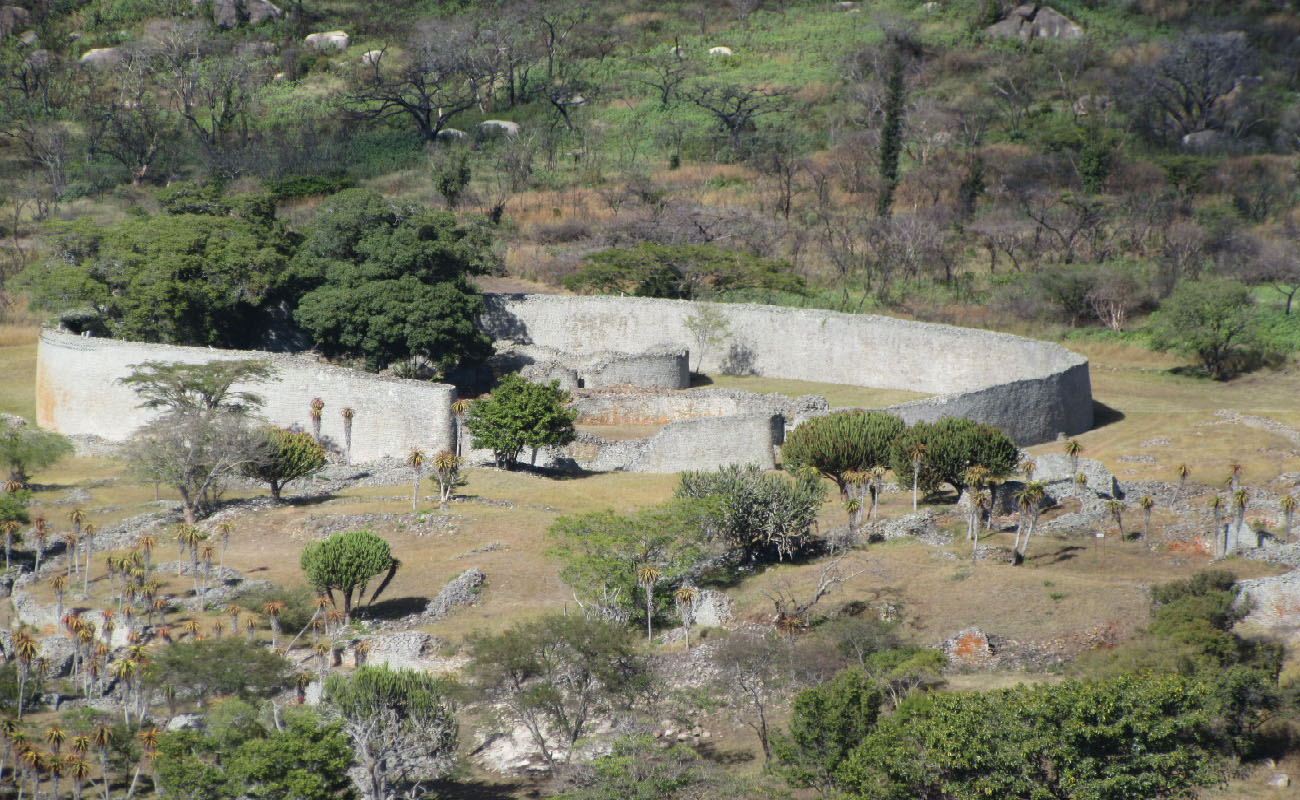
The ruins of Great Zimbabwe have impressed visitors for centuries. The Great Enclosure at the heart of the civilization dates from the thirteenth to fourteenth centuries and is still partially intact today, a massive elliptical building with drystone walls thirty-five feet high and as much as seventeen feet thick. Located in the area of the valley below the Hill Complex, it is the largest ancient monument in Africa south of the Sahara (Figure 15.15). Upon seeing the ruins, the sixteenth-century Portuguese explorer Vicente Pegado wrote, “[Quotation omitted for rights reasons.]”
英語のヒント
グレート・ジンバブエの遺跡は、何世紀にもわたり、訪れる人々を感嘆させてきた。文明の中心にあるグレート・エンクロージャー、すなわち大囲壁は、13〜14世紀のもので、今も一部が、元の形を保つ。巨大な楕円形の建造物で、空積みの石壁は、高さ35フィート、約11メートル、厚さは最大17フィート、約5メートルある。丘の遺構群の下の谷にあり、サハラ以南のアフリカでは、最大の古代建造物である(図15.15)。16世紀のポルトガル人探検家ヴィセンテ・ペガードは、遺跡を見て、こう記した。〔権利の関係で割愛〕。
The Great Enclosure.グレート・エンクロージャー(大囲壁)
(credit: “Photo of the Great Enclosure from the hilltop Great Zimbabwe” by Amanda/Flickr, CC BY 2.0) · CC BY 2.0
Figure 15.15 The Great Enclosure at the heart of the Zimbabwean civilization, which dates from the thirteenth to fourteenth centuries and is still partially intact today, is the largest ancient monument in Africa south of the Sahara. (credit: “Photo of the Great Enclosure from the hilltop Great Zimbabwe” by Amanda/Flickr, CC BY 2.0)
図15.15 ジンバブエ文明の中心にあるグレート・エンクロージャーは、13〜14世紀のもので、今も一部が元の形を保つ。サハラ以南のアフリカでは、最大の古代建造物である。(出典:Amanda/Flickr「Photo of the Great Enclosure from the hilltop Great Zimbabwe」、CC BY 2.0)
Between the thirteenth and fourteenth centuries, the Great Enclosure underwent major renovation, most notably the addition of its elliptical drystone wall. The wall pitches slightly inward at the top and is punctured by a main entrance doorway that looks out across the valley toward the Hill Complex. The existence of multiple other doorways suggests the wall was not a fortification. Inside the Great Enclosure, a subsidiary wall forms a corridor and channels visitors to a conical stone tower some sixteen feet across and thirty-two feet high. The purpose of the Great Enclosure, which has a total circumference of 820 feet, is unknown, although its size suggests it was a royal residence and the tower was a granary (grain was a common form of tribute used by Shona rulers). Between these two sites—the Hill Complex and the Great Enclosure—archaeologists have found the most impressive and luxurious artifacts, including figurines made of soapstone, elaborately worked ivory, copper ingots, and bracelets.
英語のヒント
13〜14世紀、大囲壁では、大がかりな改修が行われた。とりわけ、楕円形の空積み石壁の追加が重要だった。壁は上部で少し内側へ傾き、谷の向こうの丘の遺構群を望む、正面入口が開けられている。ほかにも複数の入口があることから、この壁は防御施設ではなかったと考えられる。大囲壁の内側では、別の壁が通路を作り、直径約16フィート、約5メートル、高さ32フィート、約10メートルの円錐形の石塔へ、来訪者を導く。全周820フィート、約250メートルの大囲壁の用途は、分かっていない。ただ、その規模から、王の住居で、塔は穀倉だったと考えられる。穀物は、ショナの支配者が受け取る、一般的な貢納の形だった。丘の遺構群と大囲壁という二つの遺跡の間では、滑石製の小像、精巧に加工した象牙、銅の延べ棒、腕輪など、特に見事でぜいたくな遺物が見つかっている。
Numerous other stone buildings lie in the valley between the Hill Complex and the Great Enclosure. These ruins are enclosed by high stone walls, along with the remains of imposing circular mud houses approximately thirty-two feet in diameter and nearly twenty feet high. The existence of these Valley Ruins suggests that the settlement along the valley floor grew significantly as Great Zimbabwe flourished. All told, the three sites cover some 1,700 acres, and the spatial organization of their structures suggests a hierarchical civilization of around eighteen thousand people ruled by an elite class or some type of central authority.
英語のヒント
丘の遺構群と大囲壁の間の谷には、ほかにも、多数の石造建築がある。これらは、直径約32フィート、約10メートル、高さ約20フィート、約6メートルの、堂々とした円形の泥造りの家の跡とともに、高い石壁に囲まれている。この「谷の遺構群」は、グレート・ジンバブエが栄えるにつれ、谷底の集落が大きく成長したことを示す。三つの遺跡を合わせると、広さは約1,700エーカー、約690ヘクタールある。建物の空間的な配置からは、上層階級や、何らかの中央権力に支配された、約1万8,000人の階層社会がうかがえる。
Great Zimbabwe flourished between the thirteenth and sixteenth centuries. Like many other aspects of the civilization, the exact makeup and nature of its government and society are unclear. Scholars have argued that it was male dominated, and that male heads of family competed for power and influence based on the size of their cattle herds. Herd size also correlated to the number of wives and thus the amount of labor at a man’s disposal. Women in this society were expected to tend and harvest crops, prepare food, and get water. Single men hunted, herded animals, and made clothing. Males without property often became dependent on the wealthier men in the society.
英語のヒント
グレート・ジンバブエは、13〜16世紀に栄えた。この文明のほかの多くの側面と同じく、統治と社会の正確な構成や性格は、明らかではない。研究者は、男性が優位に立ち、男性の家長が、所有する牛の群れの規模を基に、力と影響力を競ったと論じている。牛の数は、妻の数、ひいては、男性が使える労働力の量とも相関した。この社会の女性には、作物の世話と収穫、食事の用意、水くみが期待された。独身男性は、狩猟、放牧、衣類作りを担った。財産のない男性は、社会の中の、より富裕な男性に依存することが多かった。
Politically, Zimbabwean society was led by a chief or a king who was also likely the wealthiest member, although Shona tradition held that the position was hereditary, so being chief may not have indicated great wealth. That the chief had no army suggests that he had to govern by reaching consensus with the community’s leading male figures and whatever subordinated chiefs may have existed. All this is speculative, but the existence of grandiose stone monuments is indicative of some sort of political authority—at least the kind that could organize and control resources and labor.
英語のヒント
政治面では、社会を率いたのは首長または王で、おそらく最も富裕な人物でもあった。ただしショナの伝承では、その地位は世襲だったため、首長であることが、大きな富を示したとは限らない。軍隊を持たなかったという点は、共同体の有力男性や、存在したかもしれない従属的な首長たちと、合意を結んで統治する必要があったことを示唆する。これらは、いずれも推測である。それでも、大規模な石造建造物の存在は、何らかの政治権力を示す。少なくとも、資源と労働を組織し、統制できる種類の力である。
Medieval African society developed along similar lines in both West Africa and southern Africa. Beginning in the sixth century, regions with small groups of livestock-herders and keepers became home to growing and increasingly complex political entities. Agricultural and metallurgical innovations supported societies around the Niger River in West Africa and the Limpopo River in South Africa. The growth of these settlements was linked to the expansion and exploitation of trade, beginning with localized segments of trade routes connecting trading centers and culminating in control over vast territory. Although some of these kingdoms were short-lived (Mapungubwe, for example, lasted only about eighty years), they were vitally important to the development of medieval Africa, connecting it to peoples, places, and cultures thousands of miles away. In the end, these kingdoms linked local and regional African economies to a network of trade and commerce that touched Europe, Asia, and Arabia.
英語のヒント
中世アフリカの社会は、西アフリカとアフリカ南部の両方で、似た道筋をたどって発展した。6世紀から、牧畜の小集団がいた地域に、成長し、ますます複雑になる政治組織が現れた。農業と冶金の新技術が、西アフリカのニジェール川周辺と、南部アフリカのリンポポ川周辺の社会を支えた。集落の成長は、交易の拡大と、その利用に結び付いていた。交易中心をつなぐ路線の、地域内の一部分から始まり、最終的に広大な領域の支配に達した。王国の中には、約80年しか続かなかったマプングブエのように、短命なものもあった。それでも、何千マイルも離れた人々、場所、文化とアフリカを結び付け、中世アフリカの発展に、きわめて重要な役割を果たした。こうして諸王国は、アフリカの地域内・地域間の経済を、ヨーロッパ、アジア、アラビアへ届く交易・商業の網に結んだ。