第1章標本抽出とデータ
HOMEWORK宿題
Exercises 89–91練習問題 89–91
Exercise 89問題 89
How does sleep deprivation affect your ability to drive? A recent study measured the effects on 19 professional drivers. Each driver participated in two experimental sessions: one after normal sleep and one after 27 hours of total sleep deprivation. The treatments were assigned in random order. In each session, performance was measured on a variety of tasks including a driving simulation.
英語のヒント
睡眠不足は運転能力にどう影響するか。最近の研究は、職業運転者19人への影響を測定した。各人は、通常の睡眠を取った後と、27時間全く眠らなかった後の2回の実験に参加した。処理の順序は無作為に割り当てられた。各回で、運転シミュレーションを含むさまざまな課題の成績が測定された。
Use key terms from this module to describe the design of this experiment.
この節の重要用語を使い、実験の設計を説明せよ。
Solution解き方
Explanatory variable: amount of sleep
Response variable: performance measured in assigned tasks
Treatments: normal sleep and 27 hours of total sleep deprivation
Experimental Units: 19 professional drivers
Lurking variables: none – all drivers participated in both treatments
Random assignment: treatments were assigned in random order; this eliminated the effect of any “learning” that may take place during the first experimental session
Control/Placebo: completing the experimental session under normal sleep conditions
Blinding: researchers evaluating subjects’ performance must not know which treatment is being applied at the time
説明変数:睡眠量。応答変数:割り当てられた課題で測定する成績。処理:通常の睡眠と、27時間の完全な断眠。実験単位:職業運転者19人。潜在変数:なし。運転者は全員、両方の処理を受けた。無作為割付:処理の順序を無作為に割り当て、最初の実験で生じうる「学習」の影響を排除した。対照/プラセボ:通常の睡眠条件で実験を行うこと。盲検化:成績を評価する研究者には、そのときどちらの処理が適用されているかを知らせてはならない。
Exercise 90問題 90
An advertisement for Acme Investments displays the two graphs in Figure 1.14 to show the value of Acme’s product in comparison with the Other Guy’s product. Describe the potentially misleading visual effect of these comparison graphs. How can this be corrected?
アクメ投資社の広告は、他社の製品と比べた自社製品の価値を示すため、図1.14の2つのグラフを掲載している。この比較グラフが生みうる、誤解を招く視覚効果を述べよ。どう直せばよいか。
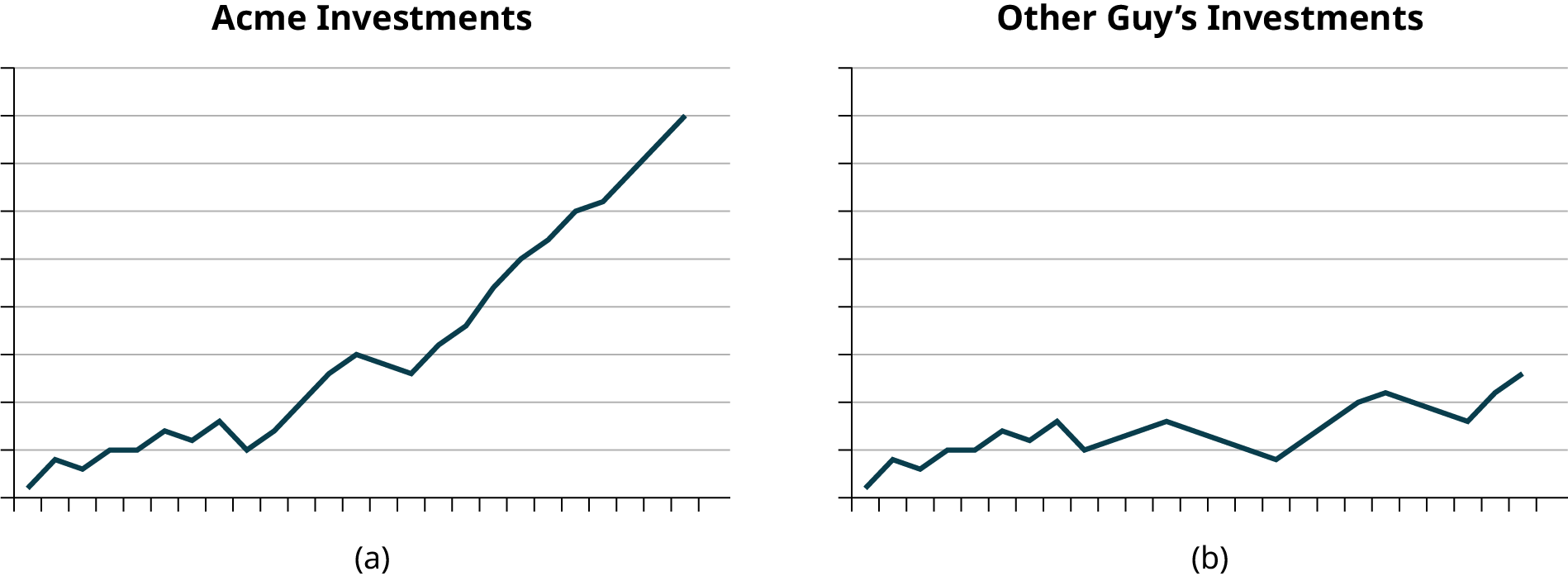
Figure 1.14図 1.14
As the graphs show, Acme consistently outperforms the Other Guys!
グラフが示すとおり、アクメは一貫して他社を上回っている!
Exercise 91問題 91
The graph in Figure 1.15 shows the number of complaints for six different airlines as reported to the US Department of Transportation in February 2013. Alaska, Pinnacle, and Airtran Airlines have far fewer complaints reported than American, Delta, and United. Can we conclude that American, Delta, and United are the worst airline carriers since they have the most complaints?
図1.15のグラフは、2013年2月に米国運輸省に報告された、6社の航空会社についての苦情件数を示している。アラスカ、ピナクル、エアトランへの苦情は、アメリカン、デルタ、ユナイテッドよりはるかに少ない。苦情が最多だから、アメリカン、デルタ、ユナイテッドが最悪の航空会社だと結論してよいか。
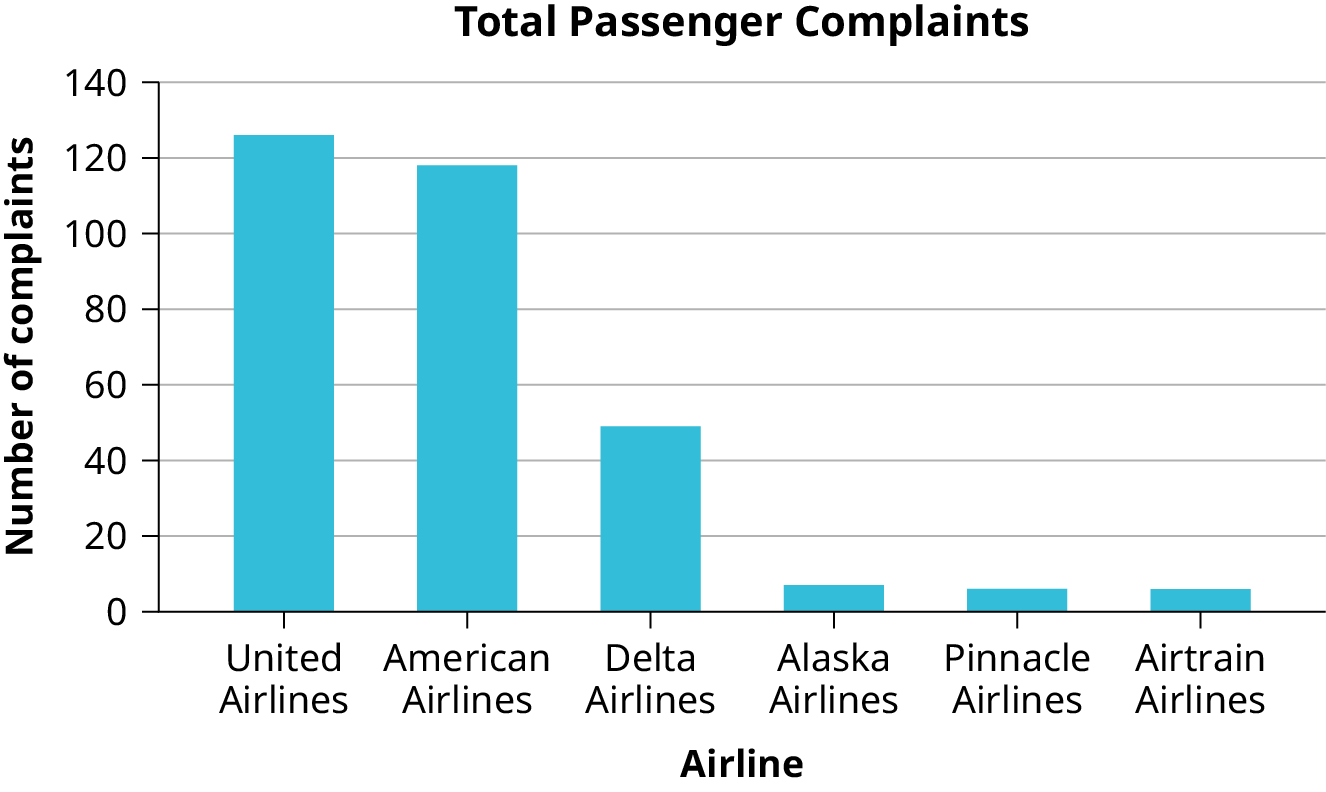


Figure 1.15図 1.15
Solution解き方
You cannot assume that the numbers of complaints reflect the quality of the airlines. The airlines shown with the greatest number of complaints are the ones with the most passengers. You must consider the appropriateness of methods for presenting data; in this case displaying totals is misleading.
苦情件数が航空会社の質を表すと決めつけてはいけない。苦情が最も多い会社は、乗客数も最も多い。データの示し方が適切かを考える必要がある。この場合、総数の表示は誤解を招く。
Explanatory Variable
説明変数
the independent variable in an experiment; the value controlled by researchers
実験における独立変数。研究者が制御する値。
Treatments
処理
different values or components of the explanatory variable applied in an experiment
実験で適用する、説明変数の異なる値や要素。
Response Variable
応答変数
the dependent variable in an experiment; the value that is measured for change at the end of an experiment
実験における従属変数。実験終了時に変化を測定する値。
Experimental Unit
実験単位
any individual or object to be measured
測定の対象となる個体や物。
Lurking Variable
潜在変数
a variable that has an effect on a study even though it is neither an explanatory variable nor a response variable
説明変数でも応答変数でもないが、研究に影響する変数。
Random Assignment
無作為割付
the act of organizing experimental units into treatment groups using random methods
無作為な方法によって実験単位を処理群に分けること。
Control Group
対照群
a group in a randomized experiment that receives an inactive treatment but is otherwise managed exactly as the other groups
無作為化実験で、無効な処理を受けるが、それ以外はほかの群と全く同じに扱われる群。
Informed Consent
インフォームド・コンセント
Any human subject in a research study must be cognizant of any risks or costs associated with the study. The subject has the right to know the nature of the treatments included in the study, their potential risks, and their potential benefits. Consent must be given freely by an informed, fit participant.
英語のヒント
人を対象とする研究では、すべての被験者が研究に伴うリスクや費用を認識していなければならない。被験者には、研究で行われる処理の内容、潜在的なリスク、期待される利益を知る権利がある。同意は、説明を受け、同意する能力のある参加者が、自由意思で与えなければならない。
Institutional Review Board
施設内審査委員会
a committee tasked with oversight of research programs that involve human subjects
人を被験者とする研究計画の監督を任された委員会。
Placebo
プラセボ
an inactive treatment that cannot directly affect the response variable, used to counter the power of suggestion
応答変数に直接影響しない無効な処理。暗示の力に対処するために用いる。
Blinding
盲検化
not telling participants which treatment a subject is receiving
被験者がどの処理を受けているかを参加者に知らせないこと。
Double-blind experiment
二重盲検実験
an experiment in which both the subjects of an experiment and the researchers who work with the subjects are blinded
実験の被験者と、その被験者に関わる研究者の両方が盲検化されている実験。