第9章規範倫理学の理論Normative Moral Theory
9.2 Consequentialism9.2 帰結主義
Learning Objectives学習目標
By the end of this section, you will be able to:
この節を学び終えると、次のことができるようになる。
Identify the meaning and purpose of the consequentialist approach.
帰結主義的なアプローチの意味と目的を理解する。
Summarize Mohist and utilitarian interpretations of consequentialism.
墨家と功利主義による帰結主義の解釈を要約する。
Most people make at least some decisions based on the likely consequences of their actions. You might, for example, appeal to costs and benefits to justify a decision. For example, you might consider the happiness your friend will feel when discovering that you’ve filled the gas tank (a benefit) and weigh that against the price of a tank of gas (cost). In doing so, you are analyzing consequences to yourself and to your friend. Consequentialists, however, ask you to take a wider view. In consequentialism, an action is right when it produces the greatest good for everyone. An agent is tasked with assessing possible consequences to determine which action will maximize good for all those who might be impacted. This section looks at two consequentialist approaches, Mohism and utilitarianism.
英語のヒント
ほとんどの人は、少なくともいくつかの決定を、自分の行為がもたらしそうな帰結に基づいて行う。たとえば、費用と便益を根拠として決定を正当化するかもしれない。燃料タンクを満タンにしたことを友人が知ったときの喜びを便益として考え、それを一回の満タンにかかる代金、つまり費用と比較する、といった具合である。そうするとき、あなたは自分と友人に対する帰結を分析している。しかし帰結主義者は、より広い視野をもつよう求める。帰結主義では、すべての人にとって最大の善を生み出すとき、行為は正しい。行為者には、影響を受ける可能性のある全員にとって、どの行為が善を最大化するかを決めるため、ありうる帰結を評価する課題がある。この節では、帰結主義的な二つのアプローチ、墨家思想と功利主義を検討する。
Mohism墨家思想
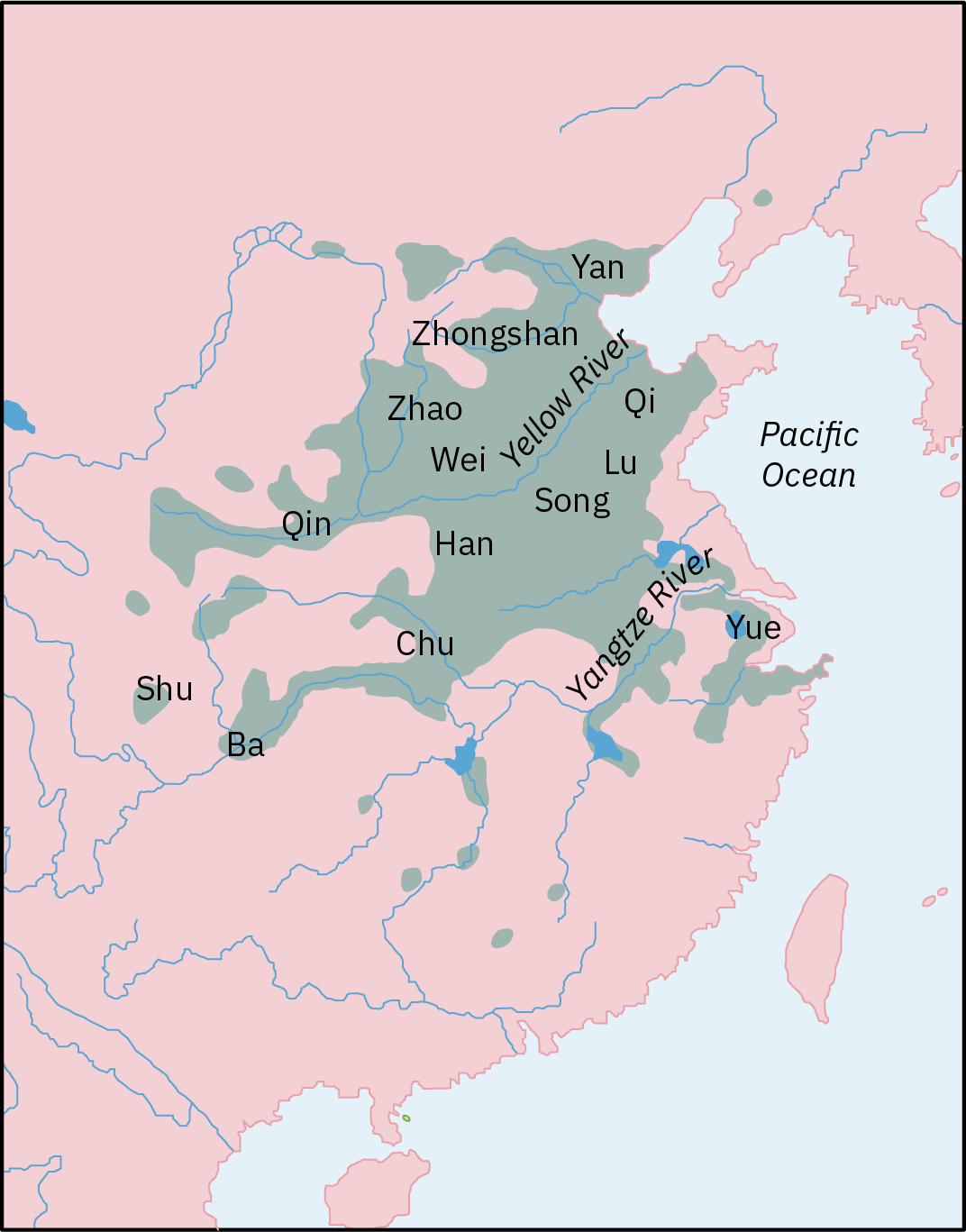
Figure 9.2 The Warring States period (ca. 475–221 BCE) saw intense warfare as older states located along the Yellow River declined and Qin, Qi, and Chu rose until Qin conquered the others in 221 BCE and established an imperial government. (attribution: Copyright Rice University, OpenStax, under CC BY 4.0 license)
図9.2 戦国時代(紀元前475~221年ごろ)には、黄河沿いの古い諸国が衰退し、秦・斉・楚が台頭して激しい戦争が起こった。紀元前221年に秦が他国を征服して皇帝の政府を樹立するまで、それは続いた。(帰属:Copyright Rice University, OpenStax, CC BY 4.0)
The Warring States period in ancient China (ca. 475–221 BCE) was a period of widespread social unrest and discord, one characterized by warfare, suffering, and a fractured society. Thinkers in ancient China responded by exploring ways to unite people and discover (or rediscover) moral norms and standards that would promote a better life and social harmony. Philosophies like Mohism, Confucianism, and Daoism were developed, making it a period marked by intellectual and cultural expansion. These philosophies, while different in important respects, are similar in that each is born as a response to the social disharmony and widespread suffering experienced during the Warring States period. Each one shows a desire to facilitate and foster change in order to overcome social challenges and improve the lives of the people.
英語のヒント
古代中国の戦国時代(紀元前475~221年ごろ)は、社会不安と不和が広がった時代であり、戦争、苦しみ、社会の分裂によって特徴づけられる。古代中国の思想家たちは、人々を結びつけ、よりよい生と社会の調和を促す道徳的な規範や基準を発見、あるいは再発見する道を探ることで応答した。墨家思想、儒家思想、道家思想などの哲学が発展し、知的・文化的な広がりを示す時代となった。これらの哲学は重要な点で異なるが、いずれも戦国時代に経験された社会の不調和と広範な苦しみへの応答として生まれたという点で似ている。どれにも、社会の難題を乗り越え、人々の生活を改善するために、変化を促し育てようとする願いが表れている。
Very little is known about the founder of Mohism, Mo Di or Mozi (ca. 430 BCE). He lived around the time of Confucius (ca. 479 BCE), the founder of Confucianism, and Laozi, the founder of Daoism. Mozi, like Confucius and Laozi, was considered a great teacher. He and early Mohists sought to establish rational, objective standards for evaluating actions and establishing ethical norms.
英語のヒント
墨家思想の創始者である墨翟、すなわち墨子(紀元前430年ごろ)については、ほとんど知られていない。彼は、儒家思想の創始者孔子(紀元前479年ごろ)と、道家思想の創始者老子とほぼ同じ時代に生きた。墨子は孔子や老子と同様に、偉大な教師とみなされていた。墨子と初期の墨家は、行為を評価し、倫理的規範を確立するための、合理的で客観的な基準を定めようとした。
Four Concepts of Mohist Ethical Theory墨家の倫理理論の四つの概念
Four interrelated concepts are at the heart of Mohist ethical theory: morality, benefit, benevolence, and care. Morality (yi) is determined by benefit (li), which shapes how we understand our duties and define what is right. Benefit (li) is defined loosely as a set of material and social goods, including virtues and practices that strengthen social order. Benefit, in turn, rested on the concept of benevolence or kindness (rèn), which requires that we look outside our own interests and treat others with care (ài). Practicing kindness is crucial for promoting social order and fair treatment. Mohists believed that we are more likely to achieve social stability and general welfare when we focus not simply on ourselves, but the betterment of others and the community.
英語のヒント
墨家の倫理理論の中心には、相互に関係する四つの概念がある。道徳、利益、仁、そして愛である。道徳(義)は利益(利)によって決められ、利益が、私たちが義務をどう理解し、何を正しいと定義するかを形づくる。利益は、社会秩序を強める徳や実践を含む、物質的・社会的な善の集合として、おおまかに定義される。その利益は、今度は仁、すなわち慈愛や親切の概念に基づく。仁は、自分だけの利益から目を外へ向け、他者を愛をもって扱うことを求める。親切を実践することは、社会秩序と公正な扱いを促進するうえで不可欠である。墨家は、自分だけでなく他者や共同体をよりよくすることに焦点を当てれば、社会の安定と全般的な福祉を実現しやすくなると考えた。
Mohists thought ethical norms should be established by looking at what increases overall benefit. To this end, Mozi argued that we should promote the immediate welfare of individuals and consider the welfare of all when acting. If people are suffering or in need now, it makes sense, Mozi thought, to address those issues first.
英語のヒント
墨家は、全体としての利益を増やすものに注目することによって、倫理的規範を確立するべきだと考えた。このため墨子は、個人の当面の福祉を促進し、行為するときにはすべての人の福祉を考えるべきだと論じた。いま苦しんでいる人や困窮している人がいるなら、その問題を先に解決するのが理にかなう、と墨子は考えた。
As the theory developed, Mohists also came to associate benefit with happiness or delight (xǐ). However, most essential to Mohism is the value of impartial care of all, or universal love. They thought we should treat everyone impartially and that we shouldn’t give preference to some people’s welfare over others. Mohists opposed the rulers and elites during the Warring States period who had focused only on their own pleasure and gain to the detriment of everyone else.
英語のヒント
理論が発展するにつれて、墨家は利益を幸福や喜び(喜)とも結びつけるようになった。しかし、墨家思想で最も重要なのは、すべての人への公平な配慮、すなわち普遍的な愛の価値である。すべての人を公平に扱い、ある人々の福祉をほかの人々の福祉より優先してはならないと考えた。墨家は、ほかのすべての人を犠牲にして自分の快楽と利益だけに目を向けていた戦国時代の支配者やエリートに反対した。
Normative Practices: The Ten Doctrines規範的な実践:十の教え
There are ten doctrines that form the core of early Mohism. These ten doctrines correspond to Mozi’s original work, and they were treated as central even by later Mohists who developed and expanded upon early Mohist thinking. The ten doctrines are normally split into five pairs as follows:
英語のヒント
初期墨家の中核をなす十の教えがある。これらは墨子の元の著作に対応し、初期の墨家思想を発展させ、拡張した後代の墨家も中心的なものとして扱った。十の教えは、通常、次のような五組に分けられる。
“Promoting the Worthy” and “Identifying Upward”
「尚賢(賢者を登用する)」と「尚同(上位者と判断を同じくする)」
“Inclusive Care” and “Condemning Aggression”
「兼愛(分け隔てなく愛する)」と「非攻(侵略を非難する)」
“Moderation in Use” and “Moderation in Burial”
「節用(支出を節する)」と「節葬(葬儀を節する)」
“Heaven’s Intent” and “Understanding Ghosts”
「天志(天の意志)」と「明鬼(鬼神を明らかにする)」
“Condemning Music” and “Condemning Fatalism”
「非楽(音楽を非難する)」と「非命(宿命論を非難する)」
The “Promoting the Worthy” and “Identifying Upward” doctrines highlight the Mohists’ concern for a meritocratic system. They believed that an individual should be appointed to a position based on their performance and moral goodness. These officials should serve as models to all. Mohists assumed that people are motivated to act in ways that conform to their beliefs about what is right. They therefore believed that people needed proper moral education informed by rational, objective moral standards. Once people possess the proper knowledge, they conform their behavior accordingly. This, in turn, would address the social upheaval and disharmony that plagued their world. Mozi realized that if people adopt the same morality, they will use the same standards to judge their own actions and the actions of others, which will improve social order and harmony.
英語のヒント
「尚賢」と「尚同」の教えは、墨家が能力本位の制度を重視していたことを際立たせる。墨家は、個人はその実績と道徳的な善さに基づいて地位に任命されるべきだと考えた。任命された官吏は、すべての人の模範となるべきである。墨家は、人は何が正しいかについての自分の信念に適合する仕方で行動するよう動機づけられる、と考えた。そのため、合理的で客観的な道徳基準に基づく適切な道徳教育が必要だと考えた。人々は正しい知識を得れば、それに従って行動するようになる。それが、彼らの世界を苦しめる社会的混乱と不調和に対処することになる。墨子は、人々が同じ道徳を採用すれば、自分と他者の行為を同じ基準で判断するようになり、社会の秩序と調和が改善されると理解していた。
The “Inclusive Care” and “Condemning Aggression” doctrines affirm the importance of considering and caring for everyone equally. They reinforce the idea that it is not just the individual’s own benefit that matters, but the benefit of all people. Mohists therefore condemn aggression because others are harmed in the pursuit of personal benefit. During a period in which warlord battled against warlord, Mohists condemned these attempts at military conquest as selfishly immoral.
英語のヒント
「兼愛」と「非攻」の教えは、すべての人を等しく考慮し、気にかけることの重要性を確認する。重要なのは個人自身の利益だけではなく、すべての人の利益であるという考えを強める。したがって墨家は、個人的な利益の追求によって他者が傷つけられるからこそ、侵略を非難する。軍閥同士が争っていた時代に、墨家はこのような軍事征服の試みを、利己的で不道徳なものとして非難した。
Mohists promoted the practices of “Moderation in Use” and “Moderation in Burial.” They rejected lavish funerals, customs, and practices that were wasteful. Resources should be used to the benefit of individuals and society. They viewed excessive displays of wealth that only benefit the few as selfish.
英語のヒント
墨家は「節用」と「節葬」の実践を奨励した。浪費的な豪華な葬儀、習慣、慣行を退けたのである。資源は個人と社会の利益のために使うべきだとした。少数の人だけに利益を与える過度な富の誇示を、利己的だと考えた。
Mohists use the ideas of “Heaven’s Intent” and “Understanding Ghosts” to argue that there is an objective moral world order that individuals and society should hasten to emulate. Heaven acts as their principal standard for evaluating and understanding our moral responsibilities.
英語のヒント
墨家は「天志」と「明鬼」の考えを用いて、個人と社会が速やかに見習うべき、客観的で道徳的な世界秩序が存在すると論じる。天は、私たちの道徳的責任を評価し理解する際の、彼らの主要な基準として機能する。
Early Mohists, in particular, also saw heaven as way to motivate individuals to act selflessly, as moral deeds would be rewarded, whereas immoral ones would be punished. Later, however, Mohists seemed to abandon or at least put less emphasis on this appeal to heaven to justify ethical norms and principles, favoring a greater emphasis on rational argumentation.
英語のヒント
とりわけ初期の墨家は、道徳的な行いは報われ、不道徳な行いは罰せられるため、天は個人に無私の行為を促す手段にもなると考えた。しかし後代の墨家は、倫理的な規範や原理を正当化するために天に訴えることをやめたか、少なくともその重視を弱め、合理的な論証をいっそう重視するようになったと見られる。
Finally, Mohists promoted the norms of “Condemning Music” and “Condemning Fatalism.” The Mohist views on music stemmed from their condemnation of the powerful for being wasteful when they enjoyed lavish displays and luxuries. They felt those with wealth had a responsibility to others and should behave morally.
英語のヒント
最後に、墨家は「非楽」と「非命」の規範を奨励した。音楽に対する見方は、権力者が豪華な見世物や贅沢を楽しむときの浪費を非難する姿勢から生じた。富をもつ者には他者への責任があり、道徳的に振る舞うべきだと考えたのである。
Mohists also believed in social mobility, such that capable, moral individuals should rise. Their support of meritocracy further underscores a belief that the individual has the power to change, to direct their own life, and to determine their own path. The Mohists condemn fatalism because it suggests that human effort is futile and undermines Mohist goals of achieving social order and a large and economically thriving population. Mohists believed that our lot in life is not set in stone, nor does fate determine our path (Fraser 2020).
英語のヒント
墨家はまた、有能で道徳的な個人が上昇するべきだという、社会的流動性を信じていた。能力本位の制度を支持することは、個人には変化し、自分の生を導き、自分の道を決める力があるという信念を、さらに際立たせる。墨家が宿命論を非難するのは、それが人間の努力は無駄だと示唆し、社会秩序と、人数が多く経済的に繁栄する人口を実現するという墨家の目標を損なうからである。墨家は、人生における境遇は変えられないものではなく、運命が私たちの進路を決めるわけでもないと考えた(Fraser 2020)。