第4章古典哲学の成立The Emergence of Classical Philosophy
Introductionはじめに
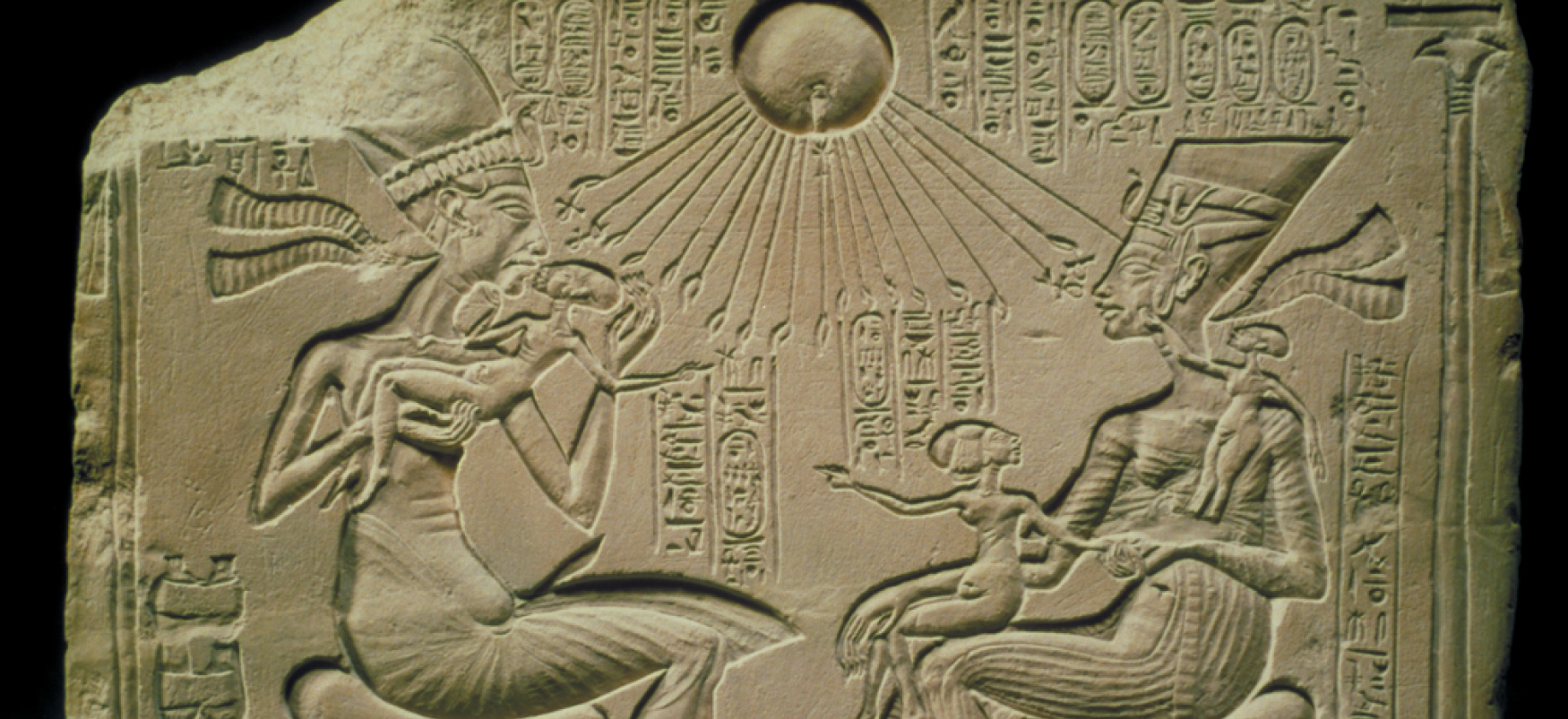
Figure 4.1 The pharaoh Akhenaten, his wife Nefertiti, and their children are blessed by the god Aten, represented by the sun. The Egyptian conception of Aten as the source of all that existed was influential in the metaphysics embraced by the Greeks. (credit: modification of work “Akhenaten, Nefertiti, and the Royal Princesses Blessed by the Aten” by MCAD Library/Flickr, CC BY 2.0)
図4.1 ファラオのアクエンアテン、その妻ネフェルティティ、二人の子供たちは、太陽として表された神アテンの祝福を受けている。存在するすべてのものの源をアテンとするエジプトの考え方は、ギリシャ人が受け入れた形而上学に影響を与えた。(credit: modification of work “Akhenaten, Nefertiti, and the Royal Princesses Blessed by the Aten” by MCAD Library/Flickr, CC BY 2.0)
Scholars long regarded ancient Greece as the birthplace of Western philosophy. After all, the word philosophy itself derives from the ancient Greek words philos (affection) and sophos (wisdom)—and indeed, ancient Greece produced the great minds of Socrates, Plato, and Aristotle. Yet the path of classical philosophy begins in North Africa, reaches Greece and Rome, jumps back across the Mediterranean, and spreads from Persia to Spain before it emerges to support what is frequently called the birth of modernity. This chapter examines that path.
英語のヒント
長らく研究者は、古代ギリシャを西洋哲学の発祥地と見なしてきた。実際、philosophyという語そのものが、古代ギリシャ語のphilos(愛情)とsophos(知恵)に由来する。古代ギリシャが、ソクラテス、プラトン、アリストテレスという偉大な知性を生んだことも確かである。しかし、古典哲学の歩みは北アフリカに始まり、ギリシャとローマに達した後、再び地中海を渡り、ペルシアからスペインにまで広がる。そして、しばしば「近代の誕生」と呼ばれるものを支える力として姿を現す。本章では、その歩みをたどる。
In order to consider the historical path of philosophy across these various cultures, we need to begin with a brief account of how philosophers have studied the history of philosophy and how we might consider the practice of philosophy throughout history before turning to these historical traditions themselves.
英語のヒント
これらのさまざまな文化を横断する哲学の歴史的な歩みを考えるために、各地の歴史的伝統そのものへ進む前に、まず簡潔に確認しておく必要がある。哲学者はこれまで哲学史をどのように研究してきたのか。また、歴史を通じて行われてきた哲学の実践を、私たちはどのように捉えればよいのか。