第6章形而上学Metaphysics
Introductionはじめに
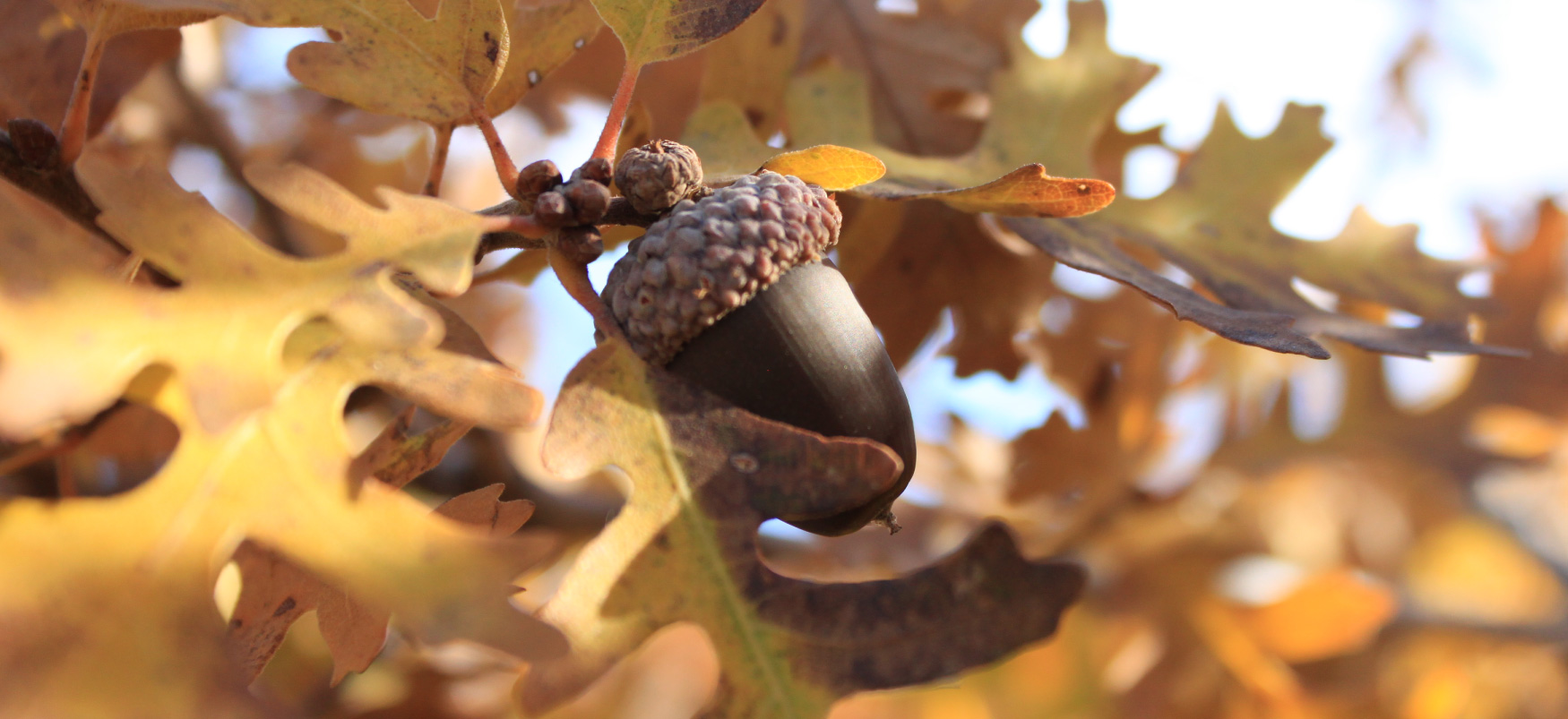
Figure 6.1 Being and Becoming. The acorn and the oak allow us to frame several metaphysical questions. Are there first causes? Do things have essences? Do things develop along a predetermined path? (credit: “Acorn” by Shaun Fisher/Flickr, CC BY 2.0)
図6.1 存在と生成。ドングリとオークの木から、いくつかの形而上学的な問いを立てることができる。第一原因はあるのか。ものは本質を持つのか。ものは、あらかじめ決められた道筋に沿って発展するのか。(クレジット:「Acorn」、Shaun Fisher/Flickr、CC BY 2.0)
Defining metaphysics is difficult. On a summary level, one possible definition is that metaphysics is the field of philosophy concerned with identifying that which is real. You may wonder why any reasonable person would invest time pursuing an answer to that which, at first glance, seems obvious. But on deeper inspection of the world around you, it can be challenging to identify what is real.
英語のヒント
形而上学を定義することは難しい。概略的には、何が実在するのかを明らかにしようとする哲学の分野、と定義することができる。一見明白に思える事柄の答えを追い求めることに、分別のある人がなぜ時間を費やすのかと、不思議に思うかもしれない。しかし、自分の周りの世界をより深く調べてみると、何が実在するのかを見定めるのは容易ではない。
Consider the acorn. As you probably learned through life science, an acorn is destined to become an oak. If you were to look at the acorn and compare it to the oak, you would see two radically different things. How can a thing change and remain the same thing?
英語のヒント
ドングリを考えてみよう。生命科学で学んだことがあるだろうが、ドングリはオークの木になるよう運命付けられている。もしドングリを見てオークの木と比べるなら、まったく異なる二つのものが見えるだろう。あるものは、どうして変化しながら同じものであり続けられるのだろうか。
Aristotle offers insight into how the acorn and the oak represent change but within the same being. Within Aristotle’s thinking, each being has a specific end or purpose. As telos is Greek for “end” (end as target or goal), this view is known as teleological. In addition, each being is described as having a specific function (ergon) by which that being seeks the proper end.
英語のヒント
アリストテレスは、ドングリとオークが、同一の存在の内部の変化をどのように示すのかについて、洞察を与えてくれる。アリストテレスの考えでは、各々の存在には特定の終わり、すなわち目的がある。テロスはギリシア語で「終わり」――標的や目標としての終わり――を意味するため、この見方は「目的論的」と呼ばれる。また、各々の存在には、それによって自らにふさわしい目的を追求する、特定の機能(エルゴン)があるとされる。
In the case of an oak tree, the oak tree works from its acorn to the fullness of the oak. Aristotle describes the becoming as movement from a state of potentiality to actuality. You might say that which is most real concerning the oak stands beneath the movement from acorn to oak. The movement from potentiality toward actuality is one method to make sense of change while maintaining a constant or underlying sense of true being.
英語のヒント
オークの木の場合、ドングリから、十分に成長したオークへと向かっていく。アリストテレスは、この生成を、可能態の状態から現実態への運動として説明する。オークに関して最も実在的なものは、ドングリからオークへの運動の下に存している、と言ってもよいだろう。可能態から現実態への運動という考えは、真の存在についての不変の、あるいは根底的な捉え方を維持しながら、変化を理解する一つの方法である。
As you will discover, the topic of metaphysics is far-reaching and broaches many questions.
英語のヒント
これからわかるように、形而上学の主題は広範囲に及び、多くの問いを提起する。
What is real?
何が実在するのか。
What is being?
存在とは何か。
Is there a purpose to our being?
私たちの存在には目的があるのか。
What is the self?
自己とは何か。
Is there a God?
神は存在するのか。
Do human beings (however defined) possess free will?
どのように定義するにせよ、人間は自由意志を持つのか。
Metaphysical questions tend not to be resting points but starting points. This chapter begins to explore many simple yet interrelated questions as part of seeking the real.
英語のヒント
形而上学的な問いは、到着点というより出発点となることが多い。本章では、実在するものを探し求める一環として、単純でありながら互いに結び付いた、多くの問いの探究を始める。
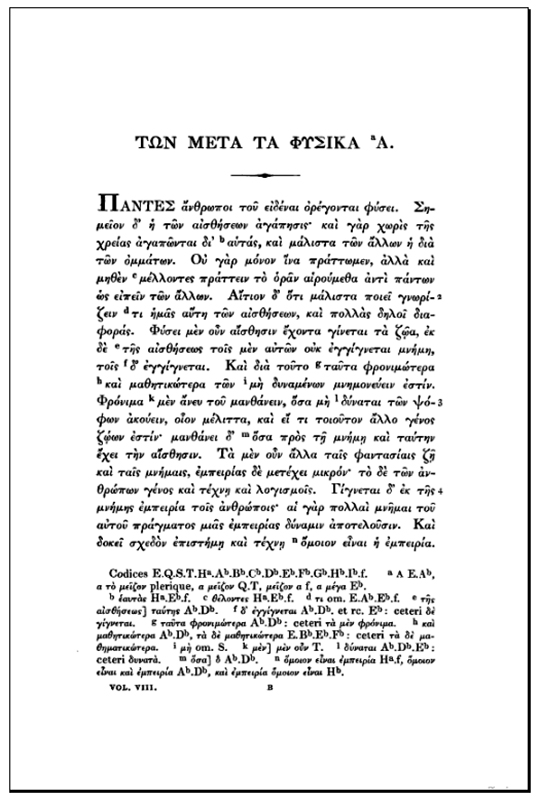
Figure 6.2 The term metaphysics comes from Aristotle’s book of the same name. The opening sentence translates as “All men by nature desire to know.” Our desire to lay bare the deepest and most discrete understanding of reality is at the heart of metaphysics. (credit: “Aristotle: Metaphysica, first page in Immanuel Bekker’s edition, 1837.” by Wikimedia, Public Doman)
図6.2 metaphysics(形而上学)という名称は、アリストテレスの同名の著作に由来する。その冒頭の一文は、「すべての人間は、生まれつき知ることを欲する」と訳せる。現実について、最も深く、最も細かく区別された理解を明らかにしたいという欲求が、形而上学の核心にある。(クレジット:「Aristotle: Metaphysica, first page in Immanuel Bekker’s edition, 1837.」、Wikimedia、パブリックドメイン)