第6章形而上学Metaphysics
6.4 Free Will6.4 自由意志
Learning Objectives学習目標
By the end of this section, you will be able to:
この節を学び終えると、次のことができるようになる。
Define free will.
自由意志を定義する。
Explain how determinism, libertarianism, and compatibilism are different.
決定論、自由意志論、両立論の違いを説明する。
Though the presence of evil in the world suggests that we have free will, the idea of a first mover or an all-powerful divine being challenges the idea that we might have free will in the material world. Throughout most of our experiences, it seems as if we are free. When we complete a task, we seem very capable of marking this experience as different from being free. But what if the sensation of freedom does not demonstrate the presence of freedom?
英語のヒント
世界に悪が存在することは、私たちに自由意志があることを示唆する。しかし、第一動者や全能の神的存在者という考えは、物質的な世界で私たちに自由意志がありうるという考えに異議を突きつける。私たちの経験の大部分では、自分は自由であるかのように思える。課題を完了したとき、私たちはその経験を、自由であることとは異なるものとして、十分にはっきり区別できるように思える。しかし、自由であるという感覚が、自由の存在を証明しないとしたらどうだろうか。
Amusement parks often have rides that consist of a car on a track that has safety features forcing the car to stay within predetermined paths. In most cases, there is an accelerator, a brake, and a steering wheel. Some rides have strategically placed rubber boundaries guiding the vehicle, while others have a steel post hidden underneath the car that guides the car by means of a predetermined tract. While “driving” the car, the young driver feels free to choose the direction. As vivid as the experience for the driver may be, the thrill and phenomenon does not prove the presence or existence of freedom! Similarly, does the feeling of being free demonstrate the presence of freedom in our actions?
英語のヒント
遊園地には、車が決められた経路から外れないようにする安全装置を備えた、軌道上を走る車の乗り物がよくある。たいてい、アクセル、ブレーキ、ハンドルが付いている。車を導くゴム製の境界が計算して配置された乗り物もあれば、車の下に鋼鉄の支柱を隠し、定められた軌道に沿って導く乗り物もある。車を「運転」している間、幼い運転手は、自分で自由に方向を選んでいると感じる。運転手の経験がどれほど鮮明でも、その興奮や現象は、自由があることを証明しない。同じように、自由であると感じることは、私たちの行為に自由が存在することを証明するのだろうか。
Defining Freedom自由を定義する
To begin to answer these questions, this section first explores two competing definitions of freedom.
これらの問いに答え始めるため、この節ではまず、競合する二つの自由の定義を検討する。
The Ability to Do Otherwise別のようにもできる能力
Perhaps the most intuitive definition of freedom can be expressed as “A moral agent is free if and only if the moral agent could have done otherwise.” Philosophers refer to this expression as the Principle of Alternative Possibilities (PAP). A person is typically thought of as performing a free action if that same person could have taken a different action or decided to take no action. Within many legal systems, a person is not considered culpable if the action taken was forced.
英語のヒント
おそらく最も直観的な自由の定義は、「道徳的行為者が自由であるのは、その行為者が別のようにもできた場合、かつその場合に限る」と表せる。哲学者はこれを、他行為可能性原理(PAP)と呼ぶ。ある人が別の行動を取ることも、何もしないと決めることもできたなら、その人は自由な行為をしたと通常は考えられる。多くの法体系では、取った行動が強制されたものである場合、その人に責任があるとはみなされない。
One objection against the PAP is based on how we define our being. What if we as physical objects are governed by the laws of nature? We do not set our rate of velocity when diving into a pool, nor are we able to determine the force of gravity if we choose to enter the water “belly first”! Those outcomes are determined by the laws of nature. We, as objects, are governed by such forces. Does this mean, like the driver in the ride depicted above, that we never actually experience alternative possibilities? If so, then the possibility of freedom—a precondition for responsibility—seems absent.
英語のヒント
PAPへの一つの反論は、私たちの存在をどう定義するかに基づく。物理的な対象である私たちが、自然法則に支配されているとしたらどうだろう。プールに飛び込むとき、自分の速度を自分で設定するわけではない。また、「腹から」水に入ろうと決めたとしても、重力の強さを自分で決めることはできない。それらの結果は自然法則によって決まる。私たちは対象として、そのような力に支配されている。これは、先ほど描写した乗り物の運転手のように、私たちが実際には別の可能性を一度も経験しないということだろうか。そうならば、責任の前提条件である自由の可能性は、存在しないように思える。
What about socialization and the conditioning that follows from living in a society? Does the constructed set of norms and values lessen our ability to do otherwise? Given the external conditioning we all endure, can we assert that the PAP is a possibility?
英語のヒント
社会の中で生きることから生じる社会化と条件づけは、どうだろうか。構築された規範や価値の体系は、別のように行為する私たちの能力を弱めるのだろうか。私たち全員が被る外からの条件づけを踏まえて、PAPが可能だと主張できるだろうか。
The Ability to Do as One Wants自分の望むようにできる能力
One possible objection to defining freedom through PAP was offered by Harry G. Frankfurt. Frankfurt argued that freedom was better understood not as the ability to do otherwise but as the ability to do what one wants (1971). Imagine that a deranged space alien barges into your room and produces a sinister-looking button. You are informed that the button will annihilate Earth if pressed. The alien laughs manically and demands that you eat a delicious pizza brought from your favorite pizzeria or the alien will press the button. You can feel and smell the freshness! In this case, most of us would argue that you are not free to do otherwise. But you could say that you not only want the pizza, a first-order volition, but given what is at stake, you want to want the pizza. You could be described as acting freely, as you are satisfying your first- and second-order volitions. You are free, as you are doing what you want to do.
英語のヒント
PAPによって自由を定義することへの一つの反論は、ハリー・G・フランクファートによって示された。フランクファートは、自由は別のようにもできる能力ではなく、自分の望むことをできる能力として理解するほうが適切だと論じた(1971)。正気を失った宇宙人があなたの部屋へ押し入り、不気味なボタンを取り出したと想像しよう。そのボタンを押すと地球が消滅する、と告げられる。宇宙人は狂ったように笑い、あなたのお気に入りの店から持ってきたおいしいピザを食べろ、さもないとボタンを押す、と要求する。できたての感じも香りも伝わってくる。この場合、あなたには別のように行為する自由はない、と私たちの大半は言うだろう。しかし、あなたはピザが欲しいという一階の意欲をもつだけでなく、何がかかっているかを考えれば、「ピザが欲しいと思いたい」とも言える。あなたは一階と二階の意欲を満たしているのだから、自由に行為していると記述できる。自分がしたいことをしているのだから、自由なのである。
Libertarianism自由意志論
Within the free will debate, libertarianism denotes freedom in the metaphysical sense and not in the political sense. A libertarian believes that actions are free—that is, not caused by external forces. We are free to plot our course through our actions. Existentialists further argue that our essence is the product of our choices.
英語のヒント
自由意志の論争において、リバタリアニズム、すなわち自由意志論が指すのは、政治的な意味での自由ではなく、形而上学的な意味での自由である。自由意志論者は、行為は自由であり、つまり外部の力によって引き起こされるものではないと考える。私たちは行為を通じて、自分の進路を自由に描ける。実存主義者はさらに、私たちの本質は自らの選択の産物だと論じる。
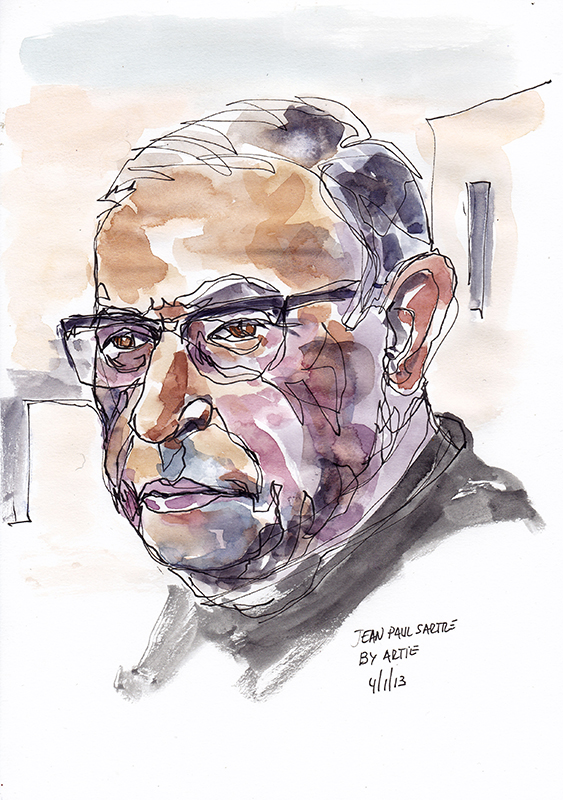
Figure 6.12 Condemned to Be Free. Jean-Paul Sartre (1905–1980) was a leader in the existential movement. He once characterized the reality of freedom as condemnation, as through the existence of free will, a human being was therefore responsible for all actions taken. (credit: “Jean Paul Sartre for PIFAL” by Arturo Espinosa/Flickr, CC BY 2.0)
図6.12 自由の刑に処せられている。ジャン=ポール・サルトル(1905~1980年)は、実存主義運動の指導者だった。彼はかつて、自由の実在を刑罰と表現した。自由意志が存在することによって、人間は自らが取ったあらゆる行為に責任を負うからである。(クレジット:“Jean Paul Sartre for PIFAL” by Arturo Espinosa/Flickr, CC BY 2.0)
Many proponents of the libertarian view assume the definition of freedom inherent to the Principle of Alternative Possibilities (PAP). We are free if and only if we could have done otherwise at a specific time.
英語のヒント
自由意志論の支持者の多くは、他行為可能性原理(PAP)に含まれる自由の定義を前提とする。私たちが自由であるのは、特定の時点で別のようにもできた場合、かつその場合に限る。
There are many challenges to this assertion. One objection, based on Benjamin Libet’s neuroscience-based experiments, suggest that many of the actions we perceive as free are, in fact, caused and determined by the brain.
英語のヒント
この主張には多くの異議がある。ベンジャミン・リベットの神経科学に基づく実験を根拠とする一つの反論は、私たちが自由だと感じる行為の多くは、実際には脳によって引き起こされ、決定されていると示唆する。