第6章形而上学Metaphysics
6.3 Cosmology and the Existence of God6.3 宇宙論と神の存在
Learning Objectives学習目標
By the end of this section, you will be able to:
この節を学び終えると、次のことができるようになる。
Describe teleological and moral arguments for the existence of God.
神の存在についての目的論的論証と道徳的論証を説明する。
Outline Hindu cosmology and arguments for and against the divine.
ヒンドゥー教の宇宙論と、神的なものの存在を支持する論証・反対する論証の概要を示す。
Explain Anselm’s ontological argument for the existence of God.
神の存在についてのアンセルムスの存在論的論証を説明する。
Articulate the distinction between the logical and evidential problems of evil.
論理的な悪の問題と証拠的な悪の問題の違いを明確に述べる。
Another major question in metaphysics relates to cosmology. Cosmology is the study of how reality is ordered. How can we account for the ordering, built upon many different elements such as causation, contingency, motion, and change, that we experience within our reality? The primary focus of cosmological arguments will be on proving a logically necessary first cause to explain the order observed. As discussed in earlier sections, for millennia, peoples have equated the idea of a first mover or cause with the divine that exists in another realm. This section cosmological arguments for the existence of God as well as how philosophers have reconciled the existence of God with the presence of evil in the world.
英語のヒント
形而上学のもう一つの主要な問いは、宇宙論に関わる。宇宙論は、実在がどのように秩序づけられているかを研究する。私たちが実在のうちに経験する秩序は、因果性、偶然性、運動、変化など、多くの異なる要素に基づいている。この秩序づけをどう説明できるだろうか。宇宙論的論証の主な焦点は、観察される秩序を説明するために、論理的に必然な第一原因を証明することにある。前の各節で論じたように、何千年にもわたり、人々は第一動者や第一原因を、別の領域に存在する神的なものと同一視してきた。この節では、神の存在についての宇宙論的論証と、世界に悪が存在することと神の存在を哲学者たちがどのように両立させてきたかを扱う。
Teleological Arguments for God神の存在についての目的論的論証
Teleological arguments examine the inherent design within reality and attempt to infer the existence of an entity responsible for the design observed. Teleological arguments consider the level of design found in living organisms, the order displayed on a cosmological scale, and even how the presence of order in general is significant.
英語のヒント
目的論的論証は、実在の内部に備わる設計を調べ、観察される設計を担う存在者の存在を推論しようとする。目的論的論証では、生物に見られる設計の水準、宇宙規模で示される秩序、さらには一般に秩序が存在することがどのような意味をもつかまで考察する。
Aquinas’s Design Argumentアクィナスの設計論証
Thomas Aquinas’s Five Ways is known as a teleological argument for the existence of God from the presence of design in experience. Here is one possible formulation of Aquinas’s design argument:
トマス・アクィナスの「五つの道」は、経験に見られる設計の存在から神の存在を論証する目的論的論証として知られている。アクィナスの設計論証は、たとえば次のように定式化できる。
Things that lack knowledge tend to act toward an end/goal.
知識をもたないものも、目的・目標に向かって作用する傾向がある。
These things act toward an end either by chance or by design.
これらのものが目的に向かって作用するのは、偶然によるか、設計によるかのどちらかである。
It is obvious that it is not by chance.
それが偶然によるのではないことは明らかである。
Things that lack knowledge act toward an end by design.
知識をもたないものは、設計によって目的に向かって作用する。
If a thing is being directed toward an end, it requires direction by some being endowed with intelligence (e.g. the arrow being directed by the archer).
英語のヒント
あるものが目的へと導かれているなら、知性を備えた何らかの存在者による指導を必要とする(たとえば、射手によって導かれる矢)。
Therefore, some intelligent being exists that directs all natural things toward their end. This being is known as God.
したがって、すべての自然的なものをそれぞれの目的へと導く、ある知的な存在者がいる。この存在者は神として知られる。
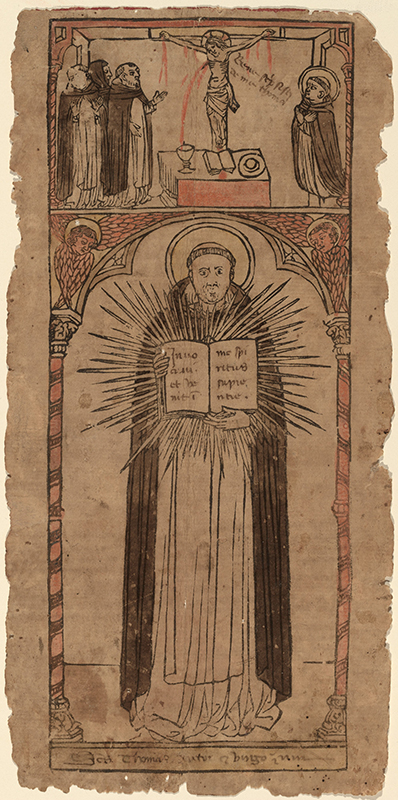
Figure 6.10 Thomas Aquinas proposed a teleological argument for the existence of God, basing God’s existence on what he viewed as the inherent design within reality. (credit: “Saint Thomas Aquinas, c. 1450” by Rosenwald Collection/National Gallery of Art, Public Domain)
図6.10 トマス・アクィナスは、実在に内在すると考えた設計を根拠に、神の存在についての目的論的論証を示した。(クレジット:“Saint Thomas Aquinas, c. 1450” by Rosenwald Collection/National Gallery of Art, パブリックドメイン)
Design Arguments in Biology生物学における設計論証
Though Aquinas died long ago, his arguments still live on in today’s discourse, exciting passionate argument. Such is the case with design arguments in biology. William Paley (1743–1805) proposed a teleological argument, sometimes called the design argument, that there exists so much intricate detail, design, and purpose in the world that we must suppose a creator. The sophistication and incredible detail we observe in nature could not have occurred by chance.
英語のヒント
アクィナスが亡くなってから長い年月がたつが、その論証は今日の言説にも生き続け、熱い議論を引き起こしている。生物学の設計論証がその例である。ウィリアム・ペイリー(1743~1805年)は、設計論証とも呼ばれる目的論的論証を提示した。世界には精緻な細部と設計と目的があまりにも多く存在するので、創造者を想定しなければならない、というものだ。私たちが自然の中に観察する洗練された仕組みと驚くほどの細部は、偶然には生じえなかったというのである。
Paley employs an analogy between design as found within a watch and design as found within the universe to advance his position. Suppose you were walking down a beach and you happened to find a watch. Maybe you were feeling inquisitive, and you opened the watch (it was an old-fashioned pocket watch). You would see all the gears and coils and springs. Maybe you would wind up the watch and observe the design of the watch at work. Considering the way that all the mechanical parts worked together toward the end/goal of telling time, you would be reluctant to say that the watch was not created by a designer.
英語のヒント
ペイリーは自らの立場を進めるため、時計に見られる設計と宇宙に見られる設計との類比を用いる。浜辺を歩いていて、たまたま時計を見つけたとしよう。好奇心が湧き、時計を開けたかもしれない(昔ながらの懐中時計だったとしよう)。すると、歯車、コイル、ばねがすべて見えるだろう。時計を巻き、その設計が働いている様子を観察するかもしれない。時を告げるという目的・目標に向けて、機械の部品すべてが協働する仕方を考えると、その時計は設計者によって作られたのではない、と言うのはためらわれるだろう。
Now consider another object—say, the complexity of the inner workings of the human eye. If we can suppose a watchmaker for the watch (due to the design of the watch), we must be able to suppose a designer for the eye. For that matter, we must suppose a designer for all the things we observe in nature that exhibit order. Considering the complexity and grandeur of design found in the world around us, the designer must be a Divine designer. That is, there must be a God.
英語のヒント
次に別の対象、たとえば人間の目の内部の仕組みの複雑さを考えてみよう。時計の設計を根拠に時計職人を想定できるなら、目についても設計者を想定できなければならない。それどころか、自然の中に観察される、秩序を示すすべてのものについて、設計者を想定しなければならない。身の回りの世界に見られる設計の複雑さと壮大さを考えれば、その設計者は神的な設計者でなければならない。つまり、神が存在しなければならないのである。
Often, the design argument is formulated as an induction:
設計論証は、しばしば帰納として定式化される。
In all things we have experienced that exhibit design, we have experienced a designer of that artifact.
設計を示すものを経験したすべての場合に、私たちはその制作物の設計者も経験している。
The universe exhibits order and design.
宇宙は秩序と設計を示している。
Given #1, the universe must have a designer.
1を踏まえると、宇宙にも設計者がいなければならない。
The designer of the universe is God.
宇宙の設計者は神である。
Moral Arguments for God神の存在についての道徳的論証
Another type of argument for the existence of God is built upon metaethics and normative ethics. Consider subjective and objective values. Subjective values are those beliefs that guide and drive behaviors deemed permissible as determined by either an individual or an individual’s culture. Objective values govern morally permissible and desired outcomes that apply to all moral agents. Moral arguments for the existence of God depend upon the existence of objective values.
英語のヒント
神の存在についての別の種類の論証は、メタ倫理学と規範倫理学を基礎としている。主観的価値と客観的価値を考えてみよう。主観的価値とは、個人またはその人の文化によって許容できると判断された行動を導き、促す信念である。客観的価値は、あらゆる道徳的行為者に適用される、道徳的に許容可能で望ましい結果を規定する。神の存在についての道徳的論証は、客観的価値が存在することに依存している。
If there are objective values, then the question of “Whence do these values come?” must be raised. One possible answer used to explain the presence of objective values is that the basis of the values is found in God. Here is one premise/conclusion form of the argument:
英語のヒント
客観的価値が存在するなら、「これらの価値はどこから来るのか」という問いを提起しなければならない。客観的価値の存在を説明する一つの可能な答えは、その価値の基盤が神にあるというものである。この論証を前提と結論の形で表すと、たとえば次のようになる。
If objective values exist, there must be a source for their objective validity.
客観的価値が存在するなら、その客観的な妥当性の源が存在しなければならない。
The source of all value (including the validity held by objective values) is God.
すべての価値の源は、客観的価値の妥当性の源も含めて、神である。
Objective values do exist.
客観的価値は確かに存在する。
Therefore, God exists.
したがって、神が存在する。
This argument, however, raises questions. Does moral permissibility (i.e., right and wrong) depend upon God? Are ethics an expression of the divine, or are ethics better understood separate from divine authority?
英語のヒント
しかし、この論証は問いを生む。道徳的な許容可能性、つまり正しさと誤りは、神に依存するのだろうか。倫理は神的なものの表現なのか、それとも神の権威から切り離して理解するほうが適切なのか。