第6章形而上学Metaphysics
Atomism in Indian Philosophyインド哲学の原子論
Indian atomism provides for foundational immutable substances while going further toward accounting for change and explaining the transformation of the acorn into the oak. One of the earliest of all atomic models was pioneered in the sixth centurty BCE by a philosopher named Acharya Kanad. According to legend, he was inspired by watching pilgrims scatter rice and grains at a temple. As he began to examine the rice, he realized that the grains, left alone, were without value. But once the grains were assembled into a meal, the collection of “anu” (atom) made a meal. So too were the beings we observe collections of indivisible particles.
英語のヒント
インドの原子論は、基礎となる不変の実体を認めながら、変化の説明、そしてドングリからオークへの変容の説明に、さらに踏み込む。最初期の原子モデルの一つを開拓したのは、紀元前6世紀のアーチャーリヤ・カナーダという哲学者であった。伝説によれば、彼は寺院で巡礼者たちが米や穀粒をまくのを見て着想を得た。米を調べ始めると、一粒ずつ離しておけば価値がないことに気付いた。しかし、穀粒を集めて一食分にすれば、「アヌ」(原子)の集まりが食事を作る。同じように、私たちが観察する存在も、分割できない粒子の集まりなのであった。
Another tradition, the Nyāya-VaiśeṢika, proposed an atomic theory built upon two elements: 1) The presence of change within things or wholes, and 2) The doctrine of five elements (pañca mahābhūtas). Unlike the Greek atomistic view explored earlier, each atom was thought to have a specific attribute. As noted by Chatterjee (2017), “An earth atom has odour, a water atom taste, a fire atom colour and an air atom has touch as specific attribute.”
英語のヒント
別の伝統であるニヤーヤ=ヴァイシェーシカは、(1)ものや全体の中に変化があること、(2)五大元素(パンチャ・マハーブータ)の教説という、二つの要素に基づく原子論を提案した。先ほど検討したギリシアの原子論とは異なり、各原子には固有の属性があると考えられた。チャタジー(2017)が述べるように、「地の原子は匂い、水の原子は味、火の原子は色、空気の原子は触覚を、固有の属性として持つ」。
The reasoning supporting the atomistic views described above is a priori. Using an appeal to reason (and not experience), it was asserted that all things were composed of parts, and therefore it was necessary to assert that all things were reducible to eternal, spherical, and indivisible building blocks. The potential of an infinite regress (anavasthā) suggested that parts could always be divided into smaller parts. However, reason dictated that there must be a logical starting point at which no smaller part could be admitted (Chatterjee, 2017).
英語のヒント
上述の原子論的見方を支える推論は、経験に先立つアプリオリなものである。経験ではなく理性に訴えることで、すべてのものは部分から成り、したがって、すべてのものは永遠で球形の、分割できない構成単位へ還元できると主張する必要があるとされた。無限後退(アナヴァスター)の可能性は、部分はいつでも、さらに小さな部分へ分けられることを示唆する。しかし理性は、それより小さい部分を認められない、論理的な出発点がなければならないと要求した(Chatterjee 2017)。
Unlike the random bumping and grinding used by Democritus to explain how atoms combined to form wholes, the Nyāya-VaiśeṢika framework explained composition through the joining of similar atomic types to first form a dyad (dyaṇuka) and then a triad (tryaṇuka). Triads joined in varying permutations in order to build the objects, or “wholes,” we experience.
英語のヒント
デモクリトスは、無作為な衝突や擦れ合いによって、原子が結合し全体を成すことを説明した。これとは異なり、ニヤーヤ=ヴァイシェーシカの枠組みでは、同じ種類の原子が結び付き、まず二原子体(ドヴィヤヌカ)を、次いで三原子体(トリヤヌカ)を作ることによって、構成を説明した。三原子体は、さまざまな配置で結合し、私たちが経験する物体、すなわち「全体」を組み立てた。
Ontological Perspectives on Substance実体に関する存在論的な見方
Up until now, this chapter has examined substance from a materialistic perspective—the concrete substances (water, fire, atoms) that make up the physical world that we see around us. As such, the discussion has been located squarely within a physicalism, an approach that equates the real world with the physical world. The study of existence, of being, of what is real—a discipline known as ontology—is broader. Ontos is the Greek participle from the verb “to be” and means “being.” What qualifies as being? How should we categorize being?
英語のヒント
ここまで本章は、物質主義的な観点から実体を検討してきた。すなわち、私たちの周囲に見える物理的世界を構成する、水、火、原子といった具体的な実体である。その意味で、この議論は、実在する世界と物理的世界を同一視する物理主義の中に、明確に位置していた。存在していること、存在そのもの、何が実在するかを研究する分野、すなわち存在論は、より広い。オントスは、ギリシア語の「ある」という動詞の分詞で、「存在するもの」を意味する。何が存在と認められるのか。存在をどう分類すべきなのだろうか。
Naturalism自然主義
Naturalism, in its simplest form, is the view that meaningful inquiry includes only the physical and the laws governing physical entities and rejects the priority placed on reason assumed within metaphysics. For example, naturalism asserts that the inventory of beings allowed should include beings that are found within the physical realm. If we can see a thing or if we can test a thing within a laboratory environment, then a naturalist would include the being within their inventory. Naturalists also weed out the assumptions, theories, and questions that are introduced but are not capable of empirical proof.
英語のヒント
最も単純な形での自然主義とは、意味のある探究は、物理的なものと、物理的存在を支配する法則だけを含むという見方である。それは、形而上学の中で前提とされる、理性を優先する姿勢を退ける。たとえば自然主義は、存在として認めるものの一覧には、物理的領域の内部に見いだされるものを含めるべきだと主張する。あるものを見ることができる、あるいは実験室で検証できるなら、自然主義者は、それを存在の一覧に含めるだろう。また自然主義者は、提示されはしても、経験による証明ができない前提、理論、問いを取り除く。
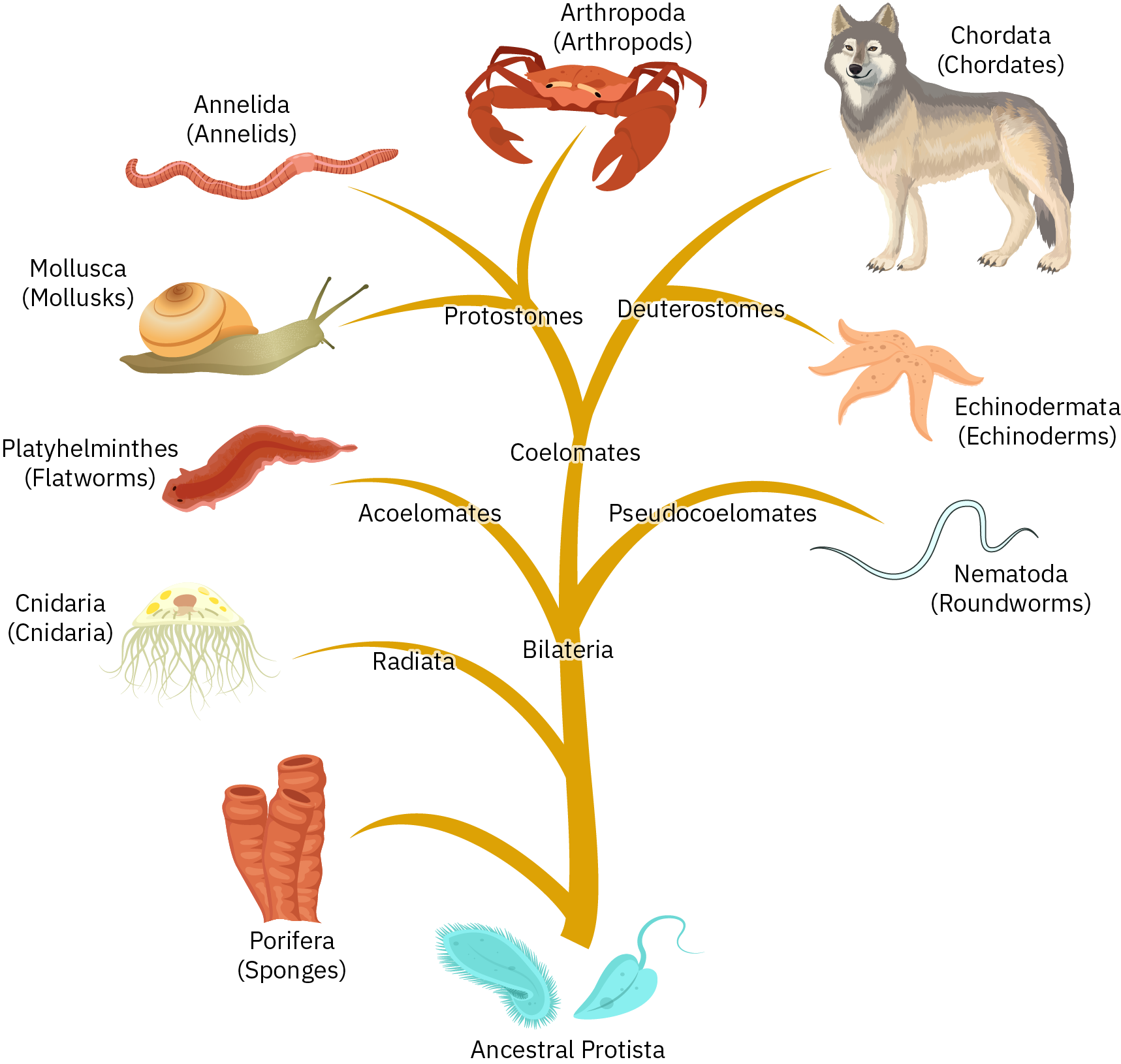
The debate between supernaturalism (that accepts the existence of beings beyond or above our natural realm) and naturalism is as old as philosophical inquiry itself. But the tension became particularly relevant during the modern period. During modernity, scholars made advances across many disciplines based upon a turn to a scientific method and a rejection of a priori reasoning.
英語のヒント
私たちの自然の領域を越えたり、その上位にあったりする存在を認める超自然主義と、自然主義との論争は、哲学的探究そのものと同じほど古い。しかし、この緊張がとりわけ重要になったのは近代である。近代の研究者たちは、科学的方法への転換と、アプリオリな推論の拒絶を基盤として、多くの分野で進歩を遂げた。
The Allegory of the Cave洞窟の比喩
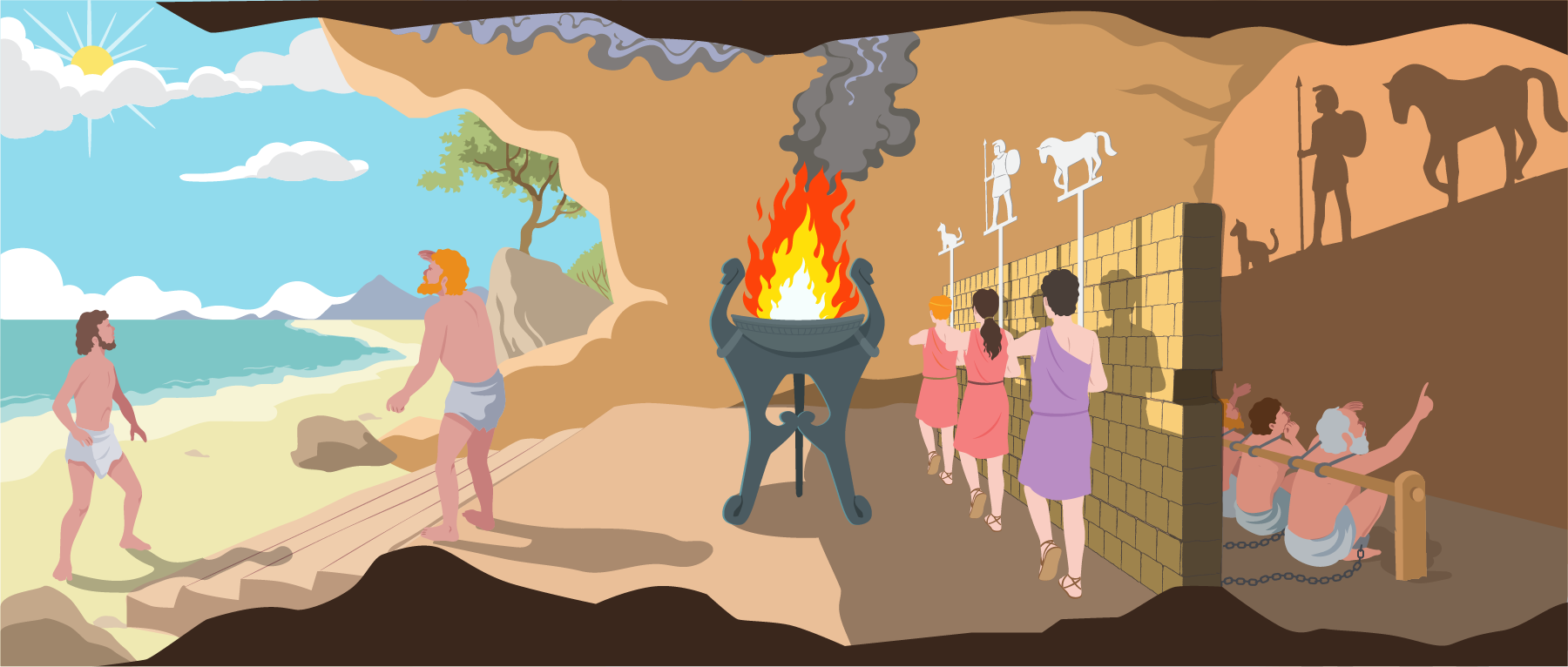
In Book VII of The Republic, Plato offered his allegory of the cave, which depicts prisoners who have mistaken shadows cast on the wall of the cave for real beings and therefore have mistaken illusion for truth. The prisoners have been imprisoned throughout their lives. They are chained in place and have been positioned so that they can only see shadows that are cast upon the wall in front of them. They have come to treat the shadows not as the reflections that they are, but as something real. In an unexpected plot twist, one prisoner escapes and reaches the cave entrance. There, for the first time, he sees the sun—the true source of light (knowledge). After adjusting to the overpowering light emanating from the sun, the prisoner realizes that a fire was causing objects to cast shadows on the cave wall. The shadows cast by the fire within the cave were reflections. He realized that the shadows are not actual being or truth—they were merely fading facsimiles of reality. The escaped prisoner, freed from the chains of his earlier captivity (metaphorically speaking), understands the true nature of being and truth. He returns to the cave to “free” his fellow captives, but his claim is rejected by those in chains.
英語のヒント
プラトンは『国家』第7巻で、洞窟の比喩を示した。そこでは、洞窟の壁に投じられた影を実在するものと取り違え、幻影を真理と取り違える囚人たちが描かれる。囚人たちは生涯ずっと閉じ込められている。鎖でその場に縛られ、目の前の壁に映る影しか見えない位置に置かれている。彼らは、影を実際のような反映としてではなく、実在する何かとして扱うようになった。思いがけない展開で、一人の囚人が脱出し、洞窟の入口へたどり着く。そこで彼は初めて、光、すなわち知識の真の源である太陽を見る。太陽から放たれる圧倒的な光に目が慣れると、洞窟の壁に物の影を映していたのは火だと気付く。洞窟内の火によって生じた影は、反映だったのである。影は、現実の存在でも真理でもなく、現実の薄れゆく複製にすぎなかったと、彼は悟る。比喩的に言えば、かつての囚われの鎖から解放されたこの囚人は、存在と真理の真の本性を理解する。彼は、仲間の囚人を「解放」しようと洞窟へ戻るが、その主張は鎖につながれた人々に退けられる。
Plato’s Notion of Substance and Formプラトンの実体とイデアの観念
The prisoners were mistaking shadows for that which was real. But shadows do not last. As soon as the source of light fades, the shadows too disappear. If we want to identify the really real, Plato argued, we need to go beyond mere shadows and try to find those beings whose reality is not temporary. The idea or form of a thing, unlike the material “shadow,” was not subject to atrophy and change.
英語のヒント
囚人たちは影を、実在するものと取り違えていた。しかし、影は続かない。光源が弱まれば、影も消えてしまう。本当に実在するものを見いだしたいなら、単なる影を越えて、実在性が一時的ではない存在を探そうとしなければならない、とプラトンは論じた。あるもののイデア、あるいは形は、物質的な「影」とは異なり、衰えや変化の影響を受けないのである。
The Latin term substantia, translated as “substance,” describes the basic reality or essence of a thing that supports or stands under features that are incidental to the substance itself. While the so-called incidental features (e.g., quantity, time, place, etc.) can change, the essence of the entity endures. To account for the fundamental whatness of a thing, Plato posited an unchanging form or idea as the underlying and unchanging substance. As all things within a person’s reality are subject to change, Plato reasoned that the forms or unchanging basic realities concerning all things must not be located within this world. He therefore posited a realm in which change did not occur.
英語のヒント
実体と訳されるラテン語substantiaは、あるものの基礎的な実在や本質を表す。それは、実体それ自体には付随的な特徴を支え、その下に存するものである。量、時、場所など、いわゆる付随的な特徴は変わりうるが、その存在の本質は存続する。あるものが根本的に「何であるか」を説明するため、プラトンは、その下にある不変の実体として、変わることのない形、すなわちイデアを想定した。人の現実の中のあらゆるものは変化するため、イデア、すなわちあらゆるものに関する不変の基礎的な実在は、この世界の内部にあってはならないと推論した。そこで、変化の起こらない領域を想定したのである。
There is an intuitive appeal to Plato’s accounting of the real to forms. How else could we explain our ability to recognize a type of being given the sheer number of differences we will observe in the instances of a thing? We can make sense of dog, for example, because beyond the differences found among spaniels, poodles, and retrievers, there is a form of dog that accounts for knowing dog and being as dog.
英語のヒント
プラトンがイデアによって実在を説明することには、直観に訴える魅力がある。あるものの個々の事例には、実に多くの違いが見られる。それなのに、私たちが一つの存在の種類を認識できることを、他にどう説明できるだろうか。たとえば犬を理解できるのは、スパニエル、プードル、レトリーバーの間の違いを越えて、犬のイデアがあり、それが犬を知ることと、犬として存在することを説明するからである。