第3章世界各地における哲学の起源The Early History of Philosophy around the World
Introductionはじめに
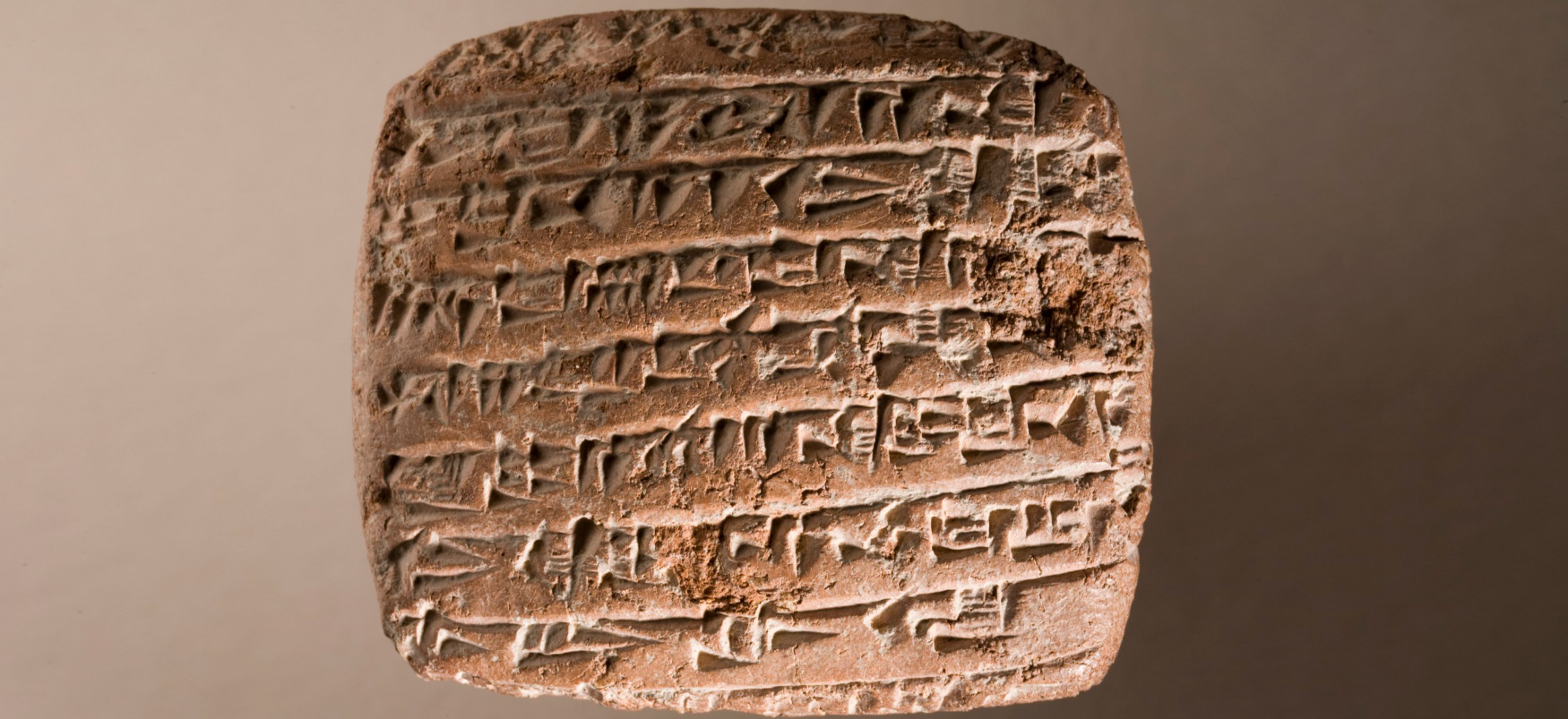
Figure 3.1 This cuneiform tablet from Anatolia has been dated to circa 1875–1840 BCE. The development of writing should not be equated with the development of a culture’s sense of meaning and history, but writing does make that meaning and history available to those living much later. (credit: “Tablet with Cuneiform Inscription LACMA M.79.106.2 (4 of 4)” by Ashley Van Haeften/Flickr, CC BY 2.0)
図3.1 アナトリア出土のこの楔形文字の粘土板は、紀元前1875〜1840年ごろのものとされる。文字の発達を、ある文化における意味や歴史の感覚の発達と同一視してはならない。しかし文字があれば、その意味や歴史を、はるか後世に生きる人々も知ることができる。(クレジット:「Tablet with Cuneiform Inscription LACMA M.79.106.2 (4 of 4)」、Ashley Van Haeften/Flickr、CC BY 2.0)
As discussed in previous chapters, the figure of the sage, the individual found in early societies around the world who mediated between the everyday and the transcendent realm, is an important precursor to philosophy. In most societies, this figure predates the recognition of the philosopher as the individual seeker of wisdom by many hundreds, if not thousands, of years. Justin E. H. Smith (2016) argues that philosophical thought requires abstract thinking of the sort required for the bureaucratic administration of society and that many societies developed philosophical traditions out of these practices of abstract reasoning. These traditions furnished shared beliefs about ethics, metaphysics, and other realms of philosophical inquiry.
英語のヒント
前の章で述べたように、世界各地の初期の社会に見られる賢者、すなわち日常世界と超越的な領域との間を仲介する人物は、哲学の重要な先駆者である。ほとんどの社会では、個人として知恵を探究する者が哲学者として認められるよりも、こうした人物の登場のほうが、数千年とはいわないまでも数百年は早い。ジャスティン・E・H・スミス(2016)は、哲学的思考には、社会を官僚制によって運営する際に必要になるような抽象的思考が求められ、多くの社会が、こうした抽象的推論の実践から哲学の伝統を発展させたと論じている。これらの伝統は、倫理、形而上学、その他の哲学的探究の領域について、人々が共有する信念をもたらした。
Homo sapiens have inhabited the earth for at least 250,000 years, originating in the Blue Nile rift region of northern Africa. However, the oldest forms of human writing were discovered in ancient Sumer, in Mesopotamia, between the Tigris and Euphrates Rivers where they enter the Persian Gulf, dating to around 3500 BCE (approximately 5,500 years ago). The vast period of time between the emergence of biological humans and the emergence of human writing is typically called prehistory. This term does not imply that early human beings lacked a sense of their past and the lessons they may draw from it. We know from studying modern aliterate societies that many of them possess oral traditions of storytelling that provide historical perspective. However, whatever perspective prehistoric humans gained from oral history is completely lost to us.
英語のヒント
ホモ・サピエンスは北アフリカの青ナイル川地溝帯地域に起源を持ち、少なくとも25万年前から地球に暮らしてきた。しかし、人類最古の文字の形態が発見されたのは、チグリス川とユーフラテス川がペルシア湾へ注ぐ一帯に位置する、メソポタミアの古代シュメールである。その年代は紀元前3500年ごろ、約5500年前にさかのぼる。生物としての人類の出現から、文字の出現までの膨大な期間は、通常「先史時代」と呼ばれる。この名称は、初期の人類に自分たちの過去についての感覚や、そこから教訓を引き出す力がなかったことを意味しない。現代の文字を使わない社会を研究すると、その多くに、歴史を捉える視点を与える口承の物語の伝統があることがわかる。しかし、先史時代の人々が口承の歴史から得た見方がどのようなものであれ、私たちにはそのすべてが失われている。
The use of writing to record human thought marks the transition from prehistory to history. The first recorded texts include genealogies, accounts of heroic and everyday actions by human beings, and legal codes. These earliest writings offer a glimpse into early human systems of government and everyday life. Writing expressing philosophical questions came later, primarily in the form of religious and mythological stories, and this is where we begin. There is concrete evidence that at this turning point in human history, people were aware of and concerned with history; engaged in questions of the origins of nature and the self; speculating about the goals and purposes of human life, whether moral or spiritual; and reasoning about right, wrong, justice, and injustice. This turning point is what German intellectual Karl Jaspers (1883–1969) has called the “Axial Period” (1953), more commonly translated as the “Axial Age.” Jaspers observed that this “axis” of the emergence of philosophical thought occurred during a somewhat well-defined period, between 800 BCE and 200 BCE, in multiple locations around the world, principally the Mediterranean region, Mesopotamia, India, and China. Remarkably, human beings in these disparate locations appear to have made roughly simultaneous transitions, first from prehistory to history, and then from a mythological and religious understanding of human beings and their place in the world to a more systematic study of human beings and the world around them. This chapter will cover the period of time from the so-called axial age to the development of rich philosophical traditions in Africa, Asia, and the Americas.
英語のヒント
人間の思考を文字で記録するようになったことが、先史時代から歴史時代への移行を画する。最初期の記録には、系譜、人々の英雄的行為や日常の行為についての記述、法典などがある。これらの最古の文書から、初期の人間社会の統治制度や日常生活を垣間見ることができる。哲学的な問いを表現する文章が現れるのは、その後のことであり、主として宗教や神話の物語という形を取っていた。私たちの検討もそこから始めよう。人類史のこの転換点で、人々が歴史を意識し、関心を寄せ、自然と自己の起源を問い、人間の生の目標や目的を道徳的・精神的な面から考察し、正邪や正義と不正義について推論していたことを示す、具体的な証拠がある。ドイツの思想家カール・ヤスパース(1883〜1969年)は、この転換点を「Axial Period」(1953年)、より一般的な英訳では「Axial Age」、すなわち「枢軸時代」と呼んだ。ヤスパースは、哲学的思考が現れるこの「枢軸」が、紀元前800〜200年という比較的はっきりした期間に、世界の複数の場所、主として地中海地域、メソポタミア、インド、中国で生じたと指摘した。驚くべきことに、互いに離れたこれらの場所の人々は、おおむね同時に移行を遂げたように見える。まず先史時代から歴史時代へ、次いで、人間と世界におけるその位置を神話的・宗教的に理解する段階から、人間とその周囲の世界を、より体系的に研究する段階へと移行したのである。本章では、いわゆる枢軸時代から、アフリカ、アジア、南北アメリカに豊かな哲学の伝統が発展するまでの時代を扱う。