第3章世界各地における哲学の起源The Early History of Philosophy around the World
3.3 Classical Chinese Philosophy3.3 古典中国哲学
Learning Objectives学習目標
By the end of this section, you will be able to:
この節を学ぶと、次のことができるようになる。
Distinguish the three main schools of classical Chinese philosophy: Confucianism, Mohism, and Daoism.
古典中国哲学の主要な三学派、儒教、墨家思想、道家思想を区別する。
Explain the five constant virtues of Confucian moral philosophy.
儒教の道徳哲学における五常の徳を説明する。
Identify the key principles of Mohism.
墨家思想の主要な原理を挙げる。
Evaluate Daoism’s approach to ethics.
道家思想の倫理へのアプローチを評価する。
In 2013, archaeologists made a remarkable discovery—Chinese characters on a stone axe dating to 5,000 years ago (Tang 2013). Previously, the earliest known Chinese characters had been dated to approximately 1600 BCE. The stone axe suggests that a written language was in use much earlier than previously thought.
英語のヒント
2013年、考古学者たちは驚くべき発見をした。5000年前にさかのぼる石斧に、中国の文字が刻まれていたのである(Tang 2013)。それ以前、知られていた最古の中国の文字は、紀元前1600年ごろのものとされていた。この石斧は、従来考えられていたよりもはるかに早く、書記言語が使われていたことを示唆する。
The first written records referring to names, dates, and accounts that were part of Chinese prehistory, like the details of other prehistoric periods around the world, are unverifiable. But this discovery of very early writing suggests that what were once considered myths of Chinese history may have a basis in reality. The so-called Five Emperors and the great leaders Yao, Shun, and Yu are frequently referenced in early writings. These great leaders are identified as sages and are said to have invented the key tools for agrarian civilization, including traps, nets, the plow, and river dams to provide a stable water supply.
英語のヒント
中国の先史時代に属する人名、年代、出来事に言及する最初期の文書記録は、世界各地の他の先史時代の詳細と同様、検証できない。しかし、この非常に古い文字の発見は、かつて中国史の神話と考えられていたものに、現実の根拠があるかもしれないことを示唆する。初期の文献には、いわゆる五帝や、堯、舜、禹という偉大な指導者への言及が頻繁に見られる。これらの偉大な指導者は聖人とされ、罠、網、鋤、安定した水の供給を確保する河川の堰など、農耕文明にとって重要な道具を発明したと伝えられている。
That early sages were rulers and inventors of key technological advances is typical of Chinese thought, which emphasizes the practical importance of wisdom. Classical Chinese philosophers were less interested in questions of epistemology and logic; instead, the most enduring impact of classical Chinese philosophy pertained to ethics. Chinese philosophers were less concerned with bridging the gap between internal thought (subjectivity) and the external world (objectivity) than with understanding how the individual fits in a larger social system so that each may act in the best possible way. This section will examine how the main schools of Chinese philosophy—Confucianism, Daoism, and Mohism—address these questions.
英語のヒント
初期の聖人が支配者であり、重要な技術的進歩をもたらした発明者でもあったということは、知恵の実践的な重要性を強調する中国思想に典型的である。古典中国の哲学者は、認識論や論理学の問いには比較的関心が薄かった。古典中国哲学が最も長く持続する影響を及ぼしたのは、むしろ倫理の領域であった。中国の哲学者は、内面の思考(主観性)と外界(客観性)との隔たりを埋めることよりも、各人が可能な限り最善の仕方で行動できるように、より大きな社会制度の中で個人がどう位置付くかを理解することに関心を寄せた。この節では、中国哲学の主要な学派である儒教、道家思想、墨家思想が、これらの問いをどのように扱うかを検討する。
Early Chinese Philosophical Thought prior to Confucius孔子以前の初期中国の哲学的思考
Philosophical thought in China initially developed during an epoch known as the Spring and Autumn period, between the eighth and fifth centuries BCE. The period gets its name from a historical document attributed to Confucius called the Spring and Autumn Annals. This period was characterized by the rise of a sophisticated feudal system and relative stability in Chinese politics. Despite advances in government, agriculture, art, and culture, the earliest Chinese texts reveal a concern with the supernatural and highlight the connections that were thought to exist between human beings and the spiritual realm. Great rulers governed not only the affairs of human beings but also the spiritual forces that influence human affairs (Fung 1952). Similarly, the arts of divination, astrology, and magic were celebrated as evidence of the capacity of some human beings to manipulate spiritual forces to benefit humanity.
英語のヒント
中国の哲学的思考は、紀元前8〜5世紀の「春秋時代」と呼ばれる時期に、まず発達した。この時代の名称は、孔子の作とされる歴史文書『春秋』に由来する。この時代は、高度な封建制度の成立と、中国政治の相対的な安定によって特徴付けられる。統治、農業、芸術、文化が進歩したにもかかわらず、最初期の中国文献には超自然的なものへの関心が見られ、人間と精神的な領域の間に存在すると考えられた結び付きが強調される。偉大な支配者は、人間の事柄だけでなく、それに影響する霊的な力も統御した(Fung 1952)。同様に、占い、占星術、呪術は、一部の人間が霊的な力を操り、人類に恩恵をもたらせることの証拠として称賛された。
Magical and mystical thinking of this early period was connected to scientific and philosophical thought. For instance, it was thought that there were five fundamental elements: earth, wood, metal, fire, and water. It was believed that there was connection between these five elements and the five visible planets (Mercury, Venus, Mars, Jupiter, and Saturn) as well as the five constant virtues (benevolence, righteousness, propriety, wisdom, and trustworthiness). The connections between human virtues, the planets, and the material elements provided some rational basis for belief in spiritual and magical forces (Fung 1952).
英語のヒント
この初期の時代の呪術的・神秘的思考は、科学的・哲学的思考と結び付いていた。たとえば、土、木、金、火、水という五つの根本的な要素があると考えられていた。また、これら五つの要素と、目で見える五つの惑星(水星、金星、火星、木星、土星)、さらに五常の徳(仁、義、礼、智、信)との間には、つながりがあると信じられていた。人間の徳、惑星、物質的な要素の結び付きは、霊的な力や呪術の力への信仰に、ある程度の合理的な基盤を与えた(Fung 1952)。
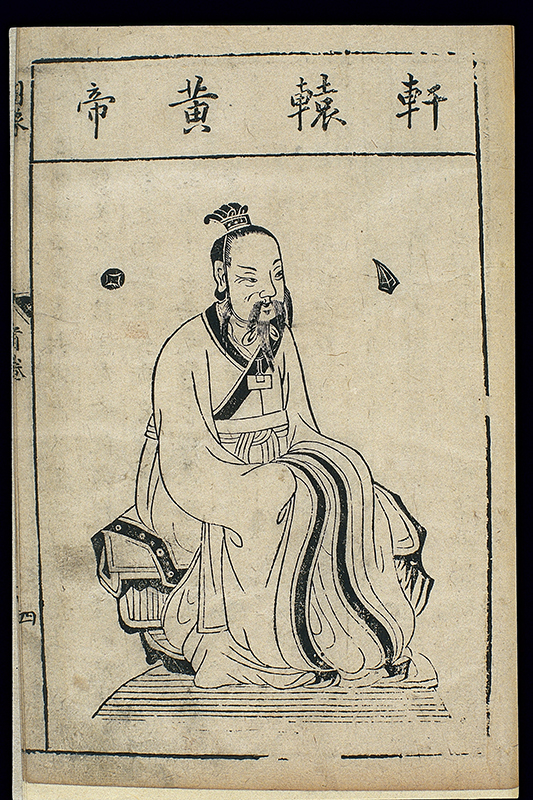
Figure 3.8 Huangdi of China, a mythical-historical sage from the third millennium BCE, is considered both the first ruler to establish a centralized state in China and the author of the texts that served as the basis for Chinese traditional medicine for thousands of years. (credit: “Chinese Woodcut, Famous Medical Figures: The Yellow Emperor” by Gan Bozong/Wellcome Collection, Public Domain)
図3.8 紀元前3千年紀の神話的・歴史的な聖人である中国の黄帝は、中国で初めて中央集権国家を樹立した支配者であると同時に、何千年にもわたり中国の伝統医学の基礎となった文献の著者とも考えられている。(クレジット:「Chinese Woodcut, Famous Medical Figures: The Yellow Emperor」、Gan Bozong/Wellcome Collection、パブリックドメイン)
Early Chinese writings often refer to the concept of heaven in opposition to the earth, but the word has a meaning that is likely unfamiliar to a modern Western audience. In these texts, the word heaven might refer to a material or physical space, like the sky; a ruling or presiding power, like the emperor; something over which human beings have no control, like fate; nature as a whole; or a moral principle guiding human action. Some of these resemble the familiar Western religious concept, but others are quite different. Nonetheless, records of great speeches in the Zuozhuan suggest that even in the sixth century BCE, leading thinkers of the period encouraged people to move away from a concern with heavenly matters and toward a greater interest in human affairs on Earth (Fung 1952).
英語のヒント
初期の中国の文献は、地と対になる概念として「天」にしばしば言及する。しかし、この語の意味は、現代の西洋の読者には、おそらくなじみがない。これらの文献で天という語は、空のような物質的・物理的空間、皇帝のような支配・統轄の力、運命のように人間の支配が及ばないもの、自然全体、あるいは人間の行動を導く道徳原理を指しうる。その一部は、西洋でなじみのある宗教的概念に似ているが、かなり異なるものもある。それでも、『左伝』に記された重要な演説は、紀元前6世紀ですでに、当時の主要な思想家たちが、天上の事柄への関心から離れ、地上の人間の事柄により大きな関心を向けるよう、人々に促していたことを示唆している(Fung 1952)。
Writings from this period also show the beginnings of the theory of yin and yang, the two fundamental forces that are characterized as male and female, or dark and light, or inactivity and activity. The move toward a theory that explains natural phenomena through fundamental forces rather than through spiritual or heavenly forces characterizes a shift from a more mythological and religious age to a more rational and philosophical age.
英語のヒント
この時代の文献には、陰陽論の始まりも見られる。陰と陽は、男性と女性、暗さと明るさ、不活動と活動として特徴付けられる、二つの根本的な力である。自然現象を、霊的な力や天上の力ではなく、根本的な力によって説明する理論へと向かう動きは、より神話的・宗教的な時代から、より理性的・哲学的な時代への移行を特徴付けている。
Another key concern of early Chinese texts is distinguishing between identity and harmony, where harmony is understood to produce new things, while identity does not. The point seems to be that whereas the same matter or form repeated does not generate anything novel, two or more different things, when combined together in a harmonious way, can produce something new. To illustrate, consider the fact that there is no music if there is only one note, but many different notes in harmony with one another can produce beautiful melodies. A wise and powerful ruler combines elements in harmonious ways to influence their citizens and exercise their power. Whether the elements are five tastes; five colors; the six notes of the pitch pipe; the ingredients of soup; the forces of wind, weather, or seasons; or the five virtues, a wise leader institutes a harmonious relation between these elements, and that relation is what is said to be responsible for the leader’s success.
英語のヒント
初期の中国文献のもう一つの主要な関心は、「同一」と「調和」を区別することである。調和は新しいものを生み出すが、同一性はそうではないと理解される。その要点は、同じ物質や形を繰り返しても新しいものは何も生まれないのに対し、二つ以上の異なるものを調和的に組み合わせれば、新しいものが生まれうるということのようである。たとえば、一つの音しかなければ音楽はないが、多くの異なる音が互いに調和すれば、美しい旋律を生み出せるという事実を考えよう。賢明で力ある支配者は、諸要素を調和的に組み合わせ、民に影響を及ぼし、権力を行使する。その要素が五つの味、五つの色、調律の管の六つの音、汁物の材料、風・天候・季節の力、五つの徳のいずれであっても、賢明な指導者は、それらの間に調和した関係を設ける。その関係こそが、指導者の成功をもたらすとされるのである。