第2章東アジアとインド洋の交流Exchange in East Asia and the Indian Ocean
2.3 Exchange in East Asia2.3 東アジアの交流
Learning Objectives学習の目標
By the end of this section, you will be able to:
この節を学ぶと、次のことができるようになる。
Identify the factors that affected exchanges between Japan, its East Asian neighbors, and Europeans
日本と東アジアの近隣諸国、ヨーロッパ人との交流に影響した要因を特定する。
Analyze how interactions with Europe influenced China during the Ming and Qing dynasties
ヨーロッパとの交流が明・清代の中国にどのような影響を与えたかを分析する。
Describe China’s relationship with its neighbors during the Ming and Qing dynasties
明・清代の中国と近隣諸国との関係を説明する。
Discuss the importance of education, culture, and science to Korean national identity
朝鮮の国家的な自己認識にとって、教育、文化、科学が持つ重要性を論じる。
Indian Ocean societies welcomed cultural and economic exchanges among people of many different ethnicities and religions. East Asian societies, however, had a different response to such exchanges. While Japan, China, and Korea were members of the same economic networks as the societies of the Indian Ocean and participated in some of the same cultural trades, they attempted, with varying degrees of success, to limit the effects at home of contact with outsiders and their ideas.
英語のヒント
インド洋の諸社会は、多様な民族や宗教の人々の間の文化的・経済的交流を歓迎した。しかし、東アジアの諸社会は、こうした交流に異なる反応を示した。日本、中国、朝鮮はインド洋の諸社会と同じ経済ネットワークに加わり、同じ文化交流の一部にも参加したが、成功の程度には差がありつつも、外来の人々や思想との接触が国内に及ぼす影響を制限しようとした。
Japan日本
In the 1400s, Japan was locked in what seemed to be unending internal strife. The Ashikaga shoguns (military overlords) who supposedly ruled the country were too weak to prevent their vassals from fighting one another or to deal with pirate bands that attacked the coasts of Japan, Korea, and China (Figure 2.18). Powerful samurai began to style themselves daimyos (“great lords”) and ruled their territories as if they were independent kingdoms; they imposed their own laws, collected tolls from those who entered, and recruited warriors loyal only to them, instead of to the shogun or the emperor. From this period of chaos emerged a succession of three powerful samurai who came to be known as “the three unifiers.” Beginning in the 1560s, Oda Nobunaga began to unite Japan under his rule. He was succeeded by Toyotomi Hideyoshi and Tokugawa Ieyasu. These men ended the incessant violence, united Japan under a strong central government, and defined the relationship their nation had with the West.
英語のヒント
1400年代の日本は、終わりがないかのような内乱に陥っていた。国を支配しているはずの足利将軍は弱く、家臣同士の争いを止めることも、日本、朝鮮、中国の沿岸を襲う海賊集団に対処することもできなかった(図2.18)。有力な武士は自らを大名(「大きな領主」の意)と称し、自分の領地を独立した王国のように治め始めた。独自の法を定め、領内に入る者から通行税を徴収し、将軍や天皇ではなく自分だけに忠誠を誓う戦士を集めた。この混乱から、「三人の統一者」と呼ばれることになる三人の強力な武士が相次いで現れた。1560年代から、織田信長が自らの支配の下に日本を統一し始めた。その後を豊臣秀吉と徳川家康が継いだ。この三人は絶え間ない暴力を終わらせ、強力な中央政府の下に日本を統一し、日本と西洋との関係を形作った。
East Asian Societies.東アジアの諸社会。
(attribution: Copyright Rice University, OpenStax, under CC BY 4.0 license) · CC BY 4.0
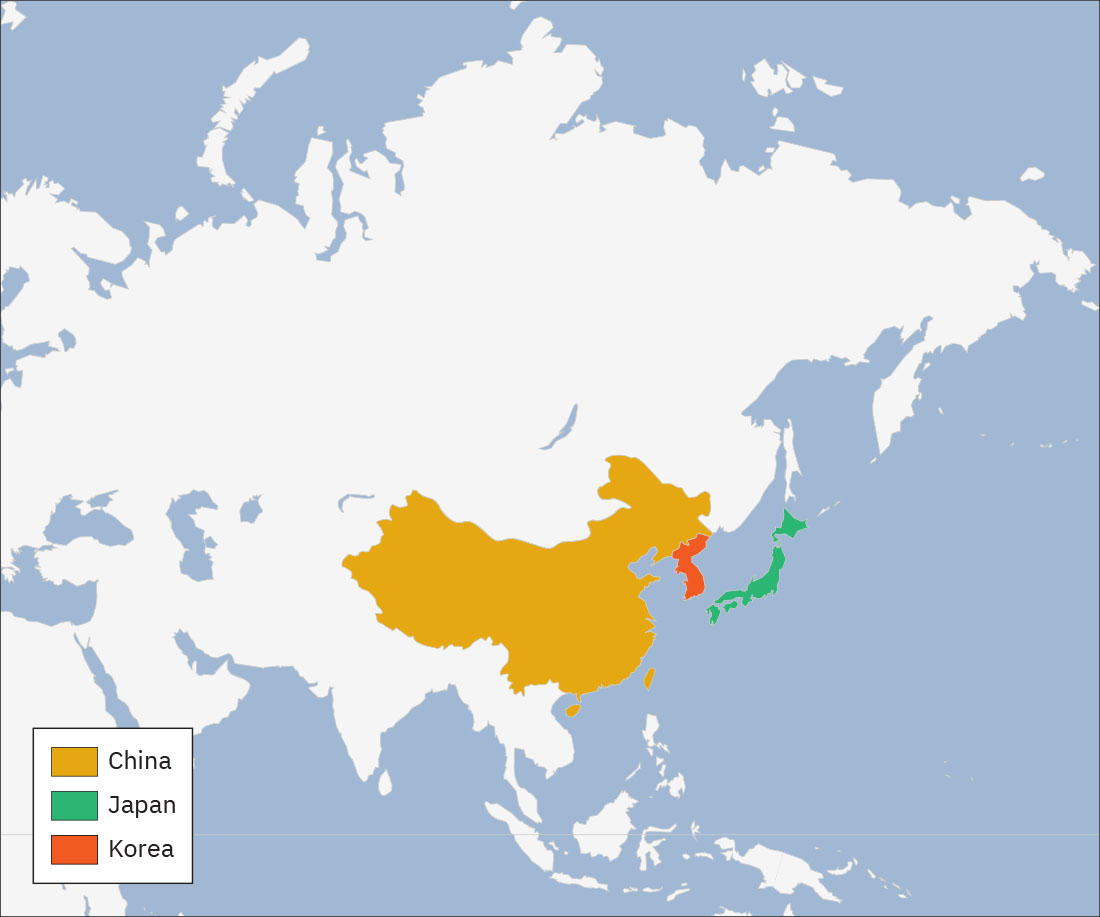
Figure 2.18 In the sixteenth and seventeenth centuries, China, Japan, and Korea all attempted to limit the effects of contact with outsiders and their ideas. (attribution: Copyright Rice University, OpenStax, under CC BY 4.0 license)
図2.18 16~17世紀、中国、日本、朝鮮はいずれも、外来の人々や思想との接触が及ぼす影響を制限しようとした。(帰属表示:著作権 Rice University、OpenStax。CC BY 4.0ライセンス)
In 1543, Portuguese ships arrived in Japan. It was the logical end point of a route that had taken them around the coast of Africa, eastward through the Indian Ocean, and into the Pacific. They wished to trade. They also wished to win converts for the Roman Catholic Church, as they had done elsewhere in Asia. The Portuguese were soon followed by the Spanish in 1549, and on the heels of the Portuguese and Spanish came the Dutch and the English. These last two nations, however, were less interested in religion than in profit.
英語のヒント
1543年、ポルトガルの船が日本に到着した。アフリカ沿岸を回り、インド洋を東へ進んで太平洋へ入る航路の、自然な到達点だった。彼らは交易を望んだ。また、アジアの他地域で行ったように、ローマ・カトリック教会への改宗者を得ることも望んだ。1549年にはスペイン人が続き、ポルトガル人とスペイン人を追うようにオランダ人とイングランド人もやって来た。ただし後の二国は、宗教よりも利益に関心を持っていた。
The Jesuit priests brought by the Spanish and Portuguese proved quite successful at winning souls. Those like Gaspar Vilela, who arrived in Japan in 1556, often learned the Japanese language so they could communicate directly with converts. By 1600, more than 100,000 Japanese had become Roman Catholics, and half the Jesuits serving in Japan were Japanese. Nagasaki, on the southern island of Kyushu, was the most Christianized community in Japan and had ten churches. Although most samurai were not interested in becoming Roman Catholics, they were nevertheless interested in something else the Europeans had to offer—guns. Many daimyos became Christian or offered the missionaries support in an effort to obtain weapons and gunpowder to assist them in their battles with rival samurai.
英語のヒント
スペイン人とポルトガル人が連れてきたイエズス会の司祭は、信徒の獲得にかなり成功した。1556年に日本に来たガスパル・ヴィレラのように、日本語を学び、改宗者と直接話せるようにした者も多かった。1600年までに10万人以上の日本人がローマ・カトリックに改宗し、日本で活動するイエズス会士の半数は日本人となった。南部の島、九州の長崎は、日本で最もキリスト教化した共同体で、教会が10か所あった。武士の大部分はローマ・カトリックになることに関心を持たなかったが、ヨーロッパ人がもたらす別のもの、銃には関心を持った。多くの大名がキリスト教徒になったり宣教師を支援したりして、対抗する武士との戦いに役立つ武器や火薬を手に入れようとした。
Guns had a great impact on Japanese warfare even though they were difficult to aim and slow to reload. One gun did not give its possessor an advantage in battle over opponents armed with swords, pikes, or lances. However, when soldiers massed together and groups of them fired in succession, as Europeans fought, they could easily defeat those armed with traditional Japanese weapons. Oda Nobunaga made use of this new style of fighting. In 1575, at the Battle of Nagashino, he and his vassal Tokugawa Ieyasu used companies of samurai armed with European guns to defeat the warriors of the Takeda clan. By 1582, the year he was assassinated by one of his vassals, Oda had unified the central portion of the main Japanese island of Honshu, including the area surrounding Kyoto, the seat of the emperor.
英語のヒント
銃は狙いを定めにくく、再装填も遅かったが、日本の戦争に大きな影響を与えた。1丁の銃を持つだけでは、刀、長槍、槍を持つ相手より有利にはならなかった。だが、ヨーロッパ人のように兵士を集め、集団ごとに次々と発砲すると、日本の伝統的な武器を持つ相手を容易に破れた。織田信長はこの新しい戦法を活用した。1575年の長篠の戦いでは、信長とその家臣徳川家康がヨーロッパの銃で武装した武士の部隊を使い、武田氏の軍を破った。家臣の一人に殺害された1582年までに、信長は天皇の座所である京都の周辺を含め、日本の主島、本州の中央部を統一していた。
Upon Oda’s death, Toyotomi Hideyoshi, a vassal of his, succeeded to his position after defeating the army of Oda’s assassin. By 1590, Hideyoshi had defeated all the daimyos in Japan and required that they declare their loyalty to him. He disarmed non-samurai and forbade peasants to leave the land or become soldiers, while also forbidding samurai to take up any occupation other than war.
英語のヒント
信長が死ぬと、家臣の豊臣秀吉は信長を殺した者の軍を破り、その地位を継いだ。1590年までに秀吉は日本のすべての大名を屈服させ、自分に忠誠を表明するよう求めた。武士以外の者を武装解除し、農民が土地を離れたり兵士になったりすることを禁じる一方、武士にも戦争以外の職業に就くことを禁じた。
Unlike Oda Nobunaga, who had been relatively unconcerned with the activities of Christians, Hideyoshi was more suspicious of them. A devout Buddhist, he disapproved of Christians’ eating of cattle and horses and was horrified by the destruction of Buddhist temples and objects of worship by some overly zealous converts, acts in which Gaspar Vilela had participated. In 1587, Hideyoshi ordered Christian missionaries to leave Japan. The edict was not enforced, but the Jesuits, alarmed, asked Christian daimyos to help them attack the shogun, which they refused to do. In 1590, the Jesuits in Japan resolved instead to refrain from intervening in Japanese affairs, but they secretly continued to provide funds for Christian daimyos.
英語のヒント
キリスト教徒の活動を比較的気にしなかった織田信長と異なり、秀吉は彼らに強い疑いを抱いた。敬虔な仏教徒だった彼は、キリスト教徒が牛や馬を食べることをよしとせず、一部の熱心すぎる改宗者が仏教寺院や礼拝対象を破壊することに衝撃を受けた。ガスパル・ヴィレラもそのような行為に加わっていた。1587年、秀吉はキリスト教宣教師に日本を去るよう命じた。布告は執行されなかったが、危機感を抱いたイエズス会士は、将軍を攻撃するのを助けるようキリシタン大名に求めた。しかし大名たちは断った。1590年、日本のイエズス会士は代わりに日本の内政への介入を控えることを決めたが、キリシタン大名への資金提供は秘密裏に続けた。
Neither approach was completely successful in avoiding Hideyoshi’s ire. In 1596 the San Felipe, a Spanish ship sailing from the Philippines to Mexico, was caught in typhoons in the Pacific and wrecked on a sandbar in the harbor of Urado, on the Japanese island of Shikoku. The local daimyo confiscated the vessel’s cargo, which Japanese law allowed, and when the ship’s captain protested, the daimyo suggested he approach Mashita Nagamori, one of the shogun’s officials, for assistance. Accordingly, the Spanish captain sent two men to the capital of Kyoto to meet with Nagamori.
英語のヒント
どちらの対応も、秀吉の怒りを避けるうえで完全には成功しなかった。1596年、フィリピンからメキシコへ向かうスペイン船サン・フェリペ号は太平洋で台風に遭い、四国の浦戸港の砂州で難破した。地元の大名は、日本の法で認められていた船の積み荷の没収を行った。船長が抗議すると、大名は将軍の役人の一人、増田長盛に援助を求めるよう勧めた。そこでスペイン人船長は、長盛に会わせるため2人を都の京都へ送った。
There they produced a map of Spain’s empire in the Americas and explained how converting the Indigenous population to Christianity had helped Spain to gain control of this vast territory. Nagamori reported this information to Hideyoshi, perhaps with the intent of providing an excuse for retaining hold of the ship’s cargo. Fearing that the Spanish intended to conquer Japan and planned to seek assistance from Japanese Christians, Hideyoshi ordered the arrest of the missionaries who had remained in Japan in violation of his 1587 decree. The Jesuits, however, had deliberately made their proselytizing efforts less public since 1587, and they were largely being ignored. Thus, of the twenty-six Christians arrested, most were Japanese, and twenty-three were of the Franciscan order. In February 1597, all were crucified in Nagasaki. They became known as the Twenty-Six Martyrs of Japan.
英語のヒント
京都で二人は、アメリカ大陸におけるスペイン帝国の地図を示し、先住民をキリスト教に改宗させたことが、この広大な領土の獲得にどう役立ったかを説明した。長盛はその情報を秀吉に報告した。おそらく、船の積み荷を返さずにおく口実にする意図もあったのだろう。スペイン人が日本征服を企て、日本のキリスト教徒に援助を求めるつもりだと恐れた秀吉は、1587年の布告に違反して国内に残っていた宣教師の逮捕を命じた。しかしイエズス会士は、1587年以降、意図的に布教を目立たなくしていたため、大部分は見逃されていた。そのため逮捕された26人のキリスト教徒のうち、多数は日本人で、23人がフランシスコ会に属していた。1597年2月、全員が長崎で十字架にかけられた。彼らは日本二十六聖人として知られるようになった。
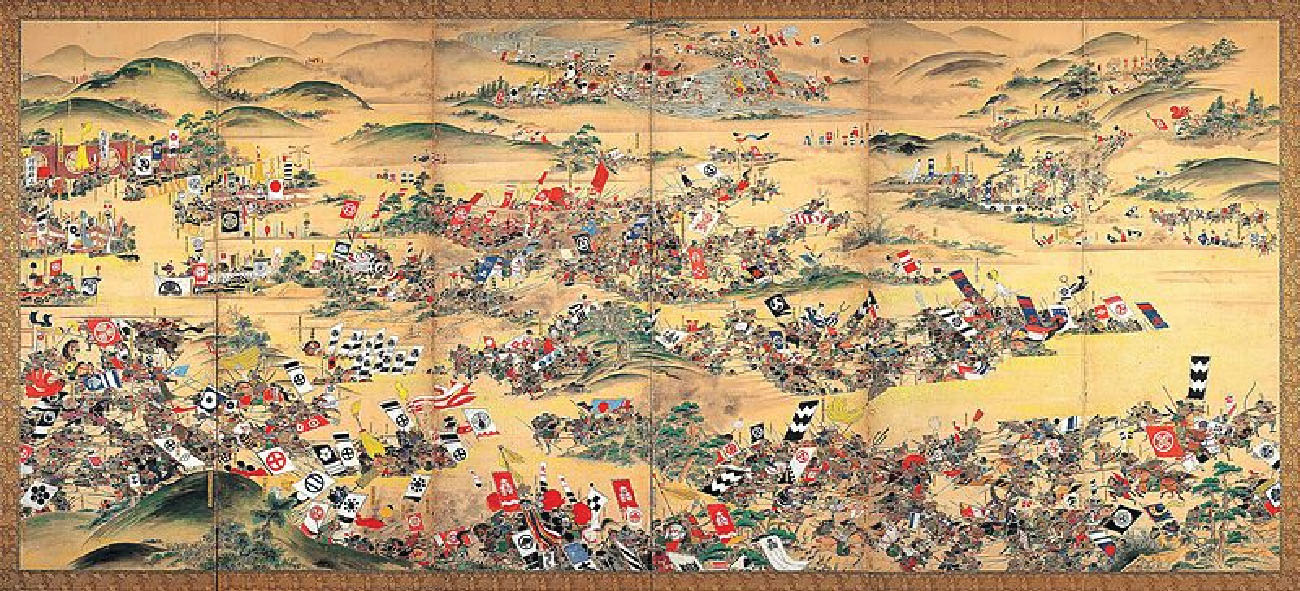
In 1592, Hideyoshi invaded Korea, a vassal state of the Ming dynasty, but Chinese troops stopped the Japanese advance. In 1597, he attacked again and was again defeated, this time by Chinese and Korean troops and Korea’s navy. In 1598 he died, leaving his five-year-old son Hideyori to inherit his position. However, the five-member council that was to rule until Hideyori came of age was soon divided, and the two sides made war upon each other. In 1600, Tokugawa Ieyasu, a vassal of Hideyoshi, defeated his opponents at the Battle of Sekigahara (Figure 2.19), and he became shogun in 1603.
英語のヒント
1592年、秀吉は明の属国である朝鮮に侵攻したが、中国軍が日本軍の進撃を止めた。1597年に再び攻撃したものの、今度も中国・朝鮮の陸軍と朝鮮水軍に敗れた。1598年に秀吉が死ぬと、5歳の息子秀頼がその地位を継いだ。だが、秀頼が成人するまで統治するはずの5人の合議体はまもなく分裂し、両派は戦争を始めた。1600年、秀吉の家臣であった徳川家康が関ヶ原の戦いで敵対勢力を破り(図2.19)、1603年に将軍となった。
The Battle of Sekigahara.関ヶ原の戦い。
(credit: “Sekigahara Kassen Byōbu-z” by The City of Gifu Museum of History/Wikimedia Commons, Public Domain) · Public Domain
Figure 2.19 This illustration on a nineteenth-century Japanese screen shows the 1600 Battle of Sekigahara. Approximately 160,000 samurai clashed over a period of six hours. (credit: “Sekigahara Kassen Byōbu-z” by The City of Gifu Museum of History/Wikimedia Commons, Public Domain)
図2.19 19世紀の日本の屏風に描かれたこの絵は、1600年の関ヶ原の戦いを示す。およそ16万人の武士が6時間にわたって激突した。(出典:岐阜市歴史博物館/Wikimedia Commons「Sekigahara Kassen Byōbu-z」。パブリックドメイン)
To consolidate power, Tokugawa Ieyasu rewarded loyal daimyos with gifts of land. He allocated 15 percent of Japan’s richest rice-producing land to himself and his heirs. The next-best land, about half of that available, was given to his “inside daimyos,” samurai who were related to him or who had declared their loyalty before the Battle of Sekigahara. The remaining land, less fertile or farthest away from the new capital of Edo (modern-day Tokyo), was given to the “outside daimyos,” samurai clans that had proclaimed loyalty only after his victory or that had fought against him. Ieyasu prohibited daimyos from forming alliances, including marriages, without his approval. He also required them to spend every other year in Edo, where it would be more difficult for them to formulate rebellion.
英語のヒント
権力を固めるため、徳川家康は忠実な大名に土地を与えて報いた。日本で最も豊かな米作地の15パーセントを、自分と後継者に割り当てた。次によい土地で、利用可能な土地の約半分に当たる部分は、家康と血縁があるか、関ヶ原の戦いより前に忠誠を表明していた「内側の大名」に与えた。残りの、肥沃さで劣るか、新首都江戸(現在の東京)から最も遠い土地は、勝利後に初めて忠誠を表明した、または家康と戦った武士の家である「外側の大名」に与えた。家康は自分の承認なしに大名が同盟を結ぶことを禁じ、その中には婚姻も含まれた。また、隔年で江戸に滞在するよう要求した。江戸にいれば、反乱を企てることが難しくなるからだった。
The peace and unity that Tokugawa Ieyasu’s rule brought to Japan ushered in a period of prosperity and cultural blossoming. The daimyos took control of the lands that had belonged to their samurai, and the samurai moved to the cities in which their lords’ castles were located. The daimyos established schools where the sons of their vassals studied Chinese characters, learned the Confucian classics, and were instructed in military skills. Temple schools taught the children of artisans and merchants. Tokugawa Japan boasted a high level of literacy, which supported a thriving publishing industry. In Edo alone, there were hundreds of shops in which people could buy or rent novels and other types of books. People visited restaurants and theaters in their leisure time, and those who could afford to do so traveled to Buddhist temples and Shinto shrines, often at festival time.
英語のヒント
徳川家康の支配が日本にもたらした平和と統一は、繁栄と文化開花の時代を開いた。大名は家臣の武士が所有していた土地を掌握し、武士は主君の城がある都市へ移った。大名は学校を設け、家臣の息子たちは漢字と儒教の古典を学び、武芸の指導を受けた。寺子屋は職人や商人の子どもに教えた。徳川時代の日本は高い識字率を誇り、それが盛んな出版業を支えた。江戸だけでも、小説などの本を買ったり借りたりできる店が何百軒もあった。人々は余暇に料理屋や劇場を訪れ、余裕のある者は、祭りの時期を選ぶことも多く、仏教寺院や神社へ旅をした。
Like Hideyoshi, Ieyasu also feared that Christians posed a threat to Japan, a belief Dutch and English merchants seeking trade advantages encouraged. Ieyasu was aware of hostile Portuguese and Spanish actions in India and the Philippines and did not intend to surrender control of Japan. He also feared that by adopting the foreign faith, he would give disloyal daimyos opportunities to conspire against him. He was encouraged in this belief when a Christian samurai forged a document to help another Christian samurai claim land he desired and a scandal erupted. The forger, caught, also claimed that a plan existed to kill an official of the shogun’s government.
英語のヒント
秀吉と同じく、家康もキリスト教徒が日本への脅威になると恐れた。交易で優位を得ようとするオランダやイングランドの商人は、その見方を後押しした。家康はインドやフィリピンでのポルトガルとスペインの敵対的行動を知っており、日本の支配を明け渡すつもりはなかった。また、外国の信仰を受け入れることで、不忠実な大名に自分への陰謀を巡らす機会を与えてしまうことも恐れた。あるキリシタンの武士が、別のキリシタンの武士の望む土地を得させるために文書を偽造し、醜聞となったことは、その考えを強めた。捕らえられた偽造者は、幕府の役人を殺す計画もあると主張した。
In 1614, Ieyasu outlawed the practice of Christianity and ordered missionaries to leave the country. Japanese Christians were warned that if they did not renounce their faith, they would be killed. It was clear to Ieyasu that the best way to keep Christian influence—and other dangerous forces—out of the country was to ban the entry of foreigners and forbid Japanese to leave. Preventing Japanese from leaving the country would also keep daimyos from conspiring against him in foreign lands.
英語のヒント
1614年、家康はキリスト教の信仰を禁じ、宣教師に国外退去を命じた。日本人のキリスト教徒は、信仰を捨てなければ殺されると警告された。家康にとって、キリスト教の影響や他の危険な力を国内に入れない最善の方法は、外国人の入国を禁じ、日本人の出国も禁じることだと明らかになった。日本人が出国できなくなれば、大名が外国で自分に対する陰謀を巡らすことも防げるはずだった。
In 1624, the Spanish were banned from entering Japan. In 1639, Ieyasu prohibited the entry of the Portuguese. The Dutch, who had refrained from missionary activity, were still allowed to enter Japan to trade. However, to limit any harmful influence on their part, Dutch merchants were confined to a settlement on Dejima Island in the harbor of Nagasaki, in a walled compound they were not allowed to leave. Only licensed trade officials and translators (a position that became hereditary) could have contact with them. The English might have been extended the same rights, but finding trade with Japan not as profitable as they had hoped, they no longer sent ships. Chinese merchants were also still allowed to enter the country, but their trade was confined to Nagasaki, and they were forced to live in a special Chinese enclave. In 1635, Japanese were forbidden to leave the country except on special missions, like transacting trade with Korea, China, and Russia.
英語のヒント
1624年、スペイン人は日本への入国を禁じられた。1639年には家康がポルトガル人の入国を禁じた。布教活動を控えていたオランダ人には、なお交易のための入国が認められた。しかし、その有害な影響を抑えるため、オランダ商人は長崎港の出島にある居留地に閉じ込められた。そこは壁に囲まれた区画で、外へ出ることを許されなかった。接触できたのは、許可を持つ貿易役人と通訳だけであり、通訳は世襲の職になった。イングランド人も同じ権利を認められたかもしれないが、日本との交易が期待ほど儲からないと分かり、船を送らなくなった。中国商人も引き続き入国を認められたが、交易は長崎に限られ、特別な中国人居留区に住まわされた。1635年、日本人は、朝鮮、中国、ロシアとの交易といった特別な任務を除き、出国を禁じられた。
Despite efforts of the shogun’s government to prevent Japanese contact with Europeans, “Dutch learning,” knowledge gained from the Dutch on Dejima, played an important part in Japanese life in the seventeenth and eighteenth centuries. In 1640, European books were banned with the exception of medical treatises and books on sailing. In subsequent years, the bans intended to isolate Japanese from Western knowledge relaxed. Ailing Japanese who could not find relief from Japanese doctors visited physicians on Dejima. Trade in Western goods was allowed to some extent in Nagasaki, and government officials were allowed to purchase maps, clocks, medical instruments, telescopes, and novelties like European seeds and birds. In the early eighteenth century, prohibitions on books were relaxed, and works on medicine, science, and geography were translated. Thus, “Dutch learning” provided a foundation for Japanese scientific and technological development and kept people informed of what was happening in Europe, even though most could not leave the country.
英語のヒント
幕府は日本人とヨーロッパ人の接触を防ごうとしたが、出島のオランダ人から得た知識である「蘭学」は、17~18世紀の日本の生活で重要な役割を果たした。1640年には、医学書と航海術の本を除いてヨーロッパの書物が禁じられた。しかしその後、日本人を西洋の知識から隔てようとする禁止は緩和された。日本の医師では病状がよくならない患者が、出島の医師を訪れた。長崎では西洋の品物の交易がある程度認められ、幕府の役人は地図、時計、医療器具、望遠鏡、ヨーロッパの種や鳥といった珍品を買うことができた。18世紀初めには書物の禁止も緩められ、医学、科学、地理の書物が翻訳された。こうして「蘭学」は、日本の科学技術の発展の基礎を提供し、ほとんどの人が国外へ出られなくても、ヨーロッパで起きていることを伝えた。