第2章東アジアとインド洋の交流Exchange in East Asia and the Indian Ocean
The Sultanate of Gujaratグジャラート・スルタン朝
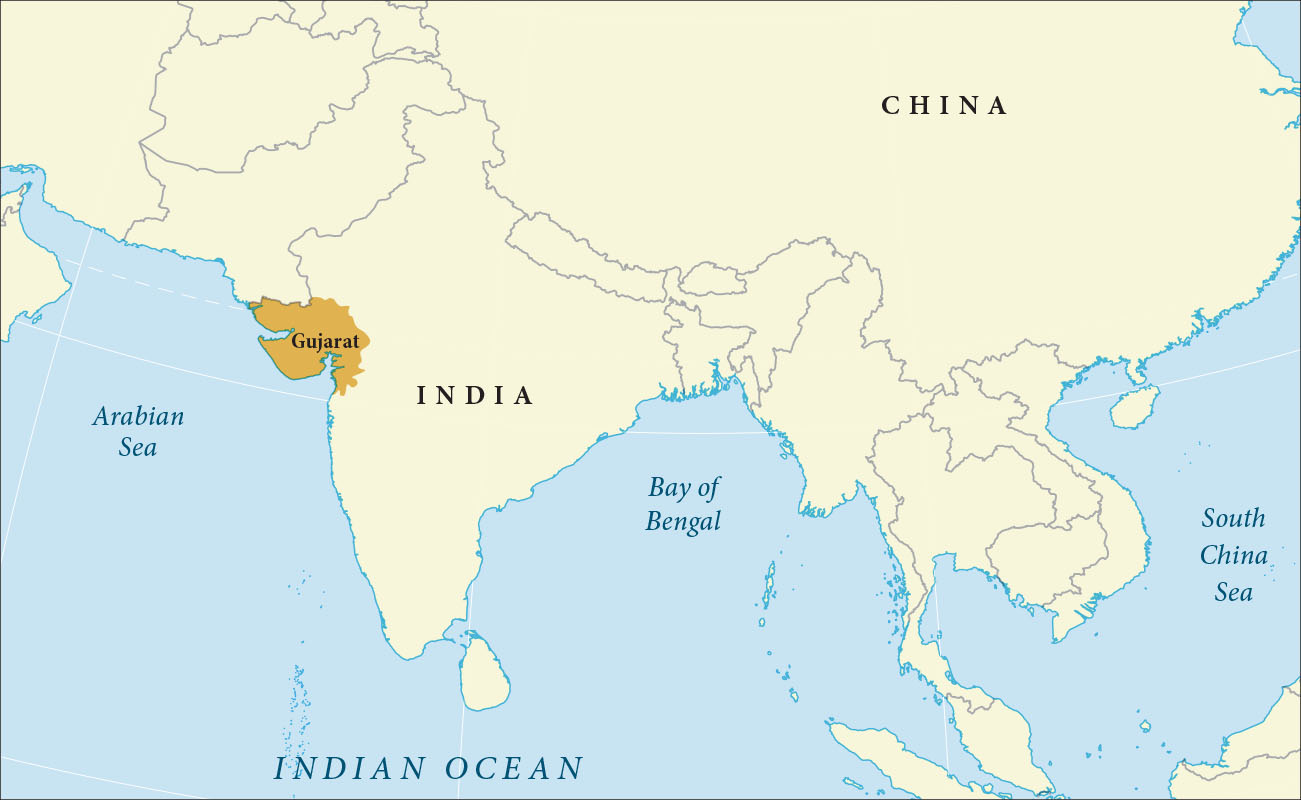
Despite their power, the Mughals never controlled all of India, and several areas remained relatively free of their dominance. In the sixteenth century, one such area, the Sultanate of Gujarat on the northwestern coast of India, was an important center of Indian Ocean trade. Gujarat was located on the Arabian Sea, close to Persia and the Arabian Peninsula (Figure 2.7). From May through September monsoon winds blew, and the resulting ocean currents pushed sailing ships from East Africa and Arabia in the direction of Gujarat and other spots on the western coast of India, such as the province of Kerala to the south. In the winter months, the monsoon winds and currents reversed, helping sailors return home. In the period between these changes brought by the monsoons, foreign sailors and merchants made their home on India’s western coast, and thriving commercial hubs developed with a year-round population of both Indians and non-Indians.
英語のヒント
ムガル帝国は強大だったが、インド全土を支配したことはなく、その支配を比較的免れた地域がいくつか残った。16世紀には、そのような地域の一つであるインド北西海岸のグジャラート・スルタン朝が、インド洋交易の重要な中心地となっていた。グジャラートはアラビア海に面し、ペルシアとアラビア半島に近かった(図2.7)。5月から9月にかけてモンスーンが吹き、それによって生じる海流が、東アフリカやアラビアからの帆船をグジャラートや、南のケーララ州などインド西海岸の各地へ押し流した。冬にはモンスーンと海流が逆向きになり、船乗りたちの帰航を助けた。モンスーンが切り替わるまでの期間、外国の船乗りや商人はインド西海岸を住まいとした。こうして、インド人と外国人が一年を通じて暮らす、繁栄した商業拠点が発達した。
The Sultanate of Gujarat.グジャラート・スルタン朝。
(credit: modification of work “Banda Sea” by Demis/Wikimedia Commons, Public Domain) · Public Domain
Figure 2.7 Gujarat is located on the northwestern coast of India. Close to the Arabian Peninsula and bordering the Arabian Sea, the Sultanate of Gujarat was a hub for Indian Ocean trade. (credit: modification of work “Banda Sea” by Demis/Wikimedia Commons, Public Domain)
図2.7 グジャラートはインド北西海岸に位置する。アラビア半島に近く、アラビア海に接するグジャラート・スルタン朝は、インド洋交易の拠点だった。(出典:Demis/Wikimedia Commons「Banda Sea」を改変。パブリックドメイン)
In 1573, Emperor Akbar incorporated Gujarat into the Mughal Empire. Through its harbors moved the wealth of India, and the port cities of Surat and Khambat were especially busy. Among the goods exported were fine cotton textiles purchased by buyers in East Africa, Europe, and the Middle East. In addition to warehouses and trading companies owned by Indians, Arabs, and Persians, the port cities contained rest houses for travelers, shops, and banking houses. In addition to being a commercial hub, Gujarat was a place of learning. Many Islamic scholars made it their home, and several cities had large mosques and religious schools, some of which were built with funds provided by Hindu rulers.
英語のヒント
1573年、アクバル帝はグジャラートをムガル帝国に併合した。その港にはインドの富が行き交い、特に港湾都市スーラトとカンバートはにぎわった。輸出品には上質な綿織物があり、東アフリカ、ヨーロッパ、中東の買い手が購入した。港湾都市には、インド人、アラブ人、ペルシア人が所有する倉庫や商社に加え、旅人の宿、商店、銀行もあった。グジャラートは商業の拠点であると同時に、学問の地でもあった。多くのイスラーム学者が住み、複数の都市に大きなモスクや宗教学校があった。その一部はヒンドゥー教徒の支配者が提供した資金で建設された。
The populations of Gujarat’s ports were diverse. Although most residents were Hindus, other religious communities were well represented. For the most part, these were trade diaspora communities, communities established by merchants from foreign lands who came to do business but often settled and married into the local population. The most significant of the trade diaspora communities in Gujarat were those founded by Muslims. Some of their inhabitants were the descendants of merchants who had arrived from Persia or the Arabian Peninsula as early as the eighth century, or descendants of Hindu merchants who had converted to Islam to better do business with Arab and Persian merchants. Sharing the faith of their business partners helped build the trust necessary for transacting business in distant lands, ventures that might take many years to become profitable.
英語のヒント
グジャラートの港には多様な人々が暮らしていた。住民の多数はヒンドゥー教徒だったが、ほかの宗教集団も相当数存在した。その大部分は交易ディアスポラの共同体、すなわち商売のため外国からやって来た商人たちが作った共同体だった。彼らはそのまま定住し、地元の人々と結婚することも多かった。グジャラートの交易ディアスポラのうち、最も重要だったのはムスリムが形成した共同体である。そこに住む人々の一部は、早くも8世紀にペルシアやアラビア半島から渡来した商人の子孫だった。また、アラブ人やペルシア人の商人と、より円滑に商売をするためイスラームに改宗したヒンドゥー商人の子孫もいた。取引相手と信仰を共有することは、遠い土地で商売をするのに必要な信頼を築く助けになった。そのような事業は、利益が出るまで何年もかかる可能性があった。
Sufis, Islamic mystics, had arrived in India in the eleventh century, and a substantial number of Muslims had Sufi ancestors. Yet other Muslims were descended from soldiers who had arrived in India in the armies of central Asian or Afghan invaders from the tenth through the thirteenth centuries. There were also large numbers of Parsis in the cities of Gujarat. The Parsis were Zoroastrians, members of a religious sect that worshipped fire and whose ancestors had arrived in India from Persia in the seventh century. They may have fled Persia after the Islamic conquest for fear of religious persecution, or they may have settled in India before the conquest and never returned home.
英語のヒント
イスラーム神秘主義者であるスーフィーは11世紀にインドへ渡来しており、スーフィーを祖先に持つムスリムもかなりの数に上った。また、10世紀から13世紀にかけて、中央アジアやアフガニスタンからの侵入者の軍に加わってインドへ来た兵士を祖先とするムスリムもいた。グジャラートの諸都市には、パールシーも大勢暮らしていた。パールシーは火を崇拝する宗教の一派、ゾロアスター教の信徒で、その祖先は7世紀にペルシアからインドへ渡った。イスラームによる征服後、宗教的迫害を恐れてペルシアを逃れたのかもしれないし、征服より前にインドへ定住し、そのまま故郷に戻らなかったのかもしれない。
Also present in Gujarat were Jews and Nestorian Christians, who had split from the larger Christian Church in the fifth century over an argument regarding whether Jesus was of one nature—divine—or two—one human and one divine. The Nestorian Christians had come primarily from Syria and Persia. A larger Christian community lived in Kerala. Gujarat also housed small communities of Indian Jains (followers of Jainism) and Buddhists.
英語のヒント
グジャラートには、ユダヤ教徒とネストリウス派のキリスト教徒もいた。ネストリウス派は、イエスの本性が神としての一つなのか、人間としてのものと神としてのものの二つなのかをめぐる論争によって、5世紀にキリスト教会の主流から分かれた人々だった。ネストリウス派のキリスト教徒は主にシリアとペルシアから来ていた。ケーララには、さらに大きなキリスト教徒の共同体があった。グジャラートには、インド人のジャイナ教徒と仏教徒の小さな共同体もあった。
The great religious and ethnic diversity of Gujarat contributed to its commercial success because merchants there traded more easily with others of the same religion and ethnic background in other parts of the world. Arabs traded with Arabs and Persians with Persians. Jews in Gujarat maintained ties with Jewish communities elsewhere in India, North Africa, and the Middle East. The prominence of the Muslim merchant community in Gujarat was undoubtedly aided by the fact that the Mughal emperors were Muslim. By the middle of the seventeenth century, however, Mughal dominance in India was being threatened.
英語のヒント
グジャラートの宗教と民族の大きな多様性は、商業上の成功につながった。そこに住む商人は、世界のほかの地域にいる、宗教や民族的背景を同じくする商人と、より容易に交易できたからである。アラブ人はアラブ人と、ペルシア人はペルシア人と交易した。グジャラートのユダヤ教徒は、インドの他地域、北アフリカ、中東のユダヤ人共同体とのつながりを維持した。ムガル皇帝がムスリムだったことが、グジャラートのムスリム商人共同体の有力な地位を支えたのは間違いない。だが17世紀半ばまでには、インドにおけるムガルの支配は脅かされるようになっていた。