第2章東アジアとインド洋の交流Exchange in East Asia and the Indian Ocean
European Malaccaヨーロッパ支配下のマラッカ
In 1509, a Portuguese fleet arrived in Malacca, bringing Diogo Lopes de Sequeira with orders from the king of Portugal to establish trade with Malacca, which would allow Portugal to replace Venice as the center of the spice trade in Europe. According to Tomé Pires, the apothecary to the king of Portugal who traveled to Southeast Asia in search of spices, “[Quotation omitted for rights reasons.]” The reigning sultan Mahmud Shah and others at his court were intrigued by the possibility of becoming trading partners with the Portuguese and possibly putting Portugal’s warships to use against rival kingdoms, as some Indian rulers had done. Many Indian Muslims in Malacca, however, especially Gujaratis, were aware of Portuguese attacks on Muslim merchants in India and opposed any dealings with the Europeans. Initially, Mahmud Shah gave the Portuguese permission to establish a factory (a trading post), but then, on the advice of Indian and Javanese Muslim merchants, he sent ships to attack them in 1510. Sequeira and his ships managed to escape, but several Portuguese were taken captive.
英語のヒント
1509年、ポルトガル船団がマラッカに到着した。ディオゴ・ロペス・デ・セケイラを乗せ、ポルトガル王からマラッカとの交易を確立するよう命じられていた。これが実現すれば、ヨーロッパの香辛料交易の中心として、ポルトガルがヴェネツィアに取って代われるはずだった。香辛料を求めて東南アジアへ旅したポルトガル王の薬剤師トメ・ピレスは、こう述べている。〔権利の関係で割愛〕当時のスルタン、マフムード・シャーと宮廷の人々は、ポルトガル人と交易相手になり、インドの一部の支配者がしたように、ポルトガルの軍艦を対抗する王国との戦いに使えるかもしれないと関心を抱いた。しかしマラッカのインド人ムスリム、とりわけグジャラート人の多くは、インドでポルトガル人がムスリム商人を攻撃したことを知り、ヨーロッパ人とのいかなる取引にも反対した。初め、マフムード・シャーはポルトガル人に商館、すなわち交易拠点の設置を許した。だがその後、インド人とジャワ人のムスリム商人の助言を受け、1510年に船を送って彼らを攻撃した。セケイラとその船はなんとか逃れたが、数人のポルトガル人が捕虜となった。
In 1511, the Portuguese military commander Alfonso de Albuquerque arrived from India at the head of a large fleet bearing more than one thousand armed troops and demanded the return of those Portuguese who had been taken prisoner the year before. The sultan delayed as he attempted to assemble an army to defeat the Portuguese, but after a week of waiting, Albuquerque bombarded the city. The prisoners were promptly released, but the sultan refused Albuquerque’s demands for reparations and the right to build a fortress. Albuquerque then landed his troops in the city with the help of Hindu, Chinese, and Burmese merchants, who hoped to use Portuguese influence to gain dominance over their Muslim rivals. Within a month, the Portuguese had gained control of Malacca, and Mahmud Shah had fled. Albuquerque erected a fortress to guard the city’s entrance and made Nina Chatu, a Hindu merchant who had helped free the Portuguese prisoners, the city’s chief administrator. Newly minted coins were distributed, and people were informed that trade would go on as before.
英語のヒント
1511年、ポルトガルの軍司令官アフォンソ・デ・アルブケルケが、1,000人以上の武装兵を乗せた大船団を率いてインドから到着し、前年に捕らえられたポルトガル人の返還を要求した。スルタンはポルトガルを破る軍を集めようと時間を稼いだが、1週間待ったアルブケルケは都市を砲撃した。捕虜はすぐに解放されたが、スルタンは賠償と要塞建設の権利を求めるアルブケルケの要求を拒んだ。そこでアルブケルケは、ヒンドゥー教徒、中国人、ビルマ人の商人の助けを得て、市内に兵を上陸させた。彼らはポルトガルの影響力を利用し、ムスリムの競争相手に優位に立とうとした。1か月以内にポルトガルはマラッカを支配し、マフムード・シャーは逃亡した。アルブケルケは都市の入口を守る要塞を建て、ポルトガル人捕虜の解放を助けたヒンドゥー商人ニナ・チャトゥを市の行政長官に据えた。新たに鋳造した貨幣が配られ、交易は以前と同じように続くと人々に伝えられた。
Things did not go quite as the Portuguese planned, however. The deposed sultan established a new base in the Riau Islands of Indonesia and from there launched attacks on the Portuguese in Malacca. Following his death in 1528, Mahmud Shah’s sons continued to attack the Portuguese from their kingdoms in Johor and Perak. Unwilling to do business in Portuguese Malacca, many Muslim merchants avoided the port and conducted trade in either Johor or the Sultanate of Aceh on the northern coast of Sumatra.
英語のヒント
しかし物事は、ポルトガル人の計画どおりには進まなかった。退位させられたスルタンはインドネシアのリアウ諸島に新たな拠点を作り、そこからマラッカのポルトガル人を攻撃した。マフムード・シャーが1528年に死去した後も、息子たちはジョホールとペラの自分たちの王国から攻撃を続けた。多くのムスリム商人は、ポルトガル支配下のマラッカで商売するのを嫌って港を避け、ジョホールかスマトラ島北岸のアチェ・スルタン朝で交易した。
In 1606, the government of the Netherlands, eager to gain an advantage over its European competitors, signed a treaty with the sultan of Johor. In exchange for help destroying the Portuguese in Malacca and freeing Johor from Aceh’s domination, the sultan promised the Dutch control of the port with the understanding that they would make no further territorial conquests in the region or attack Johor. In 1629, with Dutch assistance, forces from Johor destroyed Aceh’s navy and killed nearly twenty thousand Aceh troops. In 1641, the Dutch and troops from Johor defeated the Portuguese, and the Dutch East India Company took control of Malacca.
英語のヒント
1606年、ヨーロッパの競争相手より有利な立場を得ようとしたオランダ政府は、ジョホールのスルタンと条約を結んだ。マラッカのポルトガル勢力を打ち破り、ジョホールをアチェの支配から解放する助けを得る見返りに、スルタンはオランダに港の支配を約束した。ただし、オランダがこの地域でそれ以上領土を征服せず、ジョホールを攻撃しないという了解の下での約束だった。1629年、オランダの支援を受けたジョホール軍はアチェの海軍を破壊し、約2万人のアチェ兵を殺した。1641年、オランダとジョホールの軍はポルトガル人を破り、オランダ東インド会社がマラッカを支配した。
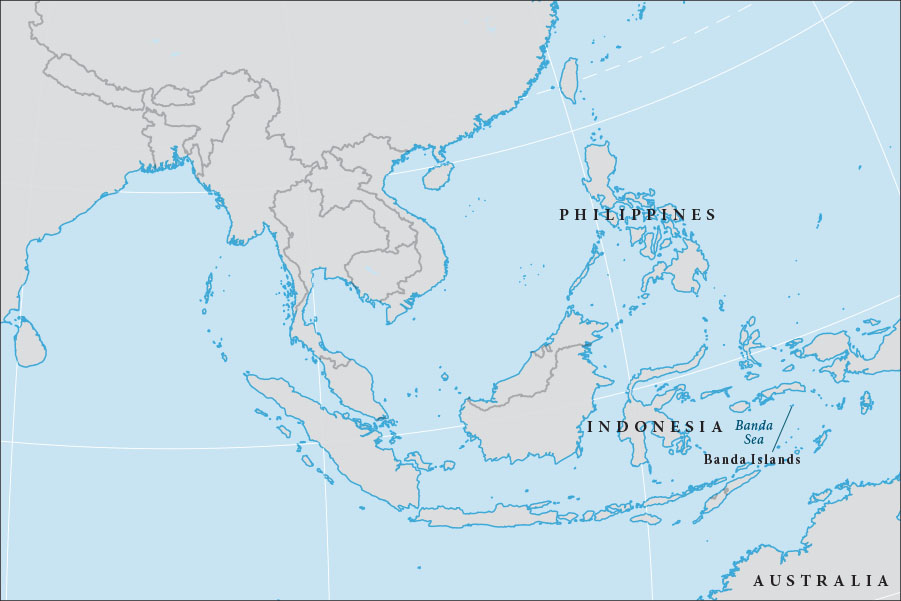
The Portuguese had not been satisfied to take just Malacca. They had a greater prize in mind—the legendary Spice Islands, the source of the nutmeg, mace, and cloves they coveted. Many different islands were known as the Spice Islands, including Zanzibar. The Spice Islands referred to here are in the Indian Ocean. Having learned of the location of the Banda Islands in the Indonesian archipelago where nutmeg and cloves grew in abundance, Afonso de Albuquerque dispatched three ships with Malay pilots to find them, believing them to be the Spice Islands. The hostility of the Bandanese, however, dissuaded the Portuguese from attempting to establish a factory there. One of the original three ships sailed on in search of another spice-rich island group, the Moluccas (Malaku) (Figure 2.16). Here, the Portuguese were able to establish trade relationships with the Sultanate of Ternate, a city-state in the Moluccas.
英語のヒント
ポルトガル人は、マラッカだけを得ても満足していなかった。彼らが思い描いた、さらに大きな獲物は伝説の「香料諸島」であり、熱望するナツメグ、メース、クローブの産地だった。「香料諸島」と呼ばれた島々は、ザンジバルなど各地にあった。ここで指す香料諸島はインド洋にある。インドネシアの群島の中で、ナツメグやクローブが豊富に生えるバンダ諸島の場所を知ったアフォンソ・デ・アルブケルケは、そこが香料諸島だと考え、マレー人の水先案内人を乗せた3隻の船を派遣して探させた。しかし、バンダの住民が敵意を示したため、ポルトガル人はそこに商館を作る試みを思いとどまった。最初の3隻のうち1隻は、香辛料に富む別の島々、モルッカ(マルク)諸島を探してさらに進んだ(図2.16)。ここではポルトガル人は、モルッカの都市国家テルナテ・スルタン朝と交易関係を結ぶことができた。
The Banda Islands.バンダ諸島。
(attribution: Copyright Rice University, OpenStax, under CC BY 4.0 license) · CC BY 4.0
Figure 2.16 The Banda Islands, a spice-rich island group, lie in the center of the Moluccas, an archipelago in the east of Indonesia. (attribution: Copyright Rice University, OpenStax, under CC BY 4.0 license)
図2.16 香辛料に富むバンダ諸島は、インドネシア東部の群島であるモルッカ諸島の中央部に位置する。(帰属表示:著作権 Rice University、OpenStax。CC BY 4.0ライセンス)
The primary interest of Sultan Hairun of Ternate was in using Portuguese military power in his contests with rival states. The Portuguese, meanwhile, had nervously noted that visitors from Mecca, the Ottoman Empire, and other Southeast Asian Islamic sultanates frequented Ternate. As Catholics who sought to convert the people of the Indian Ocean to their religion and who considered Muslims enemies, they feared the growth of Islam in the region would interfere with both their commercial and evangelical efforts and might endanger their safety. Eventually, Portuguese efforts to convert people to Christianity angered Muslim inhabitants and strengthened their devotion to Islam. After Hairun’s death, his son and heir Sultan Babullah declared a holy war against the Portuguese and drove them from the Moluccas in 1575.
英語のヒント
テルナテのスルタン・ハイルンが最も関心を持っていたのは、対抗する諸国との争いにポルトガルの軍事力を利用することだった。一方ポルトガル人は、メッカ、オスマン帝国、東南アジアの他のイスラーム諸国から来訪者がしばしばテルナテを訪れるのを、不安を持って見ていた。彼らは、インド洋の人々を自らの信仰に改宗させようとし、ムスリムを敵とみなすカトリック教徒だったため、この地域でイスラームが広がることは、商業活動と布教活動の双方を妨げ、自分たちの安全も脅かしかねないと恐れた。やがて、キリスト教への改宗を進めようとするポルトガルの行動は、ムスリム住民を怒らせ、イスラームへの献身をかえって強めた。ハイルンの死後、息子で後継者のスルタン・バーブッラーはポルトガル人への聖戦を宣言し、1575年に彼らをモルッカ諸島から追い出した。
Ferdinand Magellan, a Portuguese veteran of Albuquerque’s attack on Malacca, also dreamed of finding a route to the Spice Islands. He planned, however, to discover a westward route by sailing west from Portugal, instead of taking the long route eastward around the tip of Africa and through the Indian Ocean. When the Portuguese king declined to fund the exploratory voyage, Magellan approached the king of Spain, who provided him with the funds and ships he needed. The crew came from many countries, which was common aboard ships at that time.
英語のヒント
アルブケルケのマラッカ攻撃に参加した経験を持つポルトガル人フェルディナンド・マゼランも、香料諸島への航路を見つけることを夢見ていた。だが彼は、アフリカ南端を回りインド洋を通る東回りの長い航路ではなく、ポルトガルから西へ航海して西回りの道を発見しようと計画した。ポルトガル王が探検航海への資金提供を断ると、マゼランはスペイン王に働きかけ、必要な資金と船を提供してもらった。乗組員は多くの国の出身者から成り、これは当時の船では普通のことだった。
In 1519, with a fleet of five ships and a crew of two hundred seventy, Magellan departed from Spain. He crossed the Atlantic and sailed around the southern tip of South America, where the fleet spent the winter. On March 6, 1521, with their fresh water nearly exhausted after three months spent crossing the Pacific, they sighted Guam, and not long after, they made landfall in the Philippines. At the port of Sugbu on the island of Cebu, Magellan and the Spanish were welcomed by the ruler, Rajah Humabon, whose ancestor, a prince of the south India Chola dynasty, had come to the Philippines from Sumatra.
英語のヒント
1519年、マゼランは5隻の船と270人の乗組員を率いてスペインを出発した。大西洋を横断し、南アメリカの南端を回った。その地で船団は冬を過ごした。太平洋の横断に3か月を費やし、真水がほぼ尽きた1521年3月6日、一行はグアムを発見した。まもなくフィリピンにも上陸した。セブ島のスグブ港では、マゼランとスペイン人は支配者ラジャ・フマボンに迎えられた。フマボンの祖先は南インドのチョーラ朝の王子で、スマトラからフィリピンへ渡ってきた人物だった。
As other Portuguese had done, Magellan attempted to convert the people he encountered to Christianity. Humabon, his wives, and many of his subjects agreed. By converting, Humabon hoped to secure Magellan’s assistance in defeating Lapulapu, a rival ruler. Magellan consented to the plan, and at the Battle of Mactan on April 27, 1521, he was killed. Humabon, for unknown reasons, attacked Magellan’s remaining men. The survivors fled to the Moluccas and from there sailed home to Spain. Only eighteen men survived the voyage, and Spanish ships did not return to the Philippines until 1565, when they conquered Cebu. Then in 1570, the Spanish attacked the Muslim trading center of Maynila when one of its rulers refused to become an ally of Spain. The Filipinos were defeated, and in 1571, the Spanish established the city of Manila, which became their capital in the East Indies.
英語のヒント
ほかのポルトガル人と同じように、マゼランは出会った人々をキリスト教に改宗させようとした。フマボンとその妻たち、多くの臣民は同意した。フマボンは改宗によって、対抗する支配者ラプラプを破るためのマゼランの援助を得ようとした。マゼランはこの計画を承諾したが、1521年4月27日のマクタンの戦いで殺された。その後フマボンは、理由は分かっていないが、残ったマゼランの部下を襲撃した。生存者はモルッカ諸島へ逃れ、そこからスペインへ帰航した。航海を生き延びたのはわずか18人だった。スペインの船が再びフィリピンへ来たのは1565年で、その際にセブを征服した。続いて1570年には、支配者の一人がスペインとの同盟を拒んだため、イスラームの交易中心地マイニラを攻撃した。フィリピン人は敗れ、1571年、スペイン人はマニラ市を建設した。同市はスペインの東インドにおける首都となった。
In 1609, the Dutch East India Company attempted to establish a fortress in the Banda Islands. The men sent to negotiate the agreement with the Bandanese were killed, however. In 1621, the Dutch returned and forced the inhabitants to sign a treaty. When the Bandanese violated the treaty’s terms, Dutch soldiers and Japanese mercenaries killed many of the community’s most important leaders and burned their villages. The surviving islanders were forced to cut down sago palm trees, a valuable source of food, and plant spice trees in their place.
英語のヒント
1609年、オランダ東インド会社はバンダ諸島に要塞を設けようとした。しかし、住民との合意を交渉するために送られた者たちは殺された。1621年、オランダ人は戻ってきて、住民に条約への署名を強制した。バンダの人々が条約の条項に違反すると、オランダ兵と日本人傭兵は共同体の有力な指導者を多数殺し、村々を焼いた。生き残った島民は、貴重な食料源であるサゴヤシを切り倒し、その代わりに香辛料の木を植えることを強いられた。
The islands’ land was divided up and given to Dutch colonists, and enslaved Southeast Asians, European indentured servants, and convict laborers were set to work raising nutmeg, which was sold to the Dutch East India Company. The exception was Ambon Island, which the Dutch set aside to grow cloves. Clove trees on all other islands were destroyed, and anyone attempting to grow or sell cloves without permission was given the death penalty. To maintain a monopoly on the spices and thus keep prices high, the Dutch had already driven out English settlers attempting to colonize some of the outlying islands, and then, realizing they might be unable to control these islands, they destroyed all the nutmeg trees that grew there. In 1619, the Dutch also sent enslaved Bandanese to Java to build the Dutch settlement of Batavia (Jakarta).
英語のヒント
島々の土地は分割されてオランダの植民者に与えられた。奴隷にされた東南アジア人、ヨーロッパの年季契約労働者、受刑労働者がナツメグ栽培に従事させられ、そのナツメグはオランダ東インド会社に売られた。例外は、オランダがクローブの栽培用に指定したアンボン島だった。ほかのすべての島のクローブの木は破壊され、許可なく栽培や販売を試みた者は死刑にされた。香辛料を独占して価格を高く保つため、オランダはすでに、周辺の島々の一部を植民地にしようとしていたイングランド人入植者を追い出していた。その後、こうした島々を支配しきれないかもしれないと気付くと、そこに生えているナツメグの木をすべて破壊した。1619年には、オランダは奴隷にしたバンダ人をジャワへ送り、オランダの入植地バタヴィア(ジャカルタ)を建設させた。
The Dutch attempt to maintain their spice monopoly was destined to fail, however. Winds and seabirds spread seeds to other islands. Ships’ captains from other countries managed to return to Europe with holds filled with spices purchased from Southeast Asian kingdoms that had not fallen under the control of European powers. The English captain Sir Francis Drake, for example, purchased cloves from Sultan Babullah of Ternate. As ships grew larger, the volume of spices shipped to European ports increased, driving down prices and profits. The Dutch were not solely reliant on the spice trade, however, for they were able to take advantage of an opportunity not available to the Portuguese and Spanish, dedicated as they were to the propagation of Roman Catholicism. That opportunity was trade with Japan.
英語のヒント
しかし、香辛料の独占を維持しようとするオランダの試みは、失敗を免れなかった。風や海鳥が種を他の島へ運んだ。ほかの国の船長は、ヨーロッパ諸国に支配されていない東南アジアの王国から香辛料を買い、船倉いっぱいに積んでヨーロッパへ戻ることに成功した。たとえばイングランドの船長サー・フランシス・ドレークは、テルナテのスルタン・バーブッラーからクローブを購入した。船が大きくなるにつれ、ヨーロッパの港に運ばれる香辛料の量は増え、価格と利益は低下した。だがオランダは、香辛料交易だけに依存してはいなかった。ローマ・カトリックの布教に専念するポルトガル人やスペイン人には得られない機会を利用できたからである。その機会とは、日本との交易だった。