第2章東アジアとインド洋の交流Exchange in East Asia and the Indian Ocean
2.2 The Malacca Sultanate2.2 マラッカ・スルタン朝
Learning Objectives学習の目標
By the end of this section, you will be able to:
この節を学ぶと、次のことができるようになる。
Identify the factors that led the rise of the Malacca Sultanate
マラッカ・スルタン朝の興隆をもたらした要因を特定する。
Discuss the significance of Malacca as a center of trade
交易の中心地としてのマラッカの重要性を論じる。
Analyze the Portuguese invasion of Malacca and its consequences
ポルトガルによるマラッカ侵攻と、その結果を分析する。
Like the Sultanate of Gujarat, the Malacca Sultanate was blessed by its geography. Located on the northern part of the Indonesian island of Sumatra and the southern part of the Malay Peninsula, it controlled access to the narrow Malaccan Straits, the most direct route between the Indian Ocean and the South China Sea, a branch of the Pacific Ocean. All trade moving between India, Southeast Asia, and China went through these waters.
英語のヒント
グジャラート・スルタン朝と同じく、マラッカ・スルタン朝も地理に恵まれていた。インドネシアのスマトラ島北部とマレー半島南部に位置し、狭いマラッカ海峡の通行を支配した。この海峡は、インド洋と、太平洋の一部である南シナ海を結ぶ最短の経路だった。インド、東南アジア、中国の間を行き来する交易は、すべてこの海域を通った。
The Rise of the Malacca Sultanateマラッカ・スルタン朝の興隆
When the remnants of the Srivijaya Empire on the island of Sumatra were destroyed by the Majapahit Empire in the thirteenth century, a refugee named Sang Nila Utama, who claimed to be a descendant of Alexander the Great, founded the Kingdom of Singapura on the island of Singapore. Singapura developed into a prosperous center of trade. However, its wealth led to attacks by both the Majapahit and the Ayutthaya Kingdom in Siam (now Thailand). In 1398, Singapura too was destroyed, and Parameswara, its last king and a prince of the Srivijaya Empire, fled with his followers. He made his way to a fishing village at the mouth of the Malacca River on the Malay Peninsula that belonged to a tribe called the Orang Laut (“sea people”). The Orang Laut had already given refuge to others fleeing from Majapahit, and a mixed population of Hindus, Buddhists, and Muslims had taken up residence there. Parameswara, supposedly inspired by the courage of a small deer that did not fear his hunting dogs, decided this was the spot on which to build a new kingdom.
英語のヒント
13世紀にスマトラ島のシュリーヴィジャヤ帝国の残存勢力がマジャパヒト王国に滅ぼされると、アレクサンドロス大王の子孫を称する難民サン・ニラ・ウタマが、シンガポール島にシンガプラ王国を建てた。シンガプラは繁栄する交易の中心地に成長した。しかし、その富のために、マジャパヒト王国とシャム(現在のタイ)のアユタヤ王国の双方から攻撃を受けた。1398年にはシンガプラも滅ぼされ、最後の王でシュリーヴィジャヤの王子でもあったパラメーシュヴァラは、従者たちとともに逃れた。彼はマレー半島のマラッカ川河口にある漁村へたどり着いた。そこはオラン・ラウト(「海の民」)と呼ばれる部族の村だった。オラン・ラウトはすでにマジャパヒトから逃げる人々をかくまっており、ヒンドゥー教徒、仏教徒、ムスリムが入り混じって暮らしていた。パラメーシュヴァラは、自分の猟犬を恐れない小さな鹿の勇気に心を動かされたとされ、この地に新たな王国を築こうと決めた。
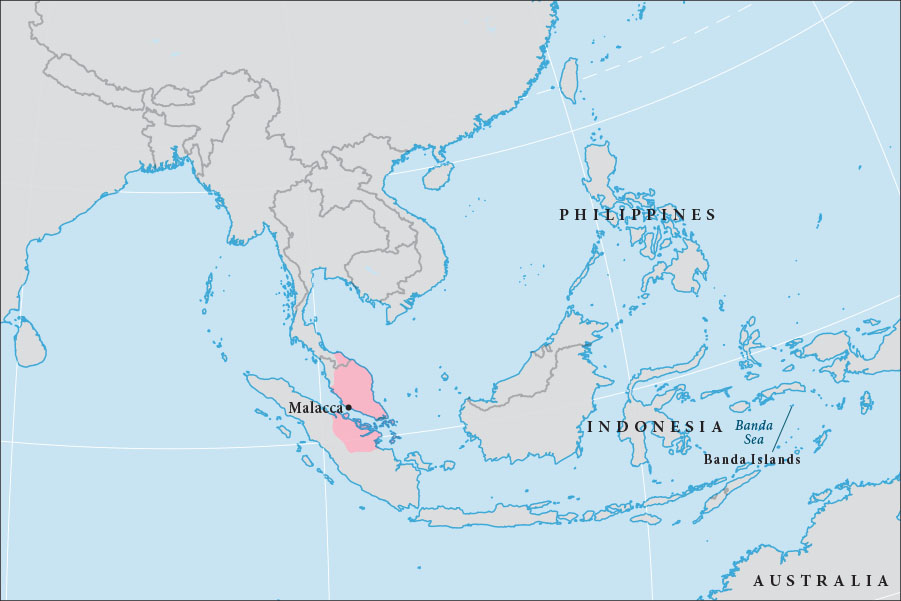
The city Parameswara and his followers founded in around 1400, called Malacca (Melaka), became a thriving trading port that grew to occupy both the northern coast of Sumatra and the Malay Peninsula, on either side of the Malaccan Straits (Figure 2.14). The Orang Laut kept the seas in the area free of pirates, and Arab, Persian, Indian, and Chinese merchants came to do business. Many decided to stay. Parameswara married the daughter of an Indonesian Muslim ruler and converted to Islam, changing his name to Iskander (Persian for Alexander) and taking the title of sultan. This enabled Malacca to form close relationships with other Muslim states on Sumatra that traded with Gujarat. Through the Malaccan Straits flowed silks, spices, and porcelain, as well as Malaccan products such as tin that was mined to the north of the city. The Malaccans also planted orchards of sago palms, which provided an important foodstuff, a starchy ingredient of bread and noodles that was traded throughout the region.
英語のヒント
パラメーシュヴァラと従者たちが1400年ごろに築いたマラッカ(ムラカ)は、繁栄する交易港となった。その勢力はマラッカ海峡の両岸、スマトラ島北岸とマレー半島を占めるまでに成長した(図2.14)。オラン・ラウトが周辺の海から海賊を排除し、アラブ人、ペルシア人、インド人、中国人の商人が交易に訪れた。多くの者は、そのまま定住した。パラメーシュヴァラはインドネシアのムスリム支配者の娘と結婚し、イスラームへ改宗した。名前をイスカンダル(ペルシア語でアレクサンドロスの意)に変え、スルタンの称号を取った。これにより、マラッカはグジャラートと交易するスマトラの他のイスラーム諸国と緊密な関係を築けるようになった。マラッカ海峡には、絹、香辛料、磁器に加え、都市の北で採掘される錫などのマラッカ産品も流れた。マラッカの人々はサゴヤシの栽培園も作った。サゴヤシはパンや麺の材料となるでんぷん質の重要な食料をもたらし、地域全体で取引された。
The Malacca Sultanate.マラッカ・スルタン朝。
(credit: modification of work “Banda Sea” by Demis/Wikimedia Commons, Public Domain) · Public Domain
Figure 2.14 The heart of the Malacca Sultanate was Malacca, a port city located on the narrow Straits of Malacca, the most direct route between India, the islands of Indonesia, and the Pacific Ocean. (credit: modification of work “Banda Sea” by Demis/Wikimedia Commons, Public Domain)
図2.14 マラッカ・スルタン朝の中心は、狭いマラッカ海峡に面する港湾都市マラッカだった。この海峡は、インド、インドネシアの島々、太平洋を結ぶ最短の経路である。(出典:Demis/Wikimedia Commons「Banda Sea」を改変。パブリックドメイン)
Malacca also established relations with China’s Ming dynasty, whose Admiral Zheng He visited Malacca six times during the voyages he undertook in the service of the Yongle emperor. When the growing power of Siam’s Ayutthaya Kingdom threatened Malacca, Ming envoys let the Siamese know that Malacca was a vassal state of China and thus not to be interfered with. By the time the Ming dynasty had turned inward in the mid-fifteenth century and ceased to trouble itself with matters involving foreign states, Malacca had grown strong enough to fend off Ayutthaya and repulsed two attacks made by that kingdom in 1446 and 1456. With Ayutthaya no longer a threat, the Sultanate of Malacca was free to spread its influence, and the religion of Islam, throughout Southeast Asia.
英語のヒント
マラッカは中国の明とも関係を築いた。明の提督鄭和は、永楽帝に仕えて行った航海の間に、6回マラッカを訪れた。シャムのアユタヤ王国が力を増してマラッカを脅かすと、明の使節は、マラッカは中国の属国であるため干渉してはならないとシャム側に伝えた。15世紀半ば、明が内向きとなり外国の問題に関わるのをやめたころには、マラッカはすでにアユタヤを撃退できるほど強くなっていた。1446年と1456年には、同王国からの2度の攻撃を退けた。アユタヤが脅威でなくなると、マラッカ・スルタン朝は東南アジア全域へ自らの影響力とイスラーム信仰を広められるようになった。
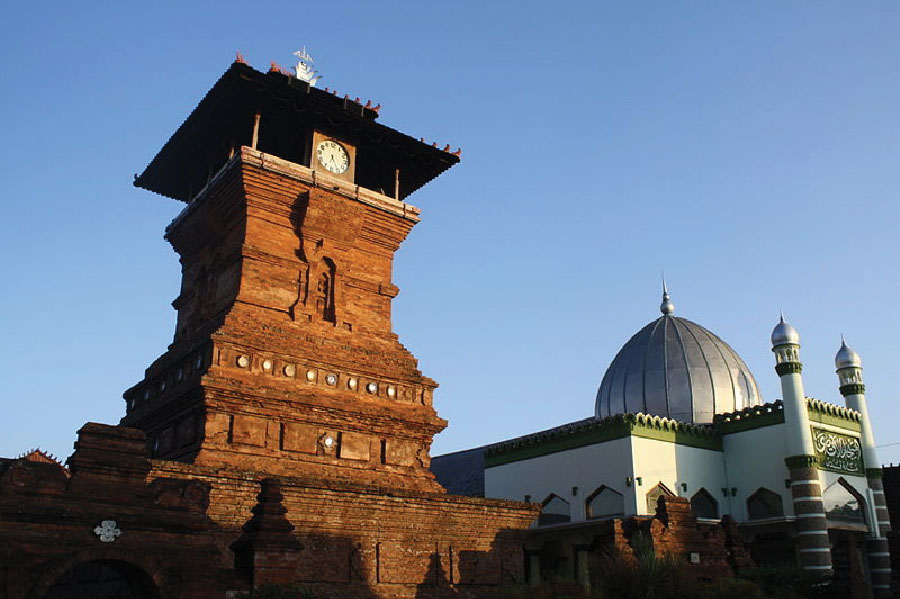
From Malacca, religious teachers, many of them Sufis, brought Islam across the Malay Peninsula, and people on nearby islands also became converts. The sultans of Malacca and other Muslim rulers paid generously for the construction of mosques and religious schools (Figure 2.15). By the early 1600s, Islam had become the dominant religion in the Indian Ocean, and only on the island of Bali was Hindu influence still substantial. On Java, the home of the Hindu-Buddhist Majapahit Empire, the adoption of Islam was marked by warfare between Muslims living on the coast and Hindus and animists (people who worship the supernatural power they believe exists in all things in the universe) in the interior. For the most part, however, conversion was peaceful. Merchants were especially eager to convert in order to connect themselves with the established network of merchants in India, Persia, Arabia, and Africa who followed the same faith. They could then also count on the protections of Islamic law. Sufi religious teachers were amenable to adapting Islam to local religious traditions, allowing people in some regions to continue worshipping nature spirits and permitting women to retain an active role in local commerce, as was common in Southeast Asia.
英語のヒント
マラッカから宗教教師たちがマレー半島全体へイスラームを伝えた。その多くはスーフィーで、近くの島々の住民も改宗した。マラッカのスルタンや他のムスリム支配者は、モスクや宗教学校の建設に惜しみなく資金を出した(図2.15)。1600年代初めにはイスラームがインド洋の支配的な宗教となり、ヒンドゥーの影響がなお大きかったのはバリ島だけとなった。ヒンドゥー教と仏教のマジャパヒト王国の本拠地ジャワでは、イスラーム受容の過程で、沿岸に住むムスリムと、内陸のヒンドゥー教徒やアニミズムの信奉者が戦った。アニミズムとは、宇宙のあらゆるものに存在すると考える超自然的な力を崇拝する信仰である。しかし大部分の場合、改宗は平和的だった。とりわけ商人は、同じ信仰を持つインド、ペルシア、アラビア、アフリカの商人の既存のネットワークにつながるため、熱心に改宗しようとした。改宗すれば、イスラーム法の保護も当てにできた。スーフィーの宗教教師たちは、イスラームを地元の宗教的伝統に合わせることに柔軟だった。一部の地域では人々が自然の精霊を崇拝し続けることを認め、東南アジアでは普通に見られたように、女性が地域の商業で積極的な役割を保つことも認めた。
The Menara Kudus Mosque.メナラ・クドゥス・モスク。
(credit: “Masjid Menara Kudus” by “PL09Puryono”/Wikimedia Commons, CC0 1.0) · CC0 1.0
Figure 2.15 The Menara Kudus Mosque on the island of Java was built in 1549. One of the oldest mosques in Indonesia, it was among many erected by pious Muslim rulers. (credit: “Masjid Menara Kudus” by “PL09Puryono”/Wikimedia Commons, CC0 1.0)
図2.15 ジャワ島のメナラ・クドゥス・モスクは1549年に建てられた。インドネシア最古級のモスクの一つであり、敬虔なムスリム支配者たちが建てた数多くのモスクの一例である。(出典:「PL09Puryono」/Wikimedia Commons「Masjid Menara Kudus」。CC0 1.0)
Malacca reached the height of its power in the late fifteenth century under the reigns of Sultan Mansur Shah and his son Sultan Alauddin Riayat Shah. During this period, often thought of as “the golden age” of Malacca, Mansur Shah pursued an expansionist policy, adding the gold-rich state of Pahang on the east coast of the Malay Peninsula to his kingdom. The ruler of Majapahit, fearing Malacca’s strength, sought peace by marrying his daughter to Mansur Shah and conceding to him a number of Majapahit territories. States throughout the Malaysian archipelago acknowledged the ruler of Malacca as their overlord.
英語のヒント
マラッカは15世紀後半、スルタン・マンスール・シャーと、その息子スルタン・アラウディン・リアヤット・シャーの治世に最盛期を迎えた。マラッカの「黄金時代」とよく呼ばれるこの時期、マンスール・シャーは拡張政策を進め、マレー半島東海岸の金に恵まれたパハン国を王国に加えた。マラッカの強さを恐れたマジャパヒトの支配者は、自分の娘をマンスール・シャーに嫁がせ、いくつかの領土を譲り渡して和平を求めた。マレー諸島の各地の国々が、マラッカの支配者を自らの宗主と認めた。
Assisting the sultans of Malacca to maintain control over the city were nine elite knights. Preeminent among them was Hang Tuah, who spoke multiple languages including Arabic, Persian, and Mandarin and was adept in the use of numerous weapons. It was his responsibility to guard the seas surrounding the Straits of Malacca and keep them free of pirates. Order was also maintained by the establishment of the office of shahbandar. Foreign traders were divided among four separate districts in the city, and each district was assigned an official known as the shahbandar to supervise them and collect taxes.
英語のヒント
9人の精鋭の騎士が、マラッカのスルタンによる都市の支配を助けた。中でも際立っていたのはハン・トゥアで、アラビア語、ペルシア語、官話などの複数の言語を話し、多くの武器を巧みに使った。彼の役目はマラッカ海峡周辺の海を守り、海賊を寄せ付けないことだった。秩序はまた、シャーバンダルという役職の設置によっても保たれた。外国人商人は市内の四つの別々の地区に分けられ、各地区にシャーバンダルと呼ばれる役人が配置されて、商人を監督し税を徴収した。
A legal code called the Undang-Undang Melaka (“law of Melaka”) governed conduct in the port. Influenced by Islamic law, it punished behavior such as robbery, adultery, and drunkenness. One of the most important parts of the legal code for merchants was the section on maritime law called the Undang-Undang Laut Melaka. This code governed everything from the behavior of sailors and traveling merchants toward the captain of the merchant vessel, to the order in which trade was to take place when the ship put into port (the captain was allowed to trade his goods first), to rules specifying how those who quarreled or stole other passengers’ property should be treated.
英語のヒント
「ウンダン・ウンダン・ムラカ」(「マラッカの法」)と呼ばれる法典が、港での行動を規制した。イスラーム法の影響を受け、強盗、姦通、酩酊などの行為を処罰した。商人にとって特に重要だったのは、海事法の部分である「ウンダン・ウンダン・ラウト・ムラカ」だった。この法は、船員や旅する商人が商船の船長に対して取るべき態度から、船が入港した際の交易の順番、さらには、争ったり他の乗客の財産を盗んだりした者の扱いまで、あらゆる事柄を定めた。交易では、船長が先に自分の品物を売ることを認められていた。
The Malaccan rulers’ ability to regulate the conduct of sailors and merchants both in their city and aboard their ships made the port a more desirable place in which to do business. Merchants need not fear that Malacca was a lawless place, as many ports were. The city quickly became the main port for trading Indian cloth and Chinese porcelain as well as goods such as spices from the Malay Archipelago. This growth in the wealth and prominence of Malacca helped make the fifteenth century a golden age.
英語のヒント
マラッカの支配者が市内と船上の両方で船員や商人の行動を規制できたことは、この港をさらに商売しやすい場所にした。商人は、他の多くの港のようにマラッカが無法地帯なのではないかと恐れる必要がなかった。都市はまもなく、インドの布、中国の磁器、マレー諸島の香辛料などを取引する主要港となった。こうしてマラッカの富と重要性が増したことが、15世紀を黄金時代にする一因となった。
The dominance of Malacca in the Indian Ocean trade spread the Undang-Undang Melaka throughout the islands of Indonesia. It also made the Malay language the premier language of trade throughout the coastal regions of Southeast Asia. In the fourteenth century, a special script for writing it was developed, based on Arabic script. In the fifteenth century, Malaysian literature, which had been transmitted only orally before, flourished, another characteristic of this golden age in the Malaccan Sultanate.
英語のヒント
インド洋交易でマラッカが優勢を占めたことで、ウンダン・ウンダン・ムラカはインドネシアの島々へ広がった。またマレー語が、東南アジアの沿岸地域全体で最も重要な交易言語となった。14世紀には、アラビア文字に基づいてマレー語を書くための特別な文字体系が発達した。15世紀には、それまで口頭でのみ伝えられていたマレー文学が花開いた。これもマラッカ・スルタン朝の黄金時代の特色の一つである。