第2章東アジアとインド洋の交流Exchange in East Asia and the Indian Ocean
European Colonialismヨーロッパの植民地主義
In 1488, a Portuguese ship’s captain, Bartolomeu Dias, had sailed around the Cape of Good Hope at the southern tip of Africa, but his restless crew made him turn back before he could further explore the Indian Ocean. Dias was one of many Portuguese explorers who had ventured out into the Atlantic Ocean in the fifteenth century following Portugal’s capture of the Muslim port of Ceuta on the Moroccan coast in 1415. Ceuta lay at the end of caravan routes that brought the gold of West Africa across the Sahara Desert. After he assumed the throne in 1433, King Edward of Portugal granted to his younger brother Henry (nicknamed “the Navigator” by historians in the nineteenth century) the right to authorize exploration south of Cape Bojador on the northwest coast of Morocco. Edward also gave Henry the rights to any profits derived from trade with regions that these explorers discovered.
英語のヒント
1488年、ポルトガルの船長バルトロメウ・ディアスは、アフリカ南端の喜望峰を回った。しかし、不満を募らせた乗組員に引き返すよう迫られ、インド洋の探検をさらに進めることはできなかった。ディアスは、1415年にポルトガルがモロッコ海岸のイスラームの港セウタを奪取したのち、15世紀に大西洋へ乗り出した数多くのポルトガル人探検家の一人だった。セウタは、西アフリカの金をサハラ砂漠越しに運ぶ隊商路の終点にあった。1433年に即位したポルトガル王ドゥアルテは、弟エンリケに、モロッコ北西海岸のボハドル岬より南への探検を許可する権限を与えた。エンリケは19世紀の歴史家から「航海王子」と呼ばれた人物である。ドゥアルテはさらに、探検家たちが発見した地域との交易から得られる利益に対する権利も、エンリケに与えた。
Eager to find the source of West Africa’s gold, Henry sponsored voyages down the African coast. Gradually, the Portuguese advanced southward, establishing trading posts as they went. Although gold was the main object of trade, enslaved people were also purchased and sold in Lisbon. Henry collected a 20 percent tax on the trade and used the money to fund yet more voyages.
英語のヒント
西アフリカの金の産地を見つけようと、エンリケはアフリカ沿岸を南下する航海を後援した。ポルトガル人は少しずつ南へ進み、行く先々に交易拠点を築いた。主な交易品は金だったが、奴隷にされた人々も買い入れ、リスボンで売った。エンリケはその交易から20パーセントの税を徴収し、その金でさらに多くの航海に資金を出した。
After the fall of Constantinople to the Ottoman Empire in 1453, access to the known routes to spices and other Asian goods that Europeans desired lay entirely in Muslim hands. Other Europeans had long resented the monopolization of the spice trade by the Venetians and Genoese, who had been granted trading concessions by the Ottomans. Now there was an even greater incentive to find new routes to the lands of the East. It was for this reason that, in 1492, Christopher Columbus, in the employ of Queen Isabella and King Ferdinand of Spain, ventured out into the Atlantic in search of an oceanic route to India.
英語のヒント
1453年にコンスタンティノープルがオスマン帝国の手に落ちると、ヨーロッパ人が求める香辛料やアジアの品々へ通じる既知の経路は、すべてムスリムの手に握られた。オスマン帝国から交易特権を与えられたヴェネツィア人とジェノヴァ人が香辛料交易を独占していることに、ヨーロッパのほかの人々は以前から反感を抱いていた。こうして、東方の土地への新たな道を見つける誘因は一層強くなった。このため、1492年、スペインのイサベル女王とフェルナンド王に雇われたクリストファー・コロンブスは、インドへの海路を求めて大西洋へ乗り出した。
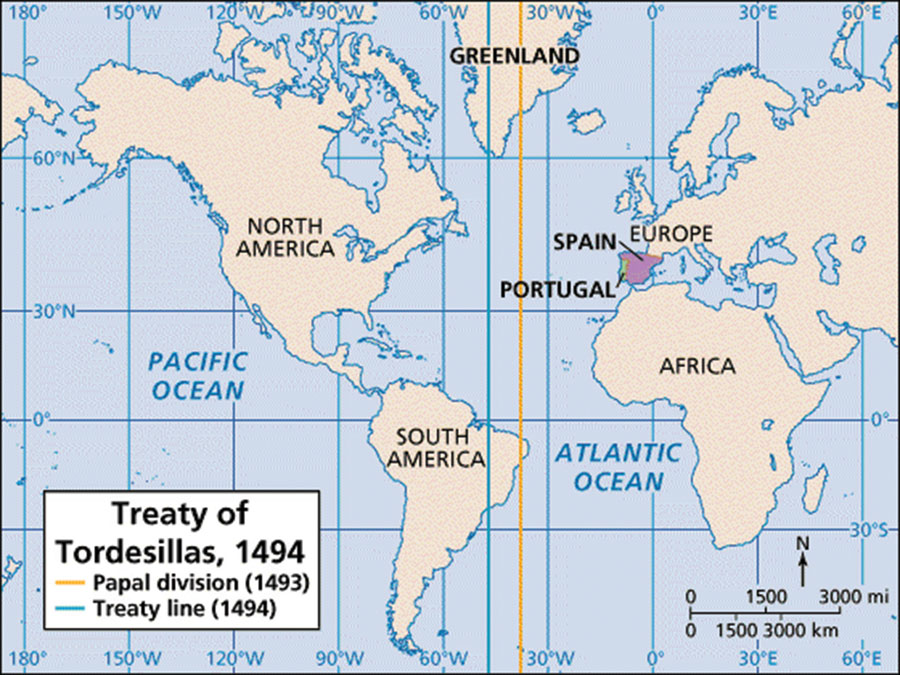
In 1494, following Columbus’s landing in the Caribbean, Spain and Portugal signed the Treaty of Tordesillas, ratifying Pope Alexander VI’s decision that all non-Christian lands west of a line drawn one hundred leagues west of the Cape Verde Islands off the coast of Africa, which Portugal already claimed, were to belong to Spain. Non-Christian lands east of the line were given to Portugal (Figure 2.11). Four years later, another Portuguese sailor, Vasco da Gama, became the first European to sail all the way to India after rounding the Cape of Good Hope.
英語のヒント
1494年、コロンブスがカリブ海地域に上陸したのち、スペインとポルトガルはトルデシリャス条約を結んだ。この条約は、教皇アレクサンドル6世の決定を承認するものだった。すなわち、アフリカ沖の、すでにポルトガルが領有を主張していたカーボベルデ諸島の西100リーグに線を引き、その西側にある非キリスト教徒の土地はすべてスペインに属するという決定である。線の東側にある非キリスト教徒の土地はポルトガルに与えられた(図2.11)。その4年後、別のポルトガル人航海者ヴァスコ・ダ・ガマが、喜望峰を回ってインドまで航海した最初のヨーロッパ人となった。
The Treaty of Tordesillas.トルデシリャス条約。
(credit: “Treaty of Tordesillas, 1494” by “Ultimadesigns”/Wikimedia Commons, Public Domain) · Public Domain
Figure 2.11 Without reference to the sovereignty of the people who lived there, the Treaty of Tordesillas granted all lands in Africa and Asia to Portugal. Spain received the Americas except the easternmost portion of South America, which eventually became the Portuguese colony of Brazil. (credit: “Treaty of Tordesillas, 1494” by “Ultimadesigns”/Wikimedia Commons, Public Domain)
英語のヒント
図2.11 トルデシリャス条約は、そこに暮らす人々の主権を考慮せず、アフリカとアジアの土地をすべてポルトガルに与えた。スペインには南北アメリカが与えられたが、南アメリカの最東部は除外され、そこは後にポルトガルの植民地ブラジルとなった。(出典:「Ultimadesigns」/Wikimedia Commons「Treaty of Tordesillas, 1494」。パブリックドメイン)
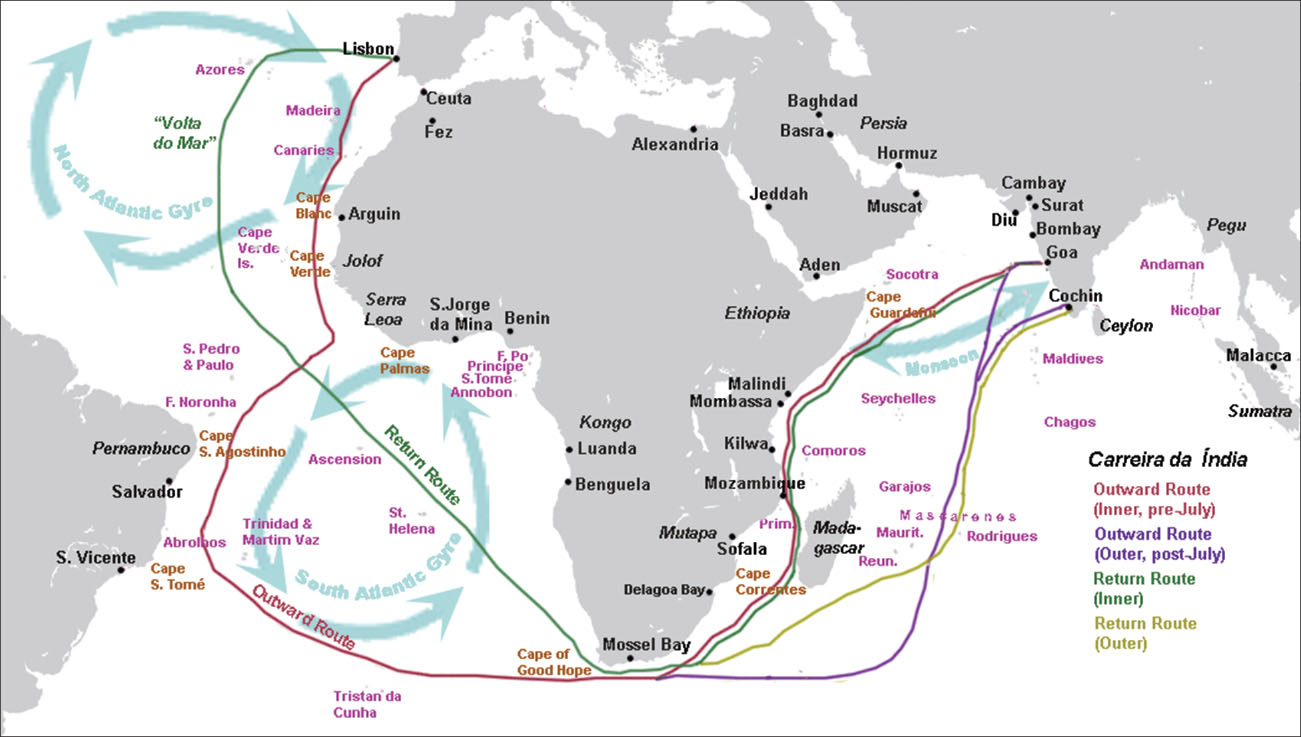
In 1498, da Gama sailed north along the east coast of Africa and from there across the Indian Ocean to the southwestern coast of India, where he landed in the port of Calicut (Kozhikode) in what is today the state of Kerala (Figure 2.12). Da Gama had come to India on a quest to find an all-water route to Southeast and East Asia, the source of spices, silks, porcelains, and other Asian goods. Europeans had had access to such luxuries for centuries, but they were expensive. They had to be carried overland, which limited the amounts that could be brought to Europe, and they also passed through the hands of many intermediaries between their point of origin and their European consumers. Finding an all-water route to the source was intended to eliminate these problems, and the nation that did so stood to become very wealthy. Before the voyages of the Portuguese, trade with Asia had been monopolized by northern Italian merchants, especially the Venetians, to the envy of merchants in other countries. Da Gama hoped to change this.
英語のヒント
1498年、ダ・ガマはアフリカ東海岸沿いに北上し、そこからインド洋を横断してインド南西海岸へ向かった。そして、現在のケーララ州にあるカリカット(コーリコード)港に上陸した(図2.12)。ダ・ガマがインドへ来たのは、香辛料、絹、磁器などのアジアの品々の産地である東南アジアと東アジアへ、海路だけでたどり着く道を探すためだった。ヨーロッパ人は何世紀も前からこうしたぜいたく品を手に入れていたが、高価だった。陸路で運ぶ必要があったためヨーロッパへ持ち込める量は限られ、産地からヨーロッパの消費者へ届くまでに、多くの仲介者の手も経ていた。産地まで全行程を海で行ける経路を見つける目的は、こうした問題を取り除くことにあった。それを実現した国は、莫大な富を得られる立場にあった。ポルトガルの航海以前、アジアとの交易は北イタリアの商人、とりわけヴェネツィア人が独占し、他国の商人の羨望を買っていた。ダ・ガマはこの状況を変えようとした。
The “India Run.”「インド航路」。
(credit: modification of work “Map of Portuguese Carreira da India” by “Walrasiad”/Wikimedia Commons, CC BY 3.0) · CC BY 3.0
Figure 2.12 Working for Portugal, Vasco da Gama sailed north along the east coast of Africa and across the Indian Ocean to Calicut, in the southern Indian province of Kerala, establishing what became the typical sea route to India, the carreira da Índia, or “India Run.” (credit: modification of work “Map of Portuguese Carreira da India” by “Walrasiad”/Wikimedia Commons, CC BY 3.0)
図2.12 ポルトガルに仕えるヴァスコ・ダ・ガマは、アフリカ東海岸沿いに北上し、インド洋を渡って、インド南部のケーララにあるカリカットに到達した。これにより、のちにカレイラ・ダ・インディア、すなわち「インド航路」と呼ばれる典型的なインドへの海路が確立された。(出典:「Walrasiad」/Wikimedia Commons「Map of Portuguese Carreira da India」を改変。CC BY 3.0)
Of all the goods da Gama sought, spices were the most desirable. They were used not only in cooking but also as ingredients in medicines, and their scents were employed to mask less pleasant odors. While this type of Portuguese ship, called a caravel, had relatively little space for cargo, a small amount of pepper and other spices would fit in the hold and still earn substantial profits in Europe.
英語のヒント
ダ・ガマが求めた品々の中で、最も望まれていたのは香辛料だった。料理だけでなく薬の材料にも使われ、その香りは不快な臭いを覆い隠すためにも利用された。キャラベルと呼ばれるこの種のポルトガル船は、貨物を載せる空間が比較的小さかったが、少量の胡椒やほかの香辛料なら船倉に収まり、それでもヨーロッパで大きな利益を上げられた。
Caravels did have certain advantages. They were larger and sturdier than most craft that sailed in the Indian Ocean, and they were heavily armed, as well as relatively fast and stable in heavy seas. If merchants in India proved unwilling to sell to the Portuguese at the low prices the Europeans set, the caravels’ captains blocked access to Indian ports so that Arab and Persian merchants were unable to trade.
英語のヒント
キャラベル船には、確かに利点もあった。インド洋を航行する多くの船より大きく頑丈で、重武装していたうえ、比較的速く、荒れた海でも安定していた。インドの商人が、ヨーロッパ人の決めた安値でポルトガル人に売るのを拒むと、キャラベル船の船長たちはインドの港への出入りを封鎖し、アラブ人やペルシア人の商人が交易できないようにした。
Da Gama’s success in reaching India and the value of the goods with which he returned led to future expeditions. In 1500, Pedro Alvares Cabral established a factory, a trading post with offices and warehouses, at Calicut to trade for pepper, and he also secured trade agreements from local rulers in Cochin (Kochi) and Kannur, both in Kerala. To eliminate competition, Cabral had his men seize Muslim merchant ships in the harbor, strip them of their cargoes, and burn them, and he then bombarded the port. Approximately six hundred Muslim sailors were killed. Indians attacked the Portuguese factory in Calicut to avenge the assault on the Muslim traders.
英語のヒント
ダ・ガマがインドに到達し、価値ある品々を持ち帰った成功は、その後の遠征につながった。1500年、ペドロ・アルヴァレス・カブラルは、胡椒を取引するためカリカットに商館を設けた。ここでいう商館(factory)とは、事務所と倉庫を備えた交易拠点である。また、同じケーララにあるコーチン(コチ)とカンヌールの地方支配者からも交易協定を取り付けた。競争相手を排除するため、カブラルは部下に港内のムスリム商船を拿捕させ、積み荷を奪って船を焼かせたうえ、港を砲撃した。およそ600人のムスリムの船員が殺された。インド人はムスリム商人への襲撃に報復するため、カリカットのポルトガル商館を攻撃した。
Relations between local rulers and the Portuguese did not improve when da Gama returned in 1502. He demanded that all Arabs be expelled from Calicut, and when this order was refused, he bombarded the city as Cabral had done. Establishing a pattern that they and other Europeans later replicated throughout India, the Portuguese sought to divide and conquer by entering into alliance with some local rulers to the disadvantage of others, a strategy made easier in later decades by the weakening of the Mughal Empire. When the Portuguese allied with the ruler of Cochin, the hereditary ruler of Calicut, called the zamorin, invaded Cochin in response. In retaliation, the Portuguese destroyed the fleet that sailed once a year from Calicut to Egypt to sell spices for the zamorin.
英語のヒント
1502年にダ・ガマが戻っても、地方支配者とポルトガル人の関係は改善しなかった。彼はカリカットからアラブ人をすべて追放するよう要求し、それを拒否されると、カブラルと同様に都市を砲撃した。ポルトガル人は、一部の地方支配者と同盟を結び、ほかの支配者を不利にすることで、分断して征服することを目指した。このやり方はのちに彼ら自身や他のヨーロッパ人によってインド全域で繰り返され、数十年後にはムガル帝国の弱体化によっていっそう容易になった。ポルトガル人がコーチンの支配者と同盟すると、カリカットの世襲支配者でザモリンと呼ばれる君主は、対抗してコーチンへ侵攻した。報復としてポルトガル人は、ザモリンのために香辛料を売ろうと年に一度カリカットからエジプトへ航海する船団を破壊した。
Beginning in 1502, the Portuguese also attempted to increase their revenues by demanding that ships trading in the Indian Ocean carry a cartaz, a document bearing the Christian cross. The money paid for this document went into the Portuguese royal coffers, and by forcing ships to sail to a Portuguese post in India to purchase one, the Portuguese government hoped also to increase commerce for its merchants in the ports it controlled. Ships that did not carry the cartaz had their cargoes seized and were sunk. Muslim, Jewish, and Hindu captains objected to having to bear a document with the Christian cross, and all non-Portuguese resented Portugal’s attempts to dominate Indian Ocean trade.
英語のヒント
1502年以降、ポルトガル人は、インド洋で交易する船にキリスト教の十字架を記した文書カルタスを携帯するよう要求し、収入を増やそうともした。この文書の代金はポルトガル王室の国庫に入った。購入のため船をインドのポルトガル拠点へ来させることで、ポルトガル政府は、自国が支配する港で自国商人の取引も増やそうとした。カルタスを持たない船は積み荷を没収され、沈められた。ムスリム、ユダヤ教徒、ヒンドゥー教徒の船長たちは、キリスト教の十字架が付いた文書の携帯を強いられることに反対した。ポルトガル人以外の人々は皆、インド洋交易を支配しようとするポルトガルの試みに憤りを抱いた。
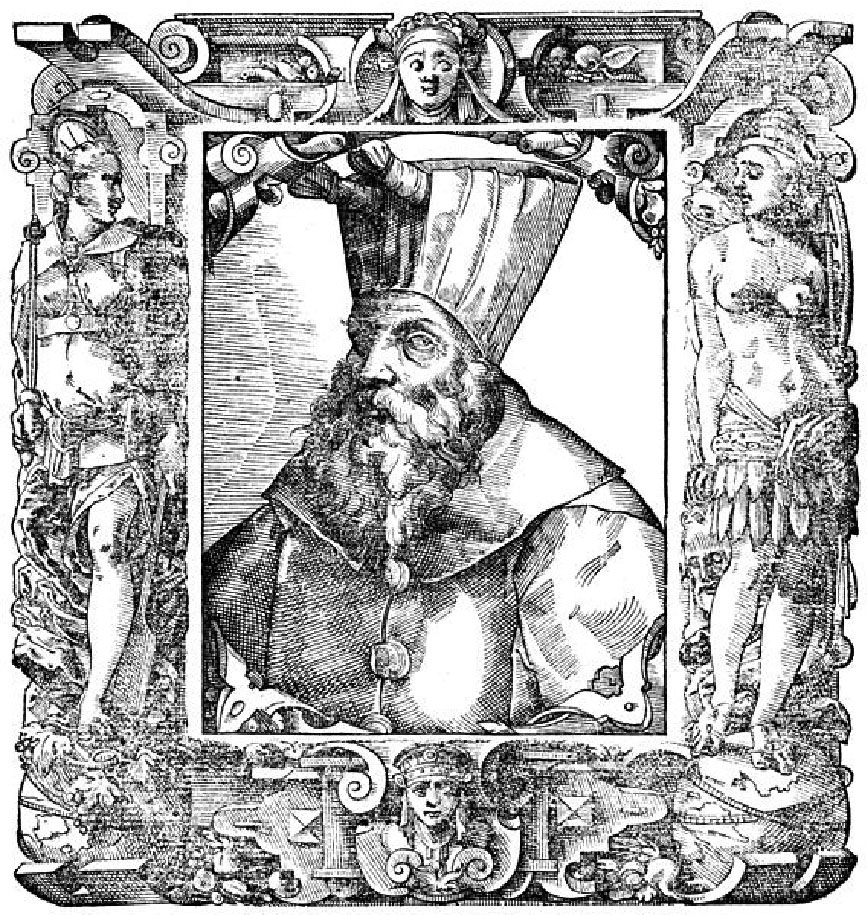
To protect their economic interests, a diverse and formidable group of opponents assembled to thwart these Portuguese efforts. Following the destruction of his spice fleet, the Hindu zamorin of Calicut and Calicut’s Muslim merchants turned to Egypt for help. At the time, the Mamluk Sultanate of Egypt controlled not only that land but also the Levant (greater Syria) and much of the Arabian Peninsula as well. (The Mamluks were an elite group of formerly enslaved warriors who ruled Egypt following the defeat of the Abbasid caliphate.) In the early sixteenth century, this area was the center of the spice trade with Europe that, before the arrival of the Portuguese in India, had been carried out by Venetian merchants in the port of Alexandria. Egypt’s Sultan Al-Ashraf Qansuh al-Ghawri thus asked Venice for assistance, which the city-state provided in the form of ships and gunners (Figure 2.13). At the same time, spurred by a desire to combat the Muslims of the Indian Ocean, the king of Portugal sent a fleet to India.
英語のヒント
経済的利益を守るため、多様で強力な相手が結集して、ポルトガルのこの試みを阻もうとした。香辛料船団を破壊されたのち、ヒンドゥー教徒であるカリカットのザモリンと、カリカットのムスリム商人は、エジプトに援助を求めた。当時、エジプトのマムルーク朝はエジプトだけでなく、レヴァント(大シリア)やアラビア半島の広い範囲も支配していた。マムルークとは、もとは奴隷にされた戦士の精鋭集団で、アッバース朝の敗北後にエジプトを支配した人々である。16世紀初め、この地域はヨーロッパとの香辛料交易の中心地だった。ポルトガル人がインドに来る以前、その交易はアレクサンドリア港のヴェネツィア商人が担っていた。そこでエジプトのスルタン、アシュラフ・カーンスーフ・ガウリーはヴェネツィアに援助を要請した。ヴェネツィアは船と砲手を提供した(図2.13)。同じころ、インド洋のムスリムと戦いたいという意欲に駆られたポルトガル王は、インドへ船団を送った。
Al-Ashraf Qansuh al-Gahwri.アシュラフ・カーンスーフ・ガウリー。
(credit: “Portrait of Al-Ashraf Qansuh al-Ghawri” by Paolo Giovio/Wikimedia Commons, Public Domain) · Public Domain
Figure 2.13 Shown in a woodcut portrait by his near-contemporary the Italian historian Paolo Giovio, Al-Ashraf Qansuh al-Gahwri was the second-to-last Mamluk sultan of Egypt. In 1516, he was defeated in battle and killed by Ottoman forces. (credit: “Portrait of Al-Ashraf Qansuh al-Ghawri” by Paolo Giovio/Wikimedia Commons, Public Domain)
図2.13 ほぼ同時代のイタリアの歴史家パオロ・ジョヴィオによる木版肖像に描かれたアシュラフ・カーンスーフ・ガウリーは、エジプトのマムルーク朝で最後から2番目のスルタンだった。1516年、オスマン軍との戦いに敗れて死んだ。(出典:Paolo Giovio/Wikimedia Commons「Portrait of Al-Ashraf Qansuh al-Ghawri」。パブリックドメイン)
In 1508, the Mamluk sultan’s Egyptian fleet, together with ships belonging to the Sultanate of Gujarat, clashed with Portuguese ships in the harbor of Chaul on the west coast of India. Although the Portuguese commander and his flagship were lost in the battle, the remainder of the Portuguese fleet escaped to the port of Cochin, and the Mamluk’s fleet was too badly damaged to give pursuit. In 1509, the Portuguese decisively defeated a combined Egyptian-Gujarati-Calicut fleet in the port of Diu, one of the main ports of the Sultanate of Gujarat. The Portuguese did not take control of Diu, but they received the right to establish a trading post there and a substantial payment in gold from the city’s Muslim merchants.
英語のヒント
1508年、マムルークのスルタンのエジプト艦隊は、グジャラート・スルタン朝の船とともに、インド西海岸のチャウル港でポルトガル船と交戦した。ポルトガル側はこの戦闘で司令官と旗艦を失ったが、残りの艦隊はコーチン港へ逃れた。マムルークの艦隊は損傷が激しく、追撃できなかった。1509年、ポルトガルはグジャラート・スルタン朝の主要港の一つであるディーウで、エジプト、グジャラート、カリカットの連合艦隊を決定的に破った。ポルトガルはディーウを支配下には置かなかったが、そこに商館を設ける権利と、市内のムスリム商人から多額の金を得た。
The Portuguese took possession of additional territory in India in subsequent years, including the city of Goa on the subcontinent’s western coast. Goa became the base of the Portuguese State of India, the name Portugal gave to its holdings in the Indian Ocean. Jesuit priests accompanied Portuguese sailors, merchants, and soldiers to these ports and began in earnest to convert Indians to Roman Catholicism. Although most Indians remained Hindu or Muslim, the Portuguese gained converts among lower-status Hindus who hoped that by adopting the Portuguese religion, they might improve their social position. Some may also have believed that becoming Roman Catholics would enable them to do business with the Portuguese, just as converting to Islam may have seemed a wise business move for members of earlier generations of merchants.
英語のヒント
その後、ポルトガル人はインドでさらに領土を獲得し、その中には亜大陸西海岸のゴアも含まれた。ゴアは「ポルトガル領インド」の拠点となった。これはポルトガルがインド洋の領有地に付けた名称である。イエズス会の司祭たちはポルトガルの船乗り、商人、兵士とともにこれらの港へ来て、インド人をローマ・カトリックに改宗させる活動を本格的に始めた。インド人の大部分はヒンドゥー教徒またはムスリムのままだったが、ポルトガルの宗教を受け入れれば社会的地位が上がるかもしれないと期待した、身分の低いヒンドゥー教徒の中から改宗者を得た。また、以前の世代の商人にとってイスラームへの改宗が賢明な商業上の判断に見えたのと同様、ローマ・カトリックになればポルトガル人と商売ができると考えた人もいたのかもしれない。
The Portuguese also won both converts and allies on the island known to them as Ceilão, or Ceylon in English (modern-day Sri Lanka), after once again taking advantage of divisions among local rulers. In 1551, the king of Kotte was assassinated, and his Buddhist successor turned to the Portuguese for assistance in maintaining his hold on the throne amid a struggle with his brother, the king of Sitawaka, an ally of Calicut. The Portuguese erected a fortress on Ceylon and also proceeded to convert some of the population to Roman Catholicism, including Kotte’s new ruler. As a result, upon his death, the ruler of Kotte left his kingdom to the king of Portugal.
英語のヒント
ポルトガル人は、彼らがセイラン、英語ではセイロンと呼んだ島、現在のスリランカでも、再び地方支配者間の分裂を利用して、改宗者と同盟者の双方を得た。1551年にコーッテ王が暗殺されると、仏教徒である後継者は王位を守るためポルトガル人に援助を求めた。彼は、カリカットの同盟者であるシーターワカ王を務める兄弟と争っていた。ポルトガル人はセイロンに要塞を建て、コーッテの新しい支配者を含む住民の一部をローマ・カトリックに改宗させていった。その結果、コーッテの支配者は死に際して、王国をポルトガル王に遺贈した。
In 1565, Muslim rulers on the Deccan Plateau joined forces with the zamorin of Calicut, the king of Sitawaka, and the sultan of Aceh (Indonesia) to again attempt to expel the Portuguese in the War of the League of the Indies. They also sought help from the Ottoman Empire. The assistance of the Ottoman Fleet would have helped counter Portuguese dominance of the seas, but the Ottomans’ need to suppress revolts on the Arabian Peninsula and do battle with the city-state of Venice kept them from participating.
英語のヒント
1565年、デカン高原のムスリム支配者たちは、カリカットのザモリン、シーターワカ王、アチェ(インドネシア)のスルタンと連合し、インド連盟の戦争で再びポルトガル人を追放しようとした。彼らはオスマン帝国にも援助を求めた。オスマン艦隊が援助すればポルトガルの海上支配に対抗する助けとなったはずだが、オスマン帝国はアラビア半島の反乱を鎮圧し、都市国家ヴェネツィアとも戦う必要があったため、参加できなかった。
Reports of the marvelous wealth of India and the riches amassed by Portuguese merchants encouraged the Europeans of other nations to seek their fortunes in the Indian Ocean. In 1600, Queen Elizabeth I of England granted a monopoly on trade in the Indian Ocean to the British East India Company (also known as the English East India Company or the East India Company). The political entity of Britain was formed after the union of England and Scotland following the death of Elizabeth I. The kingdom of Great Britain was officially formed in 1707. It is a bit anachronistic to refer to the British East India Company before the nation of Great Britain existed, but that is the name by which the company is most commonly known. The British East India Company was a joint stock company in which numerous merchants pooled their money to fund trading voyages and share the profits. An expedition to India required an enormous outlay of money that few individuals could afford, and if they could, they might lose their entire fortunes if the expedition were unsuccessful. By pooling funds, none had to risk all they owned.
英語のヒント
インドの驚くべき富と、ポルトガル商人が蓄えた財産についての報告は、ヨーロッパの他国の人々にもインド洋で財産を築こうという意欲を起こさせた。1600年、イングランドのエリザベス1世は、イギリス東インド会社(イングランド東インド会社、または東インド会社ともいう)に、インド洋での交易独占権を与えた。ブリテンという政治的まとまりは、エリザベス1世の死後にイングランドとスコットランドが結び付いた後に成立した。グレートブリテン王国が正式に成立したのは1707年である。その国家が存在する前から「イギリス東インド会社」と呼ぶのは多少時代にそぐわないが、一般に最もよく知られる名称なので、ここではそう呼んでいる。イギリス東インド会社は、多くの商人が資金を出し合って交易航海を賄い、利益を分ける株式会社だった。インドへの遠征には莫大な資金が必要で、それを出せる個人はほとんどいなかった。出せたとしても、遠征が失敗すれば全財産を失うおそれがあった。資金を出し合えば、誰も自分の持つすべてを危険にさらす必要がなくなった。
Dutch and French merchants also formed joint stock East India companies. While the Dutch focused most of their attention on the islands of Indonesia, France competed with England and Portugal to harvest the wealth of India. In 1661, Charles II of England received Bombay (Mumbai) as part of the dowry of his Portuguese wife, Catherine of Braganza, and leased it to the British East India Company. France, in turn, established a trading post at Surat in 1668 and founded others in the years that followed. Europeans often partnered with Indian merchants who sought new investment opportunities outside the subcontinent.
英語のヒント
オランダやフランスの商人も、株式会社方式の東インド会社を作った。オランダは主にインドネシアの島々へ関心を向けたが、フランスはインドの富を手に入れようとイングランドやポルトガルと競った。1661年、イングランド王チャールズ2世は、ポルトガル人の妻キャサリン・オブ・ブラガンザの持参金の一部としてボンベイ(ムンバイ)を受け取り、これをイギリス東インド会社に貸し出した。フランスも1668年にスーラトに商館を設け、その後さらに各地に商館を作った。ヨーロッパ人は、亜大陸の外で新たな投資先を探すインド人商人と提携することも多かった。
In 1685, the Mughal governor of Bengal increased taxes on English trade in the region. The British East India Company refused to pay and sought to wrest control of the territory from the Mughals. English ships blockaded Mughal ports on India’s west coast, interfering with both Mughal trade and the passage of Muslim pilgrims on their way to Mecca. In response, the Mughal emperor Aurangzeb seized control of company possessions and, in 1689, began a blockade of Bombay, starving the English into submission. Company representatives were forced to pay a substantial fine before their trading privileges were returned to them.
英語のヒント
1685年、ベンガルのムガル総督は、地域内のイングランドの交易に対する税を引き上げた。イギリス東インド会社は支払いを拒み、ムガルからその地域の支配を奪おうとした。イングランドの船はインド西海岸のムガルの港を封鎖し、ムガルの交易だけでなく、メッカへ向かうムスリム巡礼者の通行も妨げた。これに対し、ムガル皇帝アウラングゼーブは会社の領有地を奪い、1689年にはボンベイの封鎖を開始して、イングランド人を飢えによって屈服させた。会社の代表者は、交易特権を返してもらう前に、多額の罰金を払わされた。