第9章古代のアフリカAfrica in Ancient Times
The Meroitic Period in Nubiaヌビアのメロエ時代
The rise of the Neo-Assyrian Empire and completion of its conquest of Egypt in 656 BCE brought an end to Nubian rule in Egypt. The Kushite leadership fled Thebes and reconstituted their kingdom at a new capital, Meroe, located well south of the fifth cataract. This effort inaugurated the Meroitic period of the Kingdom of Kush. Sometimes called the Island of Meroe because of the way the Nile and Atbara rivers flowed around it, the new capital had several distinct advantages. One advantage was its distance from Egypt, which helped to protect it from raiding and conquests coming from the north. Another advantage was the plentiful iron ore in the surrounding land. As discussed previously, iron smelting technology had only recently reached Egypt in the early 600s BCE. But after facing the well-trained iron-wielding army of Assyria, the Kushite leadership came to appreciate the utility of this metal both as a part of their economy and as a defensive measure against possible invasion. Over time, the iron workers in Meroe earned a reputation for producing high-quality tools well regarded by kingdoms and empires far beyond its boundaries.
英語のヒント
新アッシリア帝国が台頭し、前656年にエジプト征服を完了すると、ヌビア人のエジプト支配は終わった。クシュの指導者はテーベを逃れ、第5急流のはるか南にある新しい首都メロエで王国を再建した。こうしてクシュ王国のメロエ時代が始まった。ナイル川とアトバラ川が周囲を流れることから「メロエ島」と呼ばれることもあった新都には、いくつかの明確な利点があった。一つはエジプトから遠いことだ。その距離が、北からの襲撃や征服を防ぐ助けになった。もう一つは、周辺の土地に豊富な鉄鉱石があったことである。先に述べたように、製鉄技術がエジプトへ伝わったのは前7世紀初めで、このころまだ新しい技術だった。しかし、よく訓練され鉄の武器を扱うアッシリア軍と戦ったクシュの指導者は、経済の一部としても、侵入に備える防衛手段としても、鉄の有用性を理解するようになった。やがてメロエの製鉄工は、境界のはるか外の王国や帝国にも高く評価される、良質な道具を作ることで評判を得た。
Archaeological work done at Meroe suggests that the site was occupied at least a couple hundred years before the Assyrians arrived in Egypt. There is evidence of possibly royal or at least elite tombs at the site which have been dated to the early ninth century BCE. While the earliest inhabitants may not have recognized the benefits of the rich iron ore deposits, they surely would have appreciated the environmental conditions. Unlike lower reaches of the Nile, which were known for wide floodplains and insufficient rainfall, Meroe is far enough south to receive natural watering from the sub-Saharan tropical rains. This meant that the agriculturalists of Meroe were not entirely reliant on the waters of the Nile. Instead, they could expand their farms of sorghum and millet out across the landscape and depend on the plentiful rainfall.
英語のヒント
メロエでの考古学調査は、アッシリア人がエジプトへ来る少なくとも約200年前から、この場所に人が住んでいたことを示唆する。前9世紀初めと年代づけられる墓があり、王族のものか、少なくとも有力者の墓だった可能性がある。最初期の住民は、豊富な鉄鉱床の利点に気づいていなかったかもしれないが、環境のよさは確かに理解していただろう。広い氾濫原と少ない雨で知られるナイル下流域とは異なり、メロエは、サハラ以南の熱帯性の雨によって自然に水が供給されるほど南にある。そのためメロエの農耕民は、ナイルの水に全面的に頼る必要がなかった。ソルガムや雑穀を育てる農地を広く周囲へ伸ばし、豊かな雨に頼ることができた。
Given its proximity to the Red Sea, Meroe became an important trading center. Evidence from Persia, Egypt, and Rome indicates that iron, wood, elephants, and ivory flowed from Meroe to the wider world. Meroe was also known for its distinctive jewelry produced by highly skilled artisans and made with a great variety of materials. As the goods flowed out, wealth flowed back in. According to some accounts, the wealth of Meroe was so well known that Persia in the sixth century BCE once attempted to conquer the kingdom and add it to its enormous empire. Whether this story is based in fact is up for debate, though it is undeniable that the Persians were quite familiar with the wealth of Meroe. Records indicate that ivory from Meroe was used to decorate the palace of Darius I at Susa. Additionally, stone reliefs at Persepolis appear to show a Nubian delegation bringing gifts of ivory and exotic animals to the Persian king.
英語のヒント
紅海に近いことから、メロエは重要な交易の中心地となった。ペルシア、エジプト、ローマの証拠は、鉄、木材、ゾウ、象牙がメロエから広い世界へ流れ出ていたことを示す。メロエはまた、高い技術を持つ職人が多様な素材で作る、独特の宝飾品でも知られていた。品物が外へ出るにつれて、富が流れ込んだ。一部の記録によれば、メロエの富は非常に有名で、前6世紀にペルシアが一度、王国を征服して自らの巨大な帝国へ加えようとしたという。この話が事実に基づくかは議論があるが、ペルシア人がメロエの富をよく知っていたことは否定できない。記録では、メロエの象牙が、スサのダレイオス1世の宮殿を飾るために使われていた。さらにペルセポリスの石の浮彫には、ヌビアの使節が象牙や珍しい動物をペルシア王への贈り物として運ぶ姿が描かれているように見える。
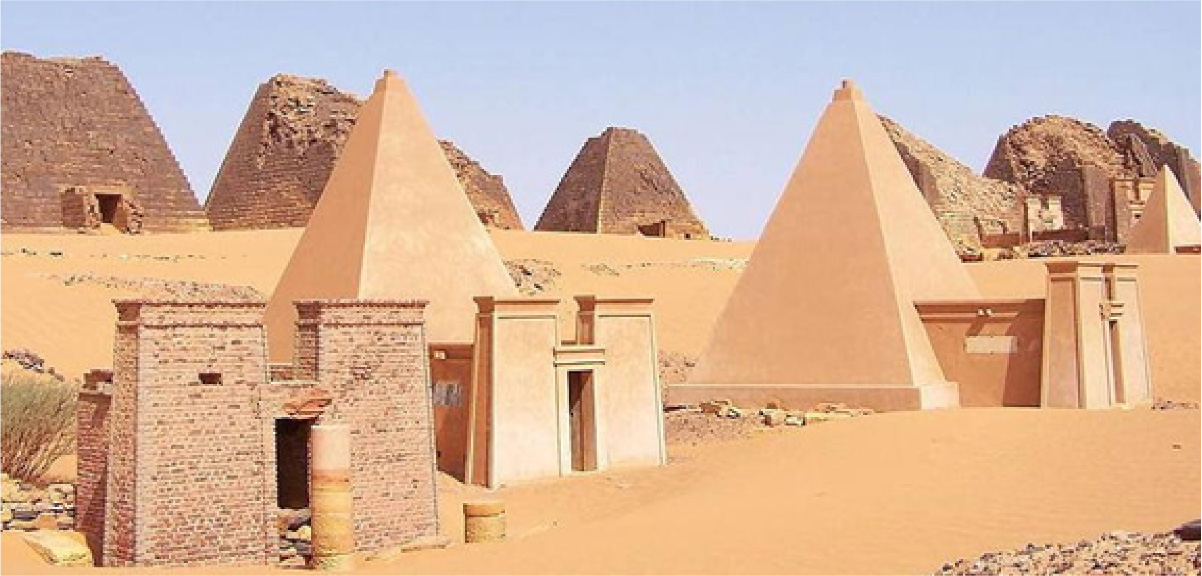
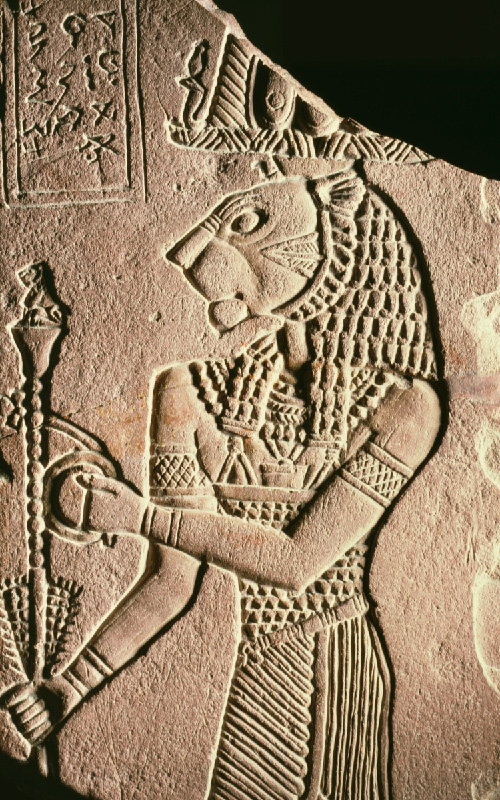
Having had many centuries of cultural contact with Egypt, it is no surprise that Egyptian influences in writing, architecture, and religion persisted despite the great geographic distance. The use of Egyptian hieroglyphs, for example, continued for centuries until it was ultimately replaced by Meroitic, an alpha-syllabic script derived from the Egyptian Demotic script. Similarly, the Meroitic rulers constructed pyramids for their rulers just as they had seen and clearly admired in Egypt. Unlike the much older pyramids in Egypt, however, the Meroitic variants were smaller, with steep sides and blunt tops (Figure 9.17). Finally, traces of Egyptian religious practices endured throughout Meroe’s long history, albeit gradually and predictably deviating from the original practices as time went on. For example, the Kushite religious traditions eventually included the worship of the lion-headed god Apademak. This was a war god worshipped exclusively by the people of Kush, though it was often depicted in an artistic style clearly influenced by Egyptian culture.
英語のヒント
何世紀にもわたるエジプトとの文化的接触があったことを考えれば、地理的には遠く離れていても、文字、建築、宗教にエジプトの影響が残ったのは不思議ではない。たとえばヒエログリフは何世紀も使われ続けたが、最終的には、エジプトのデモティックから派生した、アルファベットと音節文字の性格を併せ持つメロエ文字に取って代わられた。同様に、メロエでは、エジプトで見て明らかに感銘を受けたピラミッドをまね、君主のためにピラミッドを建てた。ただし、はるかに古いエジプトのピラミッドとは違い、メロエのものは小さく、斜面が急で、頂部は尖りきっていない(図9.17)。エジプトの宗教実践の痕跡も、メロエの長い歴史を通じて残った。もっとも、時間とともに、予想されるとおり徐々に元の実践から離れていった。たとえばクシュの宗教には、やがてライオンの頭を持つ神アペデマクへの崇拝が加わった。この軍神はクシュの人々だけが崇拝したが、その姿はしばしば、エジプト文化の影響を明らかに受けた美術様式で描かれた。
Pyramids at Meroe.メロエのピラミッド。
(credit: “Pyramids N26 and N27” by “Wufei07”/Wikimedia Commons, Public Domain) · Public Domain
Figure 9.17 The royal necropolis at Meroe contains distinctive burial pyramids for dozens of royal officials including kings, queens, and crown princes. The tallest is ninety-six feet high. Two other cemeteries contain more than a hundred additional pyramids. (credit: “Pyramids N26 and N27” by “Wufei07”/Wikimedia Commons, Public Domain)
英語のヒント
図9.17 メロエの王家の墓域には、王、女王、王太子など、数十人の王族関係者のための、特徴的な埋葬用ピラミッドがある。最も高いものは96フィート。ほかに二つの墓地があり、さらに100基以上のピラミッドが存在する。(出典:「Wufei07」「Pyramids N26 and N27」、Wikimedia Commons、パブリックドメイン)
The majority of people worked in the fields and the grazing pastures. They lived in mud homes within small rural villages overseen by minor chiefs of family clans. The elite, ruling families, and artisans, on the other hand, lived in larger towns. The entire kingdom was ruled by monarchs from the reigning family. However, unlike in Egypt where succession to the throne tended to flow from father to son, in the Meroitic kingdom, the monarch was carefully selected by a group made up of local chiefs, military officials, and other high officials. While theoretically the ultimate authority in the land, the power of the kings was limited by customs, taboos, and the consent of the nobility and the priestly class. Unpopular monarchs could be and were removed if they fell out of favor with either of these groups. There was also the position of the kentake, or queen mother. The kentake exercised a degree of official power somewhere above the highest officials and below that of the king. On several occasions, the kentakes themselves, given the right circumstances, could assume complete power and even lead armies into battle.
英語のヒント
人々の大部分は畑や放牧地で働き、家族・氏族の小首長が監督する小さな農村で、泥造りの家に暮らしていた。一方、有力者、支配者一族、職人は、より大きな町に住んだ。王国全体は、王家出身の君主が治めていた。しかし、父から息子へ王位を継ぐ傾向のあったエジプトと異なり、メロエ王国では、地方首長、軍の役人、その他の高官からなる集団が、君主を慎重に選んだ。理論上、王は国内最高の権威だったが、その権力は慣習、禁忌、貴族と祭司層の同意によって制限された。どちらかの集団の支持を失った不人気な君主は、排除されうるだけでなく、実際に排除された。「ケンタケ」、すなわち王母という地位もあった。ケンタケは、最高位の役人より上、王の権力より下に位置する、一定の公的権力を持っていた。状況が整えば、ケンタケ自身が全権を握り、軍を率いて戦いに出ることも、幾度かあった。
During the second and first centuries BCE, Roman power spread across the Mediterranean and, in the year 30 BCE, assumed control of Egypt. Around this same time, the Kushite kings of Meroe were also expanding their power northward. These two expanding powers inevitably clashed as Rome sought to secure its southern border and prevent further Meroitic expansion. In one reported encounter, the Romans came face-to-face with a possibly battle-scarred kentake leading an army. In another encounter at Syene (modern Aswan in southern Egypt), the Kushite forces of Meroe appear to have gotten the better of the Romans. Kushite soldiers pillaged the city and took with them a number of statues and other valuables, including a bronze head of the Roman emperor Augustus.
英語のヒント
前2〜前1世紀に、ローマの力は地中海各地へ広がり、前30年にはエジプトの支配を握った。同じころ、メロエのクシュ王たちも北へ勢力を伸ばしていた。ローマが南の国境を確保し、メロエのさらなる拡大を防ごうとしたため、成長する二つの勢力は必然的に衝突した。伝えられるある戦闘では、ローマ軍は、戦傷を負っていた可能性のあるケンタケが率いる軍と対峙した。シエネ、現在のエジプト南部アスワンでの別の戦いでは、メロエのクシュ軍がローマ軍を打ち負かしたとみられる。クシュ兵は都市を略奪し、ローマ皇帝アウグストゥスの青銅製の頭像を含む、多数の像や貴重品を持ち去った。
Not a group to leave such an affront unanswered, the Romans counterattacked and nearly destroyed Napata. When they finally left, they took with them several thousand Kush subjects whom they sold into slavery. Historians debate the nature of the subsequent relationship between Rome and the Meroitic Kingdom of Kush. Evidence suggests that at some point during the Augustan period, Kush was a client state of the Roman Empire. In exchange for its internal autonomy, Kush helped Rome secure its East African frontier by providing soldiers and support for garrisoned legions stationed in the kingdom.
英語のヒント
このような侮辱を受けて黙っているローマ人ではなかった。彼らは反撃し、ナパタをほぼ破壊した。最後に撤退するときには、クシュの住民数千人を連れ去り、奴隷として売った。その後のローマとメロエのクシュ王国との関係がどのようなものだったかは、歴史家の間で議論がある。証拠は、アウグストゥスの時代のある時点で、クシュがローマ帝国の従属国だったことを示唆する。クシュは内政の自治と引き換えに、王国内に駐屯する軍団へ兵員や支援を提供し、ローマが東アフリカの辺境を確保するのを助けた。
The Kingdom of Kush reached a new high-water mark in its power and artistic achievement a few decades later under King Natakamani, in the early first century CE. During his reign, Kush also attained its maximum geographic extent, stretching from the Ethiopian foothills in the south to the Nile’s first cataract in the north. Testifying to its wealth and influence during this period are the pyramids built under Natakamani as well as the temples that were constructed and restored, including one for the lion-headed god Apademak and the Egyptian god Amun (Figure 9.18).
英語のヒント
数十年後の1世紀初め、ナタカマニ王のもとで、クシュ王国の権力と芸術的達成は新たな頂点に達した。在位中、領域も最大となり、南はエチオピアの山麓から、北はナイルの第1急流まで広がった。この時期の富と影響力を物語るのは、ナタカマニのもとで築かれたピラミッドや、建設・修復された神殿である。なかには、ライオンの頭を持つ神アペデマクや、エジプトの神アムンのための神殿もあった(図9.18)。
Apademak, God of War.軍神アペデマク。
(credit: “Votive Plaque of King Tanyidamani” by Walters Art Museum/Wikimedia Commons, Public Domain) · Public Domain
Figure 9.18 This small fragment of a votive plaque was carved from red siltstone in about 100 BCE and honors the Kushite war god Apedemak, who has a lion’s head and carries a scepter with a small seated lion on top. (credit: “Votive Plaque of King Tanyidamani” by Walters Art Museum/Wikimedia Commons, Public Domain)
英語のヒント
図9.18 この小さな奉納板の断片は、前100年ごろに赤いシルト岩から彫られ、クシュの軍神アペデマクをたたえている。神はライオンの頭を持ち、頂部に座る小さなライオンを載せた王笏を携える。(出典:Walters Art Museum「Votive Plaque of King Tanyidamani」、Wikimedia Commons、パブリックドメイン)
Despite earlier tensions, Meroe and Roman Egypt enjoyed mostly friendly relations for the next two centuries. During this time, however, Meroe’s power began to wane, and the kingdom came to an end sometime in the fourth century CE. Scholars are uncertain what caused its decline, although environmental degradation due to the overuse of timber for charcoal manufacture may have been a factor. Trees were being cut down faster than they could replace themselves, which would likely have led to erosion and reduced fertility of the soil, so the land could no longer support a large urban population.
英語のヒント
以前の緊張にもかかわらず、その後2世紀にわたり、メロエとローマ領エジプトの関係は、おおむね友好的だった。しかしその間に、メロエの力は衰え始め、王国は4世紀のある時期に終わりを迎えた。衰退の原因は明らかでないが、木炭生産のための木材の過剰利用による環境悪化が、一因だったかもしれない。木々は再生するより速く伐採されていた。それがおそらく土壌侵食と肥沃度の低下を招き、土地は大きな都市人口を支えられなくなったのだろう。
In addition, the weakening of the Roman Empire and its economic contraction in the third century led to a steep decline in demand for the types of luxury goods traded through Kush, especially the ivory, enslaved peoples, perfume, exotic animals, and hardwoods on which its economy depended. Having no partners of similar size and wealth with whom to trade African goods on a large scale, the kings of Kush found that Rome’s economic crisis triggered a fiscal crisis for them. Perhaps the final blow was the rise of the kingdom of Aksum. Better placed to take advantage of the Red Sea trade, Aksum starved Kush of regional commerce. Sometime around 350, the Aksumite king Ezana invaded Meroe but found the island capital of the Kingdom of Kush had been abandoned.
英語のヒント
さらに、3世紀のローマ帝国の弱体化と経済縮小は、クシュを通じて取引される奢侈品への需要を急減させた。とりわけ象牙、奴隷とされた人々、香水、珍しい動物、硬材は、クシュ経済が頼る品物だった。同じほどの規模と富を持ち、アフリカの品を大規模に取引できる相手がほかにいなかったため、クシュの王たちは、ローマの経済危機が自分たちの財政危機を引き起こすのを目の当たりにした。最後の打撃となったのは、アクスム王国の台頭だったのかもしれない。紅海交易を利用するのにより有利な位置にあったアクスムは、クシュから地域交易を奪った。350年ごろ、アクスムのエザナ王がメロエへ侵攻した。しかし、クシュ王国の島の首都は、すでに放棄されていた。