第9章古代のアフリカAfrica in Ancient Times
The Kalahari is a semiarid sandy savanna some 350,000 square miles across. Occasionally referred to as the southern African equivalent of the Sahel, it stretches south from modern-day Namibia into South Africa’s Northern Cape province, extends deep into the interior of the South African veld or grassland, and covers almost the whole of Botswana. While Saharan sand dunes are typically large, in the Kalahari they are much smaller, ranging between twenty and two hundred feet high and measuring at least one mile in length and several hundred feet in width. The landscape is also distinguished by numerous “dry lakes” or pans, evidence of a wetter period earlier in the region’s history. Even today, some of the northeastern parts of the Kalahari receive more than ten inches of water per year and thus climatically do not qualify as “desert.” However, they do lack surface water. When they experience rain, it drains instantly through the deep sands, leaving the soil completely devoid of moisture.
英語のヒント
カラハリは、約35万平方マイルにわたる半乾燥の砂地のサヴァンナである。南部アフリカのサヘルに当たる地域と呼ばれることもあり、現在のナミビアから南へ、南アフリカ共和国の北ケープ州まで伸びる。また同国の草原地帯ヴェルトの奥深くへ広がり、ボツワナのほぼ全域を覆う。サハラの砂丘が一般に大きいのに対し、カラハリの砂丘はかなり小さく、高さは20〜200フィート、長さは少なくとも1マイル、幅は数百フィートほどである。かつてより湿潤な時代があったことを示す、多くの「干上がった湖」、すなわちパンも、この景観を特徴づける。現在でも、カラハリ北東部の一部には年間10インチを超える雨が降るため、気候学的には「砂漠」の条件を満たさない。しかし、地表水がないのは確かだ。雨が降っても、厚く積もる砂の中へすぐにしみ込み、土壌にはまったく水分が残らない。
Precipitation in the Kalahari depends largely on weather patterns influenced by the Indian Ocean and is highly variable. While the northeastern part receives comparatively abundant rainfall, the southern fringe of the desert sees less than five inches of rain per year. This rainfall accompanies severe thunderstorms, which often appear suddenly and produce violent downpours that deluge the landscape. Still, for six to eight months of the year, the region receives no rainfall. As a result, there is very little ecologically to distinguish the southwestern landscape beyond flat sand plains—aside from a few drought-resistant shrubs and bushes. On the other hand, the central Kalahari, which enjoys more rain, is dotted with scattered trees, shrubs, and grasses. At the extreme end, the northern reaches of the Kalahari appear to be an entirely different biome with woodlands, palm trees, and forests.
英語のヒント
カラハリの降水は、インド洋の影響を受ける天候に大きく左右され、変動が激しい。北東部では比較的豊富に雨が降るが、南の周縁部では年間5インチ未満しか降らない。その雨は激しい雷雨として降る。雷雨は突然現れることが多く、猛烈な豪雨となって一帯を水浸しにする。それでも、1年のうち6〜8か月は雨がない。そのため南西部は、平らな砂原が広がるほかには、乾燥に強い低木や茂みが少しある程度で、生態学的な特徴に乏しい。これに対し、より雨の多いカラハリ中央部には、木々、低木、草が点在する。さらに北の端では、樹林やヤシの木、森林があり、まったく別の生物群系のように見える。
The final major climate in Africa is the Mediterranean climate, found only on the northernmost and southernmost fringes of the continent in the coastal regions of Morocco, Algeria, and Tunisia in the north, and in South Africa. The combination of dry summers with lower humidity (relative to the tropical band) and mild rainy winters makes them ideal environments for the growing of olive trees, cereal grains, and grapes—the so-called Mediterranean triad of crops that dot the landscapes of both regions. The temperatures there are pleasant, with average daily highs of 77°F and average nightly lows hovering around 60°F.
英語のヒント
アフリカの最後の主要な気候は、地中海性気候である。分布するのは大陸の北端と南端だけで、北ではモロッコ、アルジェリア、チュニジアの沿岸、南では南アフリカ共和国に見られる。熱帯より湿度の低い乾いた夏と、穏やかで雨の多い冬の組み合わせは、オリーブ、穀物、ブドウを育てるのに理想的な環境をもたらす。いわゆる地中海の三大作物で、両地域の景観のあちこちに見られる。気温は過ごしやすく、日中の最高気温は平均77°F、夜間の最低気温は平均60°F前後である。
Africa also offers regional climates, each with its own local variations. East Africa, for example, straddles the equator and includes Kenya, Uganda, and Tanzania. Along the coast and around Lake Victoria, hot and humid conditions prevail, but there are much cooler climates in the highlands and mountains (Figure 9.9). Many areas of the region experience extreme amounts of rainfall. Coastal islands and the tropical area around Lake Victoria, for example, receive upward of fifty-nine inches of rain per year. To the north, the Ethiopian highlands form a drier climate region, thanks to the influence of the eastern desert. Locally, Africa’s diverse microclimates belie the continent’s broad regional climate patterns and suggest the impressive variety of ecosystems that span it—and to which people have adapted over the millennia.
英語のヒント
アフリカには地域的な気候もあり、それぞれに局地的な違いがある。たとえばケニア、ウガンダ、タンザニアを含む東アフリカは、赤道をまたいで広がる。海岸沿いやヴィクトリア湖の周囲では高温多湿の条件が支配的だが、高原や山地には、はるかに涼しい気候がある(図9.9)。この地域の多くの場所では、きわめて大量の雨が降る。たとえば沿岸の島々やヴィクトリア湖周辺の熱帯地域では、年間59インチ以上に達する。北方のエチオピア高原は、東の砂漠の影響により、より乾燥した気候帯をなす。アフリカの局地的で多様な微気候は、大まかな地域別の気候区分だけでは実態を捉えきれないことを示している。それは、大陸に広がり、人々が数千年にわたって適応してきた生態系の、驚くほど豊かな多様性を物語る。
Lake Victoria.ヴィクトリア湖。
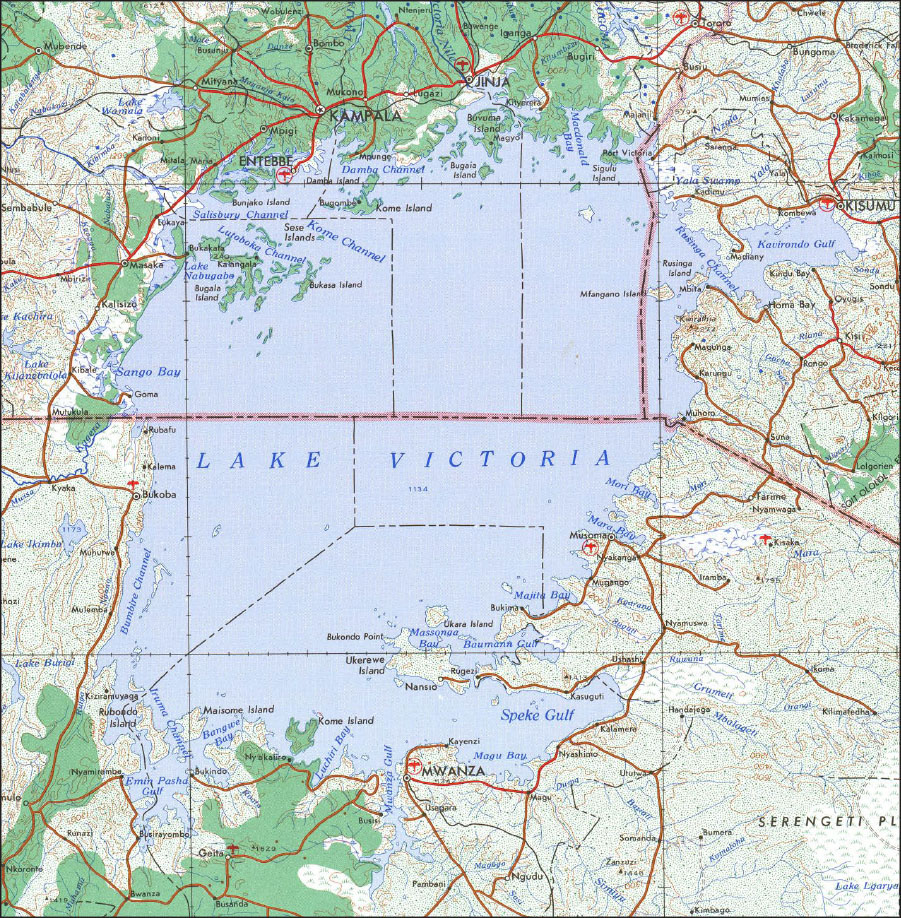
(credit: modification of work “Lake Victoria 1968” by U.S. Army/Wikimedia Commons, Public Domain) · Public Domain
Figure 9.9 Hot and humid Lake Victoria, home to one of Africa’s regional climates, is centrally located in East Africa and bordered by Uganda, Kenya, and Tanzania. (credit: modification of work “Lake Victoria 1968” by U.S. Army/Wikimedia Commons, Public Domain)
図9.9 アフリカの地域気候の一つを持つ、高温多湿のヴィクトリア湖は、東アフリカの中央に位置し、ウガンダ、ケニア、タンザニアに囲まれている。(出典:米国陸軍「Lake Victoria 1968」を改変、Wikimedia Commons、パブリックドメイン)
A staggering variety of wildlife has also adapted to these climates. Because of the abundance there of grasses as sources of food, Africa’s savannas are home to a range of large grazing mammals including gazelles, wildebeests, elephants, ostriches, and zebras. Large herds of these animals are commonly seen in the savanna, none more spectacular than the wildebeests on their annual migration in East Africa. Although giraffes, elephants, hippopotamuses, and rhinoceroses can be found in many places on the continent, including modern-day Botswana, Zimbabwe, and Zambia in the interior of south-central Africa and East Africa, one of the greatest concentrations of these animals on the continent is found in the sub-Saharan savanna.
英語のヒント
驚くほど多様な野生動物も、こうした気候に適応してきた。食料となる草が豊富なため、アフリカのサヴァンナには、ガゼル、ヌー、ゾウ、ダチョウ、シマウマなど、草を食べるさまざまな大型哺乳類が生息する。大きな群れを見かけることも多いが、なかでも壮観なのは、東アフリカを毎年移動するヌーの群れだ。キリン、ゾウ、カバ、サイは、南部アフリカ内陸の現在のボツワナ、ジンバブエ、ザンビアや、東アフリカなど、大陸各地で見られる。そのなかでも特に密集している場所の一つが、サハラ以南のサヴァンナである。
Types of Ancient African Societies古代アフリカ社会のさまざまな形
The variety of African climates directly influenced the evolution of human societies there. People adapted to these climates in many ways, developing techniques and technologies that both helped them survive and altered their surroundings. Understanding the connection between climate, geography, and humans opens the way to understanding Africa’s early history.
英語のヒント
アフリカの気候の多様性は、そこに暮らす人間社会の発展へ直接影響した。人々はさまざまな方法で気候に適応し、生き延びるのを助けるとともに、周囲の環境を変えていく技法や技術を発達させた。気候、地理、人間の結びつきを理解することが、アフリカの初期の歴史を理解する道を開く。
Before the domestication of plants and animals, life in prehistoric Africa was characterized by the hunter-gatherer stage of human civilization. Hunter-gatherers survive by hunting prey and foraging for fruits and vegetables, or by exchanging game for crops grown by others. In some regions, such as Tanzania and Kenya in East Africa and Botswana in southern Africa, hunter-gatherers followed the seasonal migrations of large game animals, such as wildebeests and elephants. Hunter-gatherers do not plant crops or build permanent shelters but rather live nomadic lifestyles guided by the seasons, limited resource availability, conflict with other groups, or a combination of these factors. They must be highly mobile so their communities tend to be small, consisting of only several dozen interrelated people. Their mobility means that they often play an important role in connecting different regions and cultures and in transmitting goods and ideas across great distances.
英語のヒント
植物の栽培化や動物の家畜化が始まる前、先史時代のアフリカの生活は、人類文明の狩猟採集段階にあった。狩猟採集民は、獲物を狩り、果実や野菜を採集するか、狩猟で得た獲物を、他の人々が育てた作物と交換して暮らす。東アフリカのタンザニアやケニア、南部アフリカのボツワナなどでは、ヌーやゾウのような大型動物の季節移動を追った。狩猟採集民は作物を植えたり恒久的な住居を建てたりせず、遊動生活を送る。その移動は、季節、利用できる資源の限界、他集団との争い、あるいはこれらの組み合わせに左右される。高い移動性が必要なため、共同体は互いに関係のある数十人だけで構成される小さなものになりやすい。こうして移動することから、彼らはしばしば、異なる地域や文化を結びつけ、品物や考え方を遠くまで伝える重要な役割を果たす。
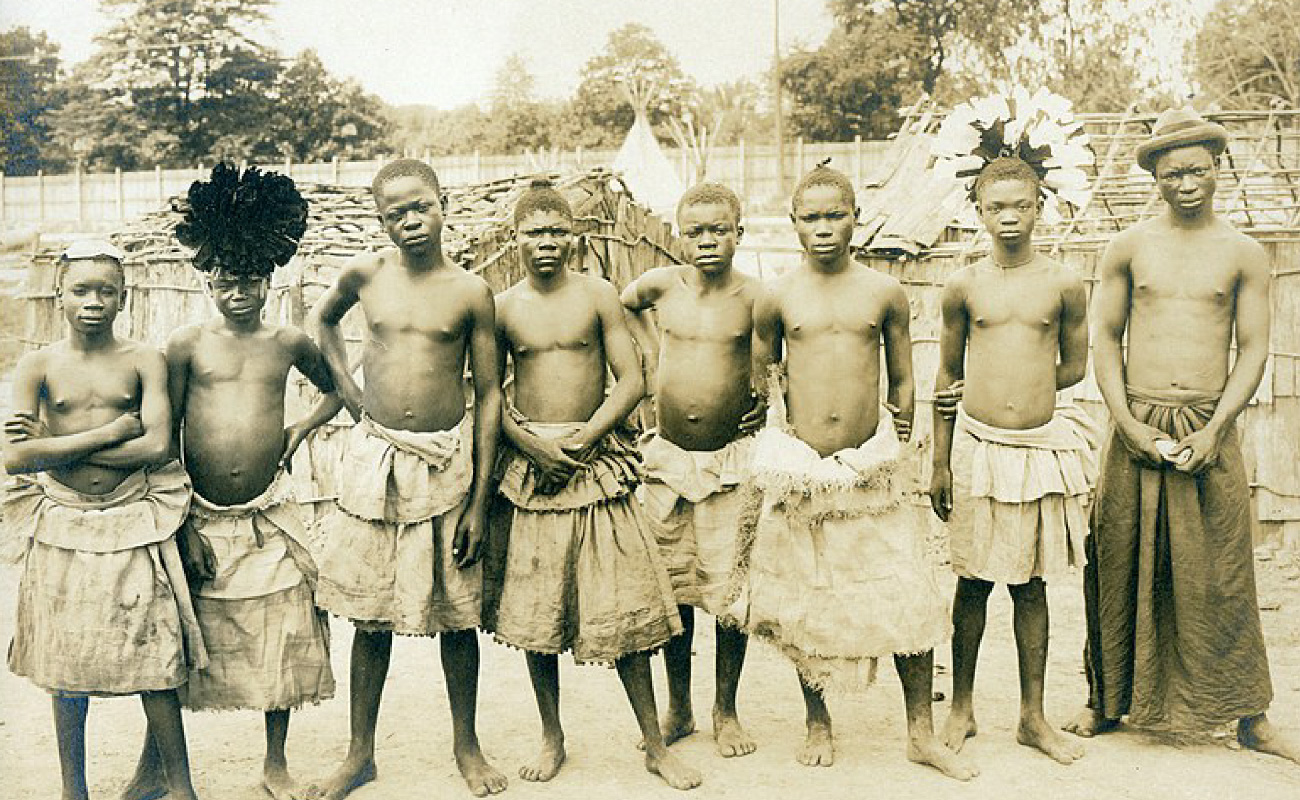
Hunting and gathering peoples of Africa have historically included the rainforest-dwelling Baka of Central Africa and the San people of the Kalahari Desert. The Baka, found today in Cameroon, Gabon, and northern Congo, eat wild roots, nuts, fruits, vegetables, a variety of insect species, fish, and wild game they hunt using bows, poison-tipped arrows, and traps (Figure 9.10). Baka villages are made up of small single-family huts of branches and leaves, built predominantly by women and usually dismantled after about a week so the Baka can follow the available food supply. Baka society has a well-defined structure. In addition to building the family hut, women also dam small streams to catch fish and carry material gathered while foraging with their husbands. Men hold a higher social status derived from the fact that they engage in the more hazardous task of hunting and trapping animals.
英語のヒント
アフリカで歴史的に狩猟採集を営んできた人々には、中央アフリカの雨林に暮らすバカや、カラハリ砂漠のサンなどがいる。現在のカメルーン、ガボン、コンゴ北部に暮らすバカは、野生の根、木の実、果実、野菜、さまざまな昆虫、魚、そして弓や毒矢、罠で捕らえた野生動物を食べる(図9.10)。バカの村は、枝や葉で作った一家族用の小さな小屋の集まりである。小屋は主に女性が建て、通常は約1週間後に解体する。手に入る食べ物を追って移動できるようにするためだ。バカ社会には明確な仕組みがある。女性は家族の小屋を建てるだけでなく、小川をせき止めて魚を捕り、夫とともに採集した物を運ぶ。男性は、より危険な狩猟や罠猟を担うことから、より高い社会的地位を持つ。
The Baka People of Central Africa.中央アフリカのバカの人々。
(credit: modification of work “Group of Pygmies from the Department of Anthropology at the 1904 World's Fair) by Missouri History Museum/Wikimedia Commons, Public Domain) · Public Domain
Figure 9.10 A group of people photographed at the Department of Anthropology at the 1904 St. Louis World’s Fair. The surviving catalog title does not identify them specifically as Baka. (credit: modification of work “Group of Pygmies from the Department of Anthropology at the 1904 World’s Fair” by Official Photographic Company/Missouri History Museum/Wikimedia Commons, Public Domain)
図9.10 1904年のセントルイス万博の人類学部門で撮影された人々。残る目録題名だけでは、バカの人々とは特定できない。(クレジット:「Group of Pygmies from the Department of Anthropology at the 1904 World’s Fair」、Official Photographic Company/Missouri History Museum/Wikimedia Commonsを改変、パブリックドメイン)
Like that of many other African peoples, the Baka religion was and remains centered on a belief in animism—that is, it teaches that certain objects, places, and creatures have spirits. Those who can interpret what those spirits desire have positions of leadership. Animism is also polytheistic, meaning it has numerous gods, each of whom typically personifies a natural force such as rain, wind, or lightning. Given the impact of weather on survival, it is not surprising that trying to control the natural environment was a key factor in religious observance. Among the gods of the Baka are Kamba, the creator of all things, and Jengi, the spirit of the forest. The Baka live in and rely on the forest for their survival, so they view Jengi as a parental figure and, perhaps most importantly, the protector of the forest.
英語のヒント
多くのアフリカの人々の宗教と同様に、バカの宗教は、過去も現在もアニミズムの信仰を中心としている。すなわち、ある種の物や場所、生き物には精霊が宿ると教える。精霊が何を望むかを解釈できる人が、指導的な地位に就く。アニミズムは多神教でもある。つまり多くの神々を持ち、それぞれが通常、雨、風、雷などの自然の力を人格化している。天候が生存に与える影響を考えれば、自然環境を制御しようとすることが宗教実践の重要な要素だったのも不思議ではない。バカの神々には、万物の創造者カンバや、森の精霊ジェンギなどがいる。バカは森に暮らし、生存を森に頼っている。そのためジェンギを親のような存在と見なし、そしておそらく最も重要なこととして、森を守る存在と考えている。
Although ancient African religions were remarkably complex, and their rituals, practices, and beliefs varied greatly among the continent’s diverse populations, some commonalities can be identified in the pre-Judaic, pre-Christian, and pre-Islamic periods, including polytheism. Another typical feature of the pantheon of traditional African deities is a supreme being, like the Ngai of the Kikuyu, held to be the creator god from whom the universe originated. The supreme being was a distant deity who played no role in the ordinary affairs of Africans. Instead, management of the day-to-day fell to specialized secondary deities, such as Obatala, the Yoruba god of earth, and Makasa, the Baganda god of harvest and fertility. Other shared features of many ancient African religions include the worship of ancestors as protectors and guides and ceremonial practices to mark important life events, such as the Bantu Okuyi, a rite of passage celebrating the transition between youth and adolescence.
英語のヒント
古代アフリカの宗教はきわめて複雑で、儀礼、実践、信仰は大陸の多様な人々の間で大きく異なっていた。それでも、ユダヤ教、キリスト教、イスラームが広がる前の時期には、多神教など、いくつかの共通点を見いだせる。伝統的なアフリカの神々の体系にもう一つよく見られるのが、キクユのンガイのような至高の存在である。宇宙がそこから生じた創造神とされる。至高の存在は遠い神であり、アフリカの人々の日常の出来事には関与しなかった。日々の事柄を管理する役目は、個別の領域を担う下位の神々に委ねられた。たとえばヨルバの大地の神オバタラや、バガンダの収穫と豊穣の神マカサである。多くの古代アフリカ宗教に共通する特徴には、祖先を守り手や導き手として崇拝することや、人生の重要な出来事を刻む儀礼もある。たとえばバントゥー系の人々のオクイは、子どもから青年期への移行を祝う通過儀礼だ。
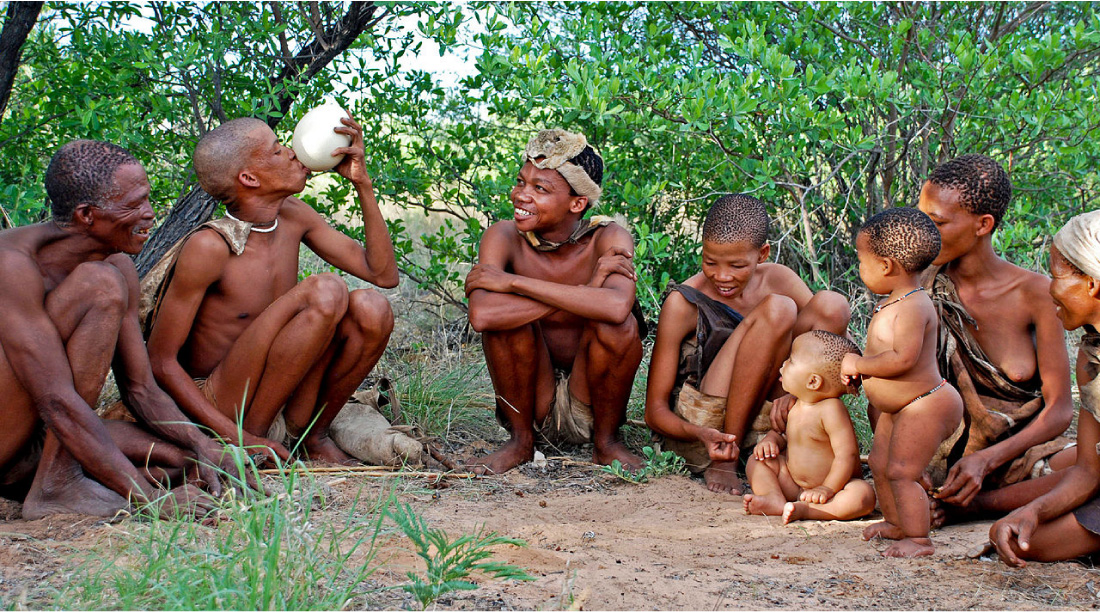
The San people of southwest Africa were and remain seminomadic hunter-gatherers and are polytheistic (Figure 9.11). Their diet is dictated by the arid conditions in which they live. Lack of water in the Kalahari Desert means there are fewer vegetables and fruits to forage, although seasonal nuts, plant buds, and certain roots are food staples. The San also hunt a variety of big game animals, including giraffe and antelope species such as kudu and hartebeest, using poison-tipped arrows and traps. They do not build permanent homes. Rather, their shelter types vary by season: they erect nightly rain shelters in the spring, when they move constantly in search of budding greens, and in the dry season, when water is scarce and most plants are dead or dormant, they congregate around the only permanent water holes in the area.
英語のヒント
アフリカ南西部のサンは、昔も今も半遊動的な狩猟採集民で、多神教を信仰している(図9.11)。食生活は、暮らしている土地の乾燥した条件に左右される。カラハリ砂漠では水が乏しいため、採集できる野菜や果実が少ない。ただし、季節ごとの木の実、植物の芽、ある種の根は主要な食べ物となる。サンは毒矢や罠を使い、キリンや、クーズー、ハーテビーストなどのレイヨウ類をはじめ、さまざまな大型動物も狩る。恒久的な住居は建てない。住まいの形は季節によって変わる。新芽を求めて絶えず移動する春には、雨を避ける一夜の小屋を建てる。水が乏しく、多くの植物が枯れるか休眠する乾季には、その地域で年中水のある唯一の水場の周囲に集まる。
The San.サンの人々。
(credit: “Bushman family” by Aino Tuominen/Wikimedia Commons, CC0 1.0) · CC0 1.0
Figure 9.11 A San family in present-day South Africa. (credit: “Bushman family” by Aino Tuominen/Wikimedia Commons, CC0 1.0)
図9.11 現在の南アフリカのサンの家族。(出典:Aino Tuominen「Bushman family」、Wikimedia Commons、CC0 1.0)
The hunt is a key part of San society, and all the San gods have jobs related to it. The supreme deity Cagn ensures a successful hunt, often by protecting the San hunters from animals or people who could endanger the hunt. Hei-tusi the hero god assists Cagn in leading and protecting the hunt. To these are added a host of lesser spirits, including predators and tricksters.
英語のヒント
狩りはサン社会の重要な部分であり、サンの神々はすべて、狩りに関係する仕事を持つ。至高神カグンは、狩りを危険にさらす動物や人間から狩人を守るなどして、狩りの成功を保証する。英雄神ヘイ・ツシは、狩りを導き守るカグンを助ける。さらにこれらの神々に、多くの下位の精霊が加わる。捕食者や、いたずら・策略で秩序をかき乱すトリックスターなどだ。
The most important of the San religious rituals depends on the hunt. The curing or great trance dance is initiated by a San shaman through the hunting of a “power animal” such as an antelope, whose fat is believed to have supernatural potency and is used in different ritualistic settings, including rites of passage. The shaman enters a trance-like state after a night-long dance around a fire surrounded by clapping women. The San believe the trance dancers can be affected physiologically and mystically by the ritual, giving them powers to heal or provoking in them an out-of-body experience. The dance, often depicted on ancient San rock art, is the key source of all spiritual knowledge for the San and is often prompted at times of great social stress such as during times of settler incursion, outbreaks of disease or illness, and poverty.
英語のヒント
サンの宗教儀礼のうち、最も重要なものは狩りに関わる。「治癒の踊り」または「大トランス・ダンス」は、シャーマンがレイヨウなどの「力を持つ動物」を狩ることから始まる。その脂肪には超自然的な力があると信じられ、通過儀礼など、さまざまな儀礼の場で用いられる。シャーマンは、手拍子をする女性たちに囲まれた火の周囲で一晩中踊った後、トランスのような状態に入る。サンは、儀礼が踊り手に生理的・神秘的な影響を与え、治癒の力を授けたり、体外離脱体験を引き起こしたりすると信じている。古代のサンの岩絵にもよく描かれるこの踊りは、あらゆる霊的知識の主要な源である。入植者の侵入、病気の流行、貧困など、社会に大きな緊張がかかる時期に行われることが多い。