第14章サイバー資源の品質とサイバーコンピューティングのガバナンス
THINK IT THROUGH考えてみよう
Global Cooperation on Cyber Economics and Cybersecurityサイバー経済とサイバーセキュリティーの国際協力
A major stumbling block to implementing responsible computing is the lack of cooperation and coordination among the world’s governments and institutions. How can we resolve this? Who should be in charge of regulating cyber economics and global cybersecurity efforts? Why? How do we develop a global plan and implement regulations that benefit everyone equally worldwide?
英語のヒント
責任あるコンピューティングの実践で大きな障害となるのは、世界の政府や機関の協力・調整が足りないことである。どう解決できるだろうか。サイバー経済と世界的な安全性の取り組みを、誰が規制すべきだろうか。その理由は何か。世界中のすべての人に等しく利益をもたらす計画と規制を、どう作り、実行するか。
Responsible Data Center責任あるデータセンター
The first pillar of responsible computing is responsible data centers, which should be designed and operated with an emphasis on sustainability. They rely on a technology infrastructure that emphasizes green energy, focusing on reducing technology’s carbon footprint. This includes using green energy sources and tracking the energy required for cooling. Responsible data centers also strive to minimize water usage.
第一の柱は、責任あるデータセンターである。持続可能性を重視して設計・運用すべきである。環境に配慮したエネルギーを重視し、技術の二酸化炭素排出量を減らす基盤に依存する。環境に配慮したエネルギー源の利用と、冷却に必要なエネルギーの追跡を含む。水の利用も最小限にするよう努める。
Responsible Infrastructure責任ある基盤
The second pillar of responsible computing is responsible infrastructure, which considers the physical resources needed for a system, including hardware, software, and other network components. The infrastructure is designed to use as little energy as possible while relying on more sustainable components, with less waste going to landfills.
英語のヒント
第二の柱は、責任ある基盤である。ハードウェア、ソフトウェア、その他のネットワーク構成要素など、システムに必要な物理的資源を考える。より持続可能な構成要素を使い、埋立地へ行く廃棄物を減らしつつ、エネルギーの使用をできるだけ小さくするよう設計する。
Responsible Code責任あるコード
With responsible code, the third pillar of responsible computing, organizations make conscious code choices that optimize environmental, social and economic impacts over time. This includes practices such as ensuring that code is efficient and results in fewer HTTP requests and smaller page sizes.
第三の柱である責任あるコードでは、組織は意識してコードを選び、長期的な環境・社会・経済への影響を最適化する。効率よいコードにして、HTTP要求を減らし、ページサイズを小さくすることなどが含まれる。
TECHNOLOGY IN EVERYDAY LIFE日常生活の技術
Dealing with Ethical Programming Issuesプログラミングの倫理問題に対処する
Try it yourself:
自分で考えてみよう。
You have achieved your goals. You have secured an entry-level programming position at TechWorks. Your first day on the job, your boss brings you in the project development meeting, and the new software package is set to be finalized this week. As a new team member, you are asked to be part of the quality assurance team and test the software of functional performance and are given the test plan. You are told that there are four levels of bug reporting:
英語のヒント
あなたは目標を達成し、TechWorksで初級プログラマーの職を得た。初日、上司がプロジェクト開発会議へ連れていく。新しいソフトウェアは今週完成予定である。新メンバーのあなたは品質保証チームの一員として、機能上の性能をテストするよう求められ、テスト計画を渡される。バグ報告には次の4段階があると説明された。
• Bug level 1: Critical functionality is missing or not present in the software
• バグのレベル1:重要な機能が、ソフトウェアから欠けている、または存在しない。
• Bug Level 2: Critical functionality is not working correctly
• バグのレベル2:重要な機能が、正しく動かない。
• Bug Level 3: Non-critical functionality is either not present or is not working properly
• バグのレベル3:重要ではない機能が、存在しない、または正しく動かない。
• Bug Level 4: Cosmetics and other user functionality issues
• バグのレベル4:見た目や、その他の利用者向け機能の問題。
During your analysis, you found several Bug Level 3 issues and several Bug Level 4 issues that were all programmed by one programmer at the company. When you bring this up to the lead developer of the team, they say, “that’s OK, the customer didn’t expect that part of the software to work anyways. We will be able to bill them for more hours to fix the software.” You know from the development meeting that if the product doesn’t ship, your company will be liable for a breach of contract. How do you handle reporting this to your supervisor? What suggestions do you have for fixing the problems? What lessons can you learn from this type of experience for future use?
英語のヒント
分析中、レベル3とレベル4の問題をそれぞれいくつか見つけた。すべて、社内の一人のプログラマーが作った部分である。開発リーダーへ伝えると、こう言われた。「それでいい。お客は、もともとその部分が動くとは期待していなかった。修正の作業時間を、さらに請求できる」。会議での話から、出荷できなければ、会社が契約違反の責任を負うと分かっている。上司への報告をどう扱うか。問題の修正に、何を提案するか。今後に生かせる教訓は何か。
Responsible Data Usage責任あるデータ利用
Responsible data usage is the fourth pillar of responsible computing, and this relates to using data securely in ways that drive transparency, fairness, and respect for the users. Initiatives like Data Augmentation for Discrimination Prevention and Bias Disambiguation, Social Media and Freedom of Speech, and General Data Protection Regulation (GDPR) are related efforts that try to promote responsible data usage by ensuring that such usage is not discriminatory and does not cause harm to users.
英語のヒント
第四の柱は、責任あるデータ利用である。透明性、公平さ、利用者への敬意を促す形で、安全にデータを使うことに関係する。差別防止と偏りの曖昧さの解消のためのデータ拡張、ソーシャルメディアと言論の自由、GDPRなどが、関連する取り組みである。データ利用が差別的でなく、利用者へ害を与えないようにし、責任ある利用を促そうとする。
Responsible Systems責任あるシステム
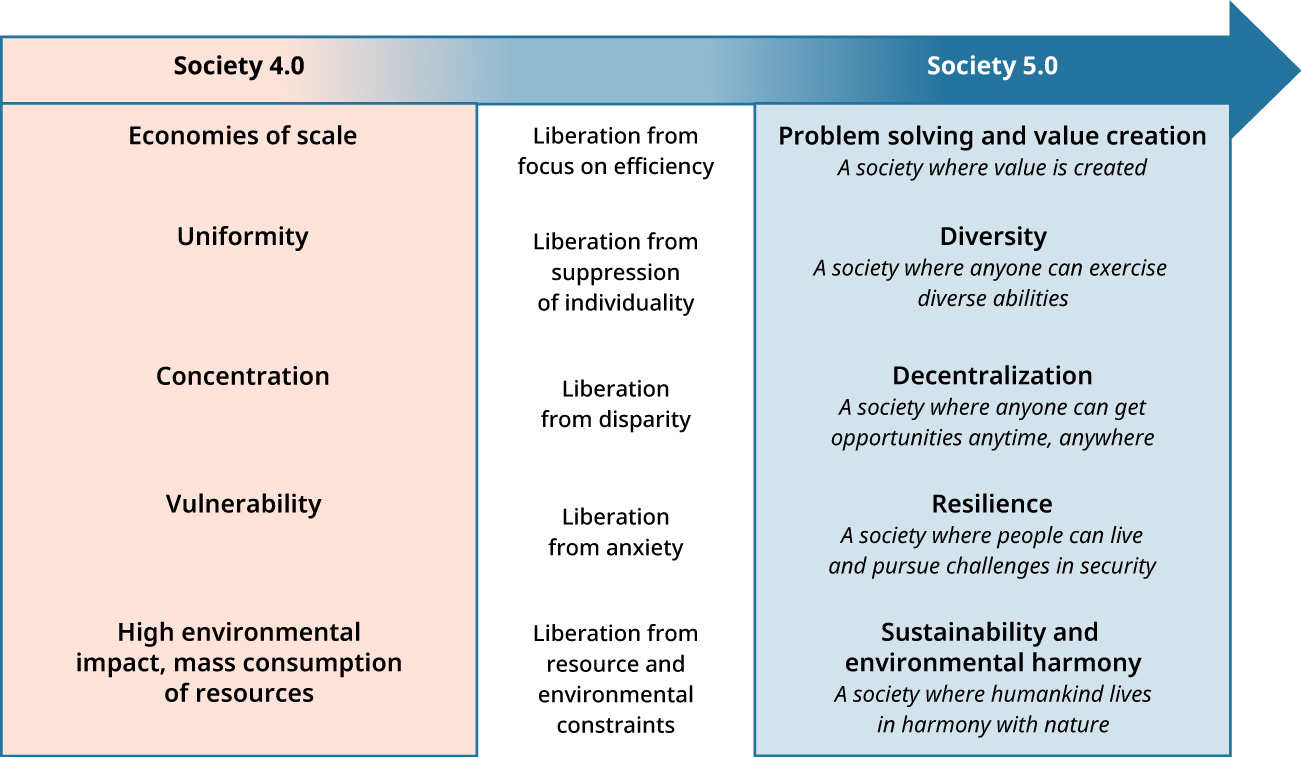
The fifth pillar of responsible computing is responsible systems, which are inclusive systems that address bias and discrimination to promote equality for all, regardless of personal characteristics such as race, age, gender, and disability. This relates to parallel efforts being conducted in areas like explainable AI, large language models regulation, and human-centered computing in the metaverse, which strive to ensure that algorithms are based on trustworthy data. This includes efforts by the World Economic Forum to transform from Society 4.0 to Society 5.0 (Figure 14.54).
第五の柱は、責任あるシステムである。偏りと差別に取り組み、人種、年齢、性別、障害などの個人的特徴にかかわらず、すべての人の平等を促す、包摂的なシステムを指す。信頼できるデータにアルゴリズムを基づかせようとする、説明可能なAI、大規模言語モデルの規制、メタバースの人間中心コンピューティングなどの並行した取り組みと関係する。世界経済フォーラムによる、Society 4.0からSociety 5.0への転換も含む(図14.54)。
attribution: modification of work from “Social Media Usage by Different Generations as a Tool for Sustainable Tourism Marketing in Society 5.0 Idea” by B. Hysa, et al./Sustainability, CC BY 4.0 · CC BY 4.0 · Source出典
Figure 14.54 The World Economic Forum’s goals are to create a society that enables anyone from any background to use their abilities to create value. (attribution: modification of work from “Social Media Usage by Different Generations as a Tool for Sustainable Tourism Marketing in Society 5.0 Idea” by B. Hysa, et al./Sustainability, CC BY 4.0)
図14.54 世界経済フォーラムの目標は、どのような背景を持つ人でも、自分の能力を使って価値を作れる社会を実現することである。(帰属表示:B. Hysaほか/Sustainability「Social Media Usage by Different Generations as a Tool for Sustainable Tourism Marketing in Society 5.0 Idea」の作品を改変、CC BY 4.0。)